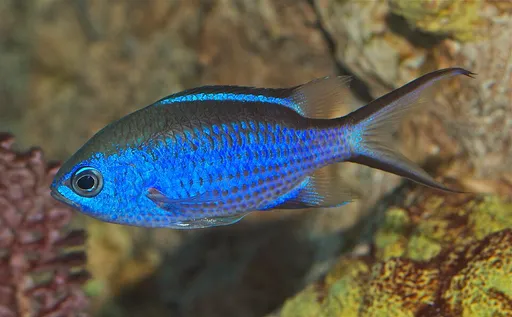
Blue chromis
Chromis cyanea
Also known as Blue Reef Chromis, Caribbean Blue Chromis, Atlantic Blue Chromis
SaltwaterFish
Care at a glance
- Temperature
- 73–81°F
- 23–27°C
- pH
- 8.1–8.4
- Adult size
- 5.1 in
- 13 cm
- Minimum tank
- 53 gal
- 200 L
- Temperament
- Peaceful
- Social behavior
- Schooling
- Swim level
- Middle
- Difficulty
- Medium
- Breeding
- Hard
- Rarity
- Common
- Reef safe
- Reef safe
- Family
- Pomacentridae
- Origin
- Western Atlantic from Florida and Bermuda through the Caribbean to Venezuela, above coral reef slopes.
Overview
Keep a shoal of five or more in a 200 litre or larger tank with open swimming water and steady flow at 23 to 27 C. It is peaceful and reef safe, making it one of the better open-water schooling choices for a reef. Feed frequent small meals of mysis, enriched brine, flake and pellets. A tight group looks best, and keeping several helps spread out any minor squabbling.
In the wild
The blue chromis is a slender bright blue fish that hovers in loose shoals above Caribbean reef slopes, feeding on plankton in the current. It is peaceful and adds constant movement in open water. Unlike territorial damsels it relies on the group and open space rather than a rock hole. It holds its vivid blue in good conditions.
Good to know
Chromis cyanea reaches about 13 cm and is the Atlantic counterpart to the many blue-green Chromis of the Pacific. It is a planktivore that feeds up in the water column. Damselfish in the genus Chromis are among the most abundant fish on many reefs.
Did you know
A shoal of blue chromis drifting over the rockwork is one of the simplest ways to add steady movement to a reef display.
Weekly picks
Tank mates
Blue chromis is a peaceful, schooling species that keeps to the middle. These picks share a community profile with it, are safe together in both directions, and overlap on water type, temperature and pH.
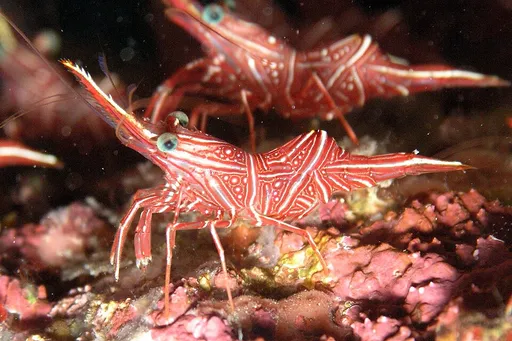
Camel / dancing shrimp
Rhynchocinetes durbanensis
Saltwater2 in (5 cm) · 16 gal (60 L)75–81°F (24–27°C)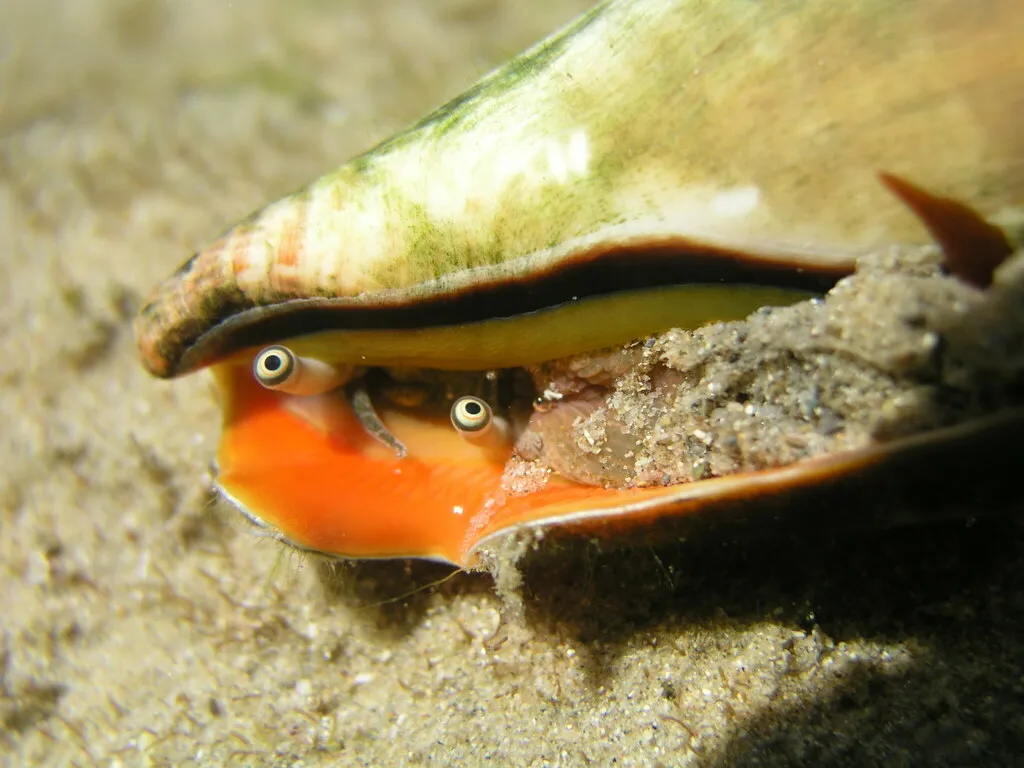
Tiger / strawberry conch
Conomurex luhuanus
Saltwater2.8 in (7 cm) · 20 gal (75 L)75–81°F (24–27°C)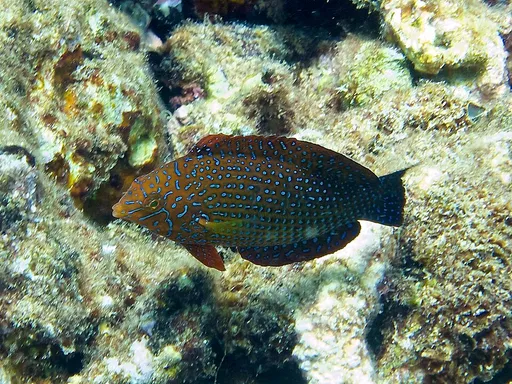
Divided leopard wrasse
Macropharyngodon bipartitus
Saltwater5.1 in (13 cm) · 55 gal (208 L)72–79°F (22–26°C)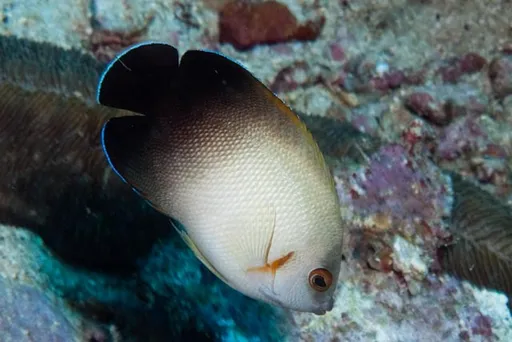
Half-black angelfish
Centropyge vroliki
Saltwater3.9 in (10 cm) · 55 gal (210 L)72–79°F (22–26°C)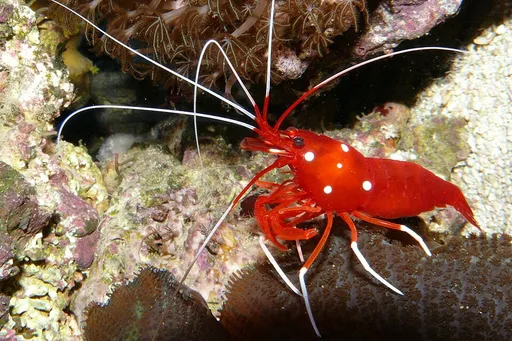
Fire shrimp
Lysmata debelius
Saltwater2.4 in (6 cm) · 20 gal (75 L)72–79°F (22–26°C)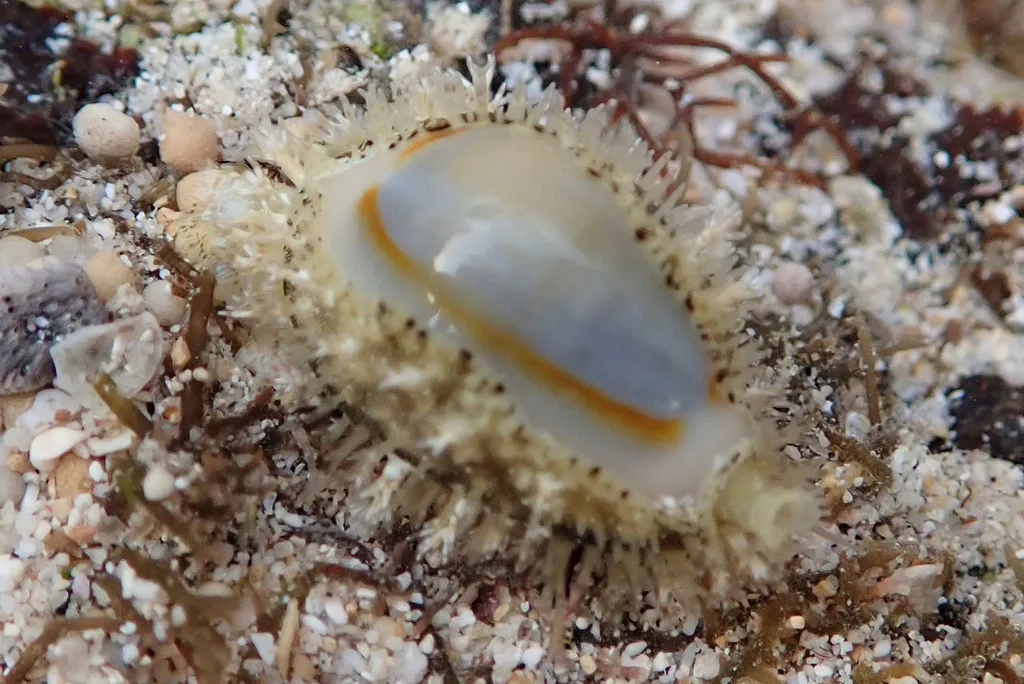
Ring cowrie
Monetaria annulus
Saltwater1.2 in (3 cm) · 20 gal (75 L)75–81°F (24–27°C)
Common questions
What size tank does a Blue chromis need?
A Blue chromis needs at least 53 gal (200 L). It spends most of its time in the middle.
What temperature and pH does a Blue chromis need?
A Blue chromis is comfortable at 73–81°F (23–27°C) with a pH of 8.1–8.4.
How big does a Blue chromis get?
An adult Blue chromis reaches about 5.1 in (13 cm).
Does a Blue chromis need a group?
Yes. A Blue chromis is a schooling species and should be kept in a group, not singly.
Related species
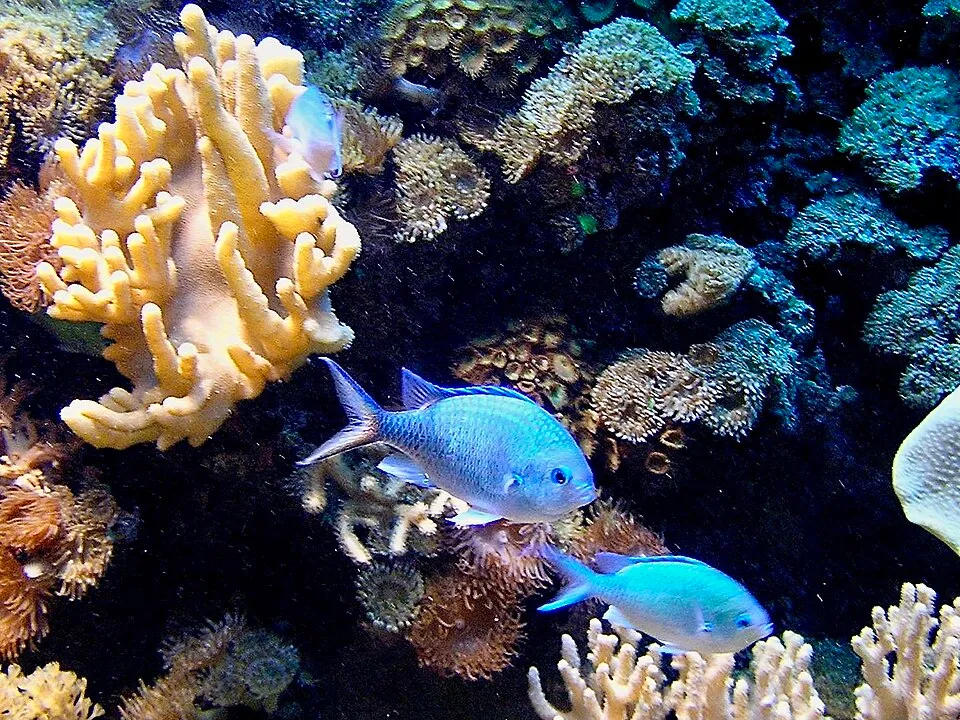 4.7 in (12 cm)30 gal (115 L)75–82°F (24–28°C)
Blue-green chromis
Chromis atripectoralis
4.7 in (12 cm) · 30 gal (115 L)
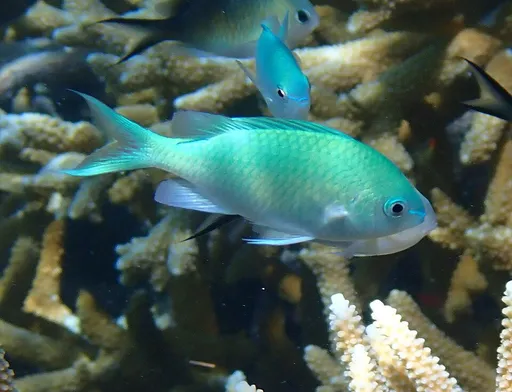 3.1 in (8 cm)30 gal (115 L)75–82°F (24–28°C)
Green chromis
Chromis viridis
3.1 in (8 cm) · 30 gal (115 L)
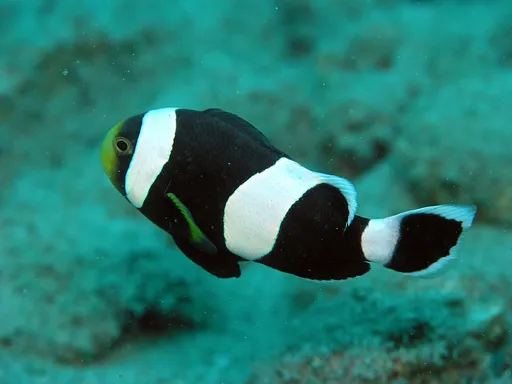 5.1 in (13 cm)40 gal (150 L)75–82°F (24–28°C)
Saddleback clownfish
Amphiprion polymnus
5.1 in (13 cm) · 40 gal (150 L)
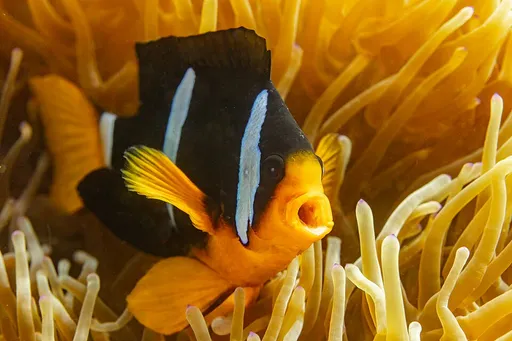 5.5 in (14 cm)30 gal (115 L)75–82°F (24–28°C)
Clark's clownfish
Amphiprion clarkii
5.5 in (14 cm) · 30 gal (115 L)
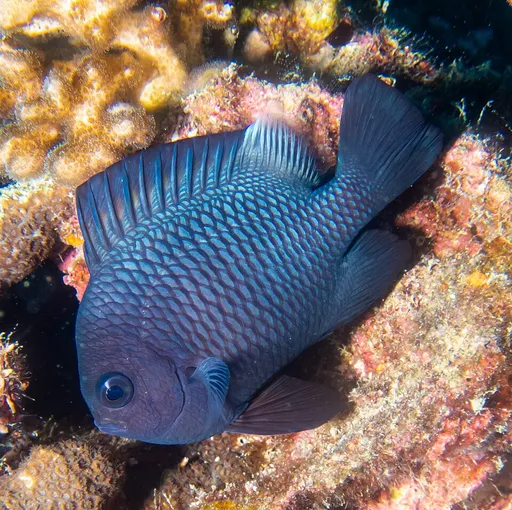 5.5 in (14 cm)55 gal (210 L)75–81°F (24–27°C)
Domino damsel
Dascyllus trimaculatus
5.5 in (14 cm) · 55 gal (210 L)
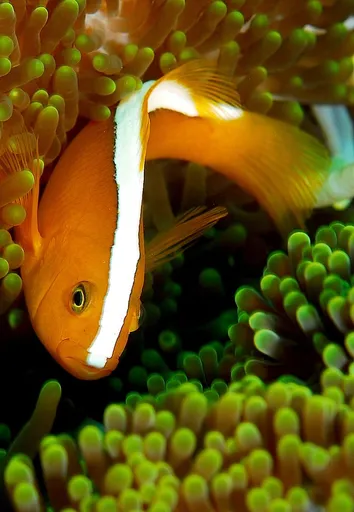 5.5 in (14 cm)30 gal (115 L)75–82°F (24–28°C)
Orange skunk clownfish
Amphiprion sandaracinos
5.5 in (14 cm) · 30 gal (115 L)