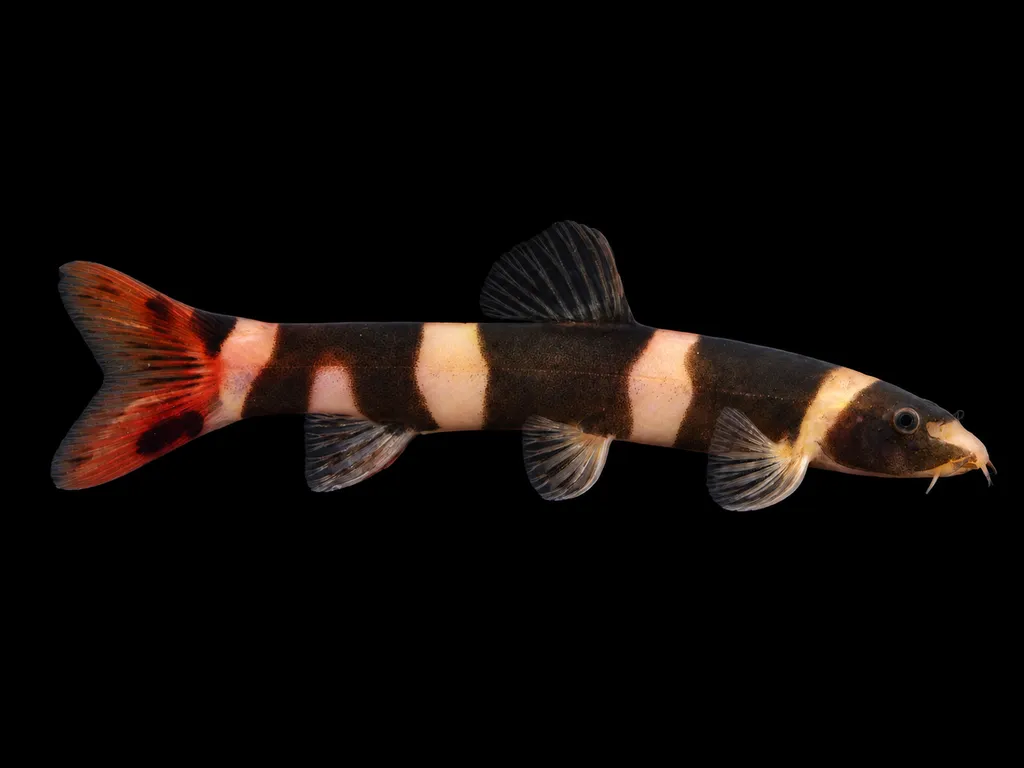
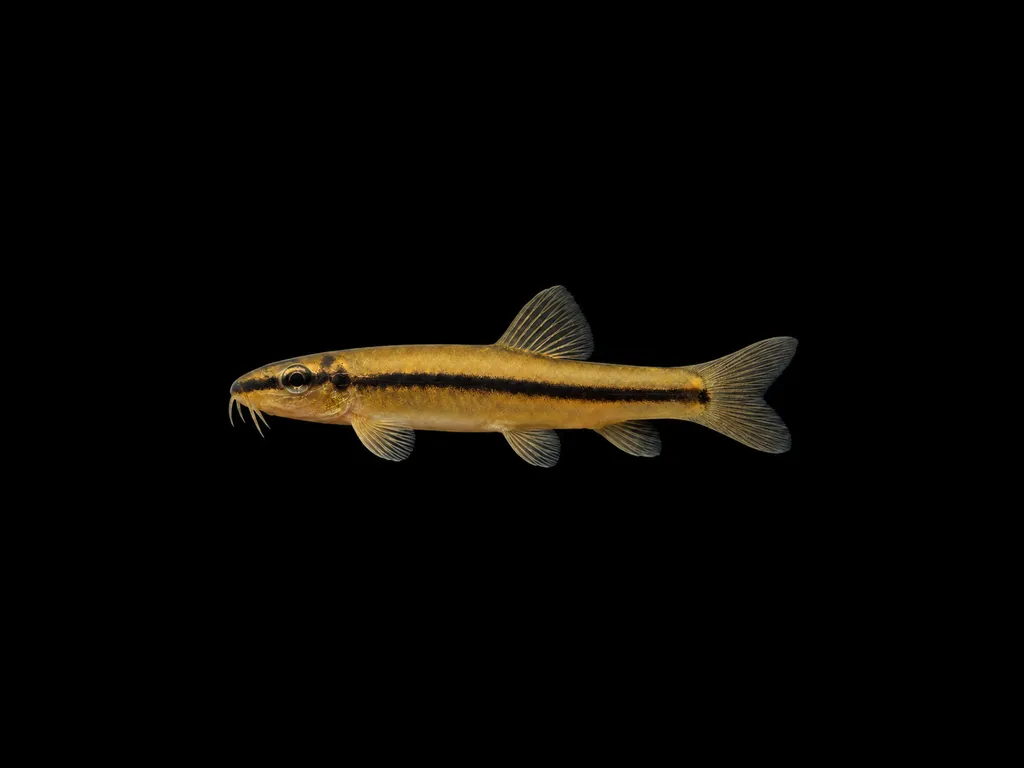
Barito loach
Kapuasia falaris
Also known as Falaris loach
FreshwaterFish
Care at a glance
- Temperature
- 73–81°F
- 23–27°C
- pH
- 5.5–7.0
- Adult size
- 2.6 in
- 6.5 cm
- Minimum tank
- 20 gal
- 75 L
- Temperament
- Peaceful
- Social behavior
- Social
- Swim level
- Bottom
- Difficulty
- Medium
- Breeding
- No record
- Rarity
- Rare
- Family
- Nemacheilidae
- Origin
- Barito basin, Kalimantan, Borneo
Overview
The Barito loach is a peaceful, busy bottom fish that behaves like its stream loach relatives. It is a step up from the easiest fish.
Did you know
The Barito loach was named and described only in 2024. Its scientific paper is younger than most of the aquariums it now lives in. Hobbyists and scientists met it at almost the same moment.
Caring for the Barito loach
Keep the Barito loach in a small group, in a tank of at least 20 gal (75 L). That gives a group room to forage and set up loose feeding stations. Give it a soft bed of fine sand with smooth stones, leaf litter and driftwood, under subdued lighting with gentle current.
It is so new to the hobby that keeper experience is still thin, so copy its wild stream conditions closely. Keep it warm, at 73 to 81°F (23 to 27°C), with a low pH of 5.5 to 7.0. Soft, clean water and tannins from leaves and wood suit it far better than hard, bright conditions.
Feed small sinking foods, frozen bloodworm and daphnia, and make sure they reach the bottom. Keep it with calm, soft-water tank mates that stay off the floor. Nothing is yet recorded about how it breeds.
Good to know
Kapuasia falaris is a stone loach in the family Nemacheilidae, also called the falaris loach. Maurice Kottelat, Tan Heok Hui and Veryl Hasan described it and placed it in the newly erected genus Kapuasia. Its name comes from Greek roots meaning a white patch on the snout, for the pale mark on its nose.
In the wild
The Barito loach lives in sandy forest streams of the Barito basin in South Kalimantan, on Borneo. The water there is soft and slightly acidic, with a blackwater influence.
Weekly picks
Tank mates
The Barito loach is a peaceful, social species that keeps to the bottom. These picks share a community profile with it, are safe together in both directions, and overlap on water type, temperature and pH.
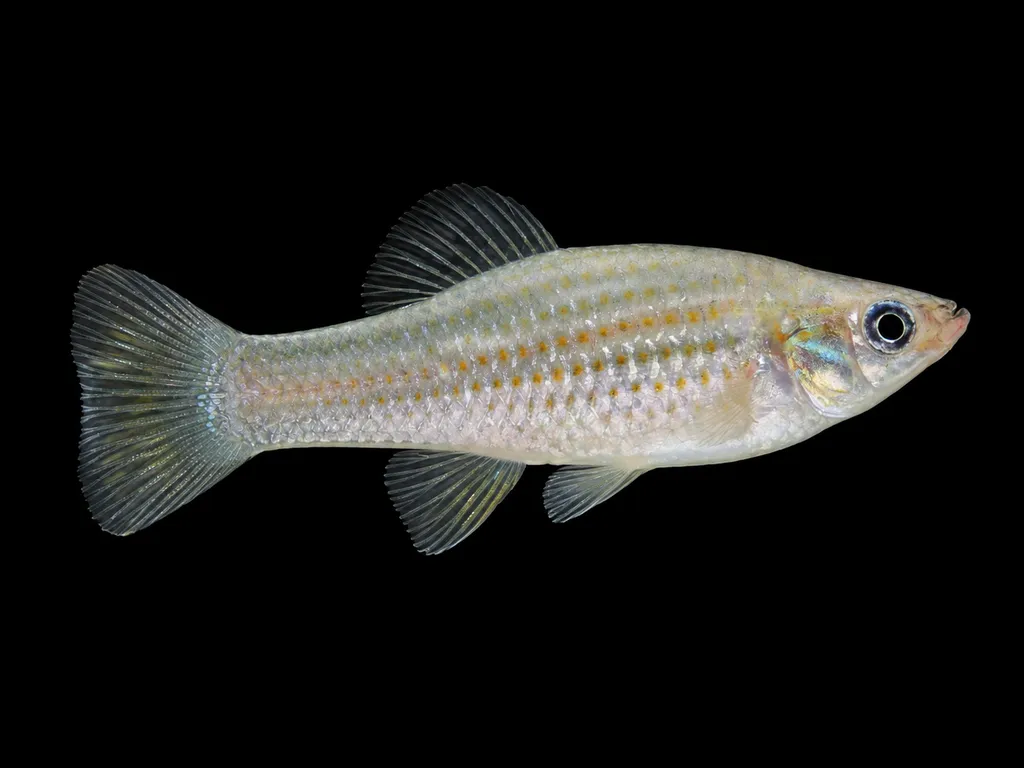
Amazon molly
Poecilia formosa
Freshwater3.5 in (9 cm) · 20 gal (75 L)68–82°F (20–28°C)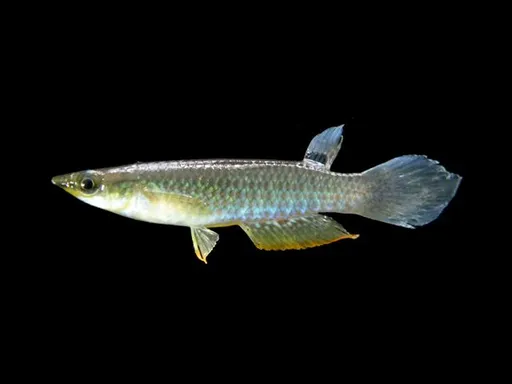
Blue panchax
Aplocheilus panchax
Freshwater3.5 in (9 cm) · 20 gal (75 L)72–82°F (22–28°C)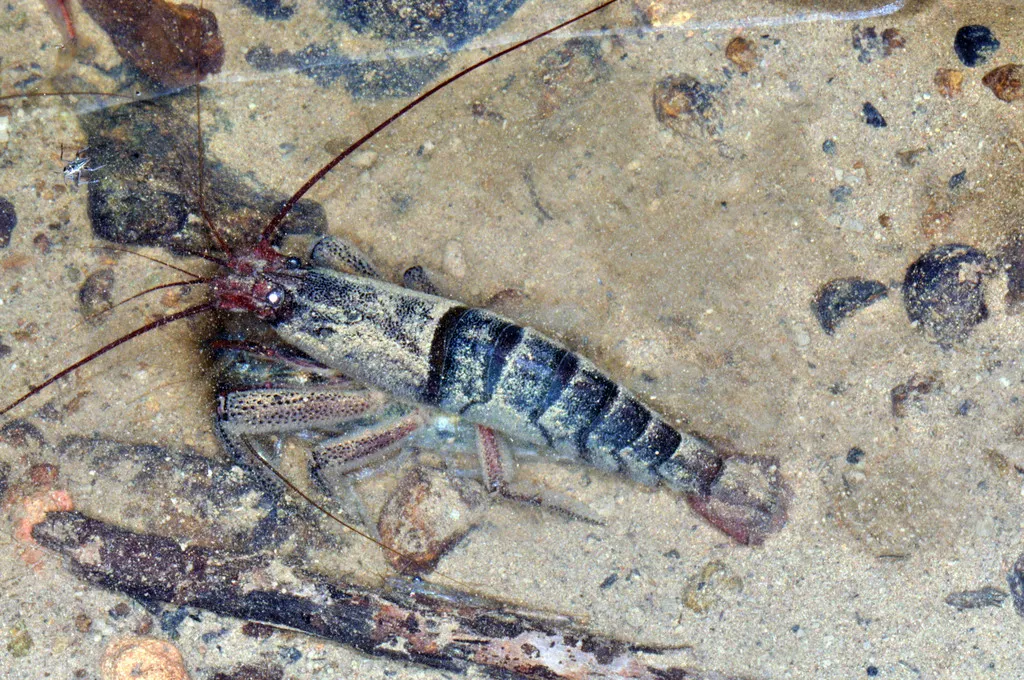
Marble wood shrimp
Atya scabra
Freshwater3.9 in (10 cm) · 20 gal (75 L)73–82°F (23–28°C)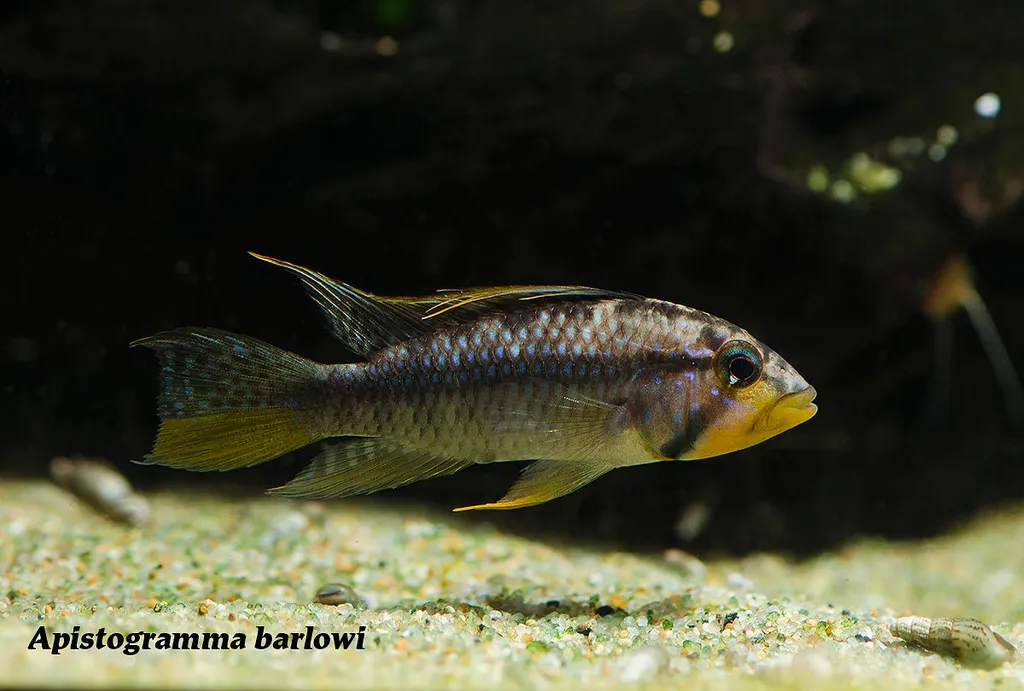
Barlow's dwarf cichlid
Apistogramma barlowi
Freshwater3.1 in (8 cm) · 20 gal (75 L)73–82°F (23–28°C)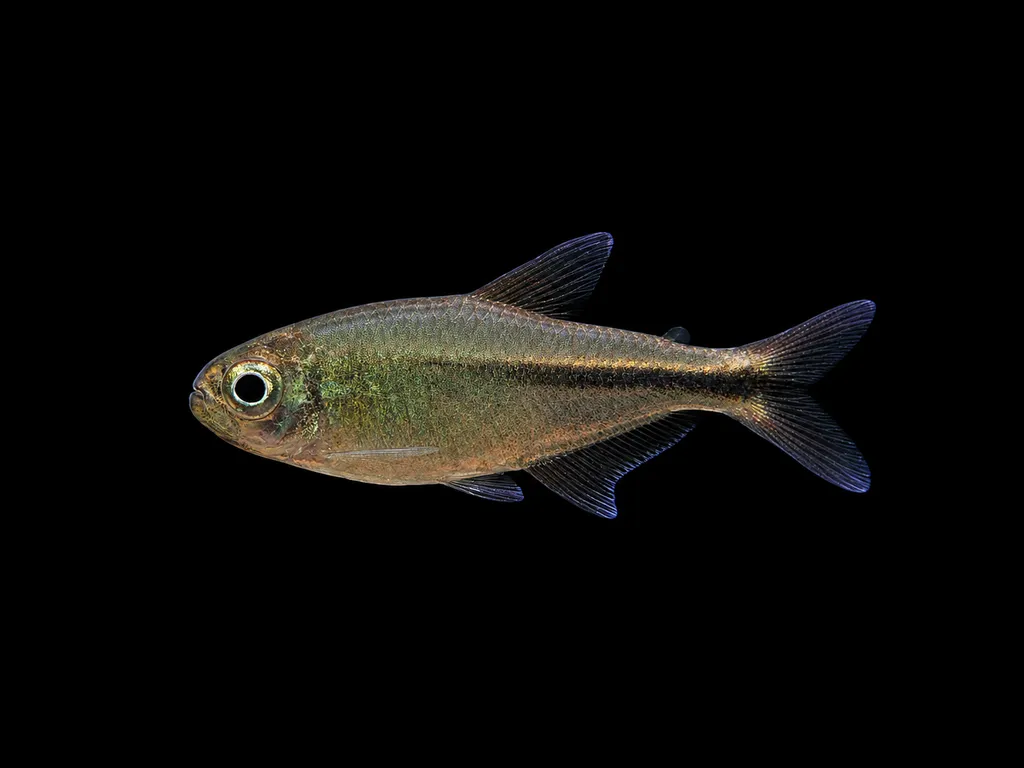
Aurora tetra
Moenkhausia aurora
Freshwater2 in (5.2 cm) · 20 gal (75 L)73–82°F (23–28°C)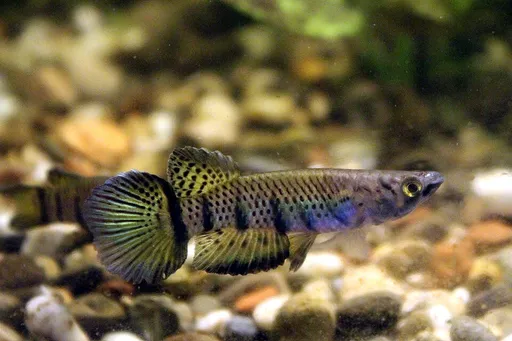
Six-barred panchax
Epiplatys sexfasciatus
Freshwater3.9 in (10 cm) · 20 gal (75 L)72–81°F (22–27°C)
Common questions
What size tank does a Barito loach need?
A Barito loach needs at least 20 gal (75 L). It spends most of its time in the bottom.
What temperature and pH does a Barito loach need?
A Barito loach is comfortable at 73–81°F (23–27°C) with a pH of 5.5–7.0.
What does a Barito loach eat?
A Barito loach eats small sinking foods, frozen bloodworm and daphnia. Make sure the food reaches the bottom, where it forages.
How big does a Barito loach get?
An adult Barito loach reaches about 2.6 in (6.5 cm).
Related species
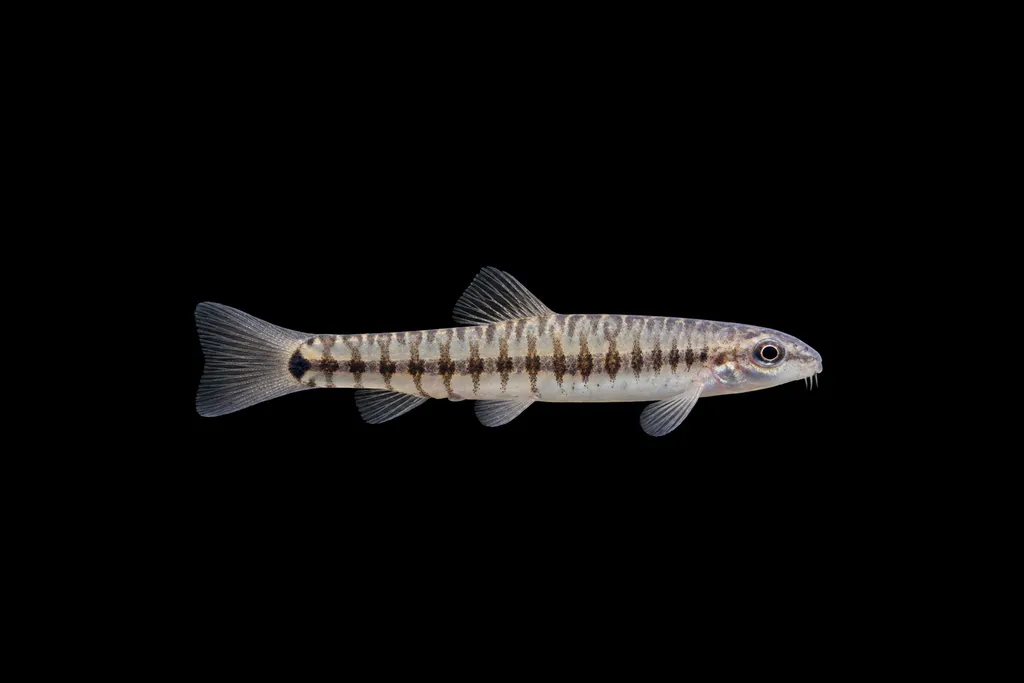
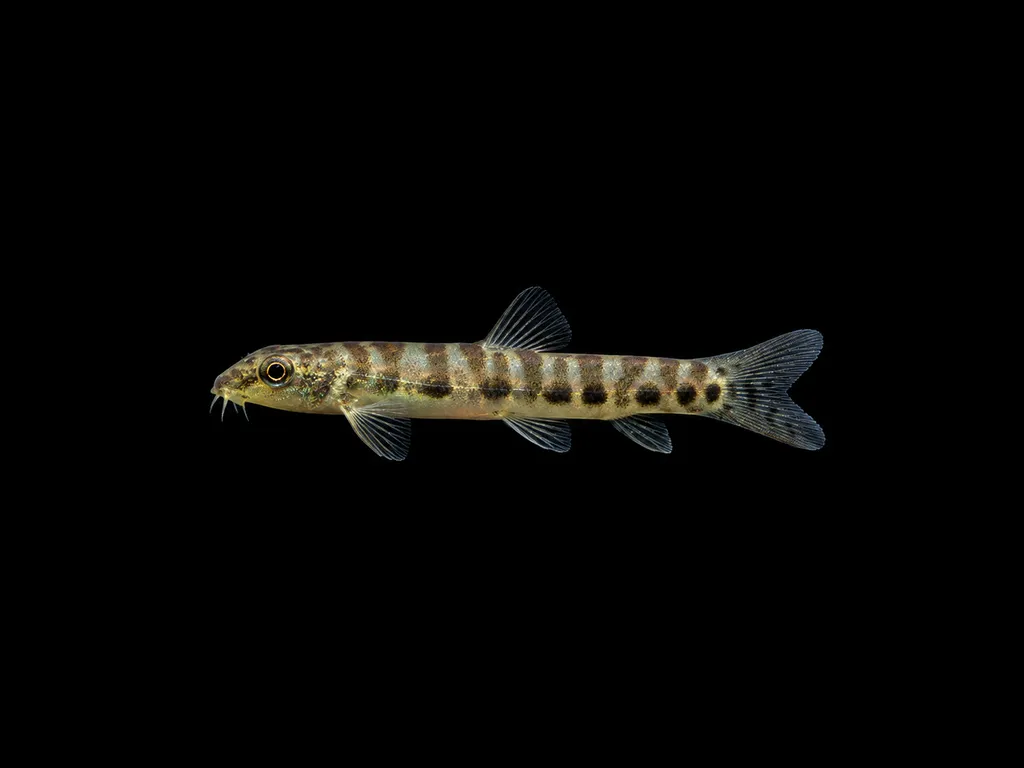 2.4 in (6 cm)20 gal (75 L)68–79°F (20–26°C)
Thuttinjet stone loach
Nemacheilus stigmofasciatus
2.4 in (6 cm) · 20 gal (75 L)
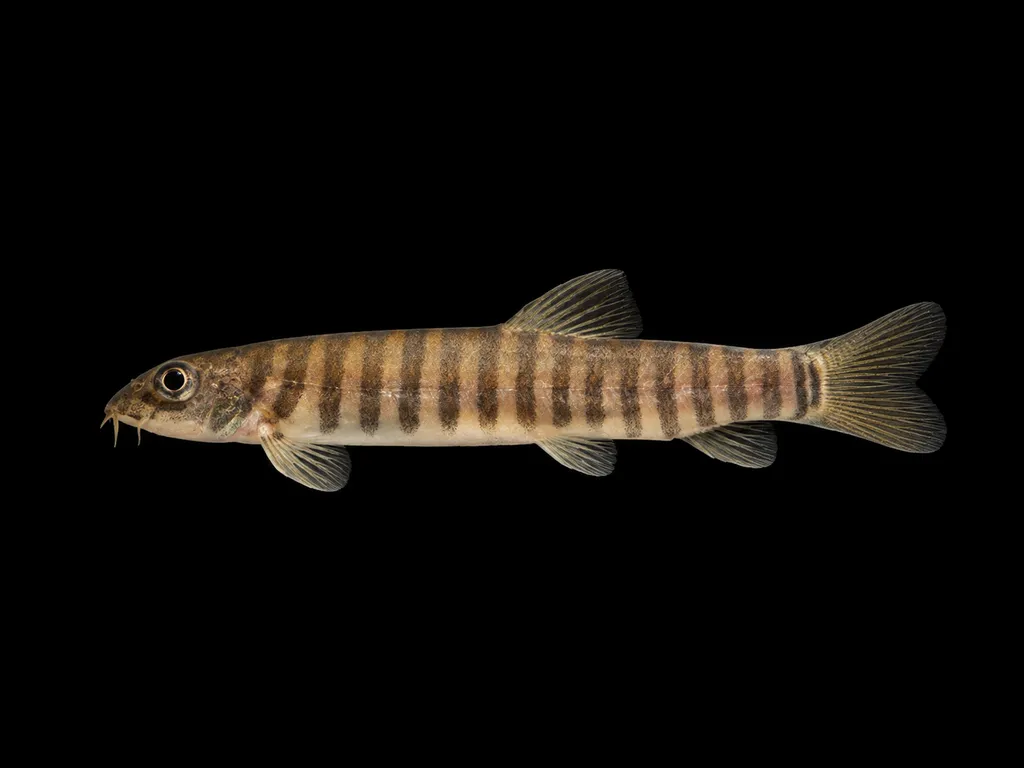
 2 in (5 cm)14 gal (54 L)64–75°F (18–24°C)
Mini zebra loach
Yunnanilus pulcherrimus
2 in (5 cm) · 14 gal (54 L)
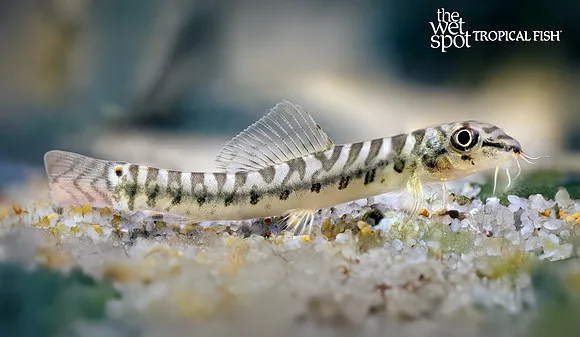
 1.8 in (4.5 cm)14 gal (54 L)68–79°F (20–26°C)
Assam banded loach
Neonoemacheilus assamensis
1.8 in (4.5 cm) · 14 gal (54 L)
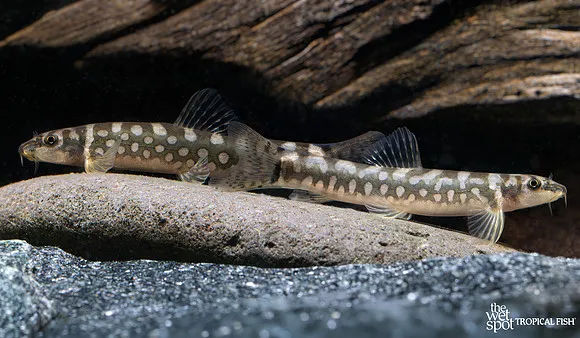
 2.6 in (6.5 cm)20 gal (75 L)68–79°F (20–26°C)
Painted zipper loach
Paracanthocobitis pictilis
2.6 in (6.5 cm) · 20 gal (75 L)
 2.6 in (6.7 cm)20 gal (75 L)68–79°F (20–26°C)
Guenther's zipper loach
Nemacheilus guentheri
2.6 in (6.7 cm) · 20 gal (75 L)
 2.8 in (7 cm)24 gal (90 L)72–81°F (22–27°C)
Twin-spot loach
Nemacheilus binotatus
2.8 in (7 cm) · 24 gal (90 L)