African butterflyfish
Pantodon buchholzi
Also known as African butterfly fish
FreshwaterFish
Care at a glance
- Temperature
- 73–86°F
- 23–30°C
- pH
- 6.0–7.5
- Adult size
- 4.7 in
- 12 cm
- Minimum tank
- 25 gal
- 95 L
- Temperament
- Mostly peaceful
- Social behavior
- Social
- Tankmates
- With caution
- Swim level
- Top
- Difficulty
- Medium
- Breeding
- Hard
- Rarity
- Very rare
- Family
- Pantodontidae
- Origin
- Central Africa
Overview
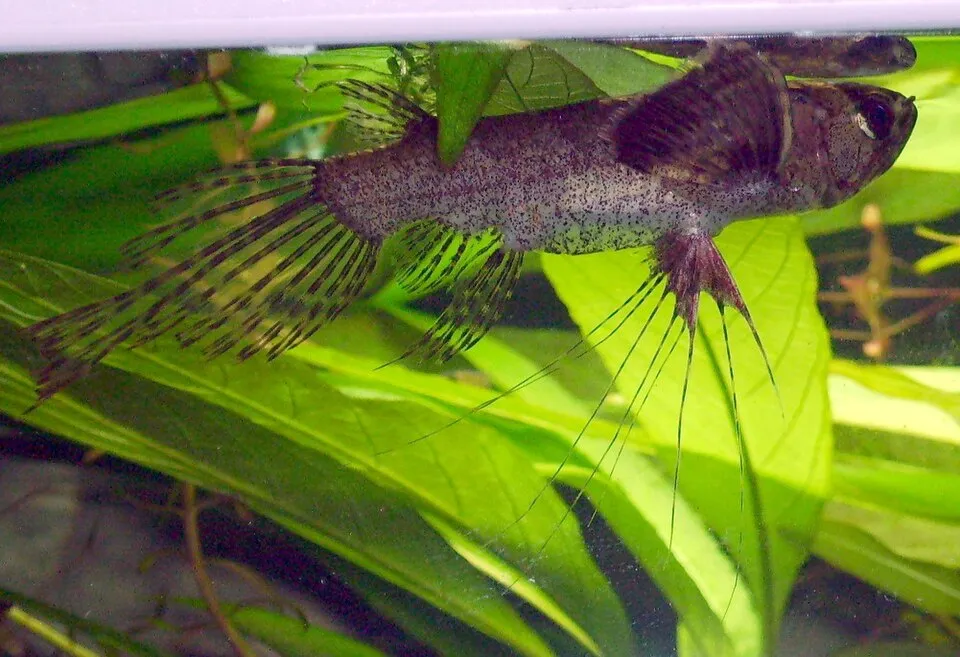
The African butterflyfish sits at the surface and waits for prey, so it needs open water at the top and a tight, gap-free lid because it is a powerful jumper. It is mostly peaceful but will eat any fish small enough to fit in its mouth, so choose tankmates that stay in the middle and lower levels and are too big to swallow. Avoid fin-nippers, which pester its long trailing fins. You can keep a small group in a roomy, well-covered tank, though males can squabble over surface space. Feed floating and live foods such as crickets, mealworms, small feeder insects, and frozen bloodworms, since it rarely takes food off the bottom. Aim for a tank around 95 liters or larger, more if you keep several.
In the wild
In the wild it drifts among floating plants in slow, warm, tannin-stained pools, swamps, and creeks across Central and West Africa. The surface is its whole world, so it likes still water, plenty of floating cover, and dim lighting. Recreate that with a long tank that has lots of surface area, floating plants such as frogbit or water lettuce, and gentle filtration that does not churn the top. Keep the water soft and slightly acidic to neutral, around pH 6 to 7.5, and warm at 23 to 30 C. A snug lid is essential, both to stop jumps and to hold a layer of humid air above the water.
Good to know
The African butterflyfish is the only living member of the family Pantodontidae, an ancient relative of the arowanas and other bonytongues. Adults reach about 12 cm, with broad, wing-like pectoral fins and an upturned mouth built for grabbing prey at the surface. Its skull and swim bladder are adapted to watch the world above the waterline. Breeding is difficult in aquariums. A courting pair releases floating eggs in batches over several sessions, sometimes well over a hundred in total, and the eggs drift at the surface until they hatch.
Did you know
Those broad pectoral fins let the African butterflyfish leap clear of the water and glide a short distance to snatch flying insects or escape danger. For a long time hobbyists believed it could truly fly, and while it does not flap, its gliding leaps across the surface are the reason for its common name.
Common questions
What size tank does an African butterflyfish need?
An African butterflyfish needs at least 25 gal (95 L). It spends most of its time in the top.
What temperature and pH does an African butterflyfish need?
An African butterflyfish is comfortable at 73–86°F (23–30°C) with a pH of 6.0–7.5.
How big does an African butterflyfish get?
An adult African butterflyfish reaches about 4.7 in (12 cm).
Related species
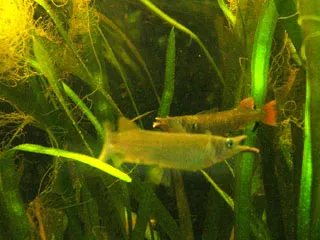 3.5 in (9 cm)29 gal (110 L)75–81°F (24–27°C)
Redfin halfbeak
Nomorhamphus ebrardtii
3.5 in (9 cm) · 29 gal (110 L)
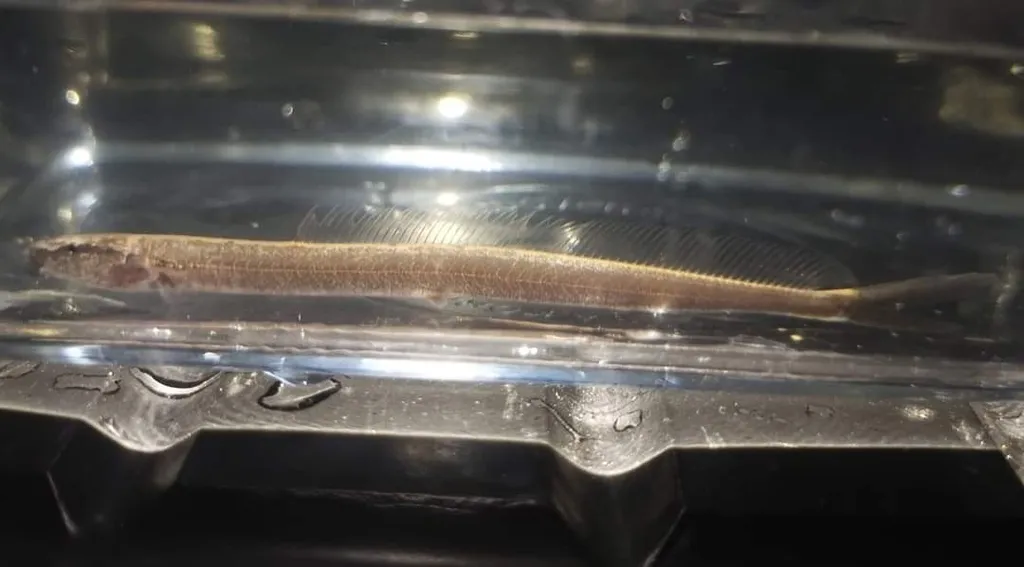 4.7 in (12 cm)46 gal (175 L)73–84°F (23–29°C)
Fork-tailed loach
Vaillantella maassi
4.7 in (12 cm) · 46 gal (175 L)
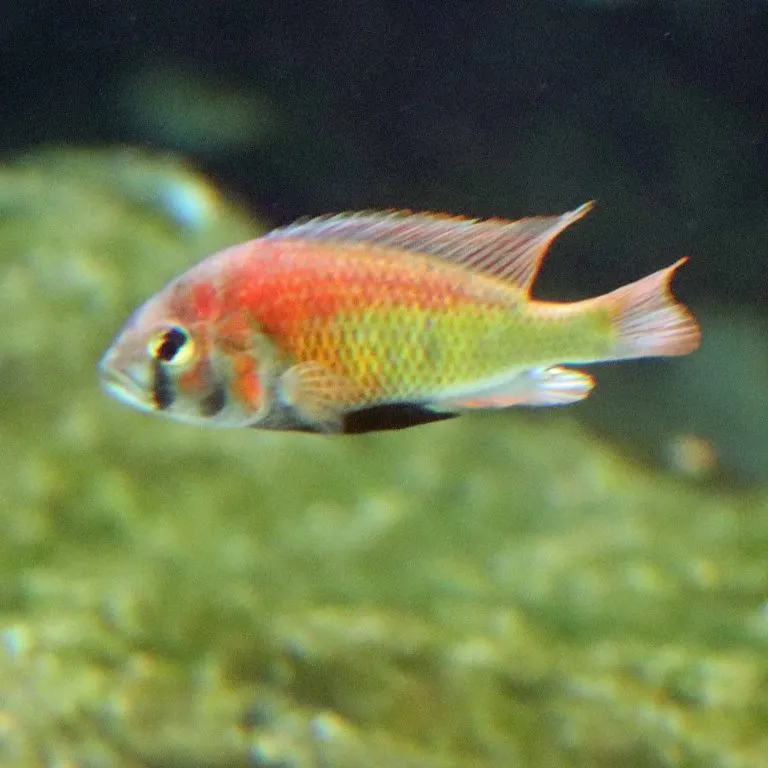 5.1 in (13 cm)30 gal (115 L)73–82°F (23–28°C)
Hippo Point salmon
Ptyochromis sp.
5.1 in (13 cm) · 30 gal (115 L)
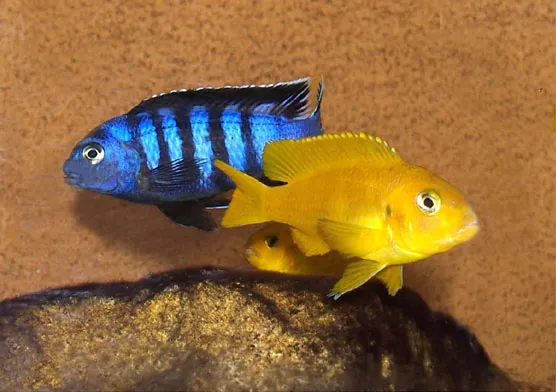 3.9 in (10 cm)42 gal (160 L)73–81°F (23–27°C)
Saulosi mbuna
Chindongo saulosi
3.9 in (10 cm) · 42 gal (160 L)
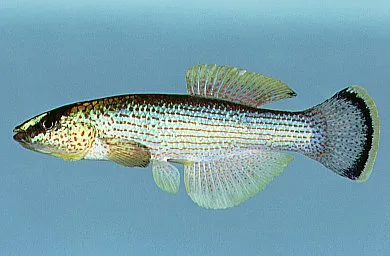 5.9 in (15 cm)37 gal (140 L)59–77°F (15–25°C)
Northern studfish
Fundulus catenatus
5.9 in (15 cm) · 37 gal (140 L)
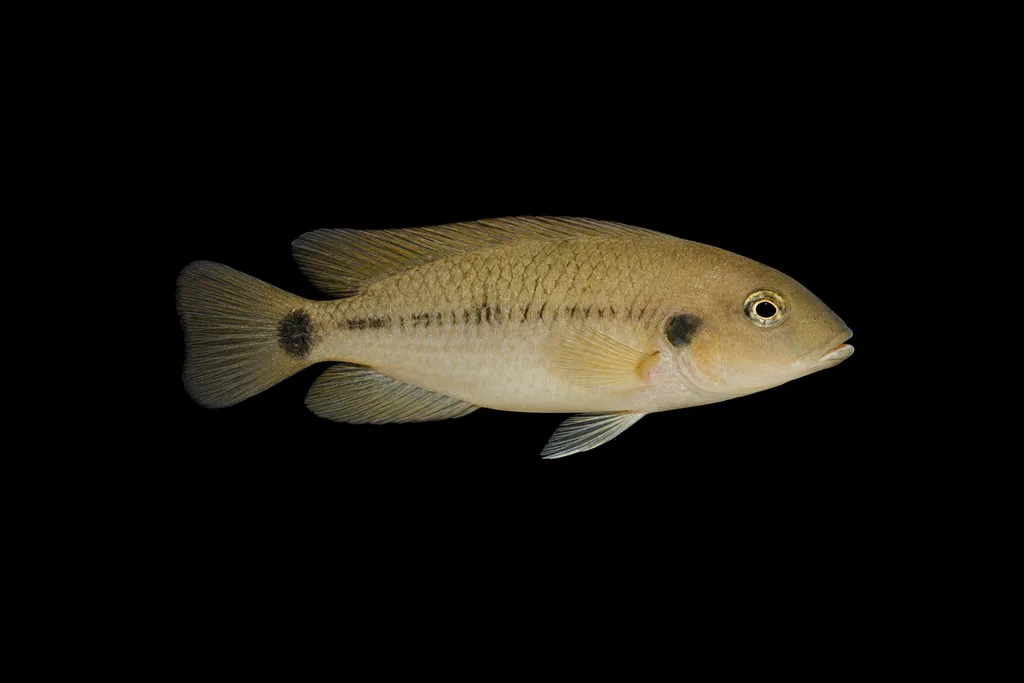 3.7 in (9.5 cm)53 gal (200 L)73–81°F (23–27°C)
Linke's mouthbrooder
Chromidotilapia linkei
3.7 in (9.5 cm) · 53 gal (200 L)