Turbinaria cup coral
Turbinaria
Also known as Cup Coral, Pagoda Coral, Scroll Coral, Vase Coral
SaltwaterCoral
Care at a glance
- Temperature
- 75–81°F
- 24–27°C
- pH
- 8.1–8.4
- Adult size
- 13.8 in
- 35 cm
- Minimum tank
- 20 gal
- 75 L
- Temperament
- Mostly peaceful
- Social behavior
- Solitary
- Swim level
- Bottom
- Difficulty
- Beginner
- Breeding
- Medium
- Rarity
- Common
- Reef safe
- Reef safe
- Family
- Dendrophylliidae
- Origin
- Indo-Pacific reefs and the Red Sea, from East Africa to Japan, the Great Barrier Reef and Tonga
Overview
A tough, adaptable coral that tolerates a wider swing of light and flow than most LPS or SPS, which is part of why it is often recommended as a first plating coral. It carries mild sweeper tentacles that come out at night, so give neighboring corals a few inches of clearance rather than crowding it against them. It gets most of its energy from its zooxanthellae and does not need to be fed, though occasional offerings of baby brine shrimp or other small zooplankton can help it grow faster. Propagated by cutting a piece of skeleton, which is a fairly straightforward frag job.
In the wild
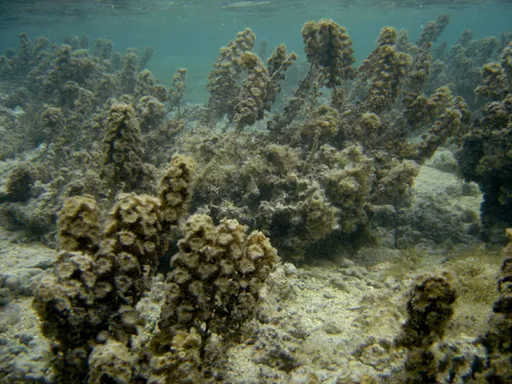
Turbinaria grows on reef flats and slopes across the Indo-Pacific and the Red Sea, from East Africa to Japan, the Great Barrier Reef and Tonga, taking the shape of cups, plates, tiers or tightly whorled scrolls depending on the light and current it grows in. In the aquarium it wants fairly bright light, roughly 150 to 250 PAR, and moderate to strong, ideally turbulent flow that keeps its folded surfaces free of detritus. Give it a mid-tank spot rather than the brightest shelf reserved for SPS, at 24 to 27 C and pH 8.1 to 8.4, and expect a colony to slowly change shape to suit the light and flow it settles into.
Good to know
Turbinaria is a large polyp stony coral in the family Dendrophylliidae, a family made up mostly of non-photosynthetic corals, which makes it a close relative of sun coral despite living the opposite lifestyle. It builds a calcified skeleton in cup, plate or scroll shapes, with the growth form driven largely by light and flow rather than fixed by species. Most Turbinaria close their polyps by day and open more fully after dark to feed.
Did you know
A single Turbinaria colony can take on very different shapes depending on where it grows, opening into a flat plate in calm water, cupping upward in brighter spots, or curling into a tight whorled scroll under strong current, all from the same genus and sometimes the same species.
Common questions
What size tank does a Turbinaria cup coral need?
A Turbinaria cup coral needs at least 20 gal (75 L). It spends most of its time in the bottom.
What temperature and pH does a Turbinaria cup coral need?
A Turbinaria cup coral is comfortable at 75–81°F (24–27°C) with a pH of 8.1–8.4.
How big does a Turbinaria cup coral get?
An adult Turbinaria cup coral reaches about 13.8 in (35 cm).
Related species
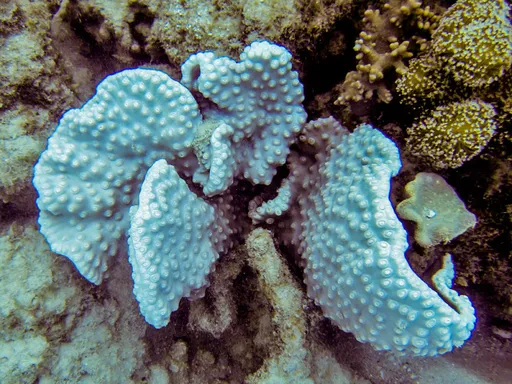 11.8 in (30 cm)40 gal (150 L)75–81°F (24–27°C)
Pagoda cup coral
Turbinaria peltata
11.8 in (30 cm) · 40 gal (150 L)
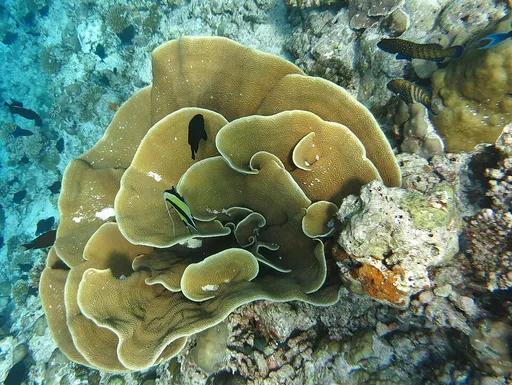 11.8 in (30 cm)40 gal (150 L)75–81°F (24–27°C)
Ruffled disc coral
Turbinaria mesenterina
11.8 in (30 cm) · 40 gal (150 L)
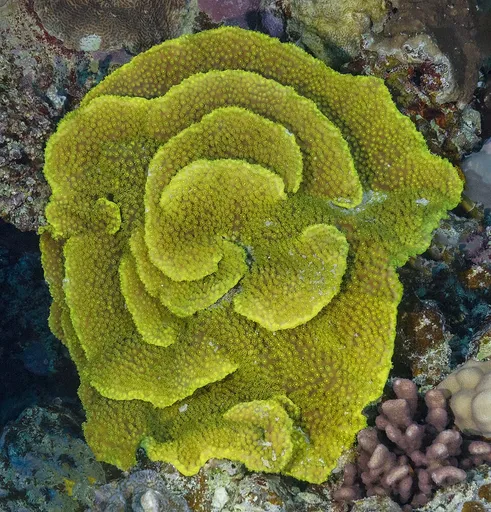 11.8 in (30 cm)40 gal (150 L)75–81°F (24–27°C)
Yellow scroll coral
Turbinaria reniformis
11.8 in (30 cm) · 40 gal (150 L)
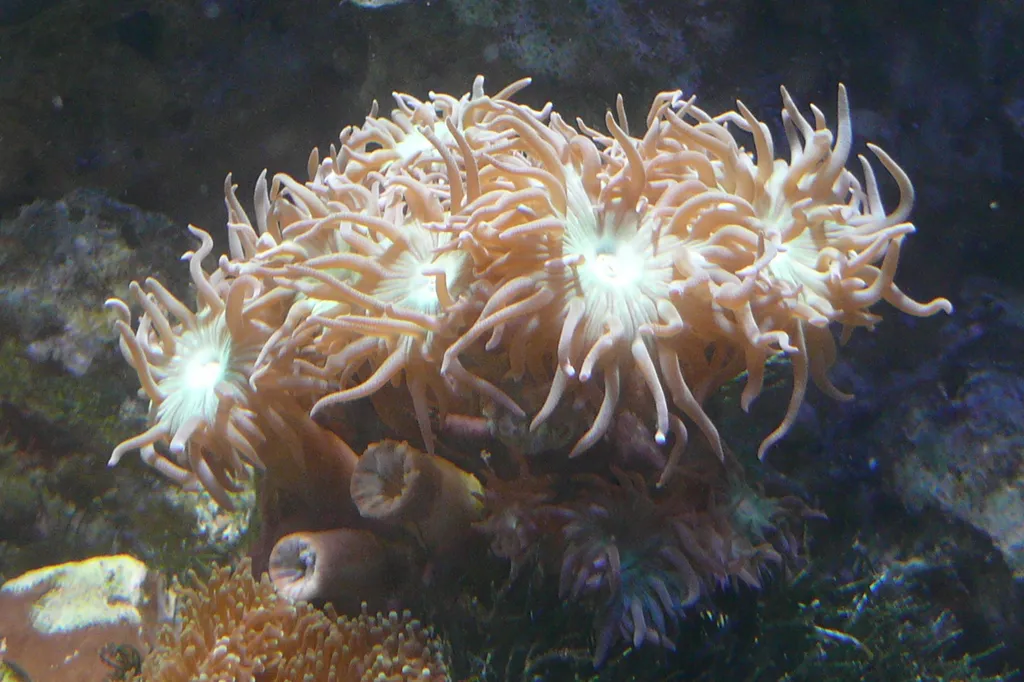 7.9 in (20 cm)11 gal (40 L)75–81°F (24–27°C)
Duncan coral
Duncanopsammia axifuga
7.9 in (20 cm) · 11 gal (40 L)
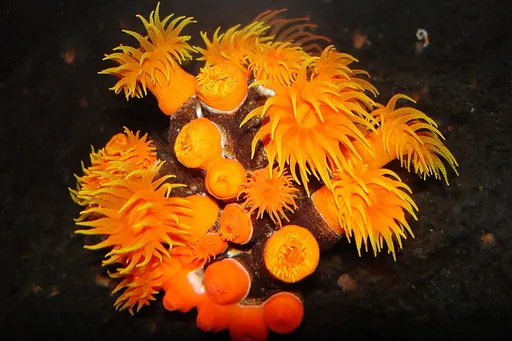 7.9 in (20 cm)20 gal (75 L)75–81°F (24–27°C)
Sun coral
Tubastraea
7.9 in (20 cm) · 20 gal (75 L)
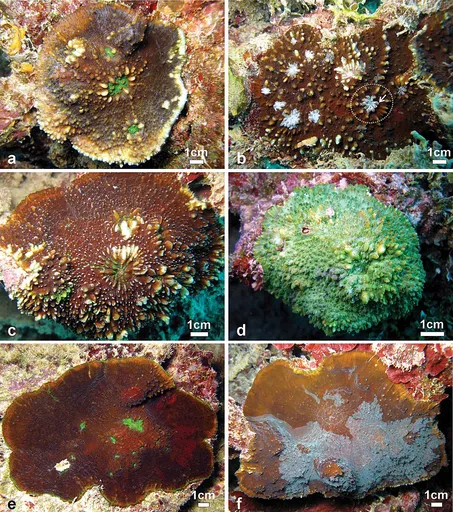 13.8 in (35 cm)20 gal (75 L)75–81°F (24–27°C)
Chalice coral
Echinophyllia
13.8 in (35 cm) · 20 gal (75 L)