Sun coral
Tubastraea
Also known as Sun Polyps, Orange Cup Coral
SaltwaterCoral
Care at a glance
- Temperature
- 75–81°F
- 24–27°C
- pH
- 8.1–8.4
- Adult size
- 7.9 in
- 20 cm
- Minimum tank
- 20 gal
- 75 L
- Temperament
- Peaceful
- Social behavior
- Solitary
- Swim level
- Bottom
- Difficulty
- Difficult
- Breeding
- Hard
- Rarity
- Common
- Reef safe
- Reef safe
- Family
- Dendrophylliidae
- Origin
- Indo-Pacific reefs, typically on shaded overhangs, cave walls and deeper rock faces; several species have also become an invasive fouling organism on oil platforms and wrecks in the tropical Atlantic, including Brazil
Overview
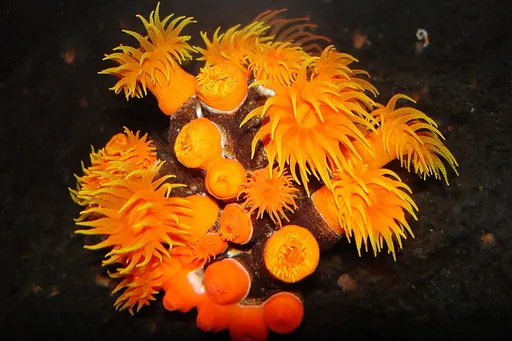
Sun coral needs no light at all, but it does need to be fed, and that is the entire challenge of keeping it. Every polyp has to be target fed, ideally most nights, with small meaty foods like baby brine shrimp, mysis or chopped seafood puffed onto each open polyp with a turkey baster or similar tool; a handful of feedings a week is a bare minimum, and colonies fed close to daily tend to do best. Skipped meals show up over weeks as shrinking, pale polyps and slow tissue loss, so this is not a coral to keep on the same casual feeding schedule as a photosynthetic LPS. It is not aggressive toward other corals and can sit close to peaceful neighbors, but the heavy, frequent feeding it needs raises nutrients fast, so strong skimming and good water changes matter more here than with almost any other coral. New heads bud slowly from the base of established polyps rather than through conventional fragging.
In the wild
Tubastraea grows on shaded overhangs, cave walls and deeper rock faces on Indo-Pacific reefs, tucked out of direct sun where its bright orange polyps stand out against the dark. It has no zooxanthellae, so light is not a requirement at all, and it does perfectly well under low light or no light, which is why it belongs in a shaded cave, overhang or the dimmer lower part of the tank rather than under strong reef lighting. It likes low to moderate flow, and many keepers place it a few inches below a powerhead so the current sweeps food past its polyps once the lights are down. Keep temperature 24 to 27 C and pH 8.1 to 8.4, and plan its spot around easy access for feeding rather than around light.
Good to know
Tubastraea is a large polyp stony coral in the family Dendrophylliidae, the same family as Turbinaria, but unlike its photosynthetic relative it is entirely non-photosynthetic, or azooxanthellate, and gets no nutrition from light at all. Its bright orange or yellow color comes from pigments rather than symbiotic algae, and its polyps stay closed through the day, opening mainly after dark to catch food drifting past. Several Tubastraea species have become one of the most successful invasive corals on record, spreading along the Brazilian coast on oil platforms, ship hulls and wrecks after being introduced from their native Indo-Pacific range.
Did you know
A well-fed sun coral colony will reach out and grab food several times its own polyp size, and public aquariums sometimes favor it specifically because a display cave of glowing orange polyps needs no special lighting to thrive, only a keeper willing to feed it by hand night after night.
Common questions
What size tank does a Sun coral need?
A Sun coral needs at least 20 gal (75 L). It spends most of its time in the bottom.
What temperature and pH does a Sun coral need?
A Sun coral is comfortable at 75–81°F (24–27°C) with a pH of 8.1–8.4.
How big does a Sun coral get?
An adult Sun coral reaches about 7.9 in (20 cm).
Related species
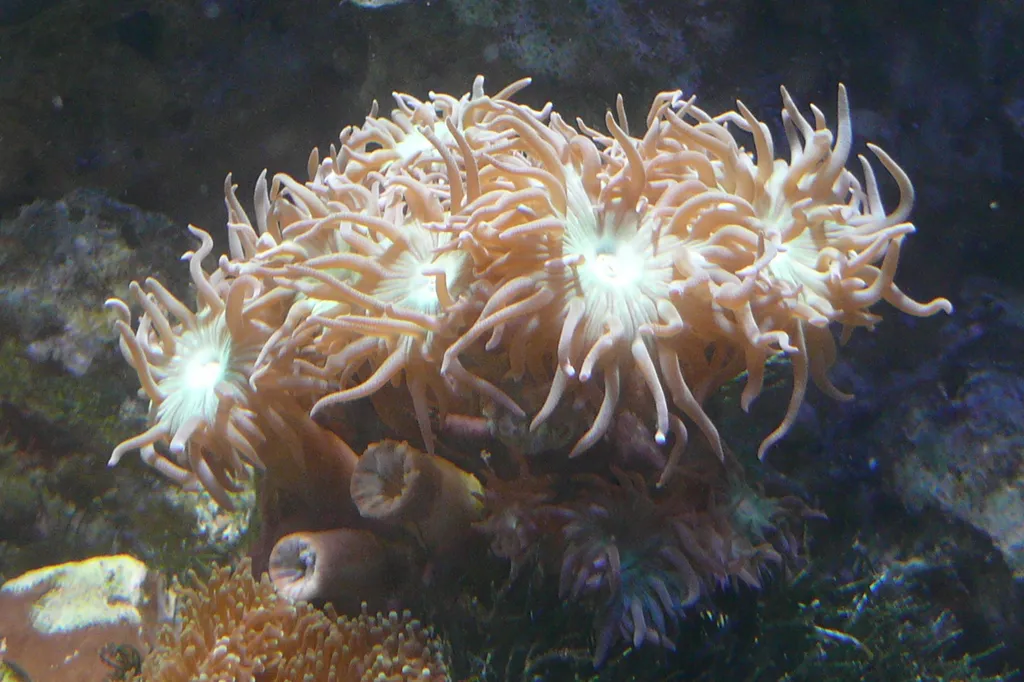 7.9 in (20 cm)11 gal (40 L)75–81°F (24–27°C)
Duncan coral
Duncanopsammia axifuga
7.9 in (20 cm) · 11 gal (40 L)
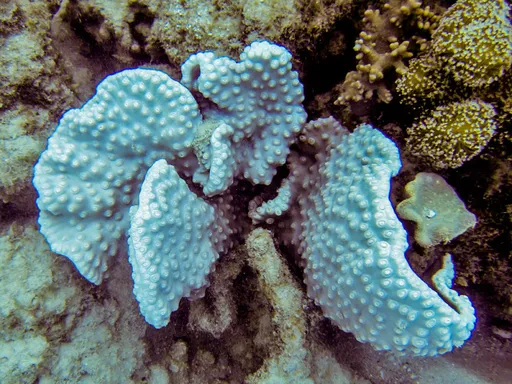 11.8 in (30 cm)40 gal (150 L)75–81°F (24–27°C)
Pagoda cup coral
Turbinaria peltata
11.8 in (30 cm) · 40 gal (150 L)
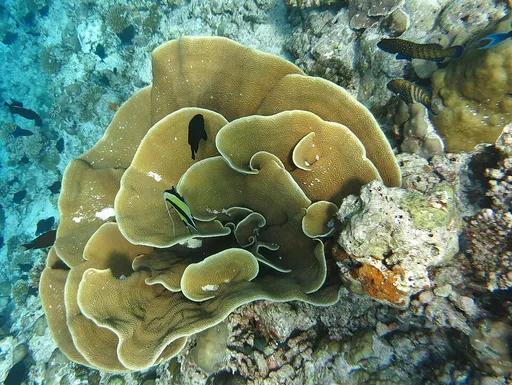 11.8 in (30 cm)40 gal (150 L)75–81°F (24–27°C)
Ruffled disc coral
Turbinaria mesenterina
11.8 in (30 cm) · 40 gal (150 L)
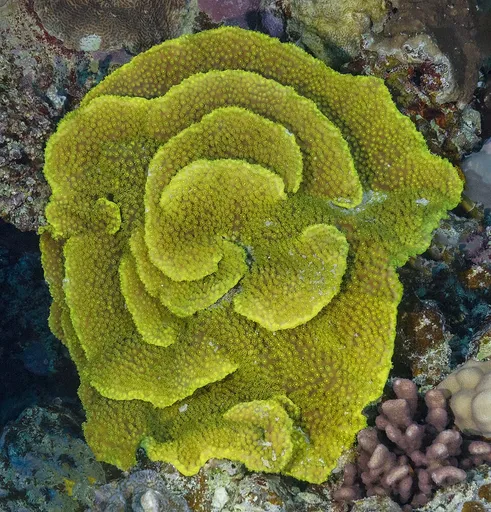 11.8 in (30 cm)40 gal (150 L)75–81°F (24–27°C)
Yellow scroll coral
Turbinaria reniformis
11.8 in (30 cm) · 40 gal (150 L)
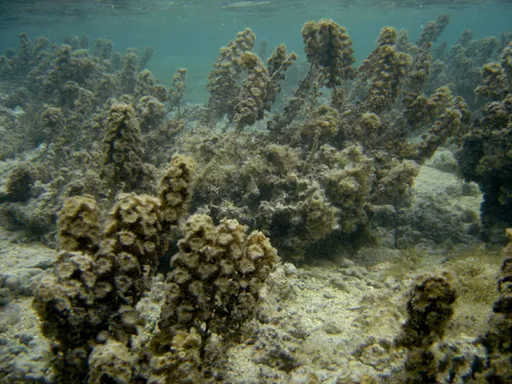 13.8 in (35 cm)20 gal (75 L)75–81°F (24–27°C)
Turbinaria cup coral
Turbinaria
13.8 in (35 cm) · 20 gal (75 L)
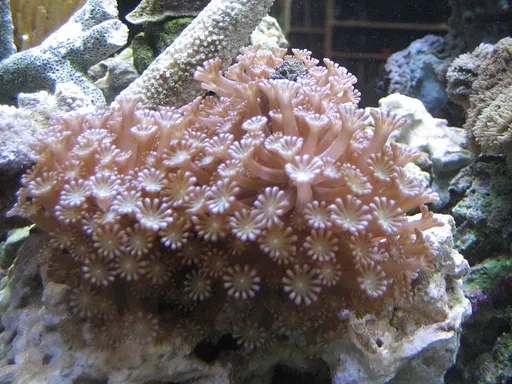 7.9 in (20 cm)11 gal (40 L)75–81°F (24–27°C)
Alveopora coral
Alveopora
7.9 in (20 cm) · 11 gal (40 L)