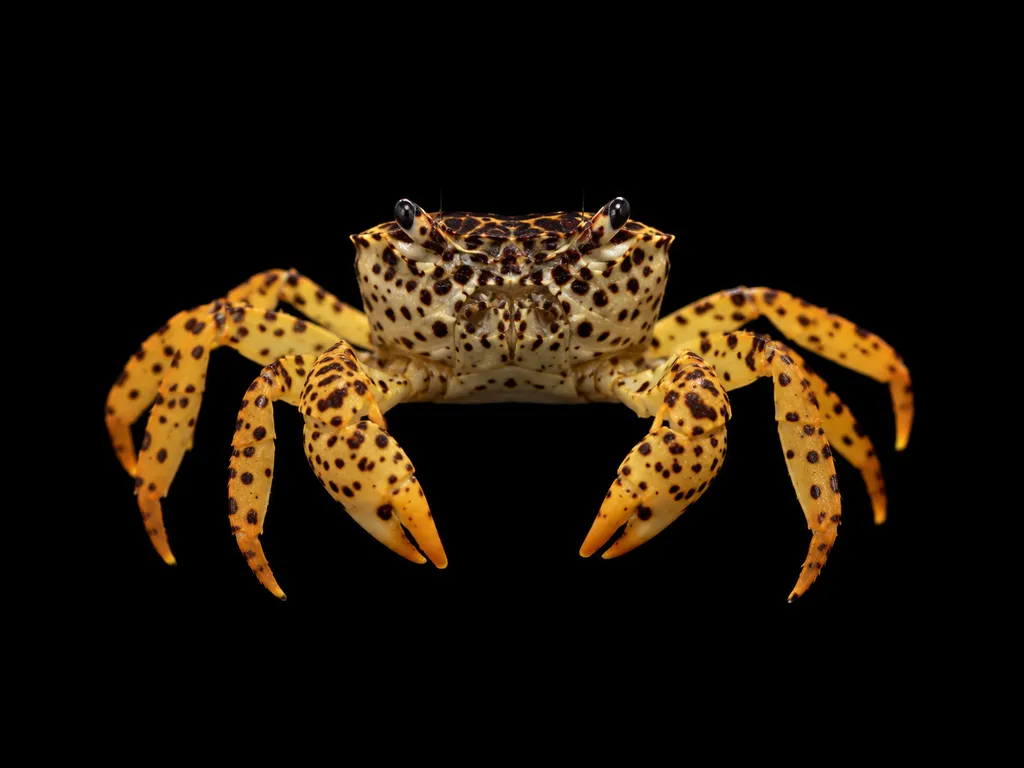
Sulawesi fine spotted crab
Parathelphusa pallida
Also known as Fine spotted crab
FreshwaterCrab
Care at a glance
- Temperature
- 75–84°F
- 24–29°C
- pH
- 7.5–8.5
- Adult size
- 1.6 in
- 4 cm
- Minimum tank
- 16 gal
- 60 L
- Temperament
- Mostly peaceful
- Social behavior
- Solitary
- Own kind
- One male per tank
- Tankmates
- With caution
- Swim level
- Bottom
- Difficulty
- Medium
- Breeding
- Hard
- Rarity
- Very rare
- Family
- Gecarcinucidae
- Origin
- Central and South Sulawesi, the Malili lakes to Lake Poso
Overview
Expect the same habits as the panther crab, its larger cousin from the same lakes: a bottom dweller that hides in its cave by day and patrols at night, territorial with its own kind. Keep one, or a male with one or two females in a big, well structured tank, because males fight. It eats anything it can hold, so dwarf shrimp, snails, and fish that sleep on the bottom are food, while fast fish in the upper water are usually left alone. Feed sinking pellets, frozen bloodworm, blanched vegetables, and a little fish or shrimp meat, with cuttlebone in the tank for the molt.
In the wild
The Sulawesi fine spotted crab is a stream crab of central and southern Sulawesi, collected in the cold tributaries feeding Lake Towuti, small rivers running into Lake Matano, the Balambano and Larona rivers near Malili, and up to Lake Poso. It is fully aquatic and needs no land, just a tight lid, because it climbs. Set up a tank of at least 60 liters with sand, piles of rock with caves, and good flow and oxygen, and run it warm and hard like a Sulawesi shrimp tank at 24 to 29 C and pH 7.5 to 8.5. Clean water matters more than plants, which it will dig up anyway.
Good to know
Parathelphusa pallida is a freshwater crab in the family Gecarcinucidae, described by Schenkel in 1902 as a pale variety of Parathelphusa celebensis from the Kalaena tributaries and treated as a species in its own right by Bott in 1970 and by Chia and Ng in their 2006 revision of the Sulawesi crabs. The lectotype male is about 2.4 cm across, and the crabs sold in the trade run to around 4 cm, but no firm maximum is published. It belongs to a knot of seven look alike species told apart mostly by the male gonopods and the swelling of the carapace. Like other freshwater crabs it develops directly, releasing finished young instead of larvae. The IUCN lists it as Least Concern, with reports of declining numbers.
Did you know
The type specimen, a male 2.4 cm across collected in 1901 by the Sarasin cousins on their Sulawesi expedition, still sits in the Basel museum. It took until 2006 for Chia and Ng to settle that the pale crab from the Kalaena tributaries was a species of its own and not just a washed out Parathelphusa celebensis.
Common questions
What size tank does a Sulawesi fine spotted crab need?
A Sulawesi fine spotted crab needs at least 16 gal (60 L). It spends most of its time in the bottom.
What temperature and pH does a Sulawesi fine spotted crab need?
A Sulawesi fine spotted crab is comfortable at 75–84°F (24–29°C) with a pH of 7.5–8.5.
How big does a Sulawesi fine spotted crab get?
An adult Sulawesi fine spotted crab reaches about 1.6 in (4 cm).
Related species
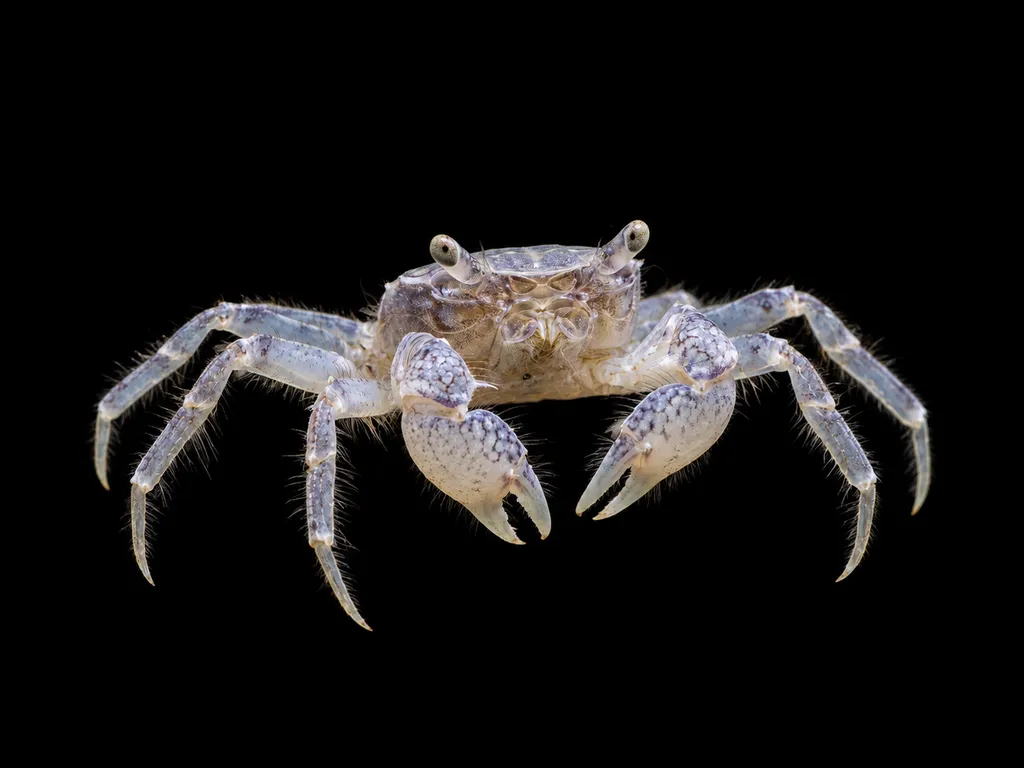 1.2 in (3 cm)11 gal (40 L)72–82°F (22–28°C)
Thai dwarf rock crab
Siamthelphusa sp.
1.2 in (3 cm) · 11 gal (40 L)
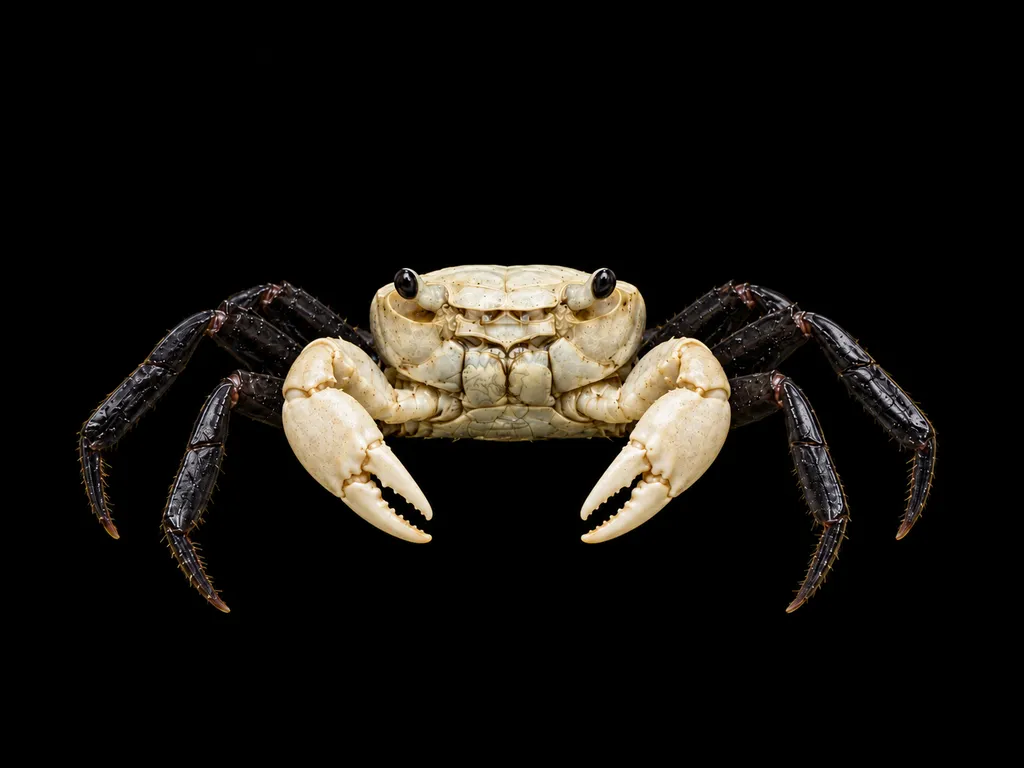 0.6 in (1.5 cm)16 gal (60 L)72–79°F (22–26°C)
Panda crab
Lepidothelphusa cognettii
0.6 in (1.5 cm) · 16 gal (60 L)
- 0.6 in (1.5 cm)11 gal (40 L)72–79°F (22–26°C)
Tricolor Borneo crab
Lepidothelphusa menneri
0.6 in (1.5 cm) · 11 gal (40 L)
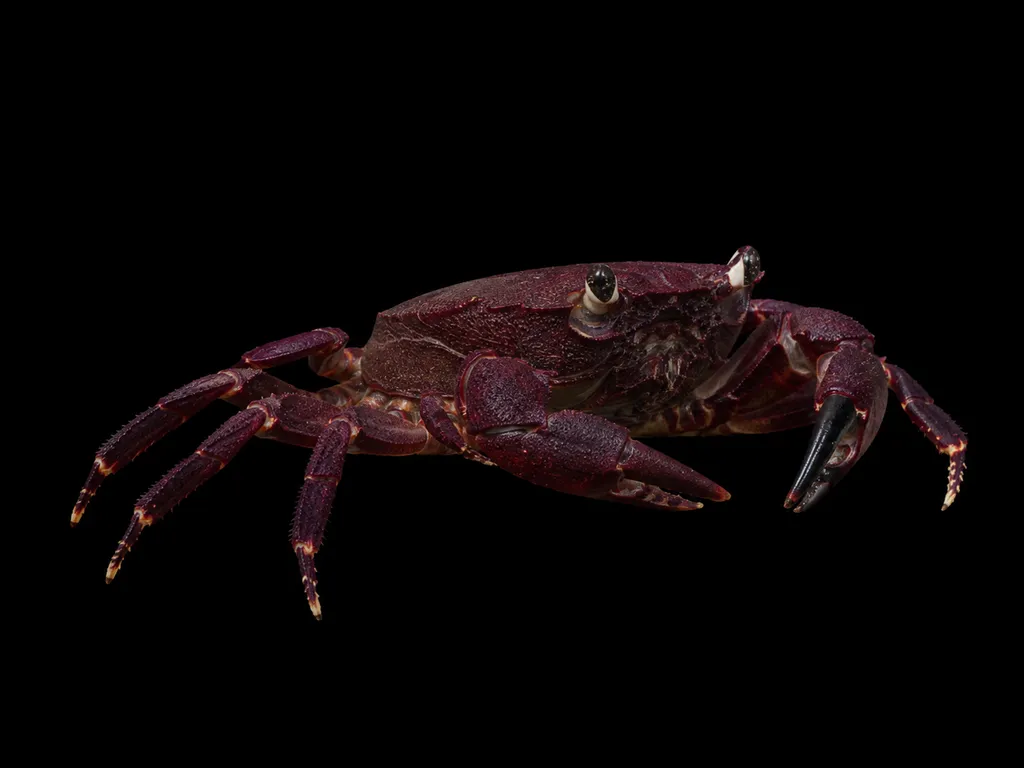 4.3 in (11 cm)22 gal (85 L)75–86°F (24–30°C)
Matano crab
Syntripsa matannensis
4.3 in (11 cm) · 22 gal (85 L)
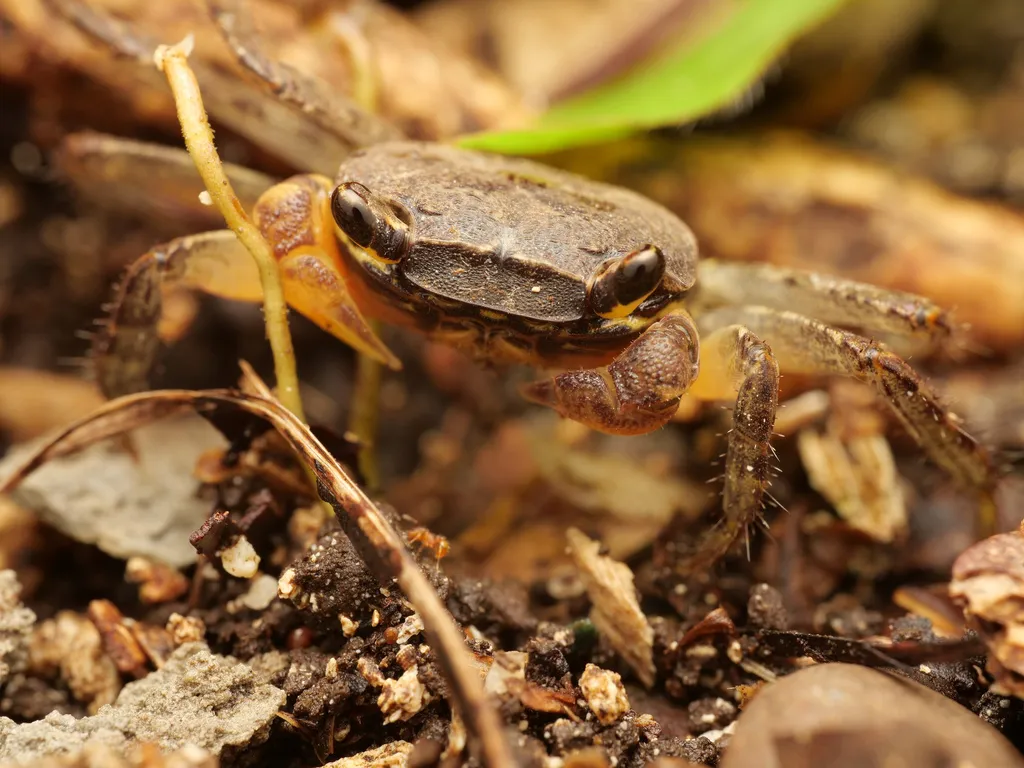 1.6 in (4 cm)11 gal (40 L)75–82°F (24–28°C)
Red apple crab
Metasesarma aubryi
1.6 in (4 cm) · 11 gal (40 L)
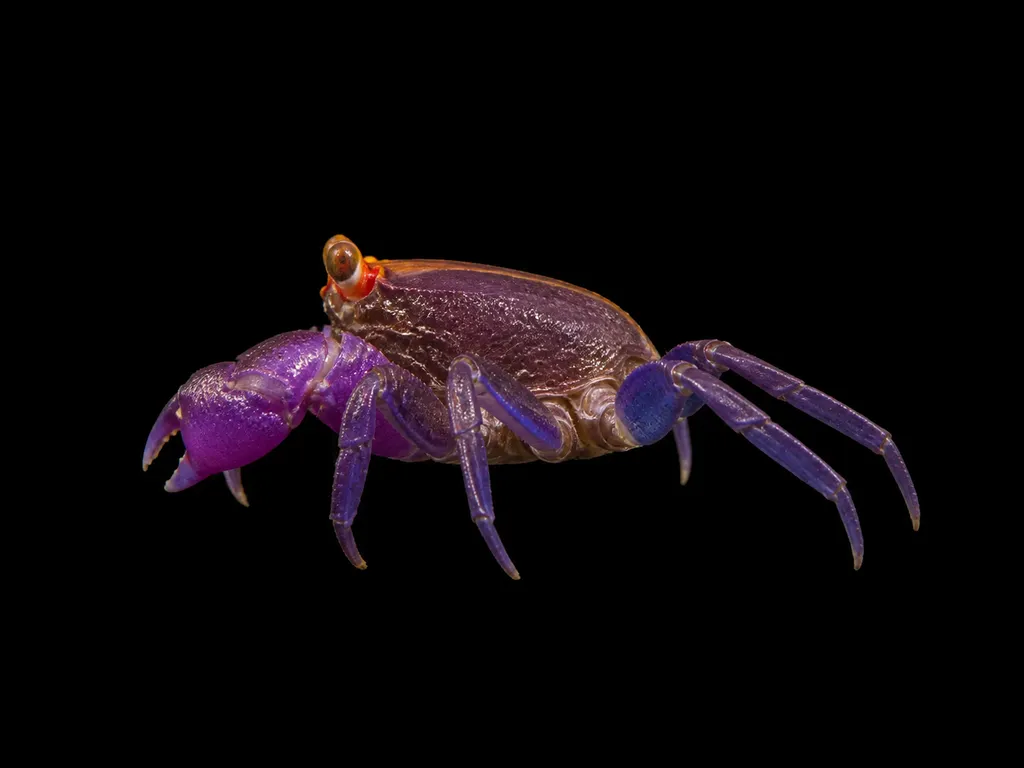 2 in (5 cm)10 gal (38 L)75–82°F (24–28°C)
Blue-leg vampire crab
Geosesarma bicolor
2 in (5 cm) · 10 gal (38 L)