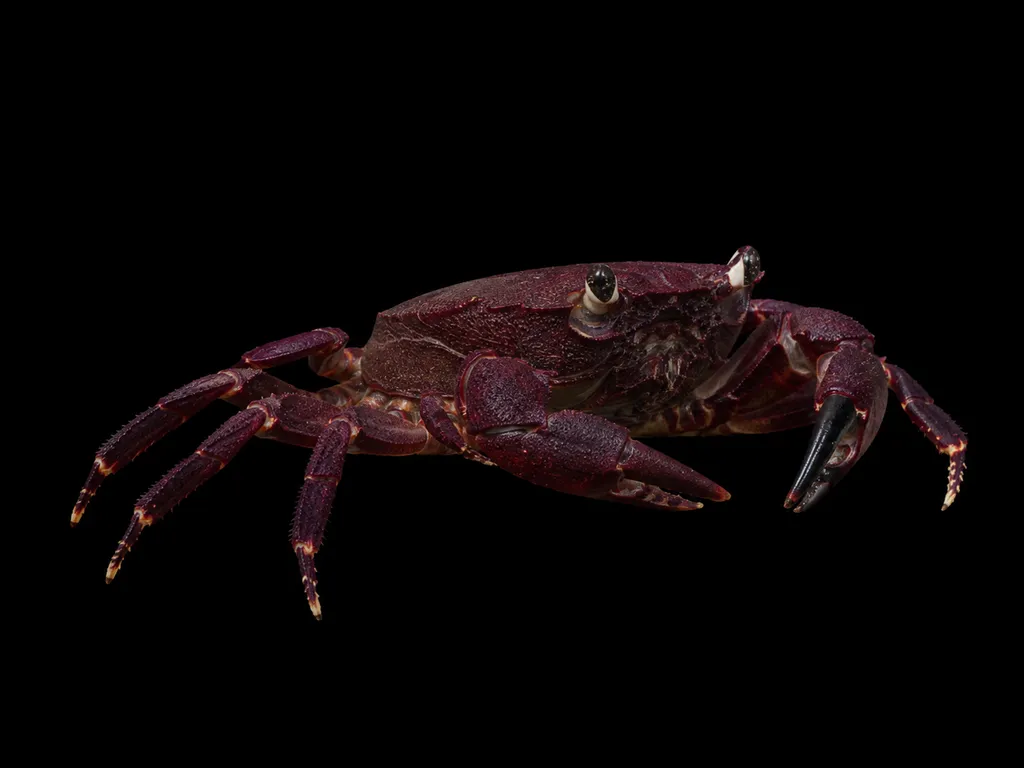
Matano crab
Syntripsa matannensis
FreshwaterCrab
Care at a glance
- Temperature
- 75–86°F
- 24–30°C
- pH
- 7.3–8.5
- Adult size
- 4.3 in
- 11 cm
- Minimum tank
- 22 gal
- 85 L
- Temperament
- Mostly peaceful
- Social behavior
- Solitary
- Own kind
- One male per tank
- Tankmates
- With caution
- Swim level
- Bottom
- Difficulty
- Medium
- Breeding
- Hard
- Rarity
- Very rare
- Family
- Gecarcinucidae
- Origin
- Sulawesi
Overview
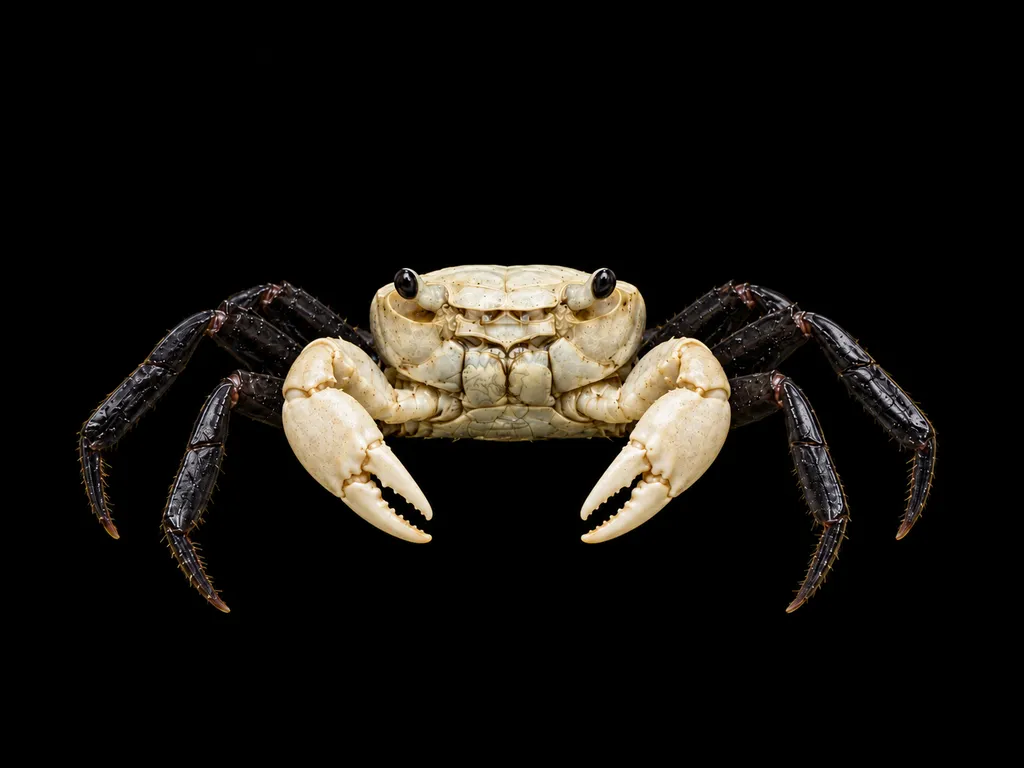
The Matano crab is a dark purple, mostly aquatic crab from Sulawesi that does not need a land section, though it likes rocks or wood that break the surface where it can climb out and rest. It is best kept on its own or as a single pair, since it is territorial with its own kind and will hunt snails, shrimp, and small or slow fish. Give it hard, warm, alkaline water, many caves and hiding spots for molting, and a tight lid, because crabs are escape artists. Keep copper out of the tank. Feed sinking pellets, algae wafers, and occasional meaty foods. Allow 85 liters or more for a pair.
In the wild
This crab is found only in and around Lake Matano, part of the ancient Malili lake system on Sulawesi. The lake is warm, hard, and strongly alkaline, so the tank should sit from about 24 to 30 c with a pH from 7.3 to 8.5 and plenty of minerals in the water. Although the crab lives underwater, it appreciates a few emersed rocks or branches to perch on, so set the water level a little below the rim. Smooth stones, caves, and driftwood give it the cover and territory it needs.
Good to know
Syntripsa matannensis is a freshwater crab in the family Gecarcinucidae, one of the Sulawesi crabs found nowhere else. Including its legs it spans up to about 11 cm, with heavy claws it uses to crush snails and scavenge. Like all crabs it molts to grow, splitting and backing out of the old shell and staying hidden until the new one sets. It breeds by direct development, the female carrying eggs that hatch straight into tiny crabs, but captive breeding is rarely achieved and rated hard.
Did you know
Sulawesi crabs like this one are unusual in living their whole lives in fresh water. Their eggs hatch straight into miniature crabs instead of the ocean-going larvae that most crabs, even freshwater ones, still depend on.
Common questions
What size tank does a Matano crab need?
A Matano crab needs at least 22 gal (85 L). It spends most of its time in the bottom.
What temperature and pH does a Matano crab need?
A Matano crab is comfortable at 75–86°F (24–30°C) with a pH of 7.3–8.5.
How big does a Matano crab get?
An adult Matano crab reaches about 4.3 in (11 cm).
Related species
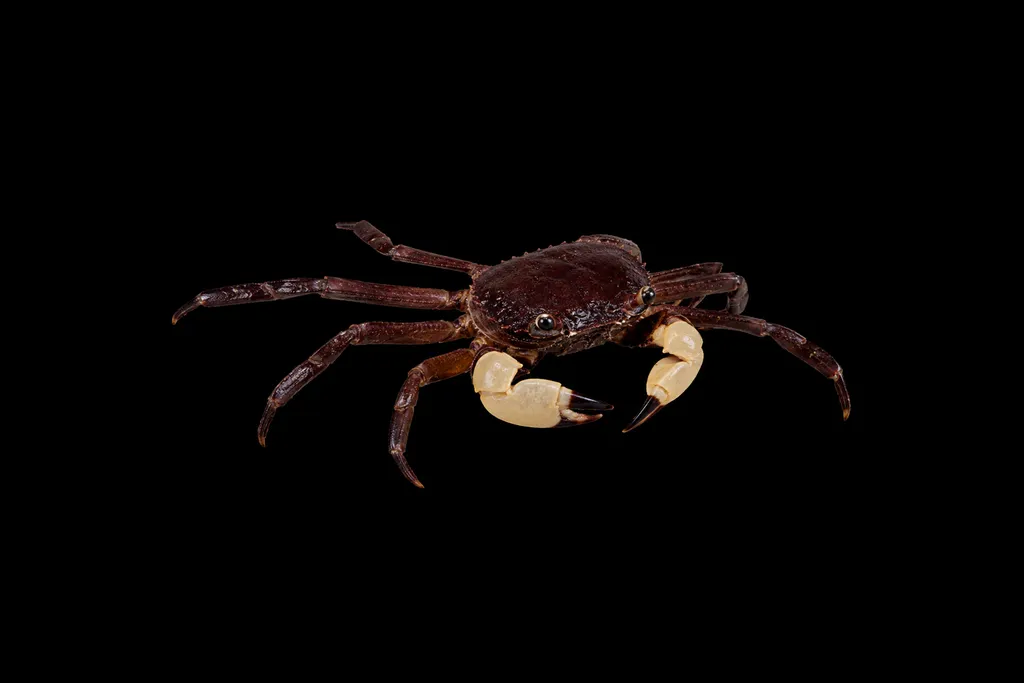 3.1 in (8 cm)20 gal (75 L)79–86°F (26–30°C)
White claw Towuti crab
Syntripsa flavichela
3.1 in (8 cm) · 20 gal (75 L)
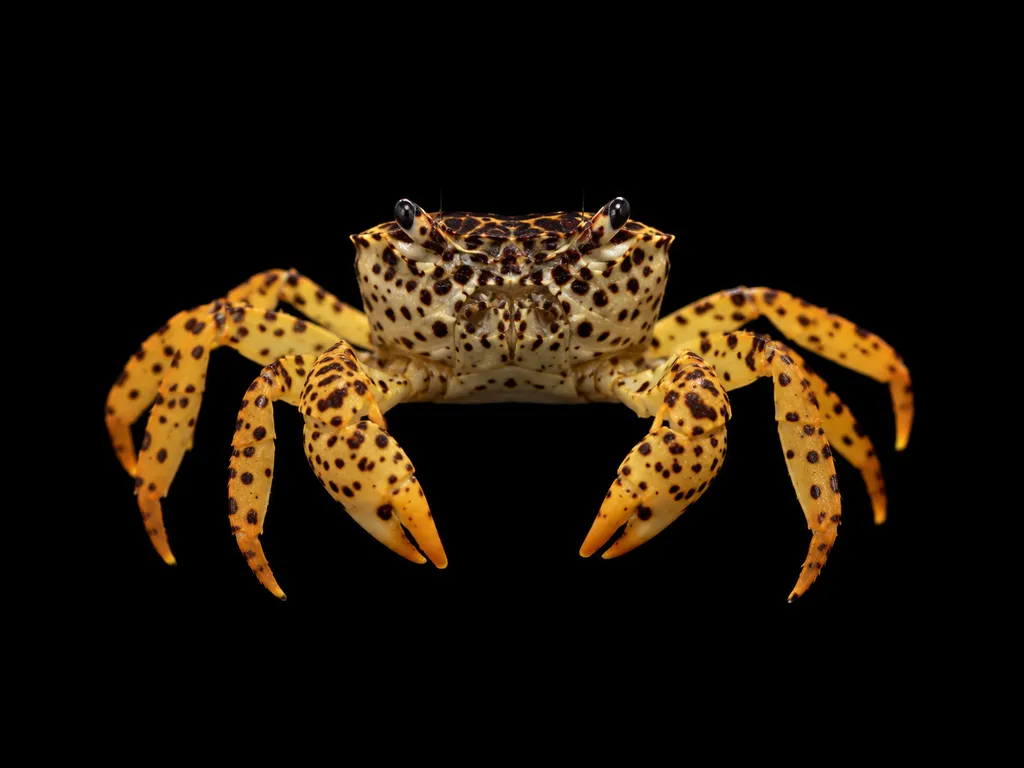 1.6 in (4 cm)16 gal (60 L)75–84°F (24–29°C)
Sulawesi fine spotted crab
Parathelphusa pallida
1.6 in (4 cm) · 16 gal (60 L)
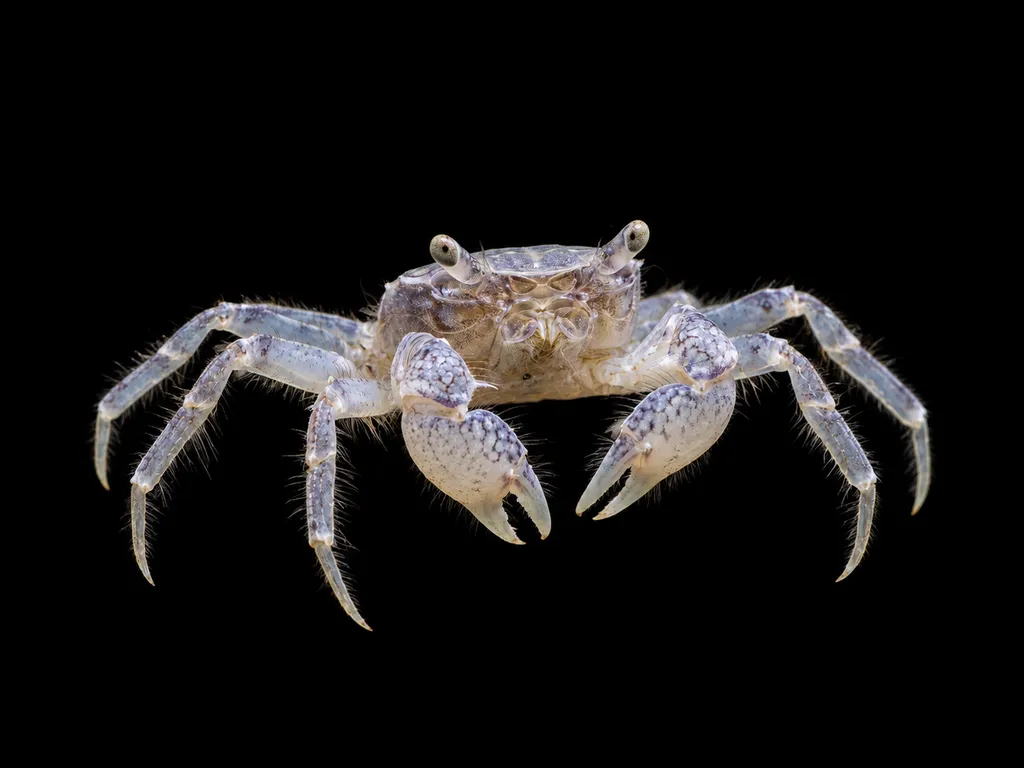 1.2 in (3 cm)11 gal (40 L)72–82°F (22–28°C)
Thai dwarf rock crab
Siamthelphusa sp.
1.2 in (3 cm) · 11 gal (40 L)
 0.6 in (1.5 cm)16 gal (60 L)72–79°F (22–26°C)
Panda crab
Lepidothelphusa cognettii
0.6 in (1.5 cm) · 16 gal (60 L)
- 0.6 in (1.5 cm)11 gal (40 L)72–79°F (22–26°C)
Tricolor Borneo crab
Lepidothelphusa menneri
0.6 in (1.5 cm) · 11 gal (40 L)
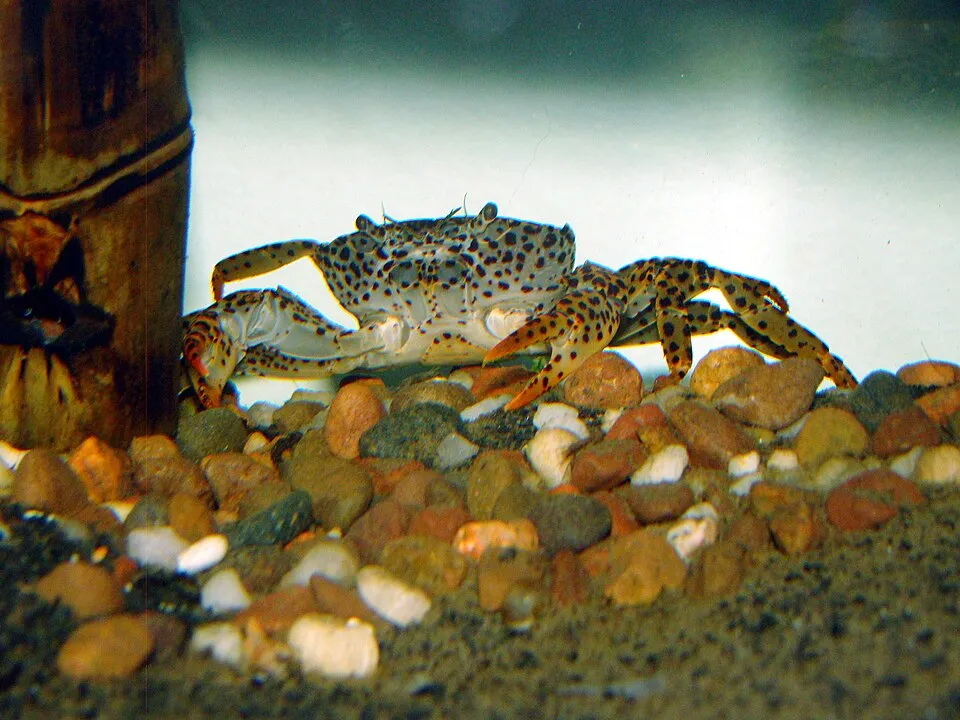 4.3 in (11 cm)22 gal (85 L)75–86°F (24–30°C)
Panther crab
Parathelphusa pantherina
4.3 in (11 cm) · 22 gal (85 L)