Panda crab
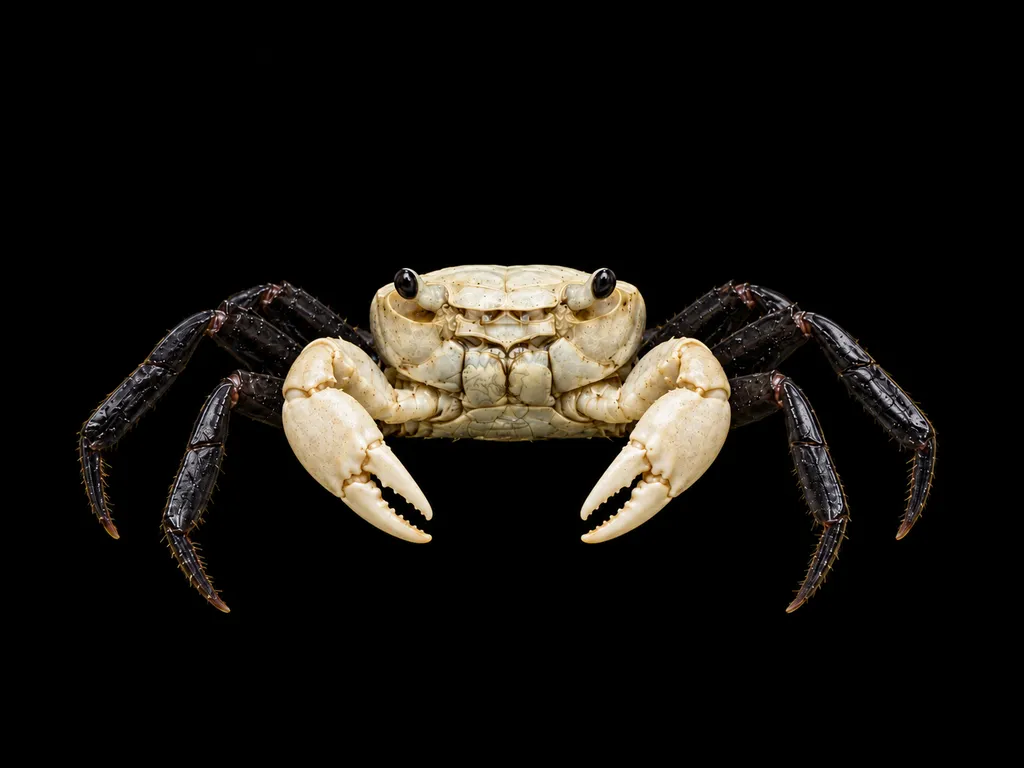
Lepidothelphusa cognettii
Also known as Borneo rainbow crab, Highlander crab, Borneo panda crab, Sarawak land crab, Panda ninja crab
FreshwaterCrab
Care at a glance
- Temperature
- 72–79°F
- 22–26°C
- pH
- 7.0–8.0
- Adult size
- 0.6 in
- 1.5 cm
- Minimum tank
- 16 gal
- 60 L
- Temperament
- Mostly peaceful
- Social behavior
- Social
- Tankmates
- With caution
- Swim level
- Bottom
- Difficulty
- Difficult
- Breeding
- Hard
- Rarity
- Rare
- Family
- Gecarcinucidae
- Origin
- Southwestern Sarawak, Borneo
Overview
Keep panda crabs in a group of five or more; they are social and squabble only briefly over space and females. They leave snails, isopods and springtails alone and generally ignore shrimp, but they are not fish tank animals and belong in a species paludarium. Hold the water at 22 to 26 C with a pH of 7 to 8, keep it well oxygenated, and never add copper. They want protein: small insects, bits of fish or shrimp, snails, and frozen foods, with a little vegetable matter on the side. Expect 2 to 3 years and give molting crabs quiet cover.
In the wild
Panda crabs come from shaded springs and seeps in the sandstone hills of southwestern Sarawak, Borneo, between about 200 and 1200 m, where they hide in wet rock crevices and leaf litter under primary forest. They are far more aquatic than vampire crabs and need cool, clean, moving water more than they need land. Set up a paludarium of 60 liters or more with roughly 60 to 70 percent water and 30 to 40 percent land, gentle to moderate flow from a small pump, plenty of stone and leaf litter, and a tight lid. Keep the water at 22 to 26 C and do not let it sit above 25 C for long, with a pH of 7 to 8 and some hardness.
Good to know
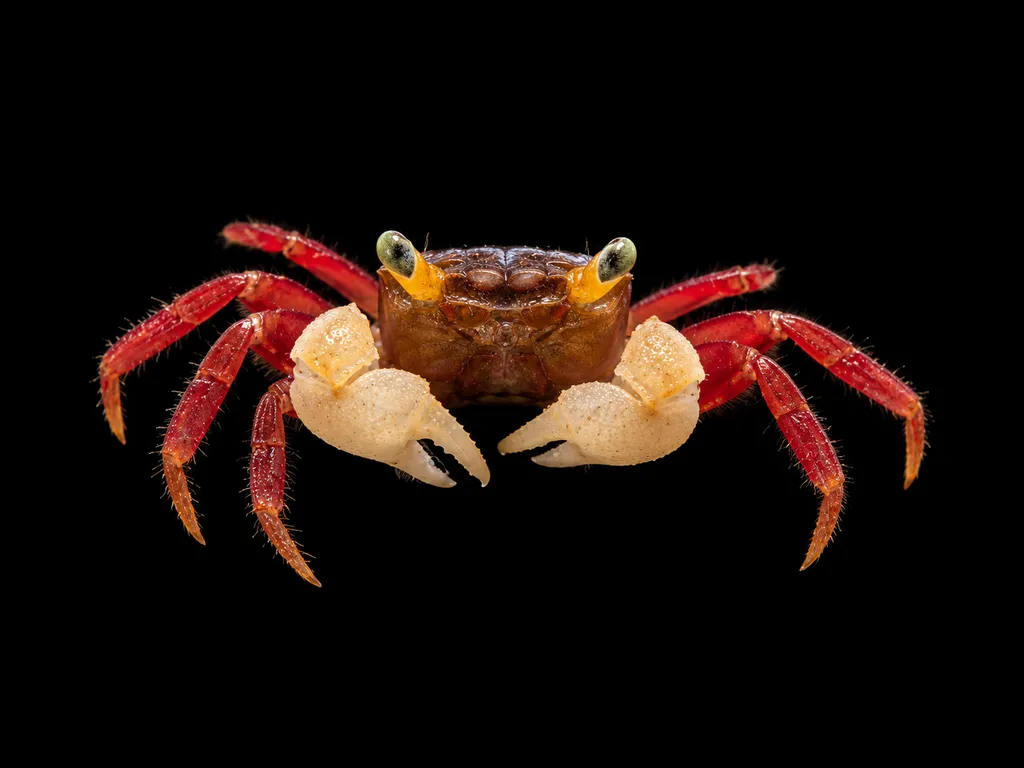
Lepidothelphusa cognettii is a semi-terrestrial gecarcinucid crab described by Nobili in 1903 from Sarawak. The type specimen measures about 12 mm across the carapace and adults span less than 4 cm across the legs; the body is cream to white with light yellow at the front and on the claws and pale blue toward the rear, and the trade animals have dark purple to black legs. A 2015 revision by Grinang and Ng split five new species (L. flavochela, L. limau, L. loi, L. padawan and L. sangon) from what had all been called L. cognettii, so a shop's panda crab may be one of those, and some keepers think the common trade form is L. padawan. Like other freshwater crabs of its family it develops directly, and the female releases fully formed young.
Did you know
Until 2015 every white and black stream crab from Sarawak was called Lepidothelphusa cognettii. Then Grinang and Ng looked closely at the colours, claws and gonopods and split five more species out of it, each living in its own patch of hill country around Kuching, which is why the hobby's panda crab is often sold with a cf. in front of the name.
Common questions
What size tank does a Panda crab need?
A Panda crab needs at least 16 gal (60 L). It spends most of its time in the bottom.
What temperature and pH does a Panda crab need?
A Panda crab is comfortable at 72–79°F (22–26°C) with a pH of 7.0–8.0.
How big does a Panda crab get?
An adult Panda crab reaches about 0.6 in (1.5 cm).
Related species
- 0.6 in (1.5 cm)11 gal (40 L)72–79°F (22–26°C)
Tricolor Borneo crab
Lepidothelphusa menneri
0.6 in (1.5 cm) · 11 gal (40 L)
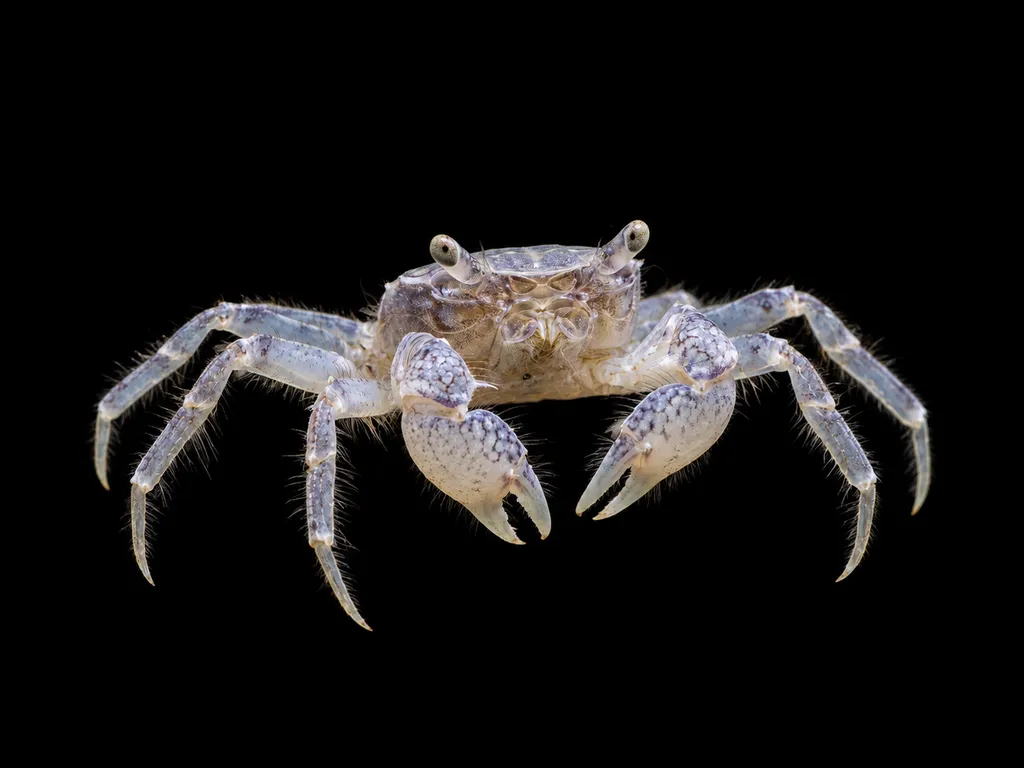 1.2 in (3 cm)11 gal (40 L)72–82°F (22–28°C)
Thai dwarf rock crab
Siamthelphusa sp.
1.2 in (3 cm) · 11 gal (40 L)
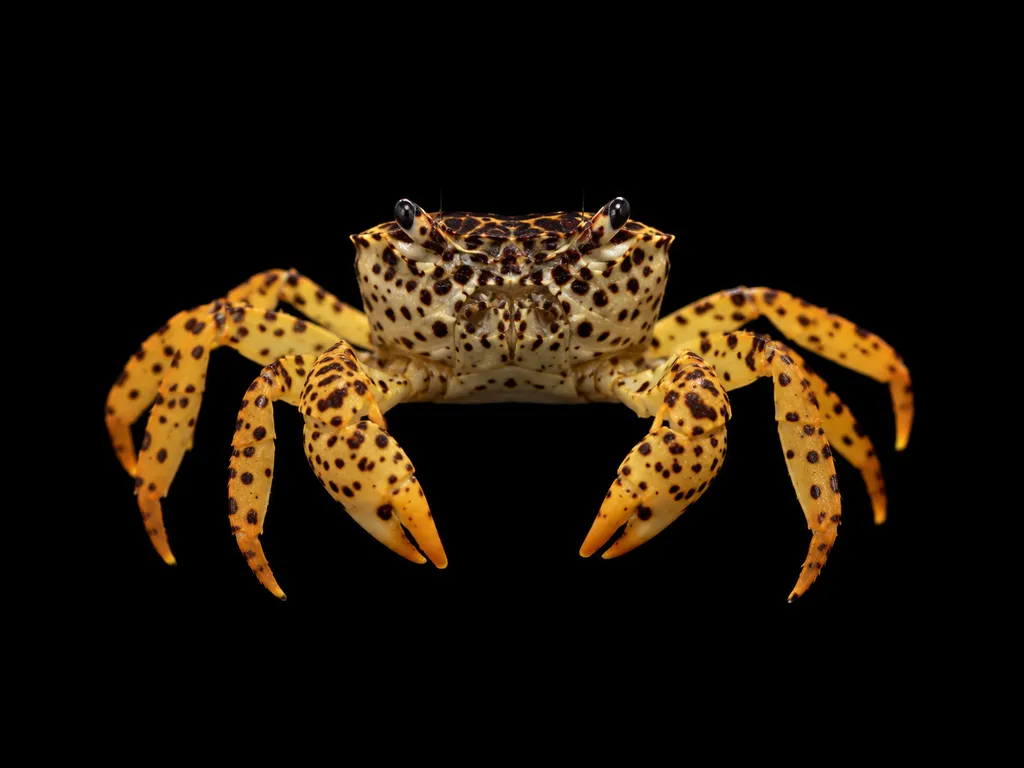 1.6 in (4 cm)16 gal (60 L)75–84°F (24–29°C)
Sulawesi fine spotted crab
Parathelphusa pallida
1.6 in (4 cm) · 16 gal (60 L)
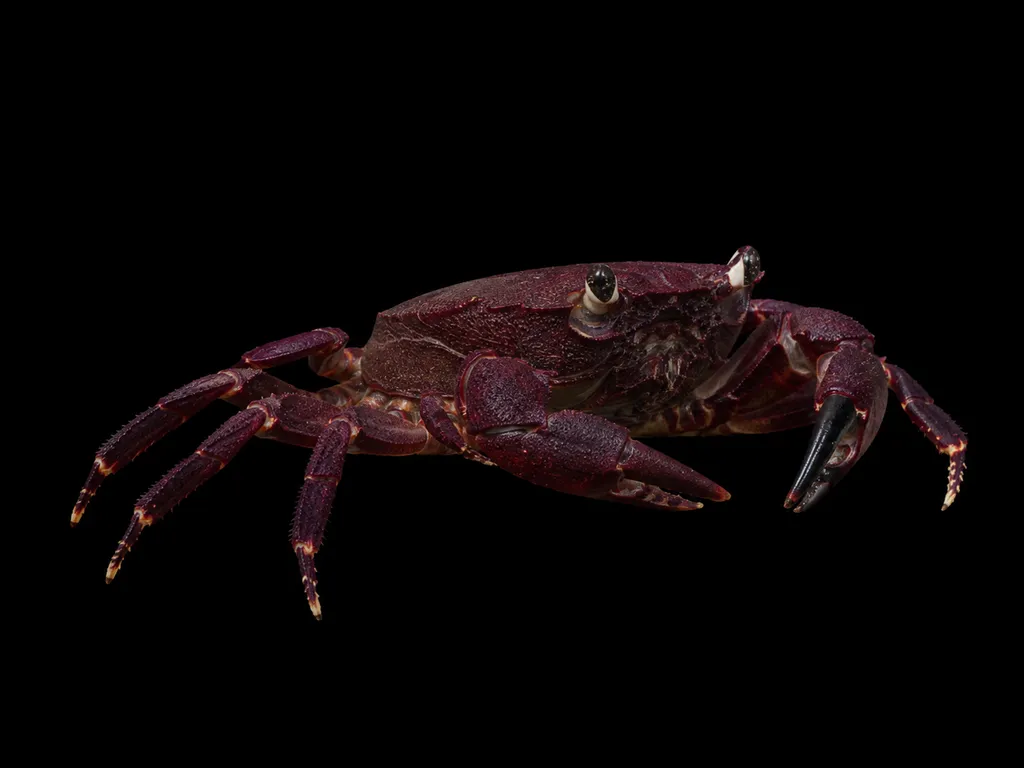 4.3 in (11 cm)22 gal (85 L)75–86°F (24–30°C)
Matano crab
Syntripsa matannensis
4.3 in (11 cm) · 22 gal (85 L)
 0.6 in (1.5 cm)10 gal (38 L)72–82°F (22–28°C)
White mandarin vampire crab
Geosesarma pontianak
0.6 in (1.5 cm) · 10 gal (38 L)
- 0.6 in (1.5 cm)10 gal (38 L)75–82°F (24–28°C)
Purple arm vampire crab
Geosesarma noduliferum
0.6 in (1.5 cm) · 10 gal (38 L)