Panther crab
Parathelphusa pantherina
FreshwaterCrab
Care at a glance
- Temperature
- 75–86°F
- 24–30°C
- pH
- 7.5–8.5
- Adult size
- 4.3 in
- 11 cm
- Minimum tank
- 22 gal
- 85 L
- Temperament
- Mostly peaceful
- Social behavior
- Solitary
- Own kind
- One male per tank
- Tankmates
- With caution
- Swim level
- Bottom
- Difficulty
- Medium
- Breeding
- Hard
- Rarity
- Very rare
- Family
- Parathelphusidae
- Origin
- Sulawesi
Overview
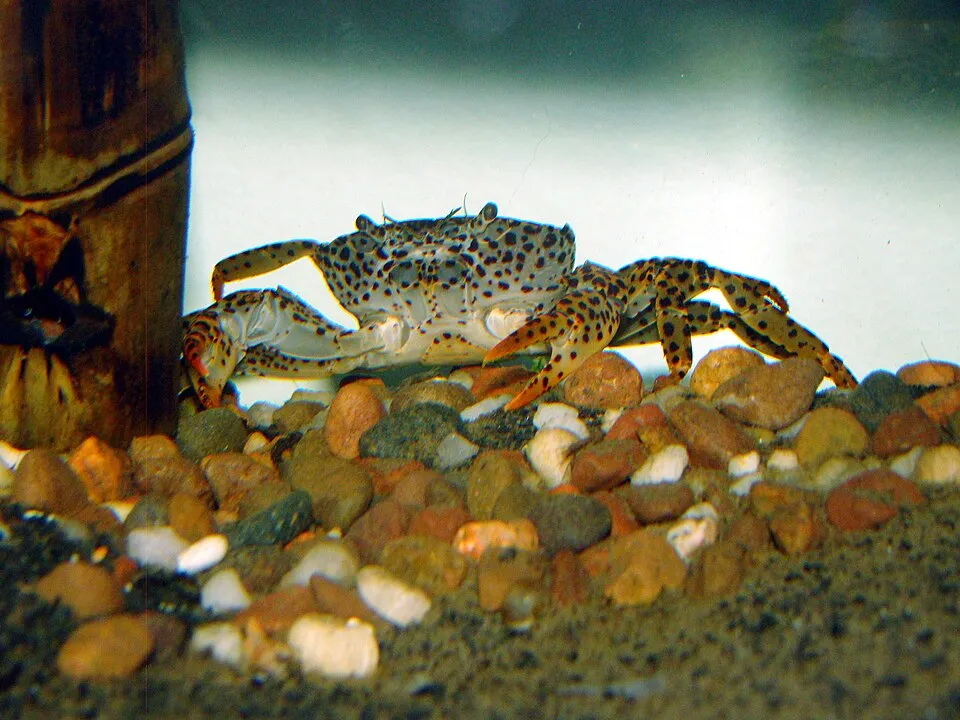
The panther crab is a cream crab spotted with dark leopard markings from Sulawesi. It is one of the few crabs that lives underwater full time, though it still likes rocks or wood that reach above the surface to climb onto. Keep it alone or as a single pair, since it is territorial and will catch shrimp, snails, and small or slow fish. It needs warm, hard, alkaline water, many caves for hiding during molts, and a firmly fitted lid to stop escapes. Keep copper out entirely. Feed sinking pellets, algae wafers, and the odd meaty food. A pair needs 85 liters or more.
In the wild
Panther crabs come from the warm lakes of Sulawesi, hard and alkaline waters they share with the island's snails and shrimp. A tank should match that, sitting from about 24 to 30 c with a pH from 7.5 to 8.5 and a good mineral load. Keep the water level a little below the rim so the crab can haul out onto emersed rock or wood when it wants to, and provide sand, smooth stones, and caves for shelter. Clean, stable, well-oxygenated water keeps molts safe and successful.
Good to know
Parathelphusa pantherina is a Sulawesi freshwater crab placed in the family Parathelphusidae. Counting its legs it reaches about 11 cm across, the females carrying eggs beneath a wide tail flap. Crabs grow by molting, and a crab is soft and helpless for a day or two after each molt, so hiding places are vital. This species breeds by direct development, the eggs hatching into fully formed crablets that live in fresh water, but raising them is difficult and success is uncommon, so it is rated hard.
Did you know
No two panther crabs share the same spot pattern, much like the big cats they are named after. Females brood their eggs under a broad abdominal flap and release tiny crabs that are ready for fresh water from birth.
Common questions
What size tank does a Panther crab need?
A Panther crab needs at least 22 gal (85 L). It spends most of its time in the bottom.
What temperature and pH does a Panther crab need?
A Panther crab is comfortable at 75–86°F (24–30°C) with a pH of 7.5–8.5.
How big does a Panther crab get?
An adult Panther crab reaches about 4.3 in (11 cm).
Related species
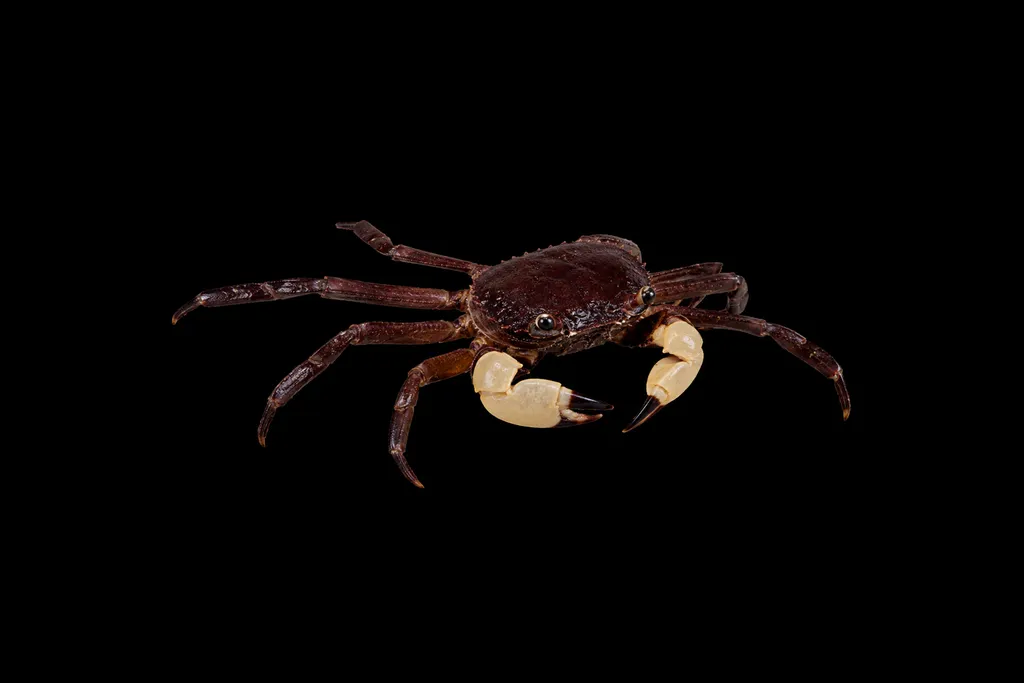 3.1 in (8 cm)20 gal (75 L)79–86°F (26–30°C)
White claw Towuti crab
Syntripsa flavichela
3.1 in (8 cm) · 20 gal (75 L)
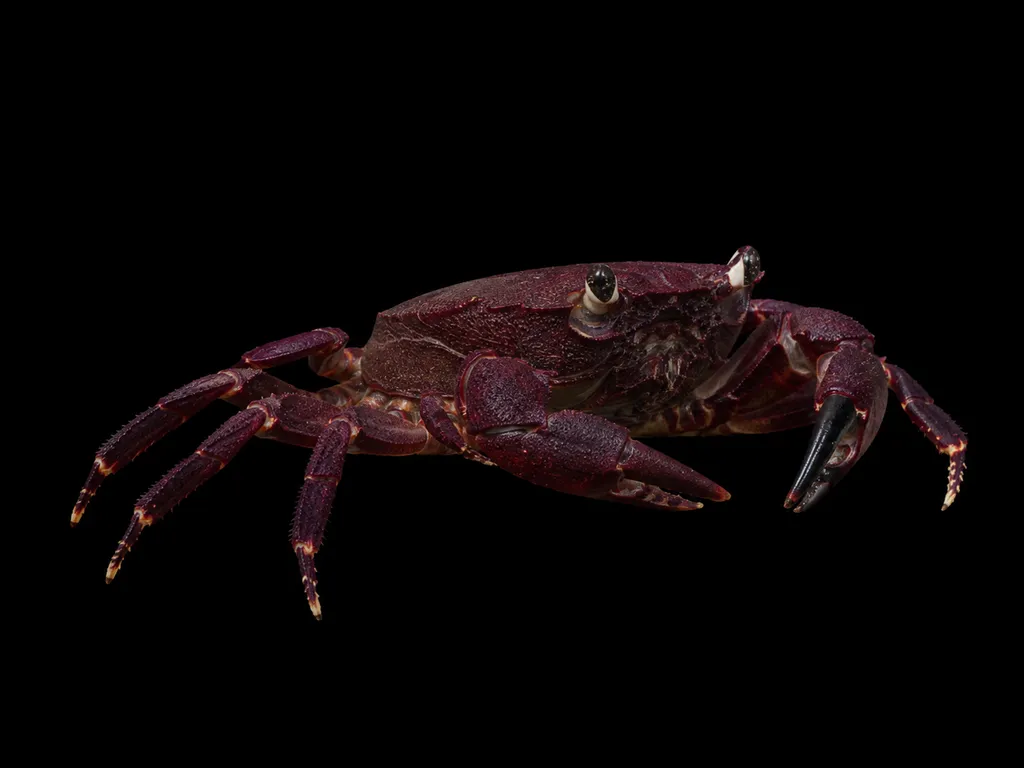 4.3 in (11 cm)22 gal (85 L)75–86°F (24–30°C)
Matano crab
Syntripsa matannensis
4.3 in (11 cm) · 22 gal (85 L)
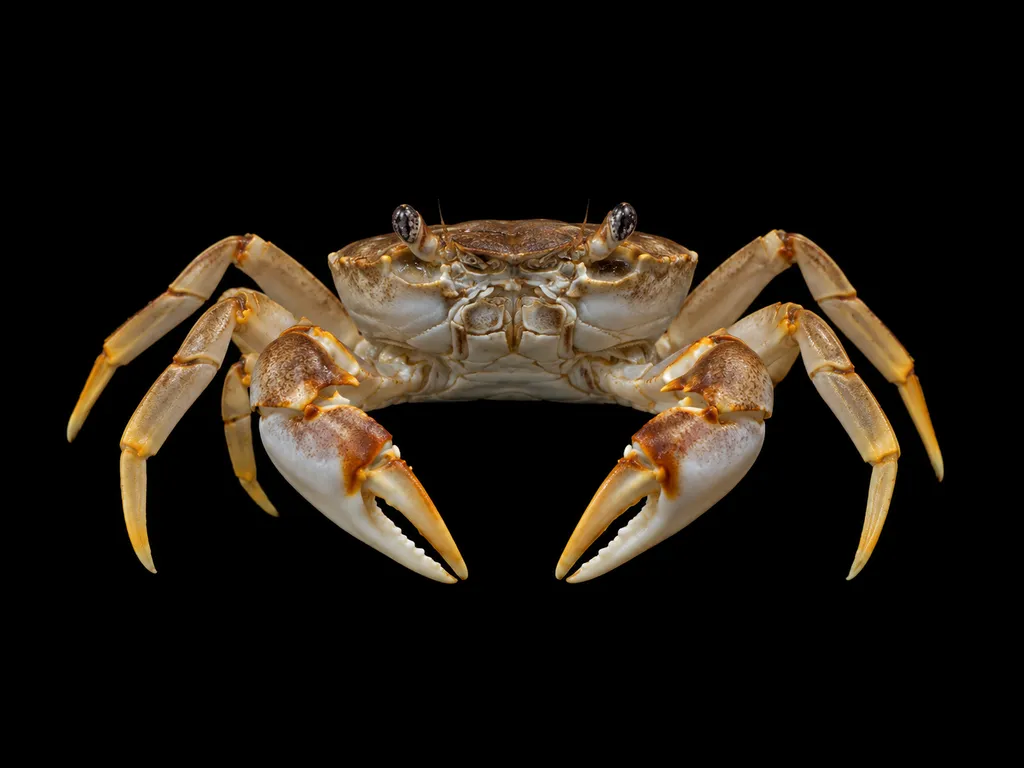 3.9 in (10 cm)16 gal (60 L)75–82°F (24–28°C)
Tanganyika crab
Platythelphusa sp.
3.9 in (10 cm) · 16 gal (60 L)