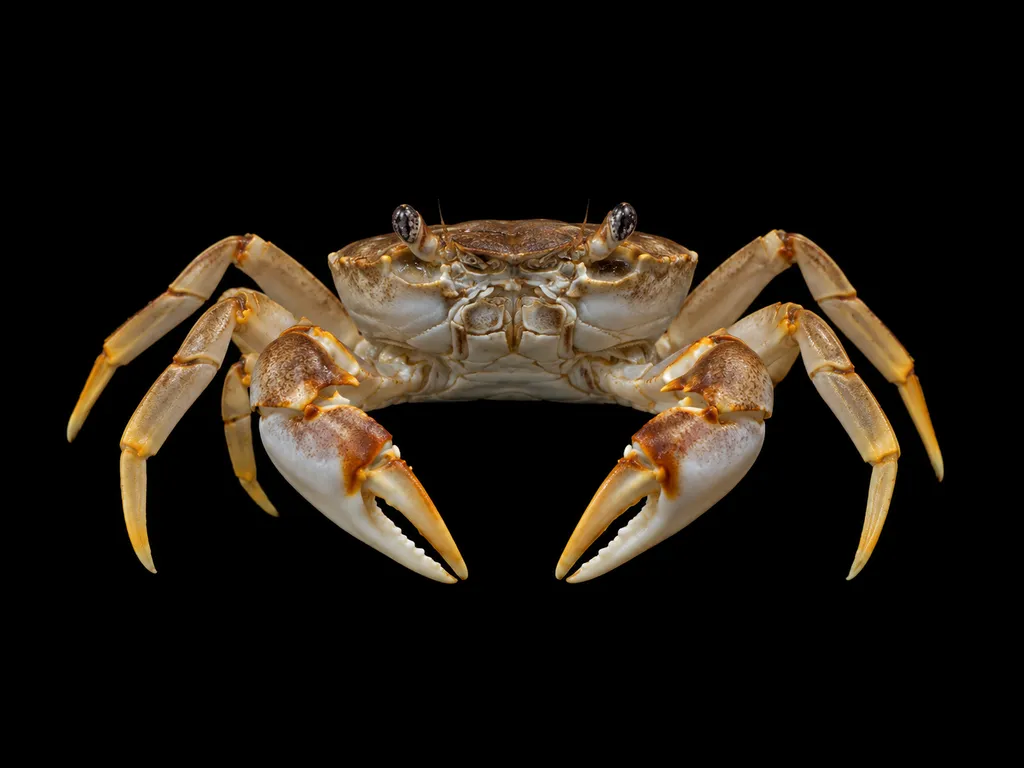
Tanganyika crab
Platythelphusa sp.
FreshwaterCrab
Care at a glance
- Temperature
- 75–82°F
- 24–28°C
- pH
- 7.0–8.5
- Adult size
- 3.9 in
- 10 cm
- Minimum tank
- 16 gal
- 60 L
- Temperament
- Mostly peaceful
- Social behavior
- Solitary
- Own kind
- One male per tank
- Tankmates
- With caution
- Swim level
- Bottom
- Difficulty
- Medium
- Breeding
- Hard
- Rarity
- Very rare
- Family
- Potamonautidae
- Origin
- Africa
Overview
Tanganyika crabs are among the very few crabs that live fully underwater, needing no land area at all. They are predatory foragers that will eat shrimp, snails, small fish, and weaker crabs, so they are best kept singly or in a species tank rather than a community. Give them the hard, alkaline, mineral-rich water of their home lake, plenty of rock caves and crevices for shelter and molting, and a secure lid. Keep copper out, since it poisons crustaceans. Feed sinking pellets, mussel, and other meaty foods along with some greens. A tank of 60 liters or more suits one crab.
In the wild
These crabs are endemic to Lake Tanganyika in East Africa, a vast, deep rift lake with hard, alkaline, and very stable water. Adults live down among rocks and shells well below the surface, which is why they are so at home submerged. A tank should copy the lake, held from about 24 to 28 c with a pH from 7 to 8.5 and a firm mineral hardness. A rocky layout with caves and piled stones gives the shelter and territory they rely on, and strong filtration keeps the water clean and oxygen-rich.
Good to know
Platythelphusa is a group of freshwater crabs found only in Lake Tanganyika, now placed in the family Potamonautidae after being shuffled between several families over the years. Depending on the species they reach up to about 10 cm across the legs, with strong claws for prying at snails and shells. They molt to grow and breed by direct development, females carrying eggs that hatch into fully formed crabs. Captive breeding is seldom managed, so it is rated hard.
Did you know
Lake Tanganyika has its own flock of crabs found nowhere else, and unlike most freshwater crabs they never leave the water. Several evolved heavy claws to crack the lake's many snails, feeding much as the cichlids famous for the same trick do.
Common questions
What size tank does a Tanganyika crab need?
A Tanganyika crab needs at least 16 gal (60 L). It spends most of its time in the bottom.
What temperature and pH does a Tanganyika crab need?
A Tanganyika crab is comfortable at 75–82°F (24–28°C) with a pH of 7.0–8.5.
How big does a Tanganyika crab get?
An adult Tanganyika crab reaches about 3.9 in (10 cm).
Related species
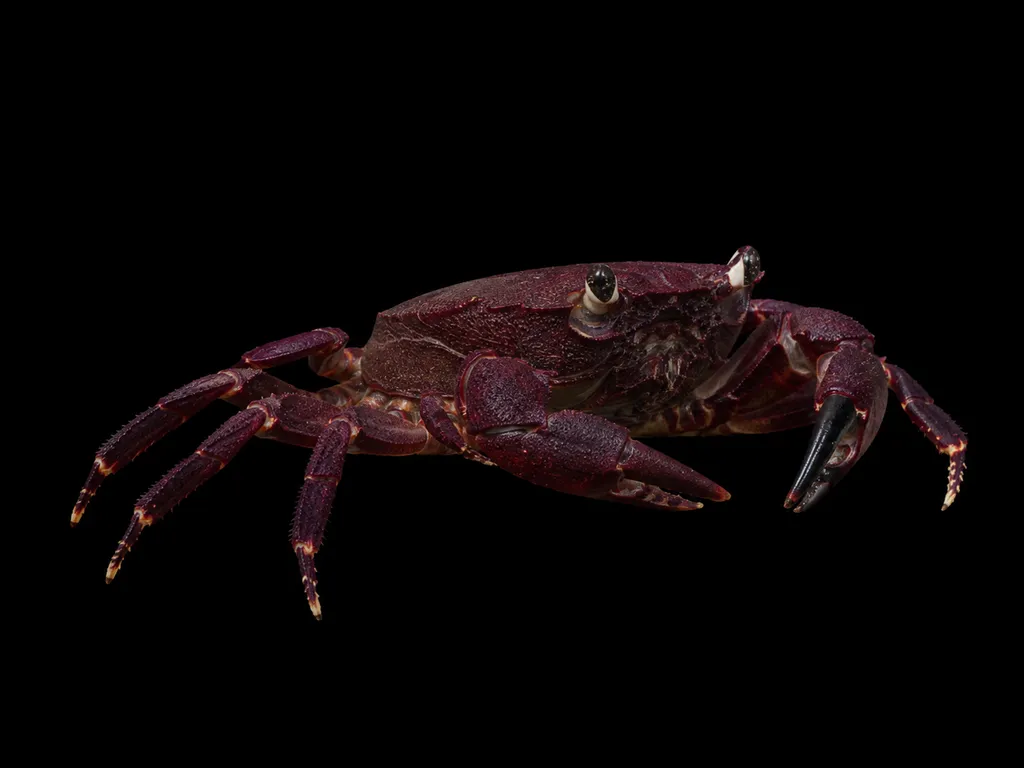 4.3 in (11 cm)22 gal (85 L)75–86°F (24–30°C)
Matano crab
Syntripsa matannensis
4.3 in (11 cm) · 22 gal (85 L)
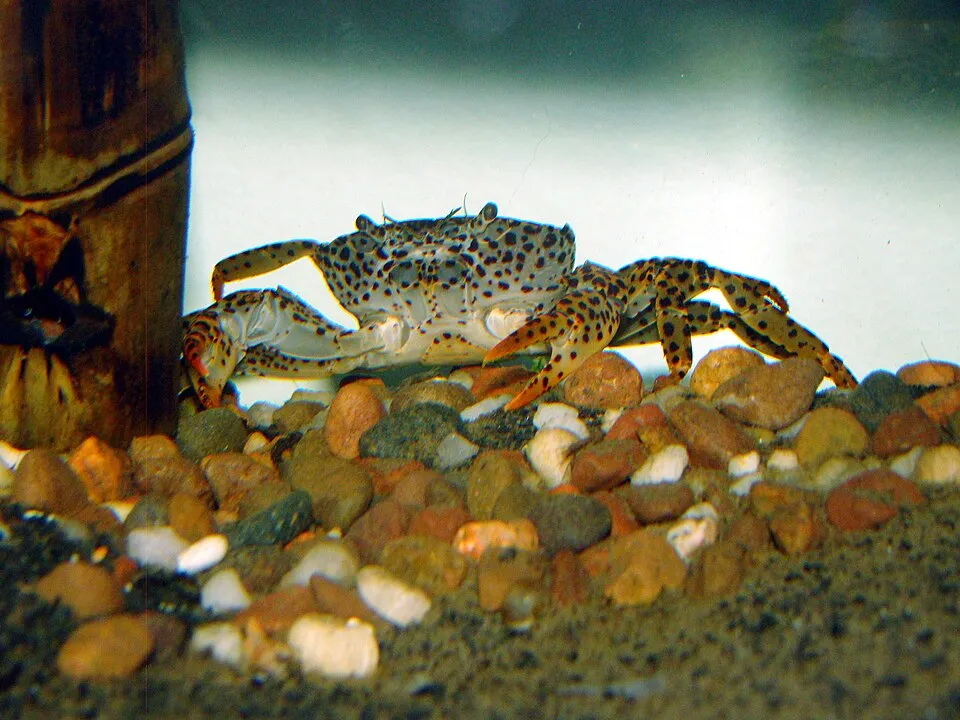 4.3 in (11 cm)22 gal (85 L)75–86°F (24–30°C)
Panther crab
Parathelphusa pantherina
4.3 in (11 cm) · 22 gal (85 L)
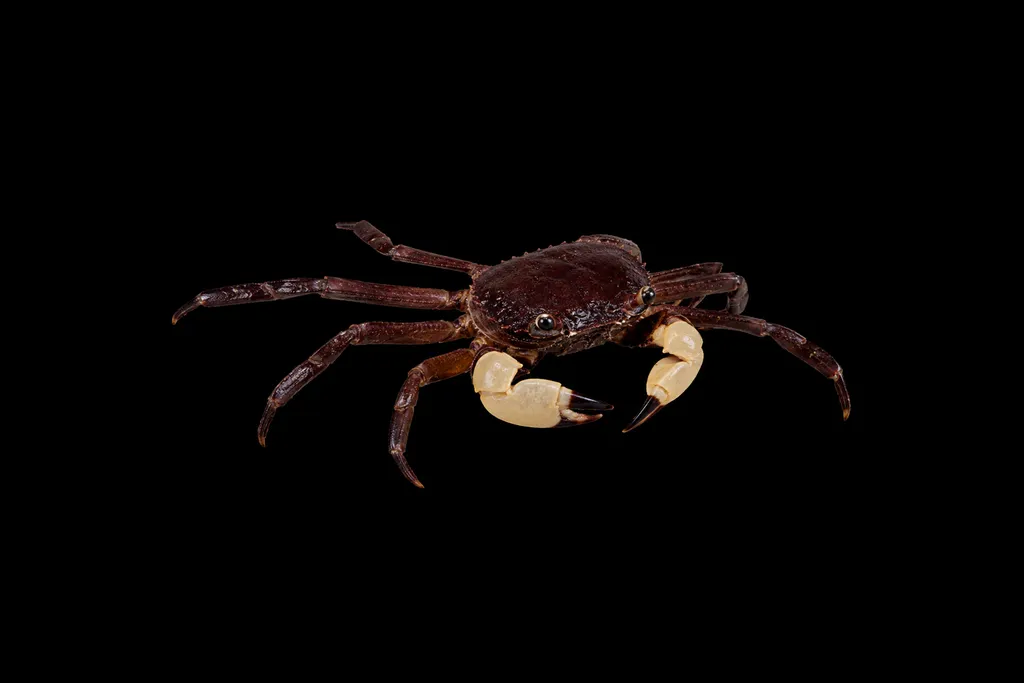 3.1 in (8 cm)20 gal (75 L)79–86°F (26–30°C)
White claw Towuti crab
Syntripsa flavichela
3.1 in (8 cm) · 20 gal (75 L)
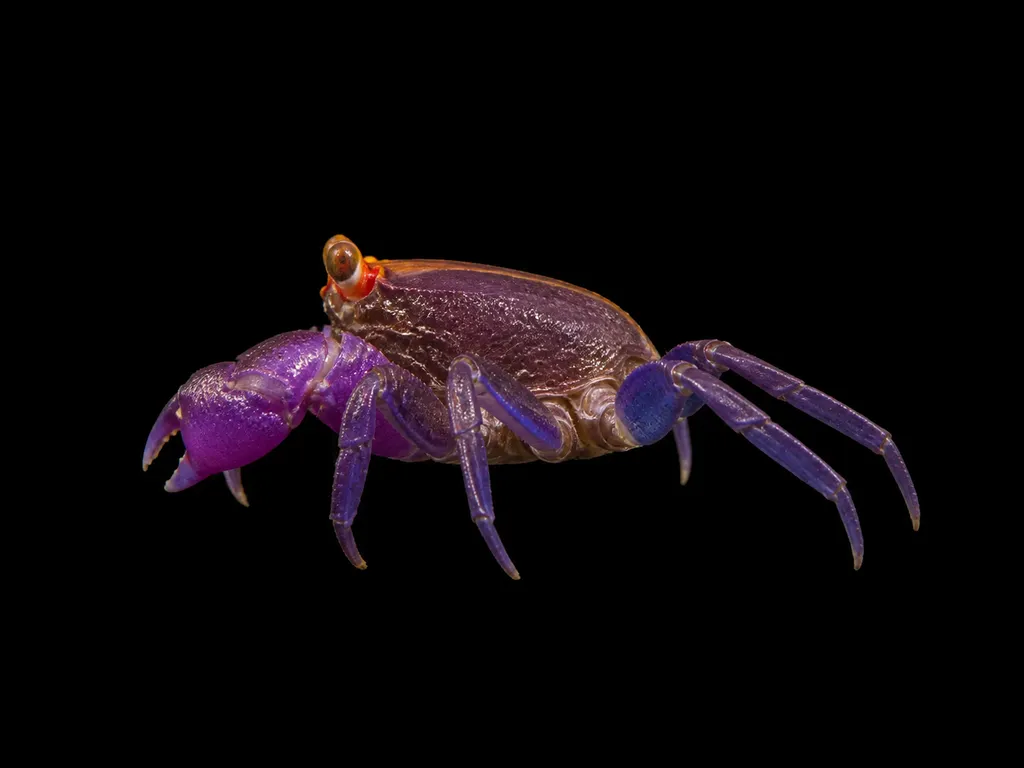 2 in (5 cm)10 gal (38 L)75–82°F (24–28°C)
Blue-leg vampire crab
Geosesarma bicolor
2 in (5 cm) · 10 gal (38 L)
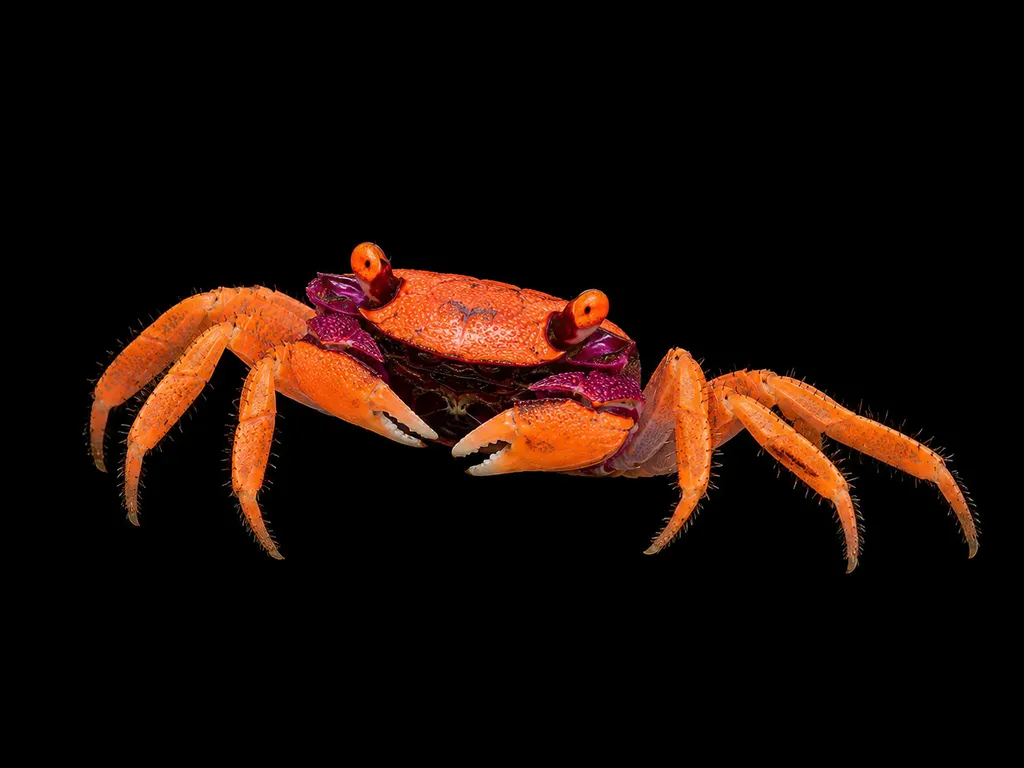 2 in (5 cm)11 gal (40 L)72–82°F (22–28°C)
Orange vampire crab
Geosesarma tiomanicum
2 in (5 cm) · 11 gal (40 L)
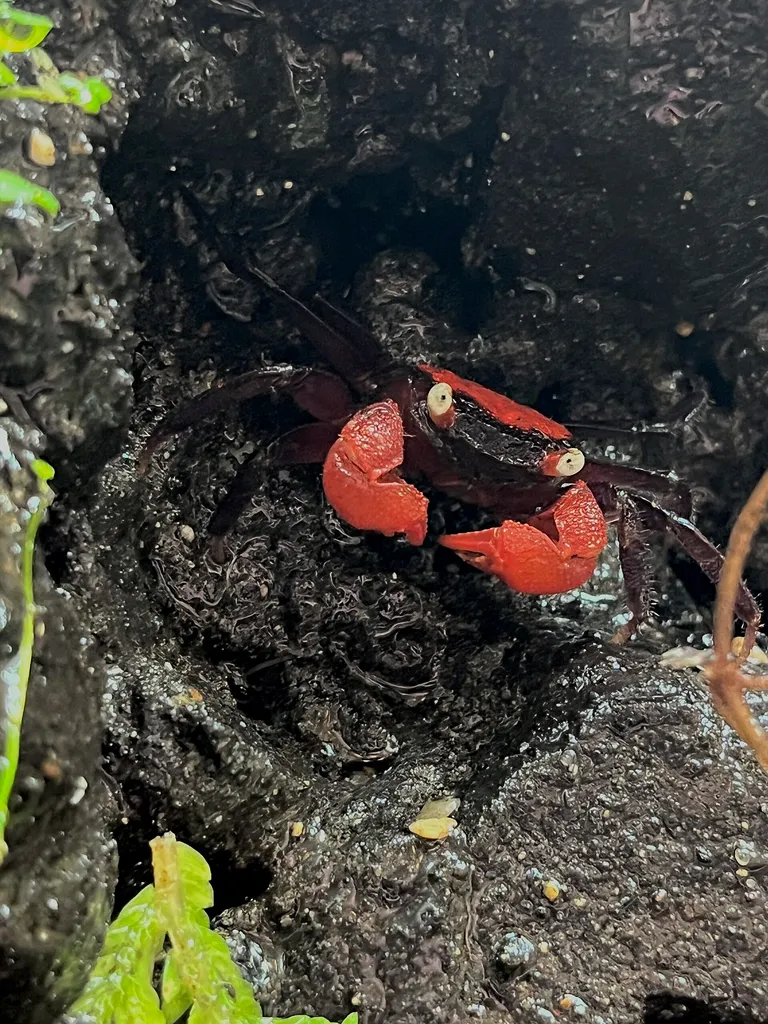 2 in (5 cm)10 gal (38 L)72–82°F (22–28°C)
Red vampire crab
Geosesarma hagen
2 in (5 cm) · 10 gal (38 L)