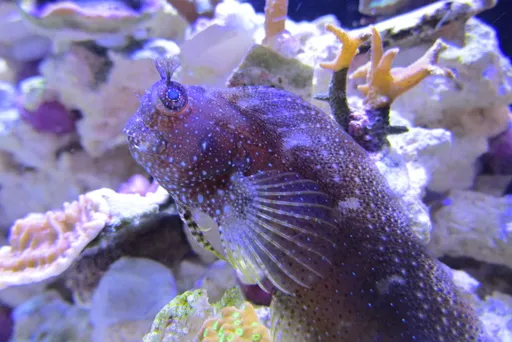
Starry blenny
Salarias ramosus
Also known as Snowflake Blenny
SaltwaterFish
Care at a glance
- Temperature
- 72–79°F
- 22–26°C
- pH
- 8.1–8.4
- Adult size
- 5.5 in
- 14 cm
- Minimum tank
- 30 gal
- 114 L
- Temperament
- Mostly peaceful
- Social behavior
- Solitary
- Tankmates
- With caution
- Swim level
- Bottom
- Diet
- Herbivore
- Difficulty
- Easy
- Breeding
- Egg layer
- Rarity
- Common
- Reef safe
- Reef safe
- Family
- Blenniidae
- Origin
- Western Pacific reefs, from the Philippines to northwestern Australia
Overview
The starry blenny is a useful algae grazer for a mature saltwater reef tank, and it is easy to keep.
Did you know
The starry blenny grazes almost constantly through the daylight hours, working over the rock in short bursts.
Caring for the starry blenny
Keep the starry blenny in a mature tank of 30 gal (114 L) or more. The tank should have run long enough to grow a healthy film of algae and diatoms on the rock and glass. Fit a tight lid, since it jumps when startled.
Hold the water at 72 to 79°F (22 to 26°C) and a pH of 8.1 to 8.4. It does poorly in a brand-new tank, but it settles in quickly once there is enough turf to work through. Supplement its diet with dried seaweed, spirulina and herbivore pellets once the natural algae supply runs low.
It stays reef safe as long as it has enough natural algae to graze. In a newer or overly clean tank, hunger can drive it to pick at coral flesh or clam mantles. Keep only one per tank, since it is territorial toward other blennies and algae eaters such as tangs and rabbitfish.
The starry blenny lays sticky, flattened eggs that adhere to the substrate. The planktonic larvae hatch and drift off to find a reef of their own.
Good to know
Salarias ramosus is a blenny in the family Blenniidae, also sold as the snowflake blenny. It uses comb-like teeth to rasp algae and diatoms from hard surfaces.
In the wild
The starry blenny is native to shallow, sheltered reef flats and lagoons from the Philippines to northwestern Australia. There it grazes algae off rock and rubble in well-lit water.
Common questions
What size tank does a starry blenny need?
A starry blenny needs at least 30 gal (114 L). It spends most of its time in the bottom.
What temperature and pH does a starry blenny need?
A starry blenny is comfortable at 72–79°F (22–26°C) with a pH of 8.1–8.4.
What does a starry blenny eat?
A starry blenny grazes the natural algae and diatoms on the rock. Once that supply runs low, supplement its diet with dried seaweed, spirulina and herbivore pellets.
How big does a starry blenny get?
An adult starry blenny reaches about 5.5 in (14 cm).
How does a starry blenny breed?
Starry blennies lay sticky, flattened eggs that stick to the substrate. The planktonic larvae hatch and drift off to find a reef of their own.
Related species
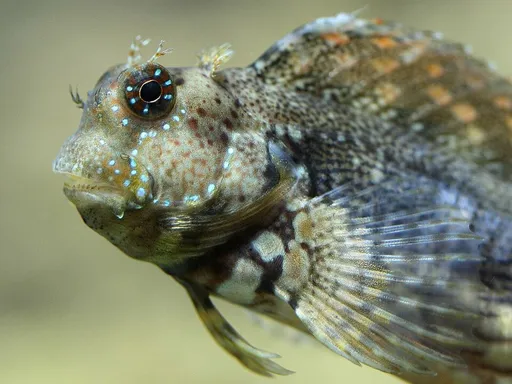 5.1 in (13 cm)29 gal (110 L)72–79°F (22–26°C)
Lawnmower blenny
Salarias fasciatus
5.1 in (13 cm) · 29 gal (110 L)
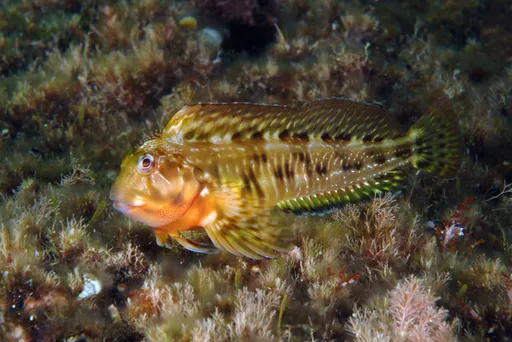 4.7 in (12 cm)30 gal (114 L)72–79°F (22–26°C)
Molly Miller blenny
Scartella cristata
4.7 in (12 cm) · 30 gal (114 L)
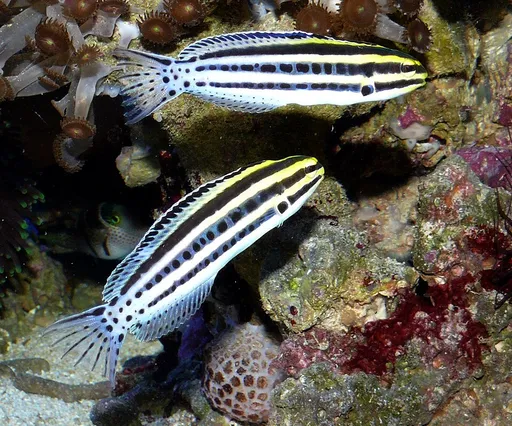 4.3 in (11 cm)29 gal (110 L)73–79°F (23–26°C)
Striped poison-fang blenny
Meiacanthus grammistes
4.3 in (11 cm) · 29 gal (110 L)
 3.9 in (10 cm)29 gal (110 L)72–79°F (22–26°C)
Bicolor blenny
Ecsenius bicolor
3.9 in (10 cm) · 29 gal (110 L)
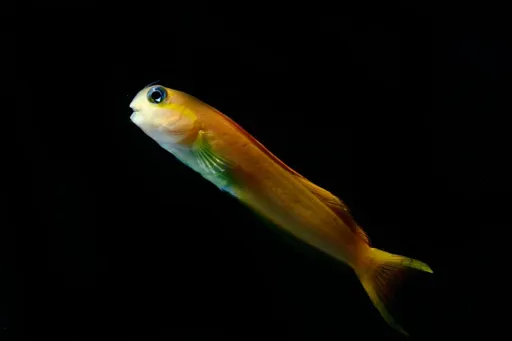 5.1 in (13 cm)29 gal (110 L)72–79°F (22–26°C)
Midas blenny
Ecsenius midas
5.1 in (13 cm) · 29 gal (110 L)
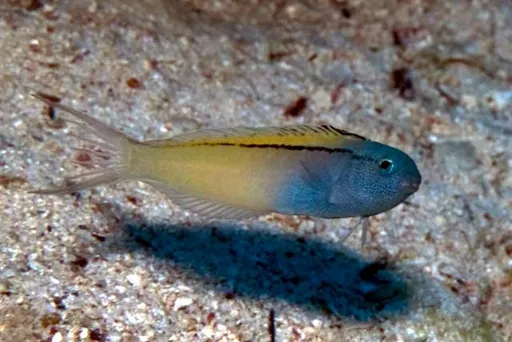 3.5 in (9 cm)20 gal (75 L)75–81°F (24–27°C)
Blackline fang blenny
Meiacanthus nigrolineatus
3.5 in (9 cm) · 20 gal (75 L)