Serpent star
Ophioderma
Also known as Serpent Sea Star, Caribbean Serpent Star, Green Serpent Star
SaltwaterInvertebrate
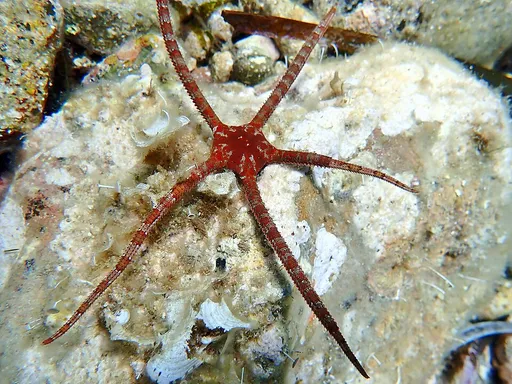
Care at a glance
- Temperature
- 72–79°F
- 22–26°C
- pH
- 8.1–8.4
- Adult size
- 11.8 in
- 30 cm
- Minimum tank
- 26 gal
- 100 L
- Temperament
- Mostly peaceful
- Social behavior
- Solitary
- Swim level
- Bottom
- Difficulty
- Easy
- Breeding
- No record
- Rarity
- Common
- Reef safe
- Reef safe with caution
- Family
- Ophiodermatidae
- Origin
- Tropical Atlantic and Caribbean reefs and rubble zones; species range from the common green/brown Caribbean serpent stars to larger red Ophioderma
Overview
The serpent star is a hardy cleanup-crew animal that turns over the sand bed and clears uneaten food. It is easy to keep and mostly peaceful.
Did you know
The serpent star has no eyes, so it navigates almost entirely by touch and smell.
Caring for the serpent star
Give the serpent star at least 26 gal (100 L), with plenty of rock crevices to anchor in and open bottom to forage. Keep one per tank.
Hold the water at 72 to 79°F (22 to 26°C) with a pH of 8.1 to 8.4. It is a relatively robust scavenger, unlike some hairy brittle stars. It is still very sensitive to copper and to sudden salinity or oxygen swings.
It is a detritivore that works a live-sand bed and rocky caves hard, stirring the substrate and picking up detritus and leftover food. Well-fed common serpent stars leave fish and inverts alone. A hungry large one can ambush a sleeping small fish or shrimp, so target-feed it. It is rated mostly peaceful and reef safe with caution.
Good to know
Ophioderma serpent stars are ophiuroids in the family Ophiodermatidae. Smooth, spineless-looking arms and a granular disc set them apart from typical brittle stars. They move by whipping their five flexible arms rather than walking on tube feet. A serpent star can drop an arm on purpose to escape a predator's grab, then regrow it over time. The genus runs from the common green and brown Caribbean serpent stars to larger red species.
In the wild
Serpent stars live on tropical Atlantic and Caribbean reefs and in rubble zones. The serpent star is a nocturnal scavenger that tucks its central disc deep in the rockwork by day. At night it snakes its smooth, banded arms out over the sand and rock to find food.
Common questions
What size tank does a serpent star need?
A serpent star needs at least 26 gal (100 L). It spends most of its time in the bottom.
What temperature and pH does a serpent star need?
A serpent star is comfortable at 72–79°F (22–26°C) with a pH of 8.1–8.4.
What does a serpent star eat?
A serpent star is a detritivore, picking up detritus and leftover food from the sand bed and rocky caves. Target-feed it too, so a hungry one does not ambush a small fish or shrimp.
How big does a serpent star get?
An adult serpent star reaches about 11.8 in (30 cm).
Related species
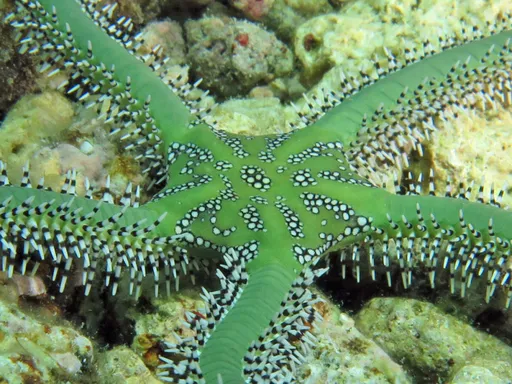 15.7 in (40 cm)79 gal (300 L)75–81°F (24–27°C)
Green brittle star
Ophiarachna incrassata
15.7 in (40 cm) · 79 gal (300 L)
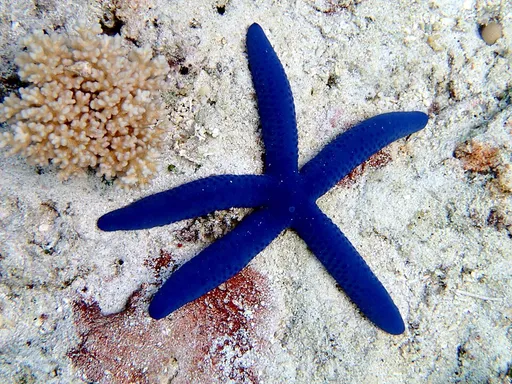 11.8 in (30 cm)53 gal (200 L)75–81°F (24–27°C)
Blue linckia star
Linckia laevigata
11.8 in (30 cm) · 53 gal (200 L)
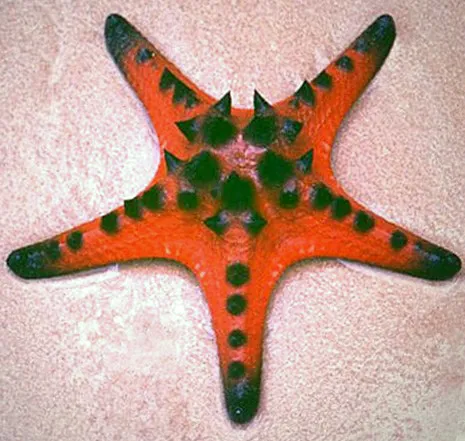 11.8 in (30 cm)53 gal (200 L)75–81°F (24–27°C)
Chocolate chip star
Protoreaster nodosus
11.8 in (30 cm) · 53 gal (200 L)
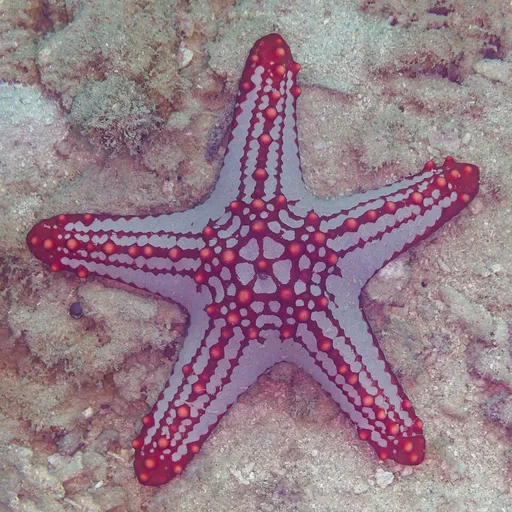 11.8 in (30 cm)53 gal (200 L)75–81°F (24–27°C)
Red knob sea star
Protoreaster linckii
11.8 in (30 cm) · 53 gal (200 L)
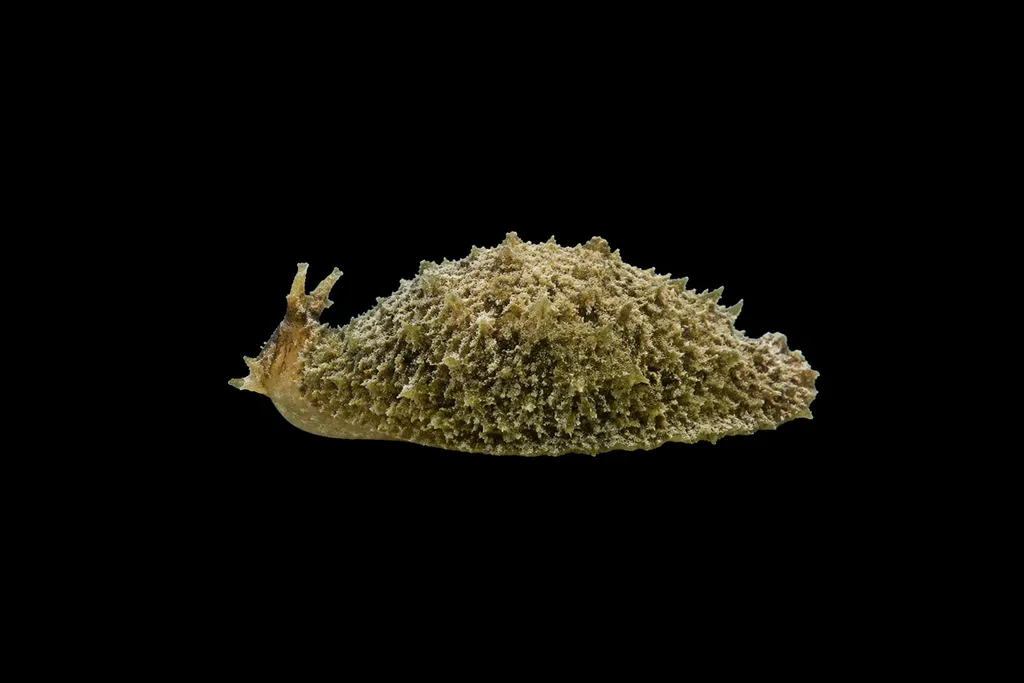 11.8 in (30 cm)50 gal (190 L)75–81°F (24–27°C)
Wedge sea hare
Dolabella auricularia
11.8 in (30 cm) · 50 gal (190 L)
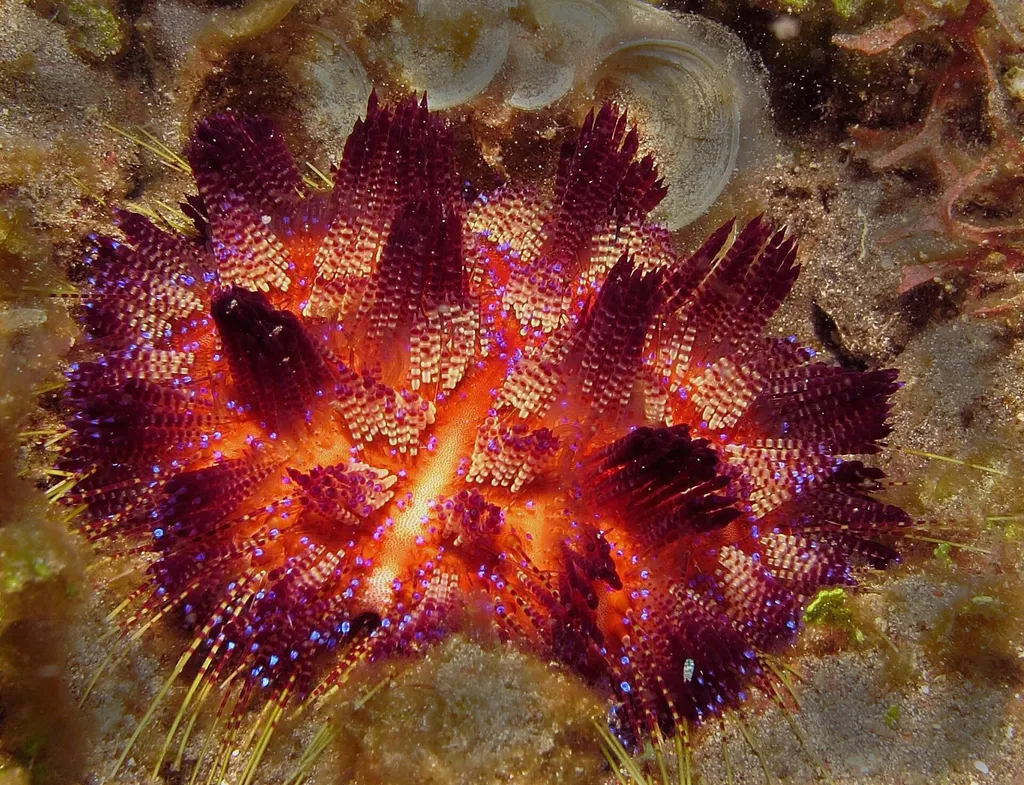 9.8 in (25 cm)201 gal (760 L)72–81°F (22–27°C)
Fire urchin
Asthenosoma varium
9.8 in (25 cm) · 201 gal (760 L)