Green brittle star
Ophiarachna incrassata
Also known as Green Serpent Star, Fancy Green Brittle Star, Stout Green Brittle Star, Green Brittle Starfish
SaltwaterInvertebrate
Care at a glance
- Temperature
- 75–81°F
- 24–27°C
- pH
- 8.1–8.4
- Adult size
- 15.7 in
- 40 cm
- Minimum tank
- 79 gal
- 300 L
- Temperament
- Mostly peaceful
- Social behavior
- Solitary
- Tankmates
- With caution
- Swim level
- Bottom
- Difficulty
- Easy
- Breeding
- No record
- Rarity
- Common
- Reef safe
- Reef safe with caution
- Family
- Ophiodermatidae
- Origin
- Indo-Pacific, hiding under rock and rubble on coral reefs by day.
Overview
It needs a large tank of 300 litres or more at 24 to 27 C and pH 8.1 to 8.4 with heavy rockwork to hide in. It is hardy and easy to feed on chunks of shrimp, mussel, or fish dropped near its arms. The catch is that a large one will hunt and eat small fish, shrimp, and other brittle stars at night, so treat it as a predator and keep it away from small gobies, cardinals, and ornamental shrimp.
In the wild
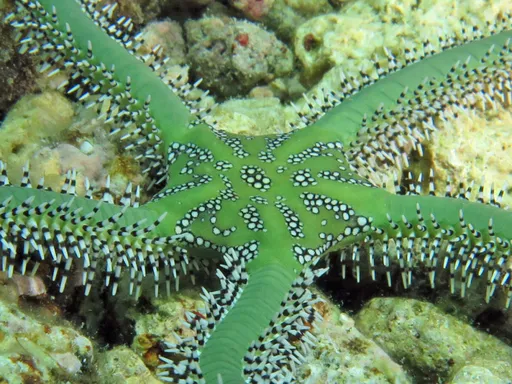
This is a large green brittle star with a disc a couple of centimeters across and five long flexible arms that can span 40 cm or more. It hides in the rockwork by day with just an arm tip showing and comes out to feed after dark. The green coloring often carries a faint banded pattern down the arms.
Good to know
Ophiarachna incrassata is unusual among brittle stars because it is an active predator, not just a scavenger. It has been recorded arching its body into a dome to trap small fish and then dropping down on them.
Did you know
It hunts by curling its arms into a raised dome to lure and shelter sleeping fish underneath, then collapses onto them to feed.
Common questions
What size tank does a Green brittle star need?
A Green brittle star needs at least 79 gal (300 L). It spends most of its time in the bottom.
What temperature and pH does a Green brittle star need?
A Green brittle star is comfortable at 75–81°F (24–27°C) with a pH of 8.1–8.4.
How big does a Green brittle star get?
An adult Green brittle star reaches about 15.7 in (40 cm).
Related species
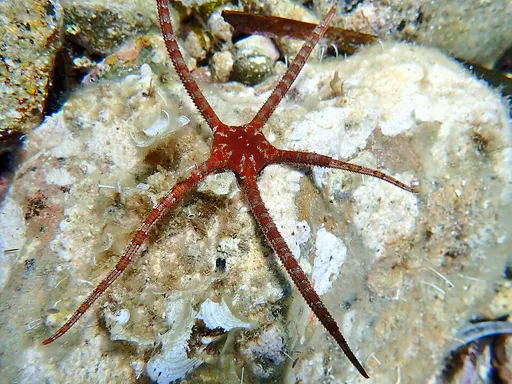 11.8 in (30 cm)26 gal (100 L)72–79°F (22–26°C)
Serpent star
Ophioderma
11.8 in (30 cm) · 26 gal (100 L)
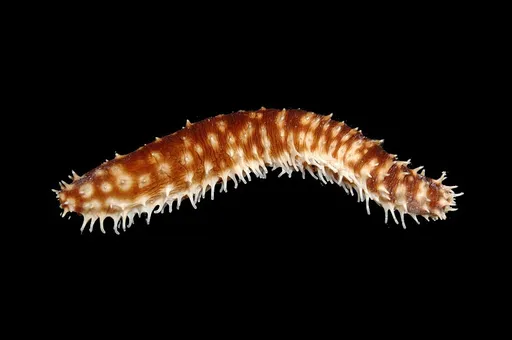 17.7 in (45 cm)50 gal (190 L)72–79°F (22–26°C)
Tiger tail sea cucumber
Holothuria hilla
17.7 in (45 cm) · 50 gal (190 L)
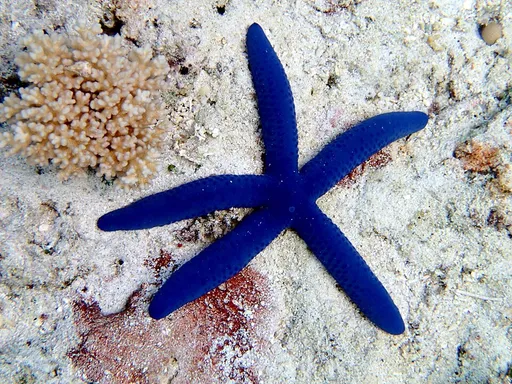 11.8 in (30 cm)53 gal (200 L)75–81°F (24–27°C)
Blue linckia star
Linckia laevigata
11.8 in (30 cm) · 53 gal (200 L)
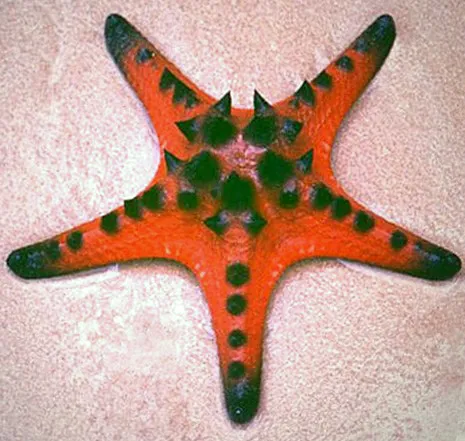 11.8 in (30 cm)53 gal (200 L)75–81°F (24–27°C)
Chocolate chip star
Protoreaster nodosus
11.8 in (30 cm) · 53 gal (200 L)
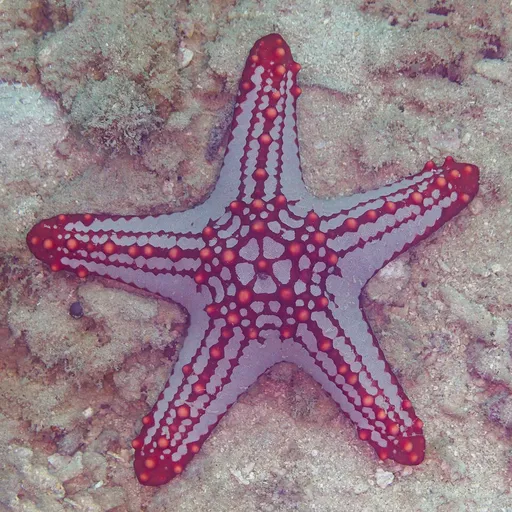 11.8 in (30 cm)53 gal (200 L)75–81°F (24–27°C)
Red knob sea star
Protoreaster linckii
11.8 in (30 cm) · 53 gal (200 L)
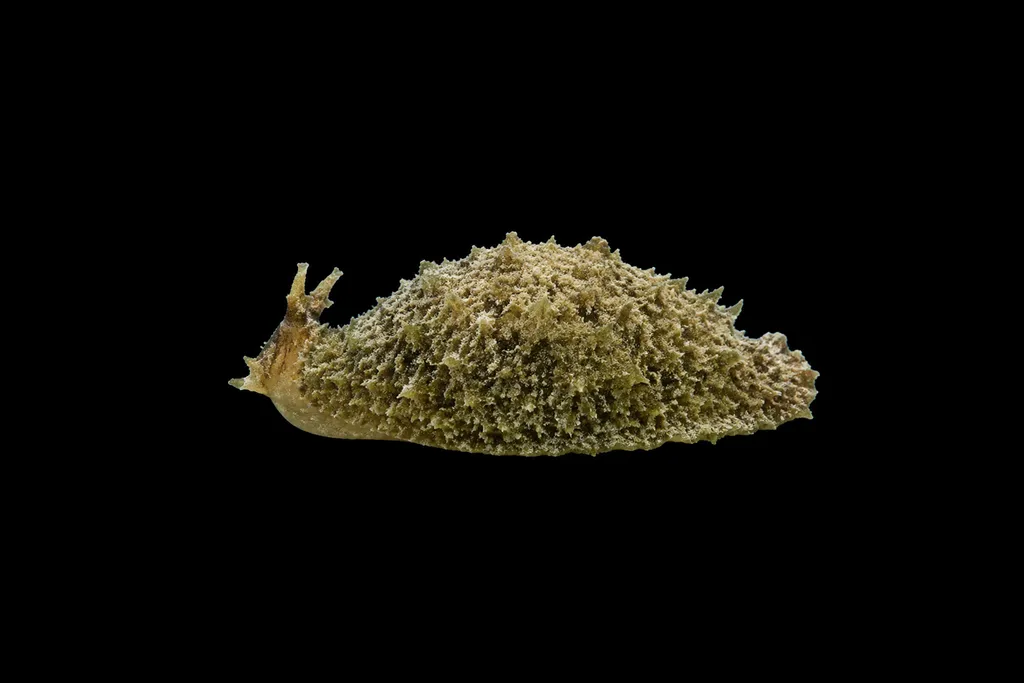 11.8 in (30 cm)50 gal (190 L)75–81°F (24–27°C)
Wedge sea hare
Dolabella auricularia
11.8 in (30 cm) · 50 gal (190 L)