Caribbean doughnut coral
Scolymia cubensis
Also known as Caribbean Scoly, Atlantic Disk Coral, Solitary Disk Coral, Artichoke Coral, Caribbean Button Coral
SaltwaterCoral
Care at a glance
- Temperature
- 73–81°F
- 23–27°C
- pH
- 8.1–8.4
- Adult size
- 3.9 in
- 10 cm
- Minimum tank
- 20 gal
- 75 L
- Temperament
- Mostly peaceful
- Social behavior
- Solitary
- Swim level
- Bottom
- Difficulty
- Medium
- Breeding
- No record
- Rarity
- Rare
- Reef safe
- Reef safe
- Family
- Mussidae
- Origin
- Native to Caribbean and western Atlantic reefs, recorded from Bermuda, Jamaica, the wider Caribbean, and Brazil, often on shaded slopes and channels.
Overview
Place it on the sand bed in a 75 liter or larger reef under low to moderate light with weak flow, mirroring the shaded slopes it comes from. Hold steady reef chemistry with temperature 23 to 27 C, pH 8.1 to 8.4, and stable alkalinity. It benefits from regular feeding of mysis and small meaty foods dropped onto the polyp in the evening. Keep it off strong current and away from taller corals that would shade or sting it.
In the wild
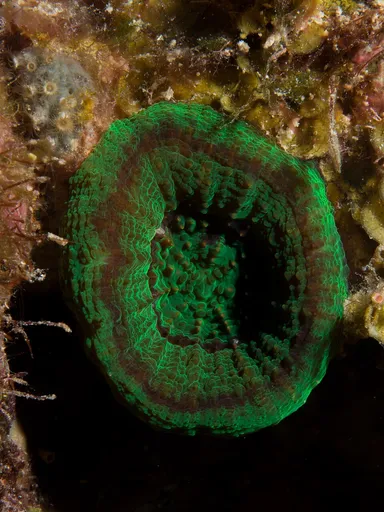
A large solitary polyp that sits as a single flat to cupped disc, usually rusty red, green, or beige with a contrasting mouth. Unlike the colonial brain corals it is one big fleshy polyp, sometimes with a second mouth, and stays around the size of a fist. It lives loose or lightly attached on sloping reef and muddy channels, often in dimmer, sheltered spots. The disc inflates over its skeleton during the day.
Good to know
Scolymia cubensis is a Caribbean member of the family Mussidae, distinct from the Indo-Pacific corals once also called scolymias, which are now placed in Homophyllia and Lobophyllia. It hosts zooxanthellae but supplements light with active feeding. The IUCN lists it as a threatened species, so aquarium specimens are usually aquacultured or collected under Atlantic harvest limits, which keeps it uncommon in the trade.
Did you know
Because it is a single oversized polyp rather than a colony, a healthy specimen showing deep red or green is treated as a collector centerpiece rather than a coral you frag.
Common questions
What size tank does a Caribbean doughnut coral need?
A Caribbean doughnut coral needs at least 20 gal (75 L). It spends most of its time in the bottom.
What temperature and pH does a Caribbean doughnut coral need?
A Caribbean doughnut coral is comfortable at 73–81°F (23–27°C) with a pH of 8.1–8.4.
How big does a Caribbean doughnut coral get?
An adult Caribbean doughnut coral reaches about 3.9 in (10 cm).
Related species
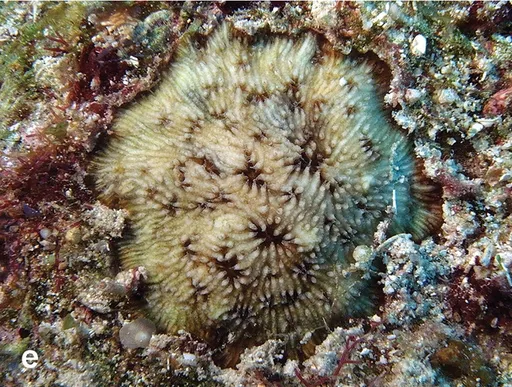 3.1 in (8 cm)20 gal (75 L)75–81°F (24–27°C)
Mobile plate coral
Cycloseris
3.1 in (8 cm) · 20 gal (75 L)
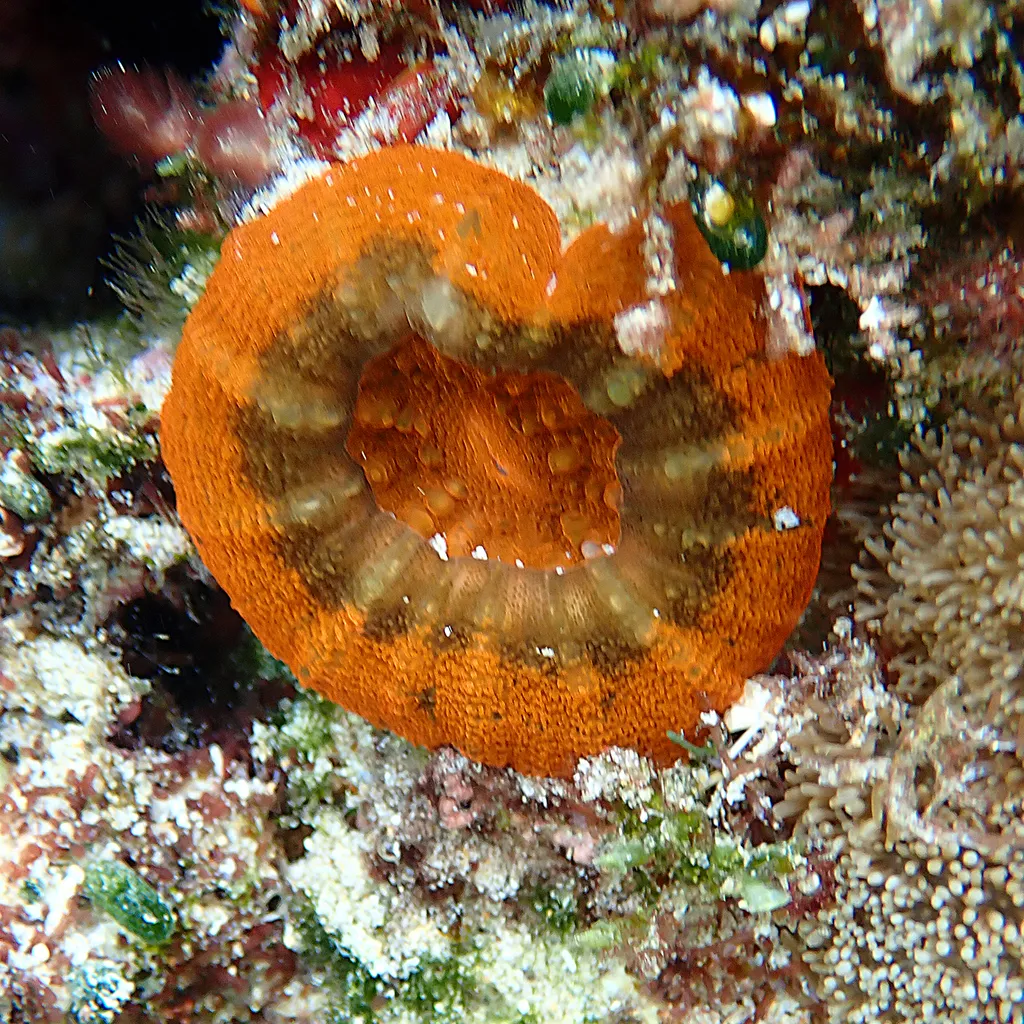 5.1 in (13 cm)11 gal (40 L)75–81°F (24–27°C)
Scoly coral
Homophyllia australis
5.1 in (13 cm) · 11 gal (40 L)
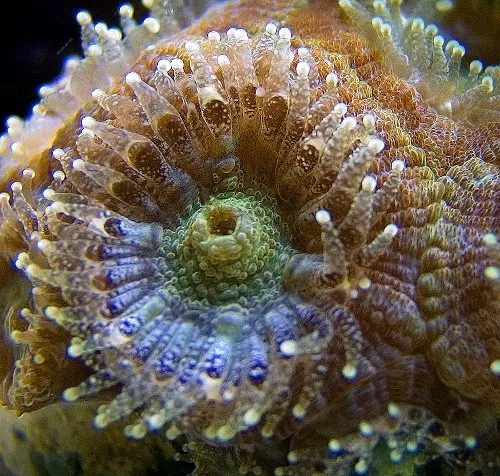 5.9 in (15 cm)11 gal (40 L)75–81°F (24–27°C)
Acan lord coral
Micromussa lordhowensis
5.9 in (15 cm) · 11 gal (40 L)
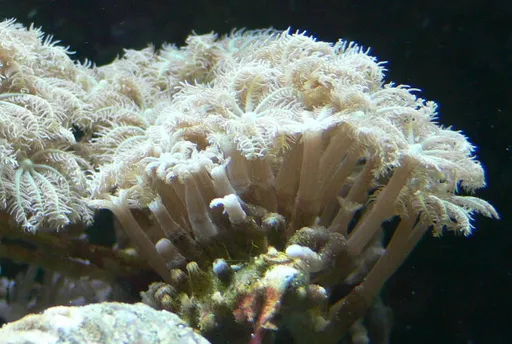 5.9 in (15 cm)11 gal (40 L)75–81°F (24–27°C)
Clove polyps
Clavularia
5.9 in (15 cm) · 11 gal (40 L)
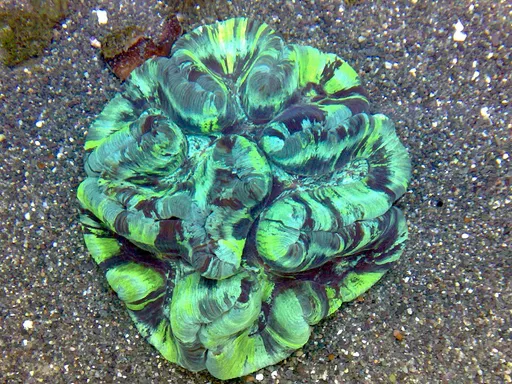 5.9 in (15 cm)11 gal (40 L)75–81°F (24–27°C)
Open brain coral
Trachyphyllia geoffroyi
5.9 in (15 cm) · 11 gal (40 L)
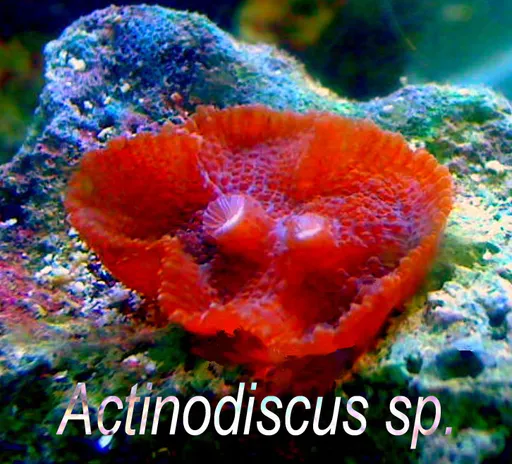 3.9 in (10 cm)11 gal (40 L)75–81°F (24–27°C)
Mushroom coral
Discosoma
3.9 in (10 cm) · 11 gal (40 L)