Mobile plate coral
Cycloseris
Also known as Cyclo Coral, Fringe Plate Coral, Button Plate Coral, Cycloseris Plate, Disc Coral
SaltwaterCoral
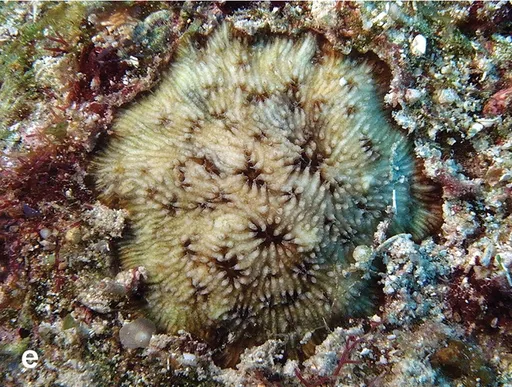
Care at a glance
- Temperature
- 75–81°F
- 24–27°C
- pH
- 8.1–8.4
- Adult size
- 3.1 in
- 8 cm
- Minimum tank
- 20 gal
- 75 L
- Temperament
- Mostly peaceful
- Social behavior
- Solitary
- Swim level
- Bottom
- Diet
- Photosynthetic
- Difficulty
- Medium
- Breeding
- Hard
- Rarity
- Common
- Reef safe
- Reef safe
- Family
- Fungiidae
- Origin
- Lives free on sandy and rubble bottoms between reefs across the Indo-Pacific, often in deeper or sheltered water.
Overview
The mobile plate coral is a small, solitary disc coral that sits loose on the sand rather than cementing to rock. It takes a little more care than a beginner coral.
Did you know
A mobile plate coral that topples upside down can slowly flip itself back over by pumping up its tissue. That makes it one of the few corals that moves under its own power.
Caring for the mobile plate coral
House a mobile plate coral on open sand, with gentle flow and moderate light. Keep it off sharp rock, where its underside can tear.
It needs a reef of at least 20 gal (75 L). Standard reef chemistry works well, at 75 to 81°F (24 to 27°C) and a pH of 8.1 to 8.4. Keep calcium and alkalinity steady for its skeleton. It photosynthesizes, but it responds strongly to spot feeding of mysis or small meaty foods dropped near the mouth.
Keep it clear of other corals, since its central mouth can sting and it may drift into neighbors. It is fine in a group of its own kind.
Good to know
Cycloseris is a genus of free-living corals in the family Fungiidae. Each animal is a single round polyp with fine radiating ridges and a slit mouth in the center. It is often bright red, orange, green or striped. Unlike its larger Fungia relatives, it stays palm-sized and rounded. These corals begin life attached to rock by a small stalk, then break free as a mobile disc once they mature. Research on Cycloseris cyclolites has documented it using tissue inflation and pulsing to right itself and move toward light.
In the wild
The mobile plate coral lives free on sandy and rubble bottoms between reefs across the Indo-Pacific, often in deeper or sheltered water. It inflates its tissue with water to lift off settling grit, and it can creep short distances across the substrate.
Common questions
What size tank does a mobile plate coral need?
A mobile plate coral needs at least 20 gal (75 L).
What temperature and pH does a mobile plate coral need?
A mobile plate coral is comfortable at 75–81°F (24–27°C) with a pH of 8.1–8.4.
What does a mobile plate coral eat?
A mobile plate coral photosynthesizes, but it responds strongly to spot feeding. Drop mysis or small meaty foods near its mouth.
How big does a mobile plate coral get?
An adult mobile plate coral reaches about 3.1 in (8 cm).
Related species
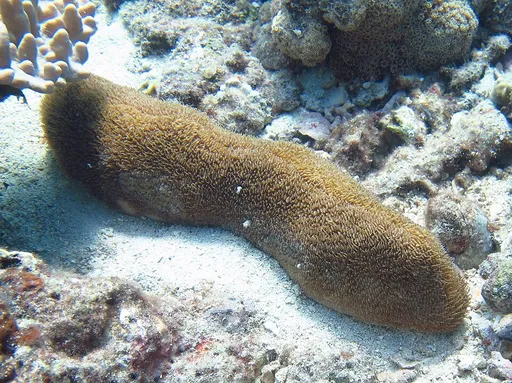 15.7 in (40 cm)40 gal (150 L)75–81°F (24–27°C)
Slipper coral
Polyphyllia talpina
15.7 in (40 cm) · 40 gal (150 L)
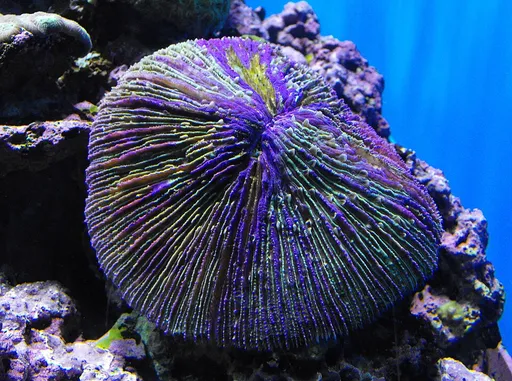 7.9 in (20 cm)11 gal (40 L)75–81°F (24–27°C)
Plate coral
Fungia
7.9 in (20 cm) · 11 gal (40 L)
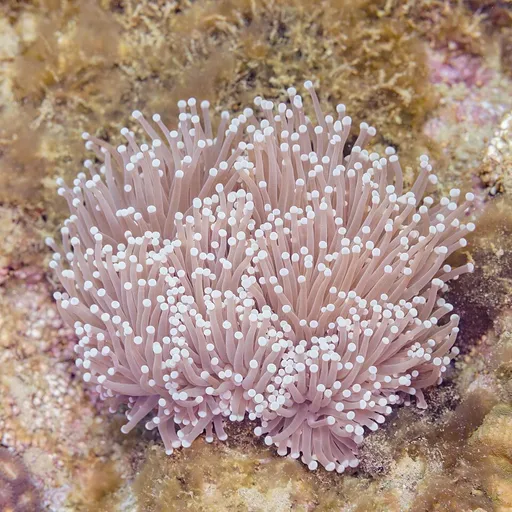 9.8 in (25 cm)11 gal (40 L)75–81°F (24–27°C)
Long-tentacle plate coral
Heliofungia actiniformis
9.8 in (25 cm) · 11 gal (40 L)
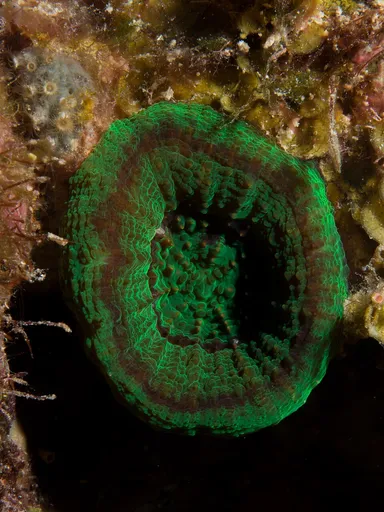 3.9 in (10 cm)20 gal (75 L)73–81°F (23–27°C)
Caribbean doughnut coral
Scolymia cubensis
3.9 in (10 cm) · 20 gal (75 L)
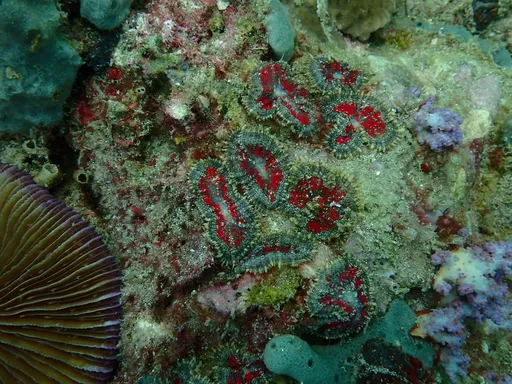 3.1 in (8 cm)11 gal (40 L)75–81°F (24–27°C)
Bullseye mushroom
Rhodactis inchoata
3.1 in (8 cm) · 11 gal (40 L)
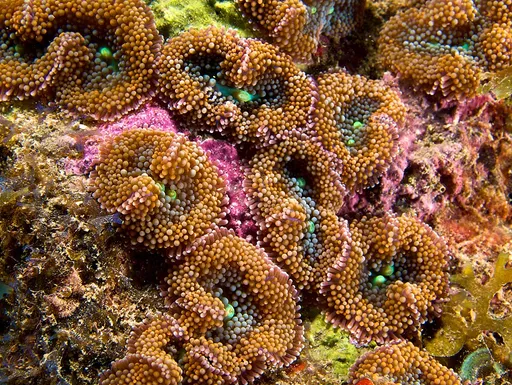 3.1 in (8 cm)11 gal (40 L)75–81°F (24–27°C)
Florida ricordea
Ricordea florida
3.1 in (8 cm) · 11 gal (40 L)