Plate coral
Fungia
Also known as Disc Coral, Mushroom Coral, Fungid Coral
SaltwaterCoral
Care at a glance
- Temperature
- 75–81°F
- 24–27°C
- pH
- 8.1–8.4
- Adult size
- 7.9 in
- 20 cm
- Minimum tank
- 11 gal
- 40 L
- Temperament
- Aggressive
- Social behavior
- Solitary
- Swim level
- Bottom
- Difficulty
- Medium
- Breeding
- No record
- Rarity
- Common
- Reef safe
- Reef safe
- Family
- Fungiidae
- Origin
- Indo-Pacific
Overview
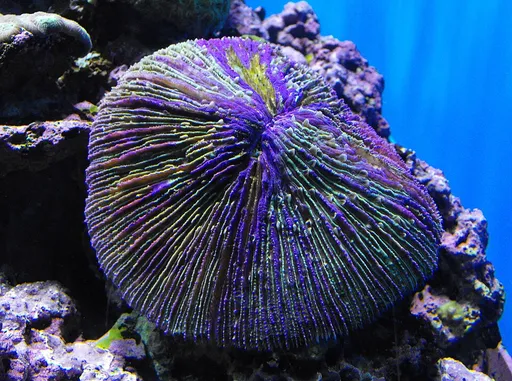
Despite their calm look, plate corals are aggressive neighbors that release toxic slime and can sting corals nearby, so keep 3 to 4 inches of clearance and place them away from torches, chalices and Galaxea. They should sit on open sand where they will not tumble or be crowded. Feed meaty foods one to three times a week at night to boost growth and color.
In the wild
Fungia plate corals are solitary, free-living discs that rest unattached on the sandy or rubble bottom of Indo-Pacific reefs. In the aquarium they belong on the sandbed, not on rock, where their fleshy tissue and underside cannot be scraped. They do best under moderate light around 80 to 150 PAR with gentle to moderate indirect flow, since they cannot anchor and will tumble in strong current. Keep temperature 24 to 27 C and pH 8.1 to 8.4.
Good to know
Fungia is a genus of solitary large polyp stony corals in the family Fungiidae, most of which live as a single free disc rather than a colony. They are photosynthetic but feed well at night when tentacles extend. They can slowly move across the sand by inflating and shifting their tissue, and even right themselves if flipped.
Did you know
A plate coral can slowly walk across the sandbed by inflating and deflating its tissue, and if it gets flipped upside down it can right itself over a day or two.
Common questions
What size tank does a Plate coral need?
A Plate coral needs at least 11 gal (40 L). It spends most of its time in the bottom.
What temperature and pH does a Plate coral need?
A Plate coral is comfortable at 75–81°F (24–27°C) with a pH of 8.1–8.4.
How big does a Plate coral get?
An adult Plate coral reaches about 7.9 in (20 cm).
Related species
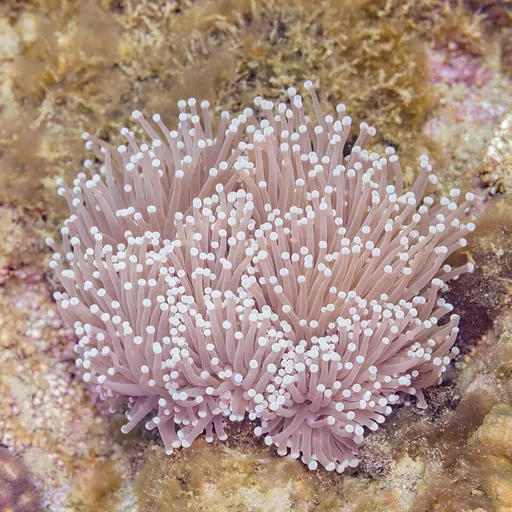 9.8 in (25 cm)11 gal (40 L)75–81°F (24–27°C)
Long-tentacle plate coral
Heliofungia actiniformis
9.8 in (25 cm) · 11 gal (40 L)
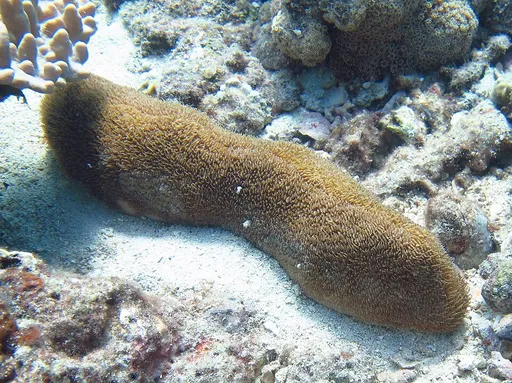 15.7 in (40 cm)40 gal (150 L)75–81°F (24–27°C)
Slipper coral
Polyphyllia talpina
15.7 in (40 cm) · 40 gal (150 L)
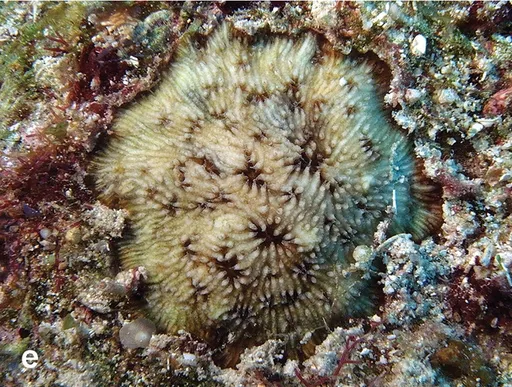 3.1 in (8 cm)20 gal (75 L)75–81°F (24–27°C)
Mobile plate coral
Cycloseris
3.1 in (8 cm) · 20 gal (75 L)
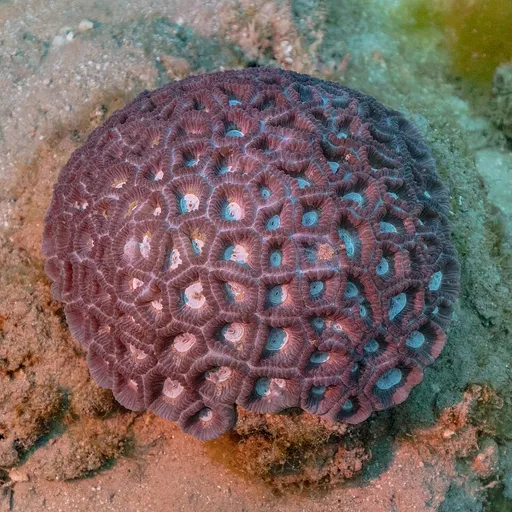 7.9 in (20 cm)20 gal (75 L)75–81°F (24–27°C)
Brain coral (Favia)
Favia
7.9 in (20 cm) · 20 gal (75 L)
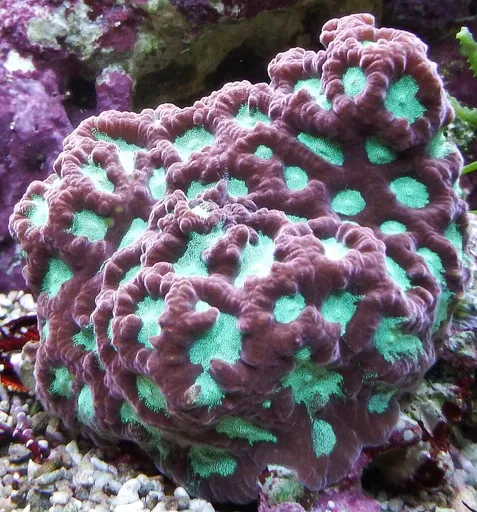 9.8 in (25 cm)20 gal (75 L)75–81°F (24–27°C)
War coral
Favites
9.8 in (25 cm) · 20 gal (75 L)
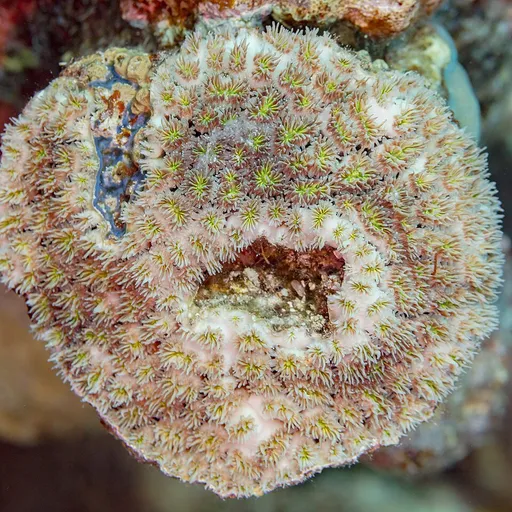 11.8 in (30 cm)20 gal (75 L)75–81°F (24–27°C)
Galaxy coral
Galaxea
11.8 in (30 cm) · 20 gal (75 L)