War coral
Favites
Also known as Moon Coral, Pineapple Coral, Star Coral
SaltwaterCoral
Care at a glance
- Temperature
- 75–81°F
- 24–27°C
- pH
- 8.1–8.4
- Adult size
- 9.8 in
- 25 cm
- Minimum tank
- 20 gal
- 75 L
- Temperament
- Aggressive
- Social behavior
- Solitary
- Swim level
- Bottom
- Difficulty
- Medium
- Breeding
- Medium
- Rarity
- Common
- Reef safe
- Reef safe
- Family
- Merulinidae
- Origin
- Indo-Pacific, from the Red Sea through the Indian Ocean to Japan and the central Pacific
Overview
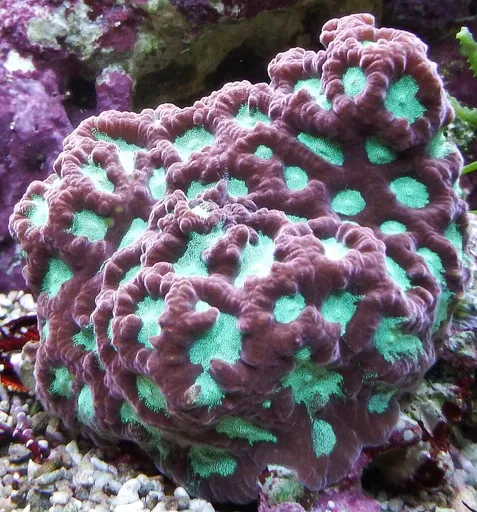
This is the most aggressive coral in this group, extending sweeper tentacles well past its base every night to sting and kill the tissue of anything nearby, so leave a genuine gap of 4 to 6 inches, more with delicate SPS or soft corals downstream of it. Feed it minced meaty foods or brine shrimp two to three times a week, timed just before the lights go down so the tentacles are already extending. It is a rewarding beginner LPS in terms of water chemistry and light tolerance, with the sweeper tentacles being the main thing a keeper has to manage rather than any special water quality need. It frags well by cutting the skeleton between heads, similar to Favia and Platygyra.
In the wild
Favites ranges across the Indo-Pacific from the Red Sea through the Indian Ocean to Japan and the Line and Tuamotu Islands, forming massive dome-shaped colonies on reef flats and slopes. In the aquarium it does well under low to moderate light, roughly 100 to 200 PAR, with moderate indirect flow that keeps its many mouths clear of debris. Place it in the lower two-thirds of the tank with generous room on all sides, since this is one of the more territorial corals here. Keep temperature 24 to 27 C and pH 8.1 to 8.4.
Good to know
Favites is a large polyp stony coral in the family Merulinidae, closely related to and easily confused with Favia, though Favites corallites typically share a common wall with their neighbors while Favia corallites each keep a separate wall. It is photosynthetic but hunts actively after dark, extending long sweeper tentacles tipped in a dense concentration of stinging cells. Its nickname, war coral, comes directly from the visible territorial battles it wages with neighboring corals for space.
Did you know
Time-lapse footage of a Favites colony at night shows neighboring corals visibly recoil or bleach along the edge nearest the war coral, a slow-motion territorial fight that plays out every night but is almost invisible during the day.
Common questions
What size tank does a War coral need?
A War coral needs at least 20 gal (75 L). It spends most of its time in the bottom.
What temperature and pH does a War coral need?
A War coral is comfortable at 75–81°F (24–27°C) with a pH of 8.1–8.4.
How big does a War coral get?
An adult War coral reaches about 9.8 in (25 cm).
Related species
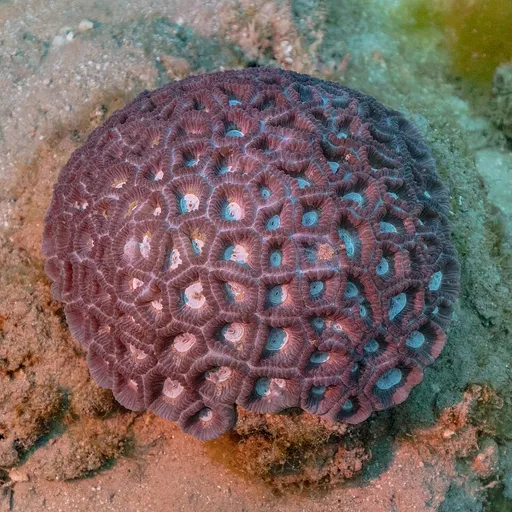 7.9 in (20 cm)20 gal (75 L)75–81°F (24–27°C)
Brain coral (Favia)
Favia
7.9 in (20 cm) · 20 gal (75 L)
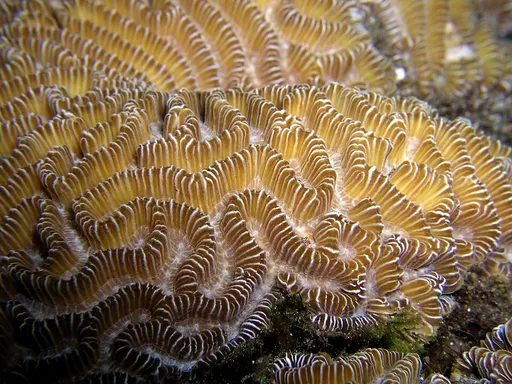 9.8 in (25 cm)20 gal (75 L)75–81°F (24–27°C)
Maze brain coral
Platygyra
9.8 in (25 cm) · 20 gal (75 L)
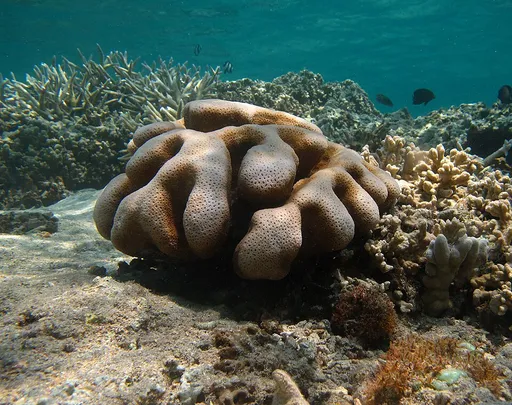 9.8 in (25 cm)20 gal (75 L)75–81°F (24–27°C)
Meteor shower coral
Cyphastrea serailia
9.8 in (25 cm) · 20 gal (75 L)
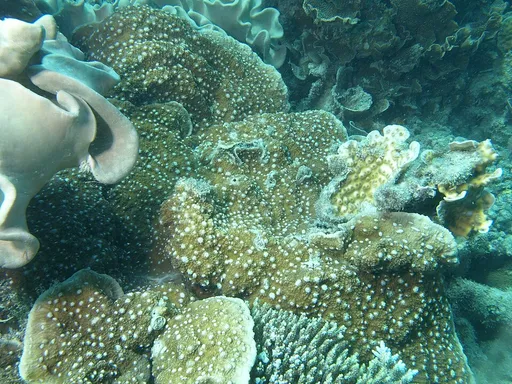 9.8 in (25 cm)26 gal (100 L)75–81°F (24–27°C)
Oxypora chalice coral
Oxypora lacera
9.8 in (25 cm) · 26 gal (100 L)
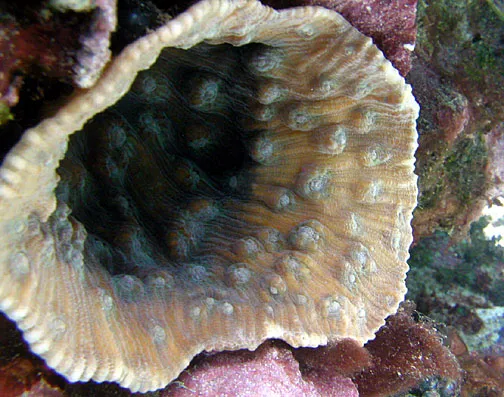 9.8 in (25 cm)26 gal (100 L)75–81°F (24–27°C)
Peacock chalice coral
Mycedium elephantotus
9.8 in (25 cm) · 26 gal (100 L)
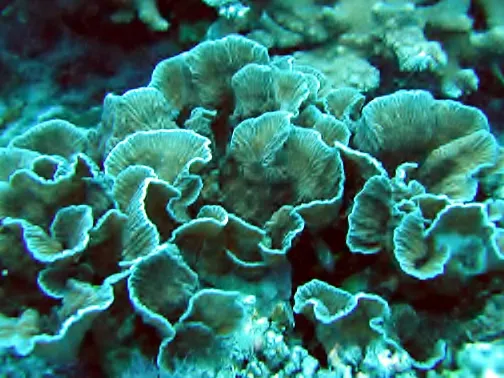 9.8 in (25 cm)26 gal (100 L)75–81°F (24–27°C)
Ruffled coral
Merulina ampliata
9.8 in (25 cm) · 26 gal (100 L)