Maze brain coral
Platygyra
Also known as Brain Worm Coral, Closed Brain Coral, Bowl Coral
SaltwaterCoral
Care at a glance
- Temperature
- 75–81°F
- 24–27°C
- pH
- 8.1–8.4
- Adult size
- 9.8 in
- 25 cm
- Minimum tank
- 20 gal
- 75 L
- Temperament
- Mostly peaceful
- Social behavior
- Solitary
- Swim level
- Bottom
- Difficulty
- Medium
- Breeding
- Medium
- Rarity
- Common
- Reef safe
- Reef safe
- Family
- Merulinidae
- Origin
- Indo-Pacific, from the Red Sea to the central Pacific
Overview
Maze brain is a genuinely semi-aggressive coral, extending sweeper tentacles well beyond its base after dark to sting anything within reach, so give it real spacing rather than tucking it in next to softer corals. Target feeding micro-plankton or minced meaty foods two to three times a week in the evening, as the tentacles emerge, helps color and growth. It tolerates a wider swing in nitrate than most LPS and is considered one of the hardier brain corals for a newer reef keeper. It frags well by cutting through the skeleton between valleys, though each cut piece needs a clean, unbroken wall to recover reliably.
In the wild
Platygyra grows across Indo-Pacific reefs from the Red Sea to the central Pacific, forming dome-shaped colonies on reef flats and slopes in a wide range of depths. In the aquarium it wants moderate light, roughly 100 to 150 PAR, paired with steady, moderately strong indirect flow, since current across the winding valleys seems to matter more to this coral than exact light intensity. Place it low to mid on stable rockwork with clearance on every side for its nighttime tentacles. Keep temperature 24 to 27 C and pH 8.1 to 8.4.
Good to know
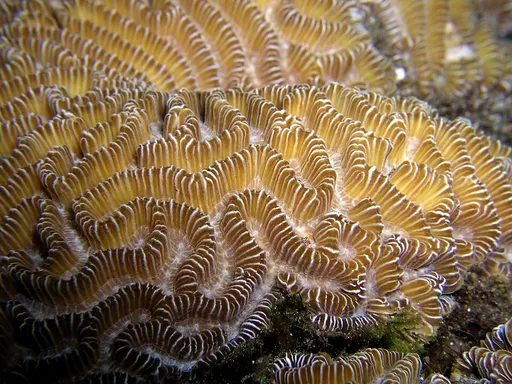
Platygyra is a large polyp stony coral in the family Merulinidae, identified by long, winding meandroid valleys that fuse neighboring corallites into a maze-like pattern, which is where both the genus name and the common name maze coral come from. It is photosynthetic but also an active nighttime predator, and it produces noticeably more mucus than many other LPS when disturbed or stressed. Colonies grow as solid, boulder-like domes that can become one of the more substantial pieces in a mature reef tank.
Did you know
The maze-like ridges that give this coral its name are also its defense system, since the whole network of connected valleys can extend stinging tentacles in unison at night, turning what looks like a static dome into a coordinated wall of nematocysts.
Common questions
What size tank does a Maze brain coral need?
A Maze brain coral needs at least 20 gal (75 L). It spends most of its time in the bottom.
What temperature and pH does a Maze brain coral need?
A Maze brain coral is comfortable at 75–81°F (24–27°C) with a pH of 8.1–8.4.
How big does a Maze brain coral get?
An adult Maze brain coral reaches about 9.8 in (25 cm).
Related species
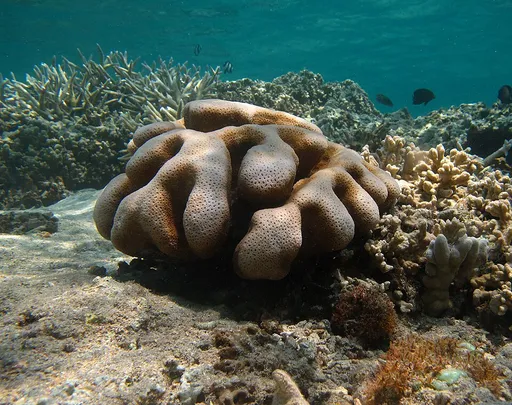 9.8 in (25 cm)20 gal (75 L)75–81°F (24–27°C)
Meteor shower coral
Cyphastrea serailia
9.8 in (25 cm) · 20 gal (75 L)
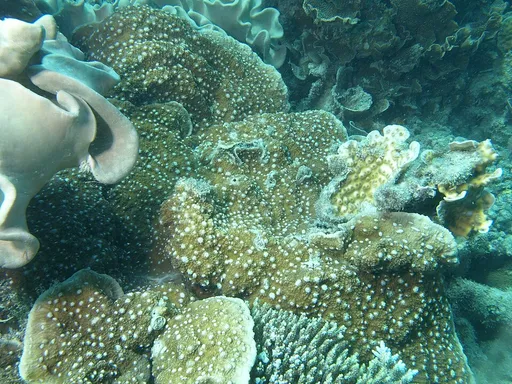 9.8 in (25 cm)26 gal (100 L)75–81°F (24–27°C)
Oxypora chalice coral
Oxypora lacera
9.8 in (25 cm) · 26 gal (100 L)
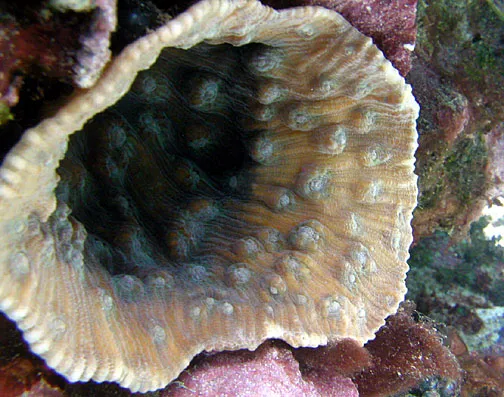 9.8 in (25 cm)26 gal (100 L)75–81°F (24–27°C)
Peacock chalice coral
Mycedium elephantotus
9.8 in (25 cm) · 26 gal (100 L)
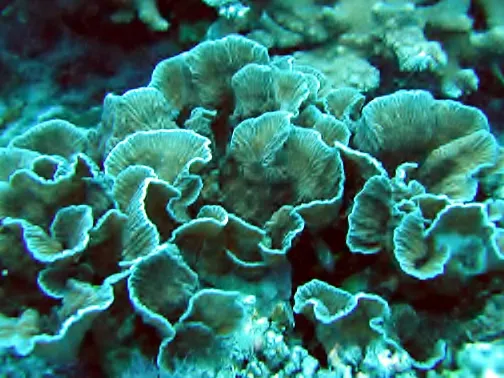 9.8 in (25 cm)26 gal (100 L)75–81°F (24–27°C)
Ruffled coral
Merulina ampliata
9.8 in (25 cm) · 26 gal (100 L)
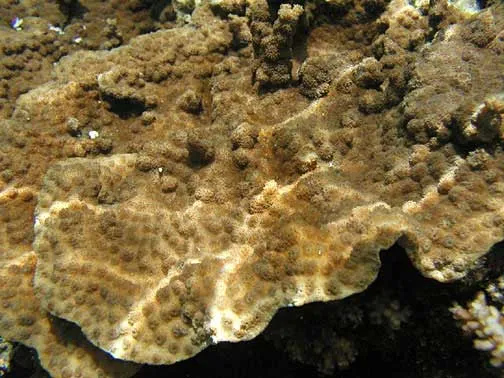 11.8 in (30 cm)26 gal (100 L)75–81°F (24–27°C)
Hedgehog coral
Echinopora lamellosa
11.8 in (30 cm) · 26 gal (100 L)
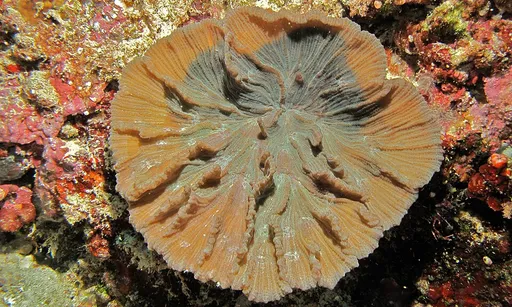 11.8 in (30 cm)20 gal (75 L)75–81°F (24–27°C)
Pectinia coral
Pectinia
11.8 in (30 cm) · 20 gal (75 L)