Pectinia coral
Pectinia
Also known as Lettuce Coral, Carnation Coral, Rainbow Pectinia
SaltwaterCoral
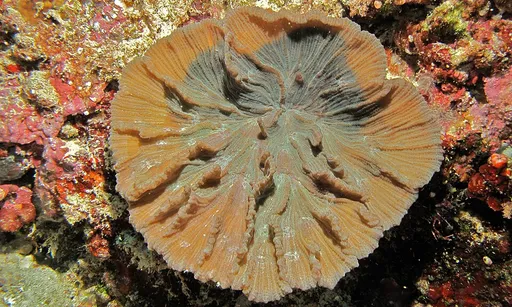
Care at a glance
- Temperature
- 75–81°F
- 24–27°C
- pH
- 8.1–8.4
- Adult size
- 11.8 in
- 30 cm
- Minimum tank
- 20 gal
- 75 L
- Temperament
- Mostly peaceful
- Social behavior
- Solitary
- Swim level
- Bottom
- Difficulty
- Medium
- Breeding
- Medium
- Rarity
- Common
- Reef safe
- Reef safe
- Family
- Merulinidae
- Origin
- Indo-Pacific reefs, from Indonesia and the Philippines to the Great Barrier Reef, mostly on deeper reef slopes and lagoon walls
Overview
Pectinia as a whole is not considered a particularly aggressive coral, but it does carry sweeper tentacles that can reach several inches, so give it 6 to 8 inches of clearance from its neighbors; one striking morph, the Space Invader, is notably more aggressive and regularly extends sweepers, so treat it with extra caution. It feeds eagerly and takes coral pellets, brine shrimp, mysis and krill directly, target fed 2 to 3 times a week, and while it often feeds more readily after dark it can be trained onto a daytime schedule. Fragging follows standard LPS practice, cutting between lobes with a bandsaw or nippers.
In the wild
Pectinia lives on deeper reef slopes and lagoon walls across the Indo-Pacific, from Indonesia and the Philippines to the Great Barrier Reef, forming ruffled plates with tall, spiky ridges that give it a lettuce or carnation-like look. It is not a particularly light-hungry coral and does well under moderate light around 100 PAR for 8 to 10 hours a day; stronger light held for more than a few days can cause tissue damage. It prefers gentle to moderate flow, just enough to keep debris from settling in its folds, since strong or direct current can tear its soft tissue. Mount it on rockwork rather than sand at 24 to 27 C and pH 8.1 to 8.4, away from the tank's brightest, highest-flow zones.
Good to know
Pectinia is a large polyp stony coral now placed in the family Merulinidae, after the older family Pectiniidae was dissolved once genetic studies showed it did not represent a natural group; the closely related chalice genera Echinophyllia and Oxypora were moved into a different family, Lobophylliidae, in the same overhaul. It builds a distinctive plate skeleton with tall vertical laminae, or blades, radiating up from the base, which is what gives the coral its ruffled, lettuce-like structure. It is photosynthetic but also an active, capable feeder that grabs food with its polyps rather than only absorbing it.
Did you know
Pectinia colonies fluoresce intensely under blue actinic light, and the rare Space Invader color morph, named for its jagged green and purple pattern, is both one of the most sought-after Pectinia in the hobby and one of the few that actually lives up to an aggressive reputation.
Common questions
What size tank does a Pectinia coral need?
A Pectinia coral needs at least 20 gal (75 L). It spends most of its time in the bottom.
What temperature and pH does a Pectinia coral need?
A Pectinia coral is comfortable at 75–81°F (24–27°C) with a pH of 8.1–8.4.
How big does a Pectinia coral get?
An adult Pectinia coral reaches about 11.8 in (30 cm).
Related species
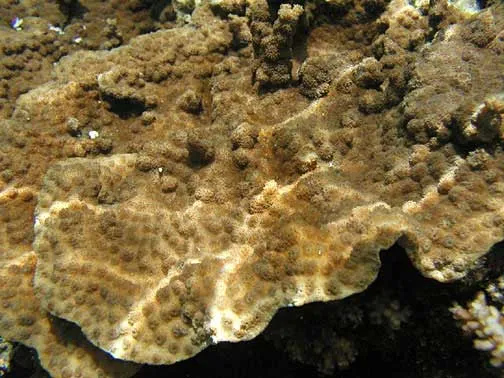 11.8 in (30 cm)26 gal (100 L)75–81°F (24–27°C)
Hedgehog coral
Echinopora lamellosa
11.8 in (30 cm) · 26 gal (100 L)
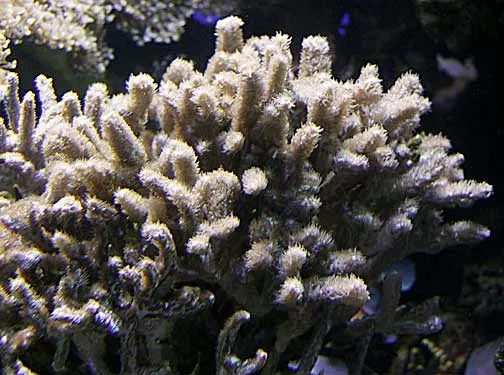 11.8 in (30 cm)26 gal (100 L)75–81°F (24–27°C)
Velvet horn coral
Hydnophora rigida
11.8 in (30 cm) · 26 gal (100 L)
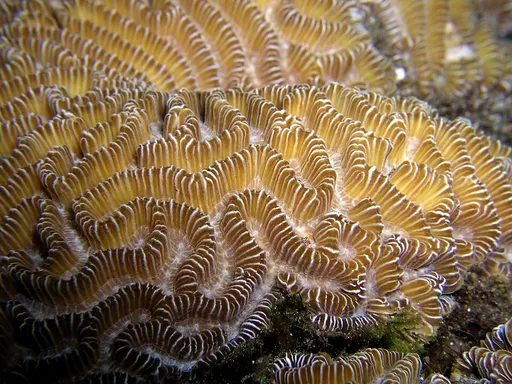 9.8 in (25 cm)20 gal (75 L)75–81°F (24–27°C)
Maze brain coral
Platygyra
9.8 in (25 cm) · 20 gal (75 L)
 9.8 in (25 cm)20 gal (75 L)75–81°F (24–27°C)
Meteor shower coral
Cyphastrea serailia
9.8 in (25 cm) · 20 gal (75 L)
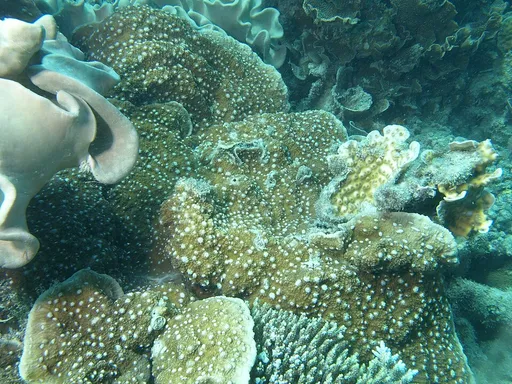 9.8 in (25 cm)26 gal (100 L)75–81°F (24–27°C)
Oxypora chalice coral
Oxypora lacera
9.8 in (25 cm) · 26 gal (100 L)
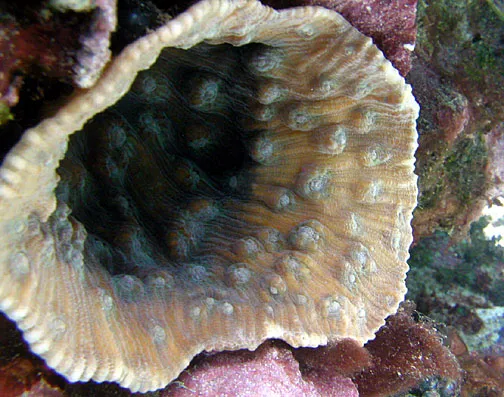 9.8 in (25 cm)26 gal (100 L)75–81°F (24–27°C)
Peacock chalice coral
Mycedium elephantotus
9.8 in (25 cm) · 26 gal (100 L)