Galaxy coral
Galaxea
Also known as Star Coral, Tooth Coral, Crystal Coral, Octopus Coral
SaltwaterCoral
Care at a glance
- Temperature
- 75–81°F
- 24–27°C
- pH
- 8.1–8.4
- Adult size
- 11.8 in
- 30 cm
- Minimum tank
- 20 gal
- 75 L
- Temperament
- Aggressive
- Social behavior
- Solitary
- Swim level
- Bottom
- Difficulty
- Medium
- Breeding
- Hard
- Rarity
- Common
- Reef safe
- Reef safe
- Family
- Euphylliidae
- Origin
- Indo-Pacific and the Red Sea, from East Africa and the Gulf of Aden to the Great Barrier Reef, Fiji, and Samoa
Overview
Give it moderate light around 75–150 PAR and medium to fairly strong, turbulent flow, avoiding a direct jet that can cause tissue recession. Placement is the single most important part of keeping Galaxea: put it on its own island rock with at least 6–12 inches of open water on every side, well clear of anything its fully extended sweepers could reach. Those sweepers come out both day and night and will sting and can kill less aggressive neighbors, so treat the spacing as non-negotiable rather than optional. It feeds well on brine or mysis shrimp, though it also draws real energy from light. Propagating it calls for a saw rather than simple hand-snapping, since the fused skeleton between polyps is tougher to cut cleanly than a typical Euphyllia branch.
In the wild
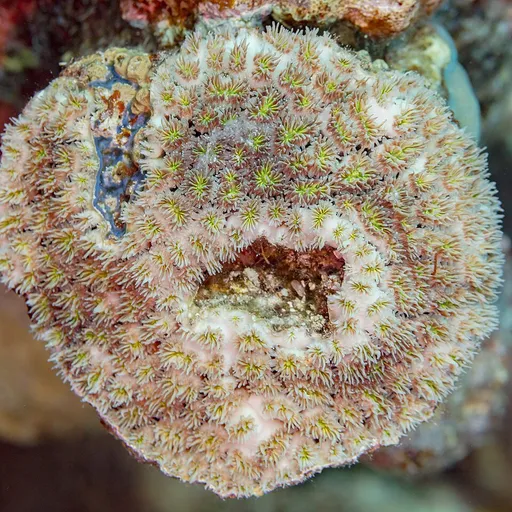
Galaxea forms encrusting to mounding colonies on reef slopes with weak wave action across the Indo-Pacific and Red Sea, typically in shallow water only a few meters deep, and wild colonies can eventually grow into columns several meters across. Each polyp sits in its own star-shaped corallite tipped with tiny contrasting points, which is where both the Galaxy Coral and Star Coral names come from. In the tank it needs its own dedicated space, ideally an island of rock with open water on every side rather than a spot worked into the main aquascape.
Good to know
Galaxea is a colonial large polyp stony coral in the family Euphylliidae, related to Euphyllia despite its very different star-studded look. It carries some of the longest and most damaging sweeper tentacles of any commonly kept coral, capable of stretching to roughly 6–12 inches (15–30 cm) at night to sting anything within reach, far beyond what a hammer or torch coral can manage. Its skeleton is also notably brittle and fractures easily, which is where its other common name, brittle coral, comes from.
Did you know
Galaxea's sweeper tentacles can stretch to many times their resting length and reach up to a foot from the coral, among the longest reach of any sweeper in the hobby, which is why experienced reefers give it an entire rock to itself rather than tucking it into a mixed reef display.
Common questions
What size tank does a Galaxy coral need?
A Galaxy coral needs at least 20 gal (75 L). It spends most of its time in the bottom.
What temperature and pH does a Galaxy coral need?
A Galaxy coral is comfortable at 75–81°F (24–27°C) with a pH of 8.1–8.4.
How big does a Galaxy coral get?
An adult Galaxy coral reaches about 11.8 in (30 cm).
Related species
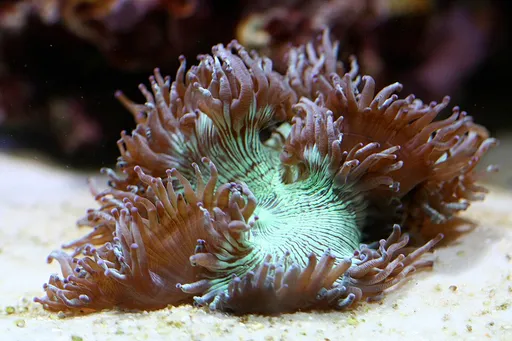 11.8 in (30 cm)20 gal (75 L)75–81°F (24–27°C)
Elegance coral
Catalaphyllia jardinei
11.8 in (30 cm) · 20 gal (75 L)
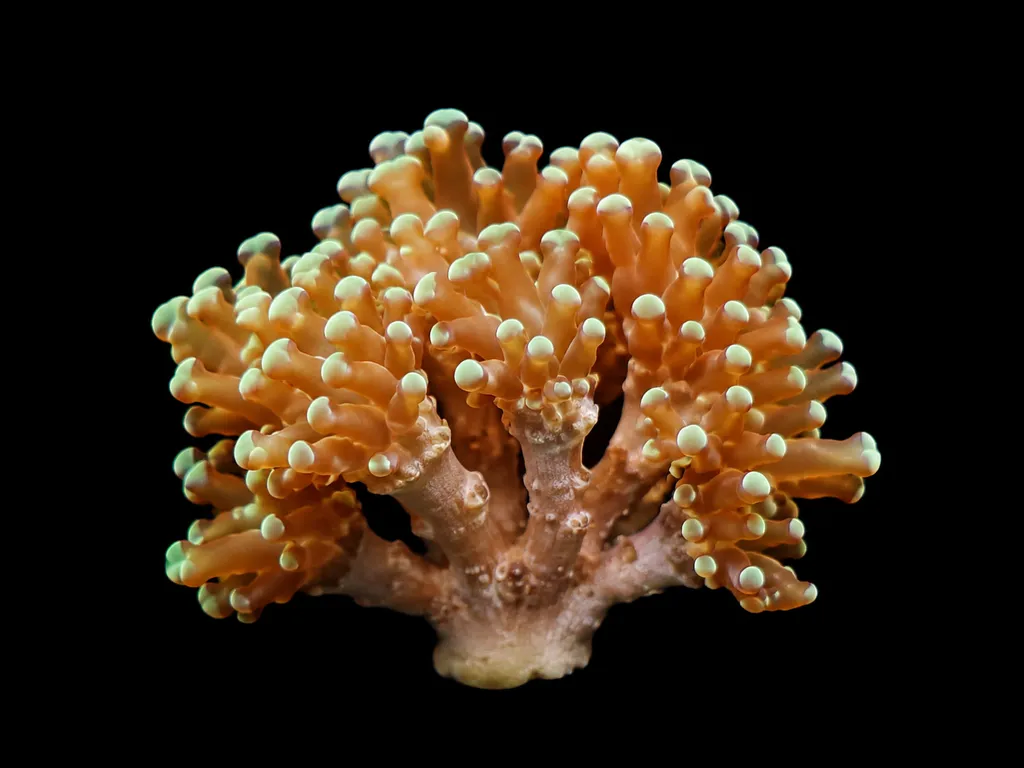 7.9 in (20 cm)20 gal (75 L)75–81°F (24–27°C)
Branching frogspawn coral
Fimbriaphyllia paradivisa
7.9 in (20 cm) · 20 gal (75 L)
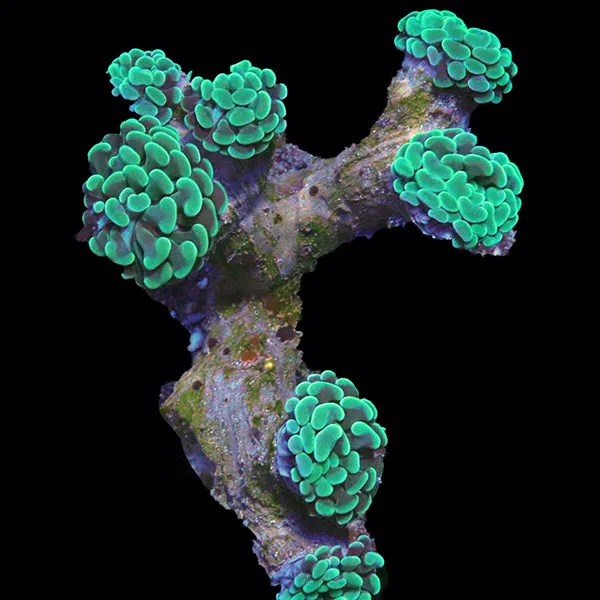 7.9 in (20 cm)20 gal (75 L)75–81°F (24–27°C)
Branching hammer coral
Fimbriaphyllia paraancora
7.9 in (20 cm) · 20 gal (75 L)
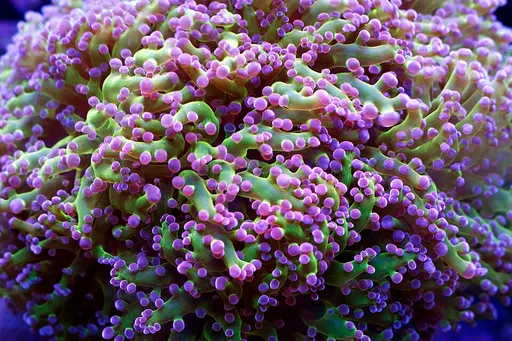 7.9 in (20 cm)20 gal (75 L)75–81°F (24–27°C)
Frogspawn coral
Fimbriaphyllia divisa
7.9 in (20 cm) · 20 gal (75 L)
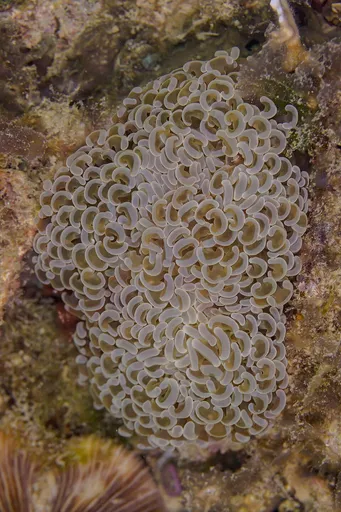 7.9 in (20 cm)20 gal (75 L)75–81°F (24–27°C)
Hammer coral
Fimbriaphyllia ancora
7.9 in (20 cm) · 20 gal (75 L)
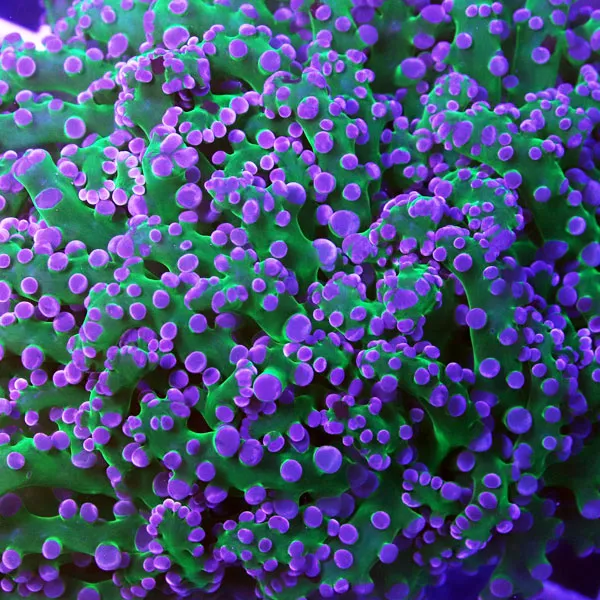 7.9 in (20 cm)20 gal (75 L)75–81°F (24–27°C)
Octospawn coral
Fimbriaphyllia yaeyamaensis
7.9 in (20 cm) · 20 gal (75 L)