Hammer coral
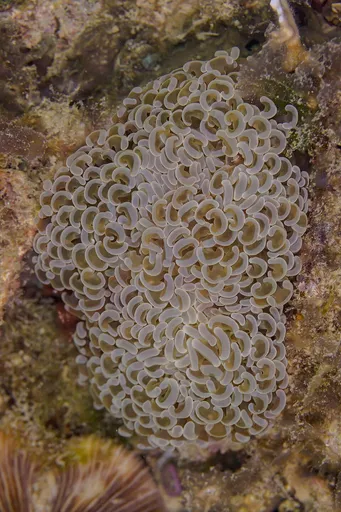
Fimbriaphyllia ancora
Also known as Euphyllia ancora, Anchor Coral, Hammerhead Coral, Euphyllia Hammer
SaltwaterCoral
Care at a glance
- Temperature
- 75–81°F
- 24–27°C
- pH
- 8.1–8.4
- Adult size
- 7.9 in
- 20 cm
- Minimum tank
- 20 gal
- 75 L
- Temperament
- Mostly peaceful
- Social behavior
- Solitary
- Swim level
- Bottom
- Difficulty
- Medium
- Breeding
- Medium
- Rarity
- Very common
- Reef safe
- Reef safe
- Family
- Euphylliidae
- Origin
- Indo-Pacific
Overview
A moderately aggressive LPS that will chemically burn non-Euphyllia neighbors with its sweeper tentacles, so give it at least 6 inches of clearance from other corals. It generally tolerates being kept close to other Euphyllia such as torch and frogspawn. It is photosynthetic and can be target fed once or twice a week to boost growth, though feeding is optional. Fragging is the usual way to propagate it.
In the wild
Hammer corals come from reef slopes and lagoons across the Indo-Pacific, where the fleshy tentacles tipped with a hammer or anchor shape sway in gentle current. In the aquarium they want moderate light around 80 to 150 PAR and low to moderate indirect flow, enough to make the tentacles sway without blasting them back into the skeleton. Place them from the sandbed to the lower and middle rockwork depending on how strong your lighting is. Temperature 24 to 27 C and pH 8.1 to 8.4 suit them, and they need stable, mature water more than a large volume.
Good to know
Euphyllia ancora is a large polyp stony coral in the family Euphylliidae, identified by the hammer or anchor shaped tips on its tentacles. It carries stinging sweeper tentacles loaded with nematocysts that can extend several inches, mainly after lights out. It gets most of its energy from symbiotic zooxanthellae but will also capture meaty foods.
Did you know
Even though hammer corals sting most other corals with their sweepers, they usually get along fine placed right next to other Euphyllia like torch and frogspawn.
Common questions
What size tank does a Hammer coral need?
A Hammer coral needs at least 20 gal (75 L). It spends most of its time in the bottom.
What temperature and pH does a Hammer coral need?
A Hammer coral is comfortable at 75–81°F (24–27°C) with a pH of 8.1–8.4.
How big does a Hammer coral get?
An adult Hammer coral reaches about 7.9 in (20 cm).
Related species
 7.9 in (20 cm)20 gal (75 L)75–81°F (24–27°C)
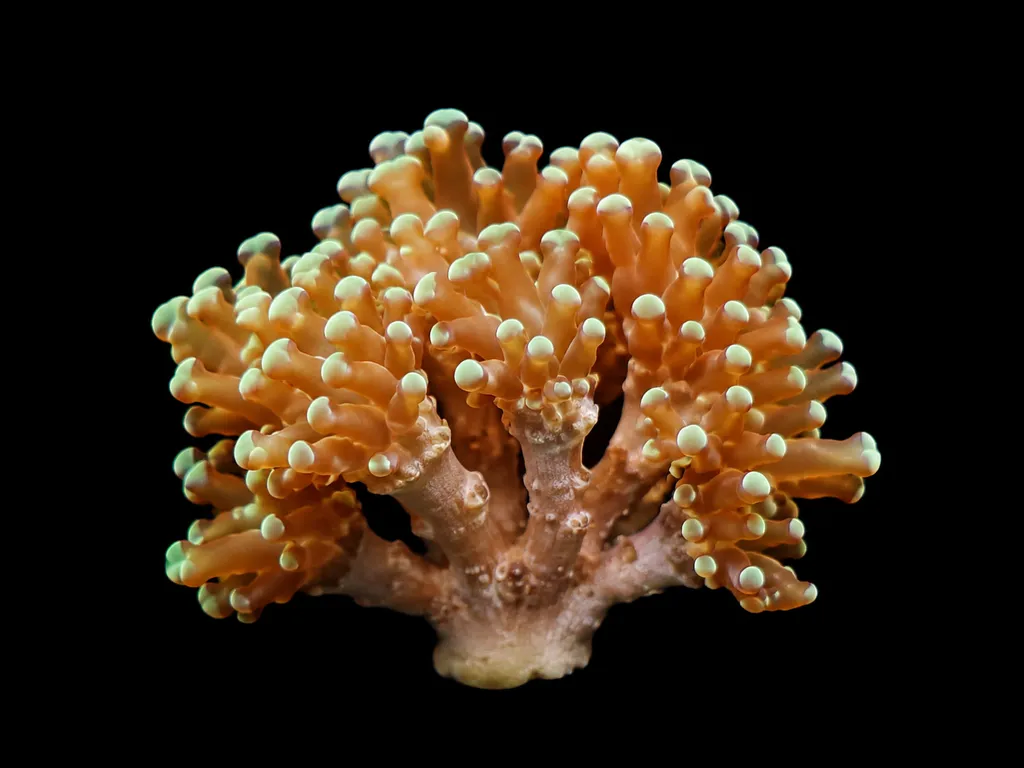
Branching frogspawn coral
Fimbriaphyllia paradivisa
7.9 in (20 cm) · 20 gal (75 L)
 7.9 in (20 cm)20 gal (75 L)75–81°F (24–27°C)
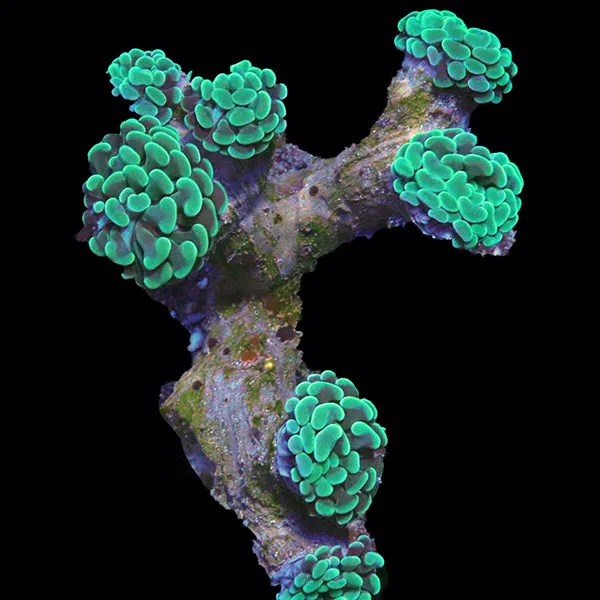
Branching hammer coral
Fimbriaphyllia paraancora
7.9 in (20 cm) · 20 gal (75 L)
 7.9 in (20 cm)20 gal (75 L)75–81°F (24–27°C)
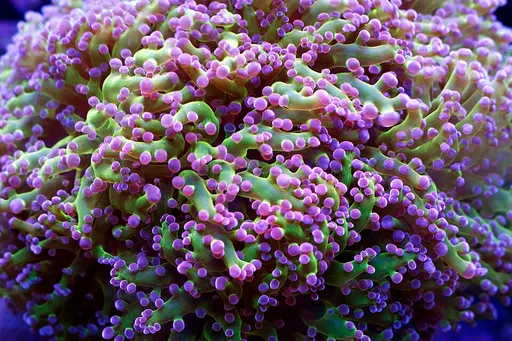
Frogspawn coral
Fimbriaphyllia divisa
7.9 in (20 cm) · 20 gal (75 L)
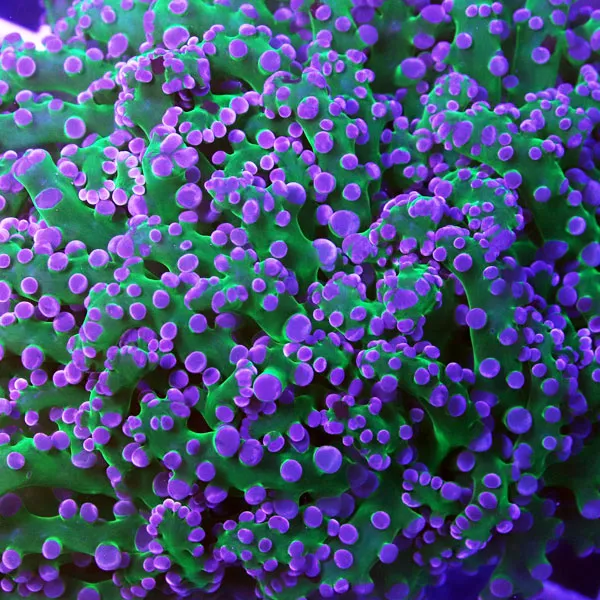 7.9 in (20 cm)20 gal (75 L)75–81°F (24–27°C)
Octospawn coral
Fimbriaphyllia yaeyamaensis
7.9 in (20 cm) · 20 gal (75 L)
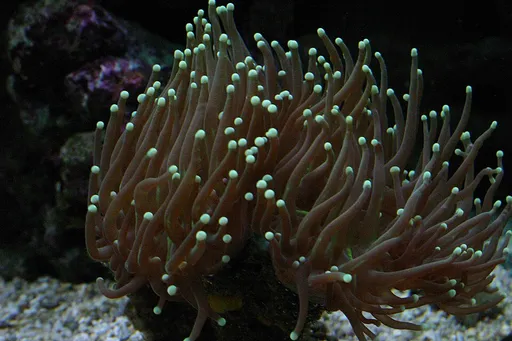 7.9 in (20 cm)20 gal (75 L)75–81°F (24–27°C)
Torch coral
Euphyllia glabrescens
7.9 in (20 cm) · 20 gal (75 L)
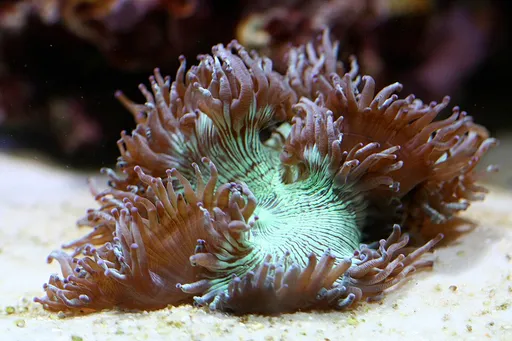 11.8 in (30 cm)20 gal (75 L)75–81°F (24–27°C)
Elegance coral
Catalaphyllia jardinei
11.8 in (30 cm) · 20 gal (75 L)