Frogspawn coral
Fimbriaphyllia divisa
Also known as Euphyllia divisa, Grape Coral, Octopus Coral, Euphyllia Frogspawn
SaltwaterCoral
Care at a glance
- Temperature
- 75–81°F
- 24–27°C
- pH
- 8.1–8.4
- Adult size
- 7.9 in
- 20 cm
- Minimum tank
- 20 gal
- 75 L
- Temperament
- Mostly peaceful
- Social behavior
- Solitary
- Swim level
- Bottom
- Difficulty
- Medium
- Breeding
- Medium
- Rarity
- Very common
- Reef safe
- Reef safe
- Family
- Euphylliidae
- Origin
- Indo-Pacific
Overview
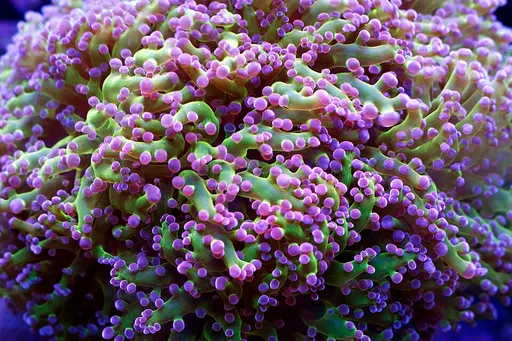
A semi-aggressive LPS whose night-time sweepers can reach 6 to 8 inches, so leave at least 6 inches around it and watch the downstream side where sweepers drift. It gets along with other Euphyllia. It is a reluctant feeder that often refuses food and does fine fed only about once a week or not at all. Fragging along the branches is the usual propagation method.
In the wild
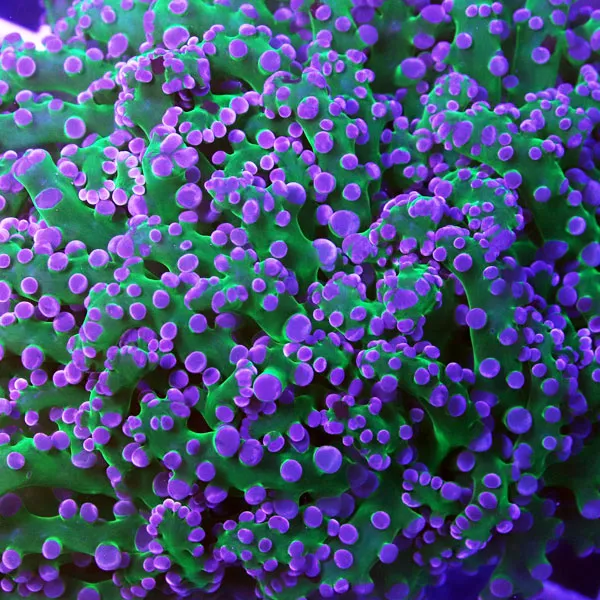
Frogspawn is found across the Pacific and is named for its branching tentacles that end in rounded, split tips resembling a mass of frog eggs. It is one of the easier Euphyllia and a good first LPS, wanting moderate light near 100 to 125 PAR and low to moderate indirect flow. Too much flow makes it retract its tentacles. Place it on lower to middle rockwork with clearance from other corals, at 24 to 27 C and pH 8.1 to 8.4.
Good to know
Euphyllia divisa is a large polyp stony coral closely related to hammer and torch coral. It gets much of its nutrition from symbiotic zooxanthellae and can survive on light alone, unlike hungrier LPS. At night it extends sweeper tentacles roughly 6 to 8 inches to defend territory and catch food.
Did you know
Frogspawn gets so much of its energy from its symbiotic algae that many hobbyists never feed it at all and it still grows well.
Common questions
What size tank does a Frogspawn coral need?
A Frogspawn coral needs at least 20 gal (75 L). It spends most of its time in the bottom.
What temperature and pH does a Frogspawn coral need?
A Frogspawn coral is comfortable at 75–81°F (24–27°C) with a pH of 8.1–8.4.
How big does a Frogspawn coral get?
An adult Frogspawn coral reaches about 7.9 in (20 cm).
Related species
 7.9 in (20 cm)20 gal (75 L)75–81°F (24–27°C)
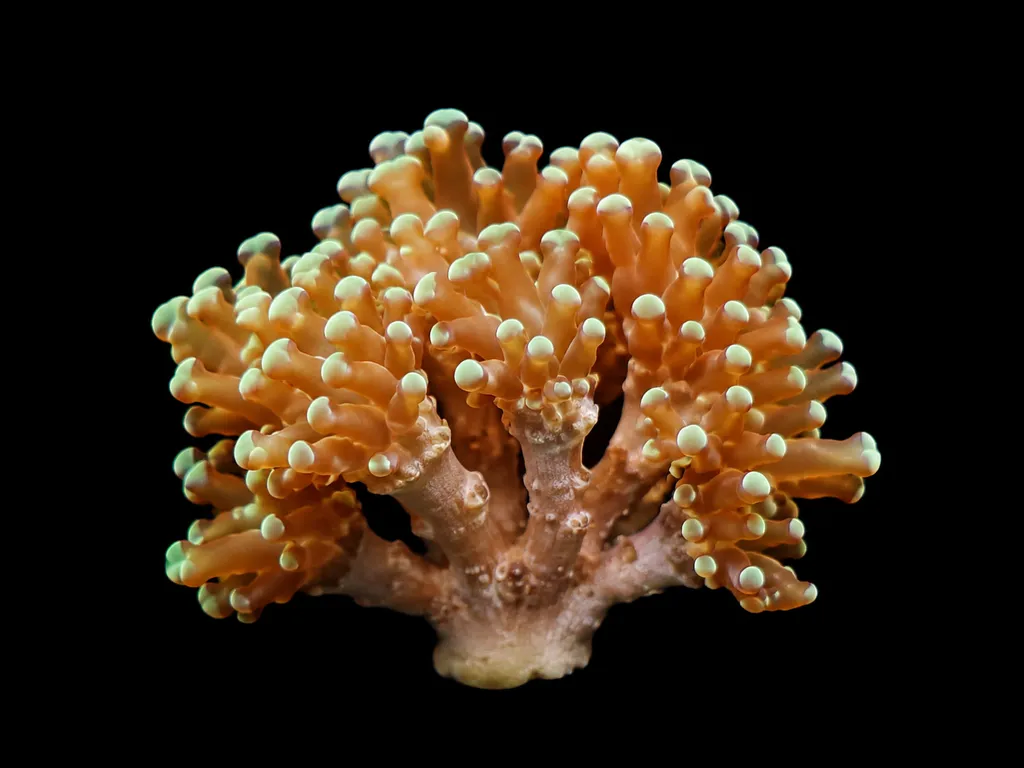
Branching frogspawn coral
Fimbriaphyllia paradivisa
7.9 in (20 cm) · 20 gal (75 L)
 7.9 in (20 cm)20 gal (75 L)75–81°F (24–27°C)
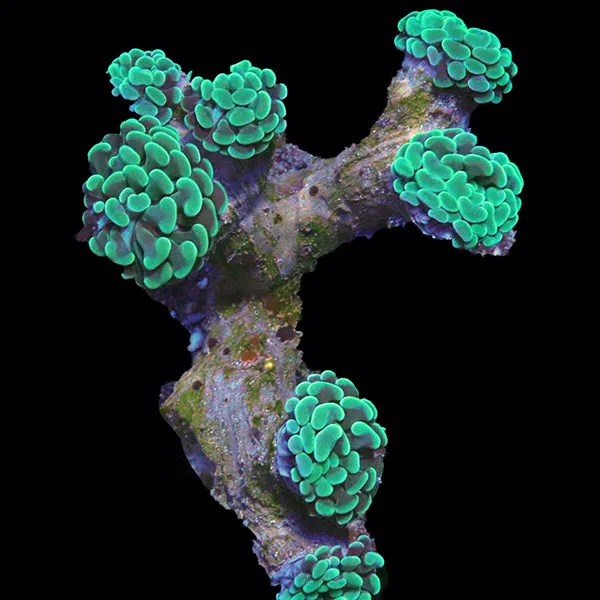
Branching hammer coral
Fimbriaphyllia paraancora
7.9 in (20 cm) · 20 gal (75 L)
 7.9 in (20 cm)20 gal (75 L)75–81°F (24–27°C)
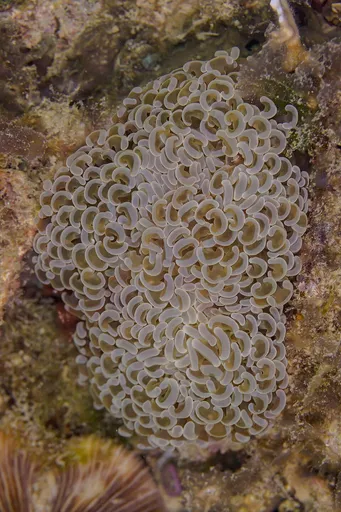
Hammer coral
Fimbriaphyllia ancora
7.9 in (20 cm) · 20 gal (75 L)
 7.9 in (20 cm)20 gal (75 L)75–81°F (24–27°C)
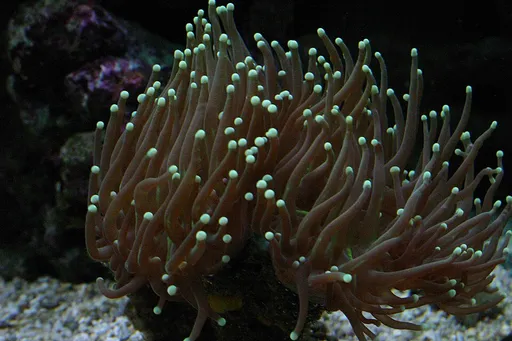
Octospawn coral
Fimbriaphyllia yaeyamaensis
7.9 in (20 cm) · 20 gal (75 L)
 7.9 in (20 cm)20 gal (75 L)75–81°F (24–27°C)
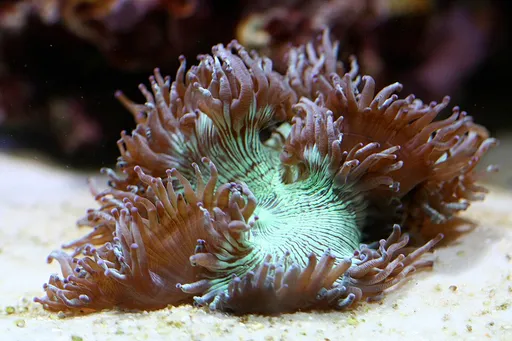
Torch coral
Euphyllia glabrescens
7.9 in (20 cm) · 20 gal (75 L)
 11.8 in (30 cm)20 gal (75 L)75–81°F (24–27°C)
Elegance coral
Catalaphyllia jardinei
11.8 in (30 cm) · 20 gal (75 L)