Long-tentacle plate coral
Heliofungia actiniformis
Also known as Plate Coral, Mushroom Coral, Disc Coral, Heliofungia
SaltwaterCoral
Care at a glance
- Temperature
- 75–81°F
- 24–27°C
- pH
- 8.1–8.4
- Adult size
- 9.8 in
- 25 cm
- Minimum tank
- 11 gal
- 40 L
- Temperament
- Aggressive
- Social behavior
- Solitary
- Swim level
- Bottom
- Difficulty
- Medium
- Breeding
- No record
- Rarity
- Common
- Reef safe
- Reef safe
- Family
- Fungiidae
- Origin
- Indo-Pacific, from the eastern Indian Ocean across Indonesia and the Philippines to northern Australia, Japan and the West Pacific island groups
Overview
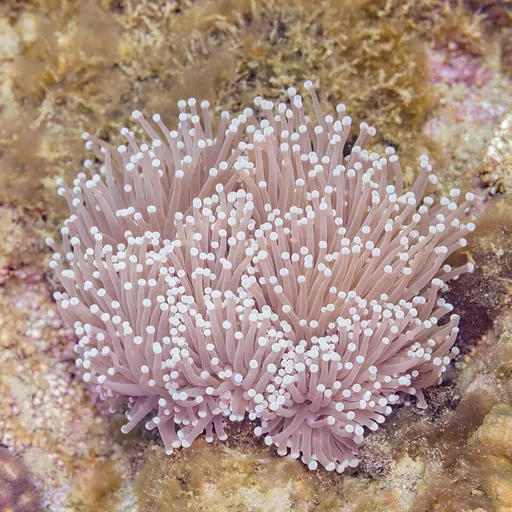
Despite its soft, anemone-like look, this is a genuinely aggressive coral: its long tentacles carry a real sting and can kill tissue on any coral they can reach, so keep at least 6 inches of open space around it. It is an eager feeder and takes brine shrimp, mysis and other small meaty foods well, ideally offered at night when the tentacles are fully out, and regular feeding on top of what it gets from its zooxanthellae keeps it looking full and healthy. Because it lies loose on the sand, an unhappy specimen will slowly shuffle itself to a different spot, which is a useful sign to just leave it wherever it settles.
In the wild
Heliofungia actiniformis lives on shallow reef slopes and flats across the Indo-Pacific, usually less than 25 m down, and starts out cemented in place as a juvenile before breaking free to spend its adult life as a single loose disc resting on sand or rubble. In the tank it belongs on open sandbed rather than rock, where its thick tissue and long tentacles will not be torn on anything hard. It wants moderate to fairly bright light, roughly 80 to 150 PAR, and moderate indirect flow, since strong current can flip or shift a free-living disc more than is good for it. Keep temperature 24 to 27 C and pH 8.1 to 8.4, and give it real distance from other corals.
Good to know
Heliofungia actiniformis is a solitary large polyp stony coral in the family Fungiidae, the same family as Fungia, but its long, thick, anemone-like tentacles stay extended even in daylight, which is the main visual difference between the two. It is photosynthetic and hosts zooxanthellae, and it can inflate its tissue with water until it looks almost twice its resting size. As a single free-living polyp it is not fragged the way branching or plating corals are, so deliberate propagation of this species is essentially unheard of in the hobby.
Did you know
A juvenile Heliofungia actually starts out cemented to the reef like most stony corals, then breaks free of its stalk to spend its entire adult life as a single free-living disc that can shift position on the sand to find a spot it likes.
Common questions
What size tank does a Long-tentacle plate coral need?
A Long-tentacle plate coral needs at least 11 gal (40 L). It spends most of its time in the bottom.
What temperature and pH does a Long-tentacle plate coral need?
A Long-tentacle plate coral is comfortable at 75–81°F (24–27°C) with a pH of 8.1–8.4.
How big does a Long-tentacle plate coral get?
An adult Long-tentacle plate coral reaches about 9.8 in (25 cm).
Related species
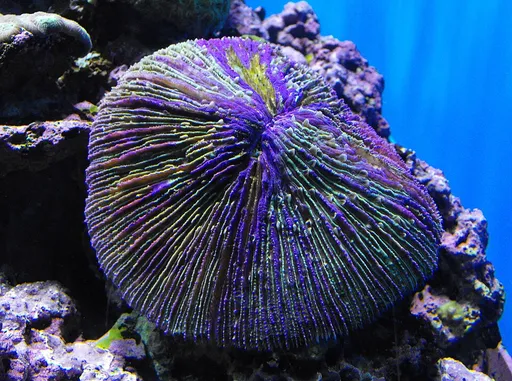 7.9 in (20 cm)11 gal (40 L)75–81°F (24–27°C)
Plate coral
Fungia
7.9 in (20 cm) · 11 gal (40 L)
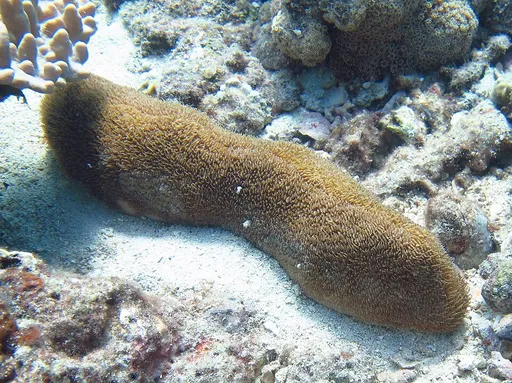 15.7 in (40 cm)40 gal (150 L)75–81°F (24–27°C)
Slipper coral
Polyphyllia talpina
15.7 in (40 cm) · 40 gal (150 L)
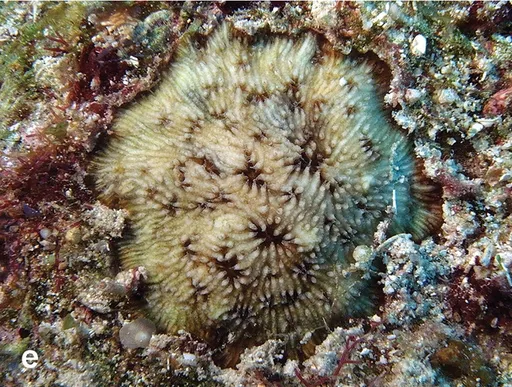 3.1 in (8 cm)20 gal (75 L)75–81°F (24–27°C)
Mobile plate coral
Cycloseris
3.1 in (8 cm) · 20 gal (75 L)
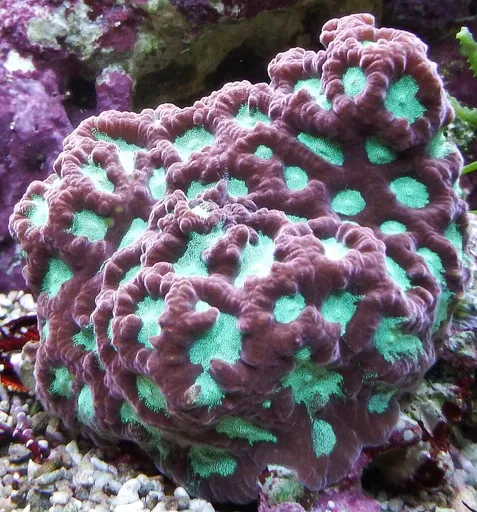 9.8 in (25 cm)20 gal (75 L)75–81°F (24–27°C)
War coral
Favites
9.8 in (25 cm) · 20 gal (75 L)
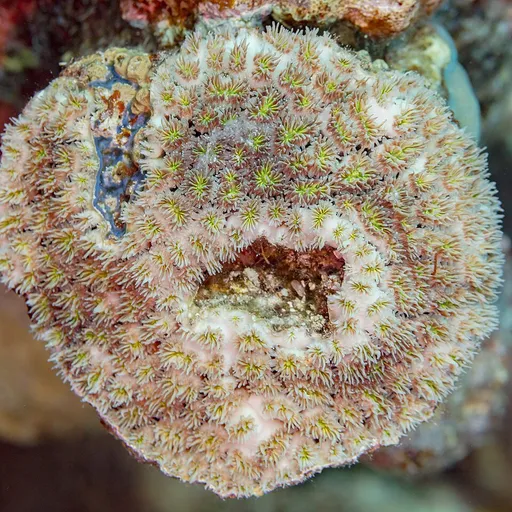 11.8 in (30 cm)20 gal (75 L)75–81°F (24–27°C)
Galaxy coral
Galaxea
11.8 in (30 cm) · 20 gal (75 L)
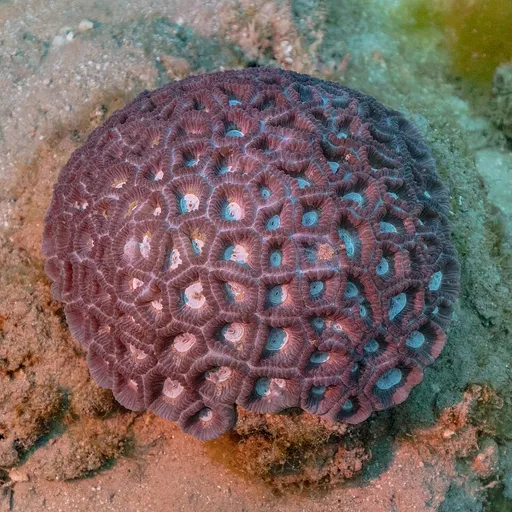 7.9 in (20 cm)20 gal (75 L)75–81°F (24–27°C)
Brain coral (Favia)
Favia
7.9 in (20 cm) · 20 gal (75 L)