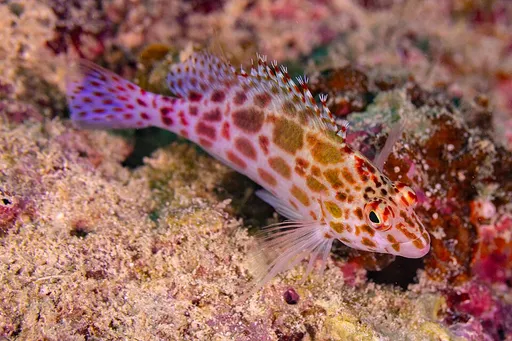
Pixy hawkfish
Cirrhitichthys oxycephalus
Also known as Spotted Hawkfish, Sharp-headed Hawkfish, Coral Hopper
SaltwaterFish
Care at a glance
- Temperature
- 72–79°F
- 22–26°C
- pH
- 8.1–8.4
- Adult size
- 3.9 in
- 10 cm
- Minimum tank
- 29 gal
- 110 L
- Temperament
- Mostly peaceful
- Social behavior
- Solitary
- Own kind
- One male per tank
- Tankmates
- With caution
- Swim level
- Bottom
- Difficulty
- Easy
- Breeding
- No record
- Rarity
- Common
- Reef safe
- Reef safe with caution
- Family
- Cirrhitidae
- Origin
- Indo-Pacific and eastern Pacific reefs, from the Red Sea and East Africa to Central America
Overview
Hardy and hunts confidently from its perch, but it is intolerant of other hawkfish and can be aggressive toward fish added to the tank after it has settled in, so add it later in the stocking order alongside similarly sized tankmates. It is reef safe with caution: it will not touch corals but treats small shrimp, crabs, and tiny fish as prey, so it is not a safe companion for a cleaner shrimp or a nano fish collection. Offer a varied carnivore diet of mysis, krill, and chopped marine meats.
In the wild
Widely distributed across the Indo-Pacific and into the eastern Pacific from the Red Sea and East Africa to Central America, living on clear lagoon and seaward reefs from just below the surface to about 40 m. It rests directly on or beneath stony and soft coral heads rather than swimming in open water, so the aquarium needs plenty of live rock with coral rubble, overhangs, and perches within easy striking distance of open sand or rubble patches. A tank of at least 110 litres (30 US gal) gives a single fish room to establish a territory.
Good to know
Named for its sharply angled head profile and the small dark spots scattered under and around the eye, which separate it from similar hawkfish that carry lines instead of spots in that area. Reaches roughly 10 cm and shows a highly variable base color from pale grey to pink, each overlaid with grey, black, or red blotches. As in other hawkfish, thickened lower pectoral fin rays let it perch on rock and coral instead of holding position in open water, since it has no swim bladder.
Did you know
It is a protogynous hermaphrodite that lives in small harems in the wild, with one male defending a patch of reef that overlaps the home ranges of several females, any one of which can turn male herself if the resident male disappears.
Common questions
What size tank does a Pixy hawkfish need?
A Pixy hawkfish needs at least 29 gal (110 L). It spends most of its time in the bottom.
What temperature and pH does a Pixy hawkfish need?
A Pixy hawkfish is comfortable at 72–79°F (22–26°C) with a pH of 8.1–8.4.
How big does a Pixy hawkfish get?
An adult Pixy hawkfish reaches about 3.9 in (10 cm).
Related species
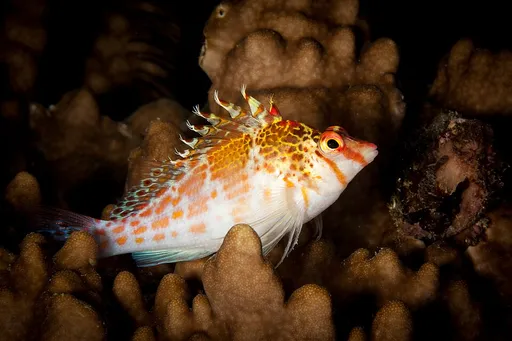 2.8 in (7 cm)29 gal (110 L)72–79°F (22–26°C)
Falco hawkfish
Cirrhitichthys falco
2.8 in (7 cm) · 29 gal (110 L)
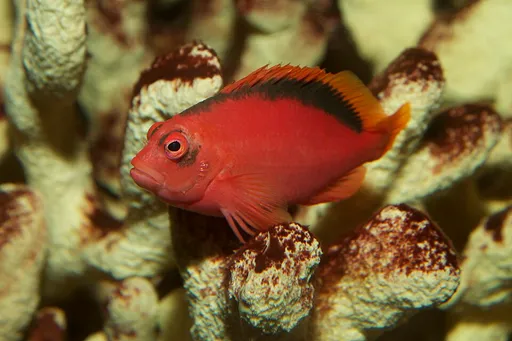 3.5 in (9 cm)29 gal (110 L)72–79°F (22–26°C)
Flame hawkfish
Neocirrhites armatus
3.5 in (9 cm) · 29 gal (110 L)
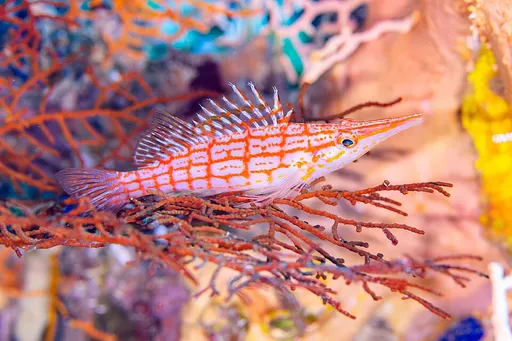 5.1 in (13 cm)29 gal (110 L)72–79°F (22–26°C)
Longnose hawkfish
Oxycirrhites typus
5.1 in (13 cm) · 29 gal (110 L)
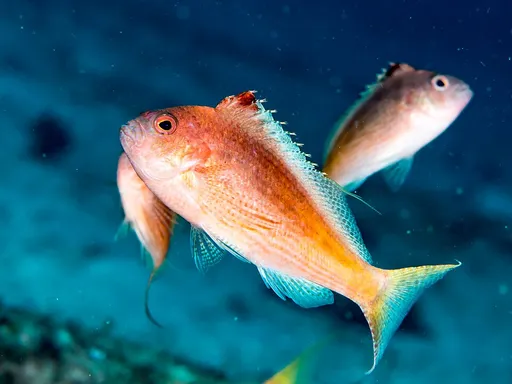 5.9 in (15 cm)40 gal (150 L)72–79°F (22–26°C)
Lyretail hawkfish
Cyprinocirrhites polyactis
5.9 in (15 cm) · 40 gal (150 L)
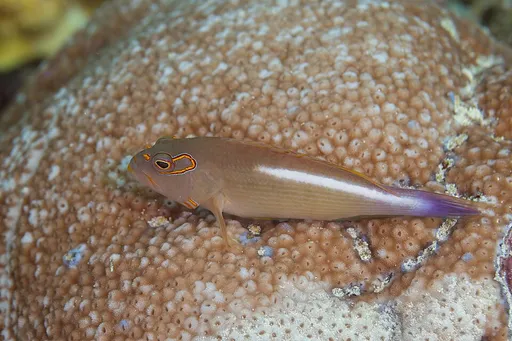 7.9 in (20 cm)40 gal (150 L)72–79°F (22–26°C)
Arc-eye hawkfish
Paracirrhites arcatus
7.9 in (20 cm) · 40 gal (150 L)
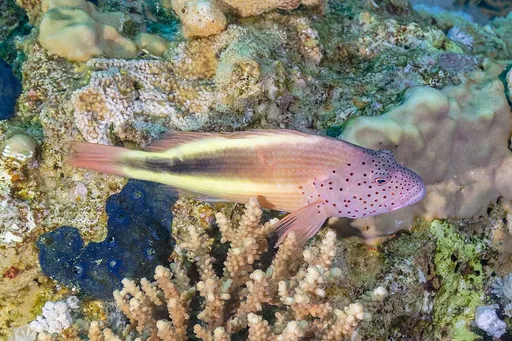 8.7 in (22 cm)70 gal (265 L)73–81°F (23–27°C)
Freckled hawkfish
Paracirrhites forsteri
8.7 in (22 cm) · 70 gal (265 L)