Lyretail hawkfish
Cyprinocirrhites polyactis
Also known as Swallowtail Hawkfish, Red Hawkfish, Soaring Hawkfish
SaltwaterFish
Care at a glance
- Temperature
- 72–79°F
- 22–26°C
- pH
- 8.1–8.4
- Adult size
- 5.9 in
- 15 cm
- Minimum tank
- 40 gal
- 150 L
- Temperament
- Mostly peaceful
- Social behavior
- Solitary
- Tankmates
- With caution
- Swim level
- Middle
- Difficulty
- Easy
- Breeding
- No record
- Rarity
- Common
- Reef safe
- Reef safe
- Family
- Cirrhitidae
- Origin
- Indo-West Pacific reefs, from East Africa to Tonga, north to southern Japan, south to New Caledonia
Overview
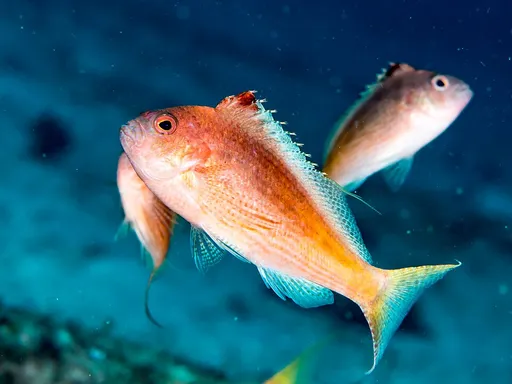
The most easygoing hawkfish in the trade and one of the few considered genuinely reef safe, since it feeds on drifting plankton rather than ambushing shrimp and small fish the way its relatives do. It is still a hawkfish at heart, so very small or delicate tankmates can occasionally get harassed, and it will defend a favorite perch. Feed mysis, finely chopped krill, and other small meaty foods several times a day to match its planktivore feeding style, and keep the lid secured since it can jump like any hawkfish.
In the wild
Found across the Indo-West Pacific from East Africa to Tonga, north to southern Japan and south to New Caledonia and northern New Zealand, on steep, current-swept reef slopes and drop-offs from about 10 m to over 100 m deep. Unlike most hawkfish it spends its time hovering several metres above the bottom rather than sitting on it, so the aquarium should offer open water above the rockwork as well as ledges to retreat to when startled. A tank of at least 150 litres (40 US gal) gives it room to hold position in the water column.
Good to know
An unusual hawkfish that behaves more like an anthias than a typical ambush percher: it hovers, often in loose groups, over the reef picking copepods and other zooplankton out of the current, and its deep, compressed, yellow-to-orange mottled body with a forked, lyre-shaped tail reflects that open-water lifestyle. It still carries the family's diagnostic stiffened lower pectoral fin rays and lacks a swim bladder as an adult, but uses them mainly for brief perching rather than as its main way of getting around. Reaches about 15 cm.
Did you know
It is often mistaken for an anthias at the fish store thanks to its similar shape, color, and habit of swimming in open water, but the giveaway shows up at rest: given a quiet moment, it drops down and perches on a rock exactly like its hawkfish relatives, something no anthias ever does.
Common questions
What size tank does a Lyretail hawkfish need?
A Lyretail hawkfish needs at least 40 gal (150 L). It spends most of its time in the middle.
What temperature and pH does a Lyretail hawkfish need?
A Lyretail hawkfish is comfortable at 72–79°F (22–26°C) with a pH of 8.1–8.4.
How big does a Lyretail hawkfish get?
An adult Lyretail hawkfish reaches about 5.9 in (15 cm).
Related species
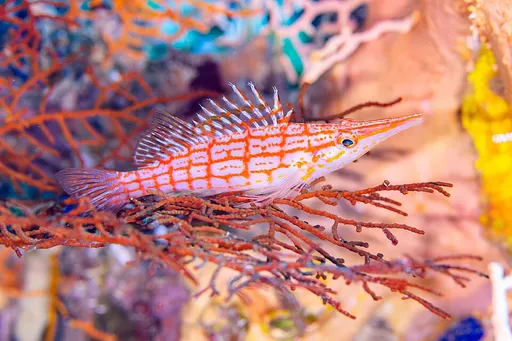 5.1 in (13 cm)29 gal (110 L)72–79°F (22–26°C)
Longnose hawkfish
Oxycirrhites typus
5.1 in (13 cm) · 29 gal (110 L)
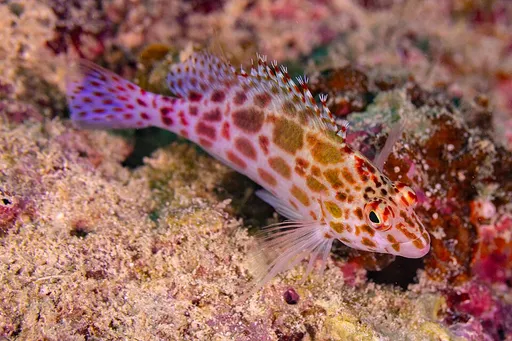 3.9 in (10 cm)29 gal (110 L)72–79°F (22–26°C)
Pixy hawkfish
Cirrhitichthys oxycephalus
3.9 in (10 cm) · 29 gal (110 L)
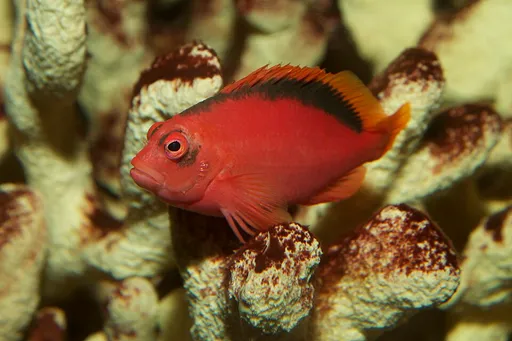 3.5 in (9 cm)29 gal (110 L)72–79°F (22–26°C)
Flame hawkfish
Neocirrhites armatus
3.5 in (9 cm) · 29 gal (110 L)
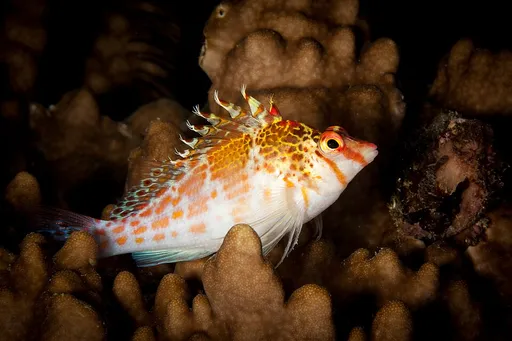 2.8 in (7 cm)29 gal (110 L)72–79°F (22–26°C)
Falco hawkfish
Cirrhitichthys falco
2.8 in (7 cm) · 29 gal (110 L)
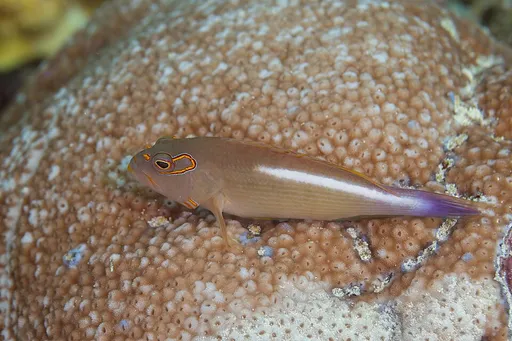 7.9 in (20 cm)40 gal (150 L)72–79°F (22–26°C)
Arc-eye hawkfish
Paracirrhites arcatus
7.9 in (20 cm) · 40 gal (150 L)
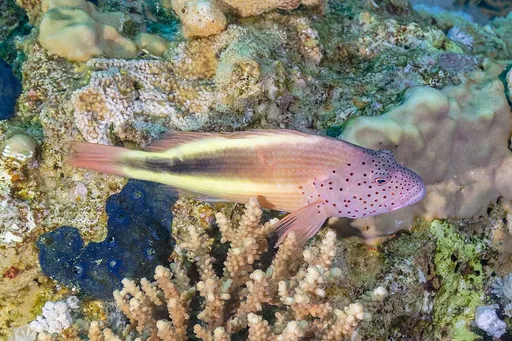 8.7 in (22 cm)70 gal (265 L)73–81°F (23–27°C)
Freckled hawkfish
Paracirrhites forsteri
8.7 in (22 cm) · 70 gal (265 L)