Flame hawkfish
Neocirrhites armatus
Also known as Brilliant Red Hawkfish
SaltwaterFish
Care at a glance
- Temperature
- 72–79°F
- 22–26°C
- pH
- 8.1–8.4
- Adult size
- 3.5 in
- 9 cm
- Minimum tank
- 29 gal
- 110 L
- Temperament
- Mostly peaceful
- Social behavior
- Solitary
- Tankmates
- With caution
- Swim level
- Bottom
- Diet
- Carnivore
- Difficulty
- Easy
- Breeding
- No record
- Rarity
- Common
- Reef safe
- Reef safe with caution
- Family
- Cirrhitidae
- Origin
- Western Pacific, from the Ryukyu Islands and Micronesia south to the Great Barrier Reef and the Line Islands
Overview
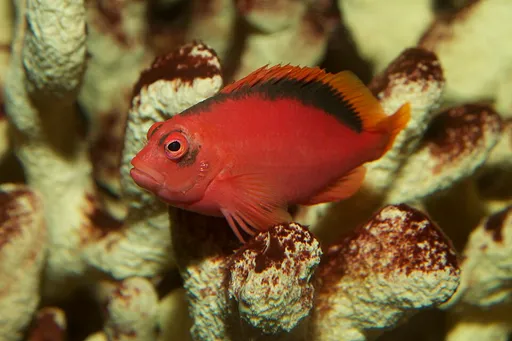
The flame hawkfish is a bold little perching fish for a saltwater tank with rock to claim. It is one of the easier hawkfish to keep.
Did you know
Flame hawkfish often adopt a single coral or rock cave as a permanent perch. They retreat into it whenever startled.
Caring for the flame hawkfish
House the flame hawkfish in at least 29 gal (110 L), with strong flow. Build a rock structure with caves and ledges it can claim as home. It is an accomplished jumper, so fit a tight lid.
Aim for 72 to 79°F (22 to 26°C) and a pH of 8.1 to 8.4. The flame hawkfish is hardy, adapts quickly and eats readily.
It is mostly peaceful, but it defends a home den and may chase small gobies, blennies or newly added timid fish. Add it after shyer tank mates have settled. It leaves corals alone but treats small shrimp, feather dusters, tiny hermits and other small crustaceans as food. That makes it reef safe with caution.
Good to know
Neocirrhites armatus is a hawkfish of the family Cirrhitidae and the only species in its genus. Its solid scarlet body, black-edged dorsal ridge and dark eye markings set it apart from the patterned longnose hawkfish. Like other hawkfish, it has no swim bladder, so it rests rather than swims. Thickened lower pectoral fin rays act like little legs, letting it prop on coral and rock in high-flow zones.
In the wild
The flame hawkfish ranges across the western Pacific, from the Ryukyu Islands and Micronesia south to the Great Barrier Reef and the Line Islands. It lives among the branches of live Pocillopora and Stylophora corals, on shallow, surge-swept reef flats. It perches down inside the coral thicket and darts out to grab food, then retreats back to its den.
Common questions
What size tank does a flame hawkfish need?
A flame hawkfish needs at least 29 gal (110 L). It spends most of its time in the bottom.
What temperature and pH does a flame hawkfish need?
A flame hawkfish is comfortable at 72–79°F (22–26°C) with a pH of 8.1–8.4.
What does a flame hawkfish eat?
A flame hawkfish eats readily, and it treats small shrimp, feather dusters, tiny hermits and other small crustaceans as food.
How big does a flame hawkfish get?
An adult flame hawkfish reaches about 3.5 in (9 cm).
Related species
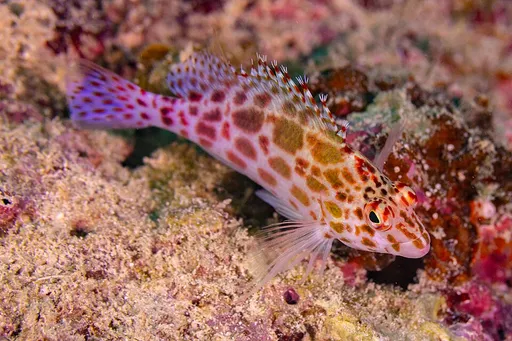 3.9 in (10 cm)29 gal (110 L)72–79°F (22–26°C)
Pixy hawkfish
Cirrhitichthys oxycephalus
3.9 in (10 cm) · 29 gal (110 L)
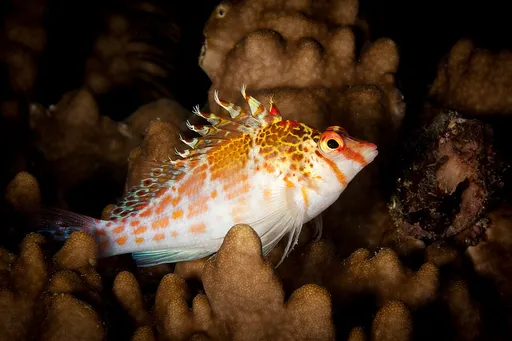 2.8 in (7 cm)29 gal (110 L)72–79°F (22–26°C)
Falco hawkfish
Cirrhitichthys falco
2.8 in (7 cm) · 29 gal (110 L)
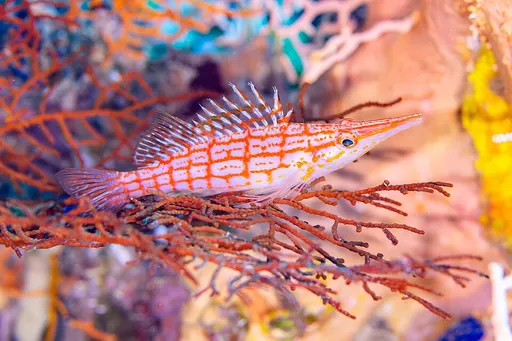 5.1 in (13 cm)29 gal (110 L)72–79°F (22–26°C)
Longnose hawkfish
Oxycirrhites typus
5.1 in (13 cm) · 29 gal (110 L)
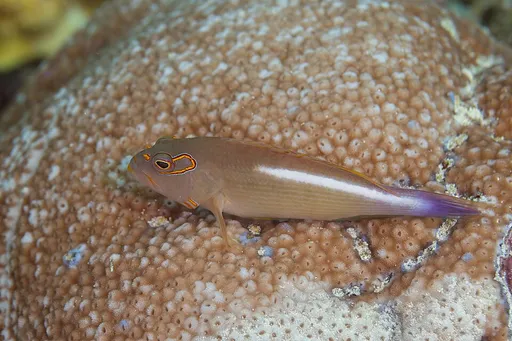 7.9 in (20 cm)40 gal (150 L)72–79°F (22–26°C)
Arc-eye hawkfish
Paracirrhites arcatus
7.9 in (20 cm) · 40 gal (150 L)
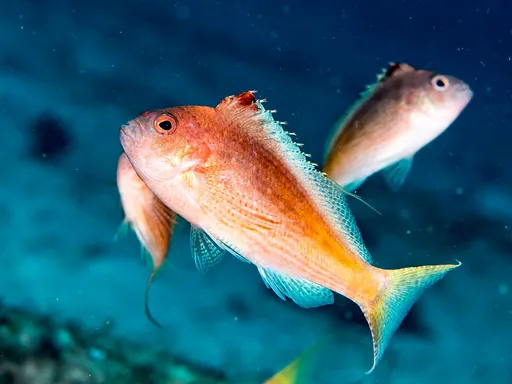 5.9 in (15 cm)40 gal (150 L)72–79°F (22–26°C)
Lyretail hawkfish
Cyprinocirrhites polyactis
5.9 in (15 cm) · 40 gal (150 L)
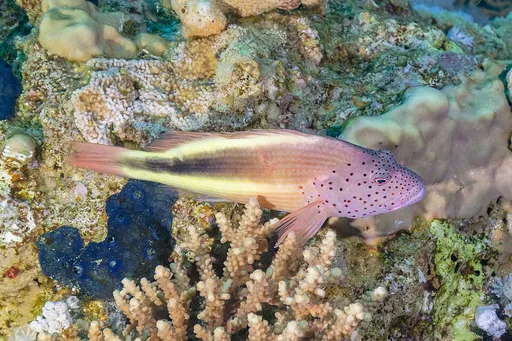 8.7 in (22 cm)70 gal (265 L)73–81°F (23–27°C)
Freckled hawkfish
Paracirrhites forsteri
8.7 in (22 cm) · 70 gal (265 L)