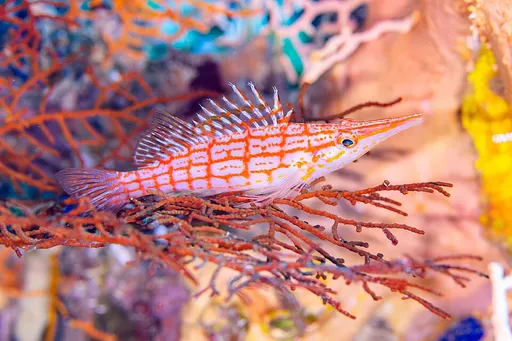
Longnose hawkfish
Oxycirrhites typus
Also known as Longnosed Hawkfish
SaltwaterFish
Care at a glance
- Temperature
- 72–79°F
- 22–26°C
- pH
- 8.1–8.4
- Adult size
- 5.1 in
- 13 cm
- Minimum tank
- 29 gal
- 110 L
- Temperament
- Mostly peaceful
- Social behavior
- Solitary
- Own kind
- One male per tank
- Tankmates
- With caution
- Swim level
- Bottom
- Difficulty
- Medium
- Breeding
- No record
- Rarity
- Common
- Reef safe
- Reef safe with caution
- Family
- Cirrhitidae
- Origin
- Indo-Pacific and Red Sea, plus the eastern Pacific from the Gulf of California to the Galapagos
Overview
A hardy, semi-aggressive perching predator that spends its day sitting on rock or coral and pouncing on food. It is best kept one to a tank unless a mated pair is introduced together, and it will bully smaller, timid fish. It is reef safe with corals but will hunt ornamental shrimp, tiny crabs, and other small mobile inverts, so it earns a caution rating. Keep it well fed with meaty foods like mysis and chopped seafood a couple of times a day.
In the wild
In the wild the longnose hawkfish lives on deeper reef slopes and drop-offs, usually perched among sea fans and black coral where it wedges itself into branches to watch for passing prey. It has no functional swim bladder, so it does not hover in open water. It rests on live rock, coral, or the sand and moves in short darting hops. Give it plenty of rockwork with perches and overhangs, and a tight lid because it is a proven jumper.
Good to know
Oxycirrhites typus is the only species in its genus and is easily recognized by its long, forceps-like snout and the red cross-hatched pattern over a white body. The elongated jaw lets it pick small crustaceans from tight coral crevices. Like all hawkfish it lacks a swim bladder and relies on thickened lower pectoral fin rays to prop itself on the reef.
Did you know
It can swallow prey larger than its mouth by smashing the food against a rock first, and it will readily eat small cleaner shrimp, which is why it is trusted with corals but not with a shrimp population.
Common questions
What size tank does a Longnose hawkfish need?
A Longnose hawkfish needs at least 29 gal (110 L). It spends most of its time in the bottom.
What temperature and pH does a Longnose hawkfish need?
A Longnose hawkfish is comfortable at 72–79°F (22–26°C) with a pH of 8.1–8.4.
How big does a Longnose hawkfish get?
An adult Longnose hawkfish reaches about 5.1 in (13 cm).
Related species
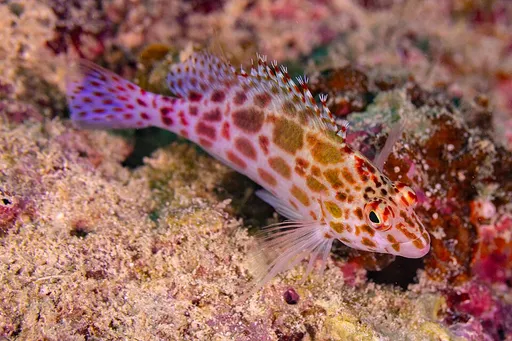 3.9 in (10 cm)29 gal (110 L)72–79°F (22–26°C)
Pixy hawkfish
Cirrhitichthys oxycephalus
3.9 in (10 cm) · 29 gal (110 L)
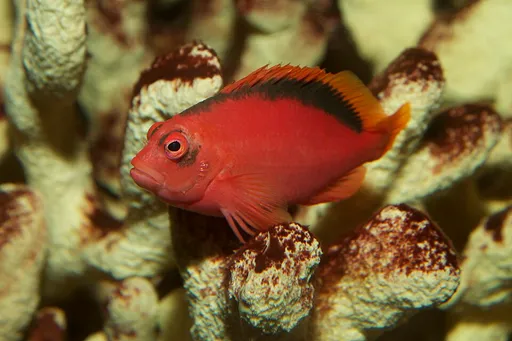 3.5 in (9 cm)29 gal (110 L)72–79°F (22–26°C)
Flame hawkfish
Neocirrhites armatus
3.5 in (9 cm) · 29 gal (110 L)
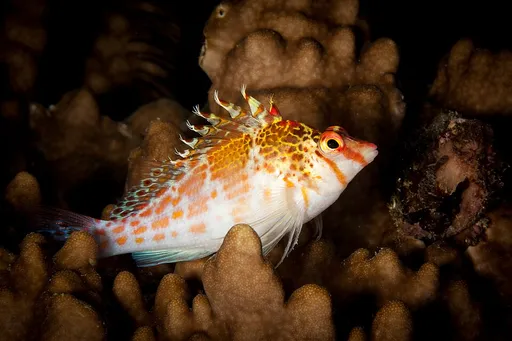 2.8 in (7 cm)29 gal (110 L)72–79°F (22–26°C)
Falco hawkfish
Cirrhitichthys falco
2.8 in (7 cm) · 29 gal (110 L)
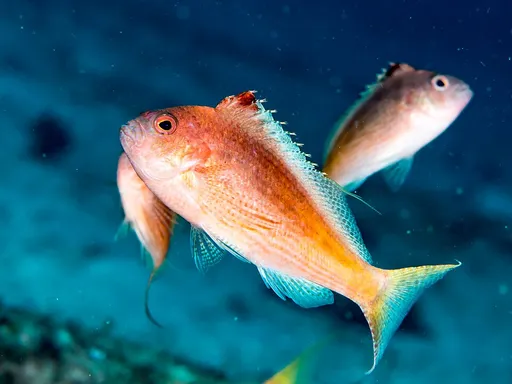 5.9 in (15 cm)40 gal (150 L)72–79°F (22–26°C)
Lyretail hawkfish
Cyprinocirrhites polyactis
5.9 in (15 cm) · 40 gal (150 L)
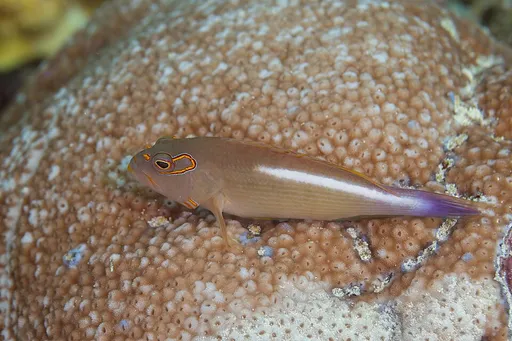 7.9 in (20 cm)40 gal (150 L)72–79°F (22–26°C)
Arc-eye hawkfish
Paracirrhites arcatus
7.9 in (20 cm) · 40 gal (150 L)
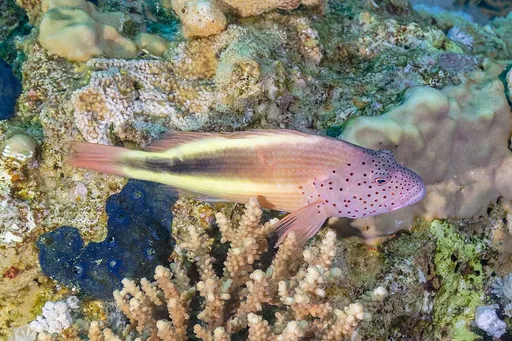 8.7 in (22 cm)70 gal (265 L)73–81°F (23–27°C)
Freckled hawkfish
Paracirrhites forsteri
8.7 in (22 cm) · 70 gal (265 L)