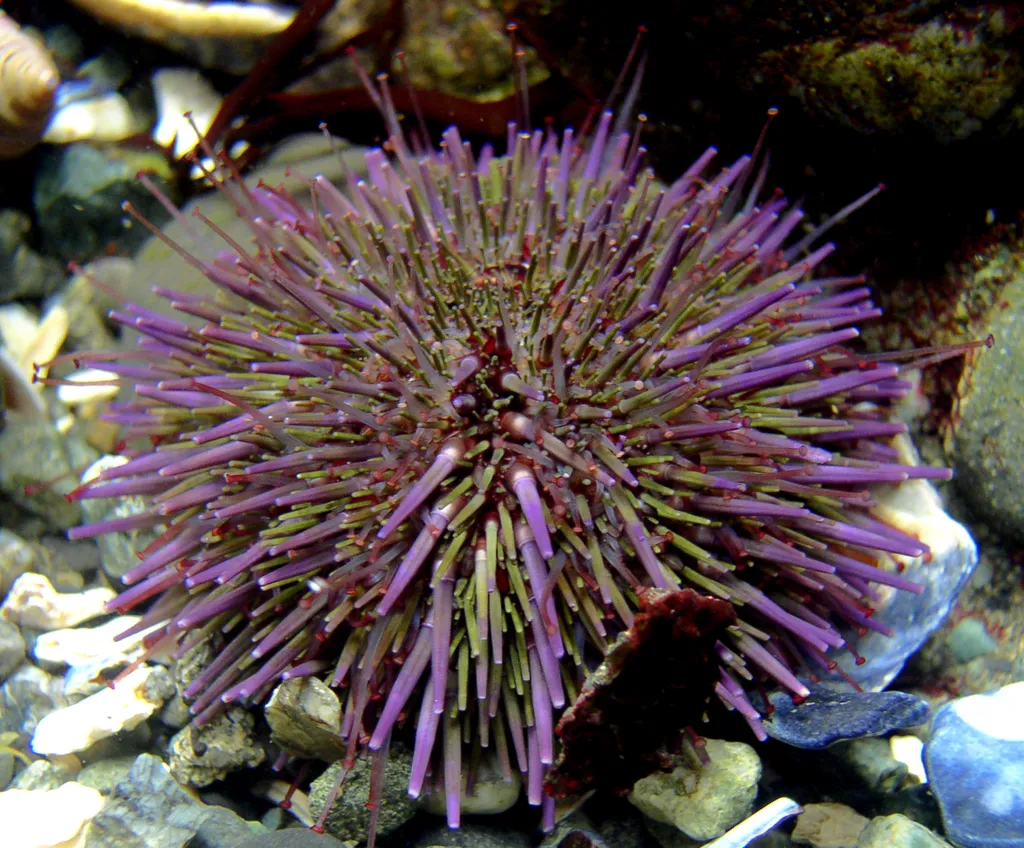
Pacific purple urchin
Strongylocentrotus purpuratus
Also known as Purple sea urchin, California purple sea urchin, West Coast purple urchin
SaltwaterInvertebrate
Care at a glance
- Temperature
- 46–64°F
- 8–18°C
- pH
- 8.1–8.4
- Adult size
- 3.9 in
- 10 cm
- Minimum tank
- 53 gal
- 200 L
- Temperament
- Peaceful
- Social behavior
- Solitary
- Tankmates
- With caution
- Swim level
- Bottom
- Difficulty
- Difficult
- Breeding
- Hard
- Rarity
- Rare
- Reef safe
- Not reef safe
- Family
- Strongylocentrotidae
- Origin
- Eastern Pacific rocky shores, Alaska to Baja California
Overview
Peaceful and hardy at the right temperature, and a very hungry grazer. It is not reef safe for the simple reason that it cannot live in a reef tank: it needs 8 to 18 C, and in a coldwater tank it will strip every kelp blade or macroalga you put in. Keep it with other cold Pacific tide pool animals, feed kelp, dried seaweed, and algae pellets, keep the water at pH 8.1 to 8.4 with high oxygen, drip acclimate it, and never use copper. Spine loss means the water is too warm or too dirty.
In the wild
The Pacific purple urchin lives on wave-washed rock in the low intertidal and shallow subtidal along the eastern Pacific, from Alaska to Cedros Island in Baja California, in and around kelp forests. It grinds shallow pits into rock with its teeth and spines and often sits in them for life. This is a coldwater animal: it needs 8 to 18 C, which means a chiller in almost every home, plus strong flow, lots of oxygen, rock to bore into, and 200 liters or more. It is not an animal for a tropical tank; water warmer than about 23 C kills it.
Good to know
Strongylocentrotus purpuratus is a regular urchin in the family Strongylocentrotidae. The test reaches about 10 cm across, usually 5 to 8, with short deep purple spines; juveniles start out greenish. It eats kelp, giant kelp above all, and where sea otters and sunflower stars are gone, purple urchin herds have mown whole kelp forests into urchin barrens. It matures at about two years, may live 70 years or more, and has been a laboratory model for embryology for over a century, with its genome sequenced in 2006 as the first for any echinoderm. Do not confuse it with the catalog's purple urchin, Arbacia punctulata, which is a warm-water Atlantic species.
Did you know
When the purple urchin genome was published in 2006 it turned out to carry about 23,500 genes and to share roughly 7,700 of them with people, including a surprisingly large set of immune genes. It is one of the oldest lab animals in biology, used to watch fertilisation and cell division since the 1800s.
Common questions
What size tank does a Pacific purple urchin need?
A Pacific purple urchin needs at least 53 gal (200 L). It spends most of its time in the bottom.
What temperature and pH does a Pacific purple urchin need?
A Pacific purple urchin is comfortable at 46–64°F (8–18°C) with a pH of 8.1–8.4.
How big does a Pacific purple urchin get?
An adult Pacific purple urchin reaches about 3.9 in (10 cm).
Related species
- 3.5 in (9 cm)40 gal (150 L)36–59°F (2–15°C)
Green sea urchin
Strongylocentrotus droebachiensis
3.5 in (9 cm) · 40 gal (150 L)
 2.8 in (7 cm)40 gal (150 L)54–75°F (12–24°C)
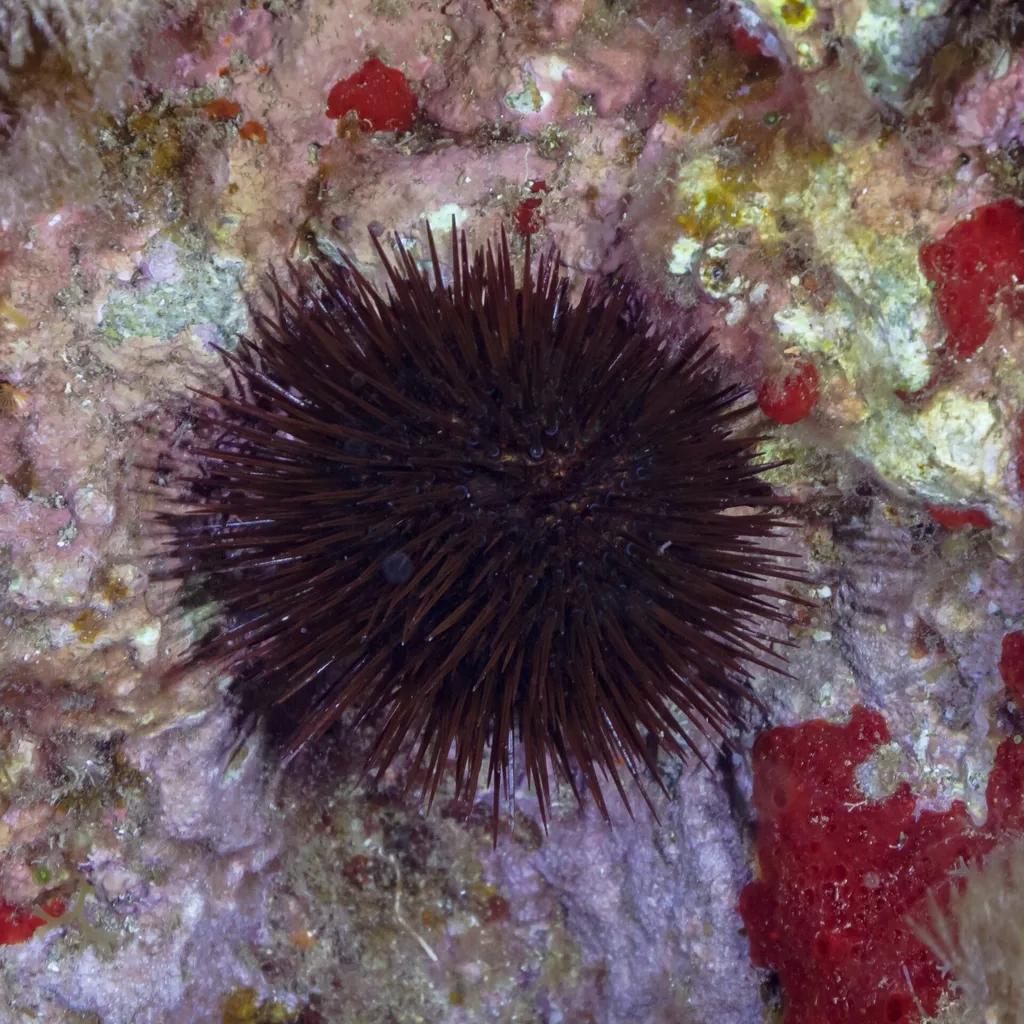
Mediterranean purple urchin
Paracentrotus lividus
2.8 in (7 cm) · 40 gal (150 L)
 3.9 in (10 cm)79 gal (300 L)72–81°F (22–27°C)
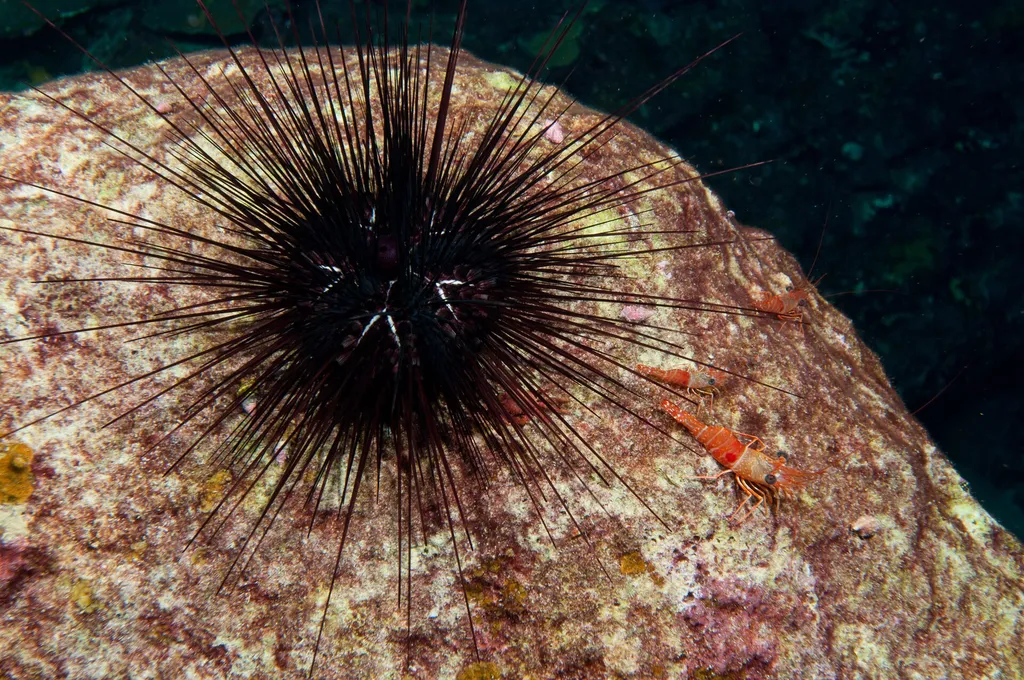
Caribbean long-spined urchin
Diadema antillarum
3.9 in (10 cm) · 79 gal (300 L)
 3.9 in (10 cm)11 gal (40 L)75–81°F (24–27°C)
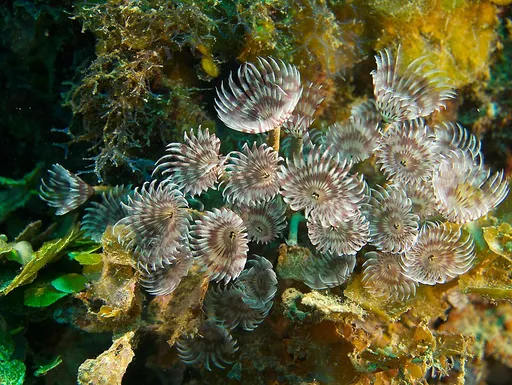
Social feather duster
Bispira brunnea
3.9 in (10 cm) · 11 gal (40 L)
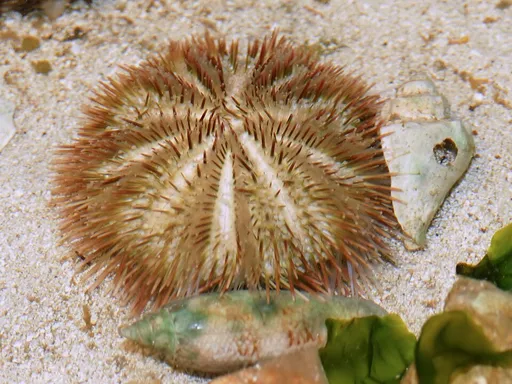 3.9 in (10 cm)20 gal (75 L)72–81°F (22–27°C)
White urchin
Lytechinus variegatus
3.9 in (10 cm) · 20 gal (75 L)
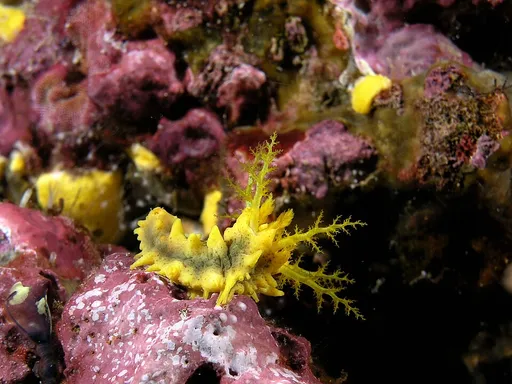 3.9 in (10 cm)11 gal (40 L)75–81°F (24–27°C)
Yellow sea cucumber
Colochirus robustus
3.9 in (10 cm) · 11 gal (40 L)