Green sea urchin
Strongylocentrotus droebachiensis
Also known as Northern green sea urchin, Green urchin
SaltwaterInvertebrate
Care at a glance
- Temperature
- 36–59°F
- 2–15°C
- pH
- 8.1–8.4
- Adult size
- 3.5 in
- 9 cm
- Minimum tank
- 40 gal
- 150 L
- Temperament
- Peaceful
- Social behavior
- Solitary
- Tankmates
- With caution
- Swim level
- Bottom
- Difficulty
- Difficult
- Breeding
- Hard
- Rarity
- Very rare
- Reef safe
- Not reef safe
- Family
- Strongylocentrotidae
- Origin
- Cold northern seas around the globe, Arctic to Maine, Britain and Puget Sound
Overview
Peaceful and simple at the right temperature. It is not a reef tank animal at all: it needs 2 to 15 C, and in a chilled tank it will clear every macroalga and kelp frond within reach. Keep it with other cold North Atlantic or North Pacific animals, feed kelp, dried seaweed, and algae wafers, hold the water cold with high oxygen, drip acclimate it, and never use copper. Sea stars, crabs, lobsters, and wolffish eat it in the wild, so choose tank mates with that in mind. Note that the trade sometimes calls the tropical Lytechinus variegatus a green sea urchin; that is a different animal that takes warm water.
In the wild
The green sea urchin lives on rocky bottom in cold northern water right around the globe, from the Arctic at 81 degrees north down to Maine and Cape Cod, the British Isles, Norway, Puget Sound, Sakhalin, and the Kuril Islands, from the tide line to over 1,000 m. It grazes kelp beds and in places has eaten them down to bare rock. It is the coldest-water urchin in this catalog and needs 2 to 15 C, so a chiller is not optional; a summer spike above about 20 C will kill it. Give it 150 liters or more with rock, strong oxygenated flow, dim light, and water at pH 8.1 to 8.4.
Good to know
Strongylocentrotus droebachiensis is a regular urchin in the family Strongylocentrotidae, named for the town of Drobak on the Oslo Fjord, where Muller described it in 1776. The test averages about 5 cm and reaches 8.7 cm, pale green with short green spines, and it grows roughly 10 mm a year, so its age can be read from its size. It eats kelp and other seaweed and will take small animals, and it tolerates lower salinity than most urchins. It supports a roe fishery in Maine, Canada, Norway, and Russia and is farmed experimentally.
Did you know
You can age a green sea urchin with a ruler. It grows about 10 mm of test a year, so a 5 cm animal is roughly five years old and the 8.7 cm record holder was pushing nine.
Common questions
What size tank does a Green sea urchin need?
A Green sea urchin needs at least 40 gal (150 L). It spends most of its time in the bottom.
What temperature and pH does a Green sea urchin need?
A Green sea urchin is comfortable at 36–59°F (2–15°C) with a pH of 8.1–8.4.
How big does a Green sea urchin get?
An adult Green sea urchin reaches about 3.5 in (9 cm).
Related species
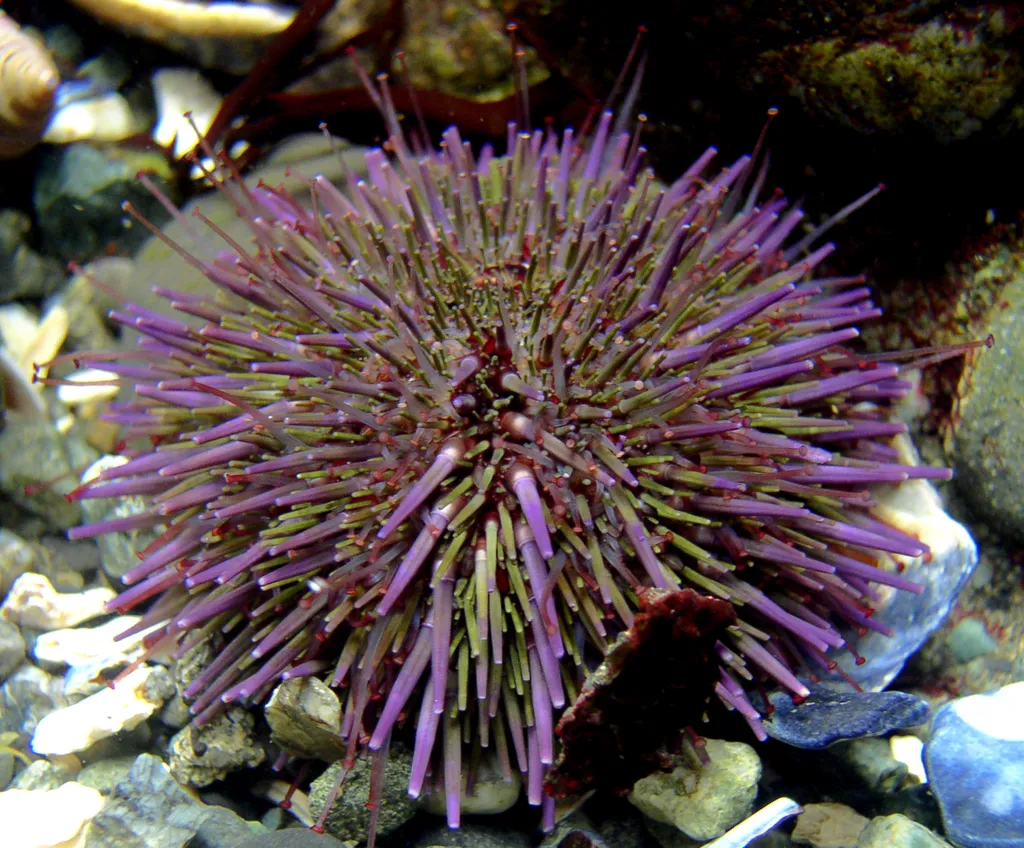 3.9 in (10 cm)53 gal (200 L)46–64°F (8–18°C)
Pacific purple urchin
Strongylocentrotus purpuratus
3.9 in (10 cm) · 53 gal (200 L)
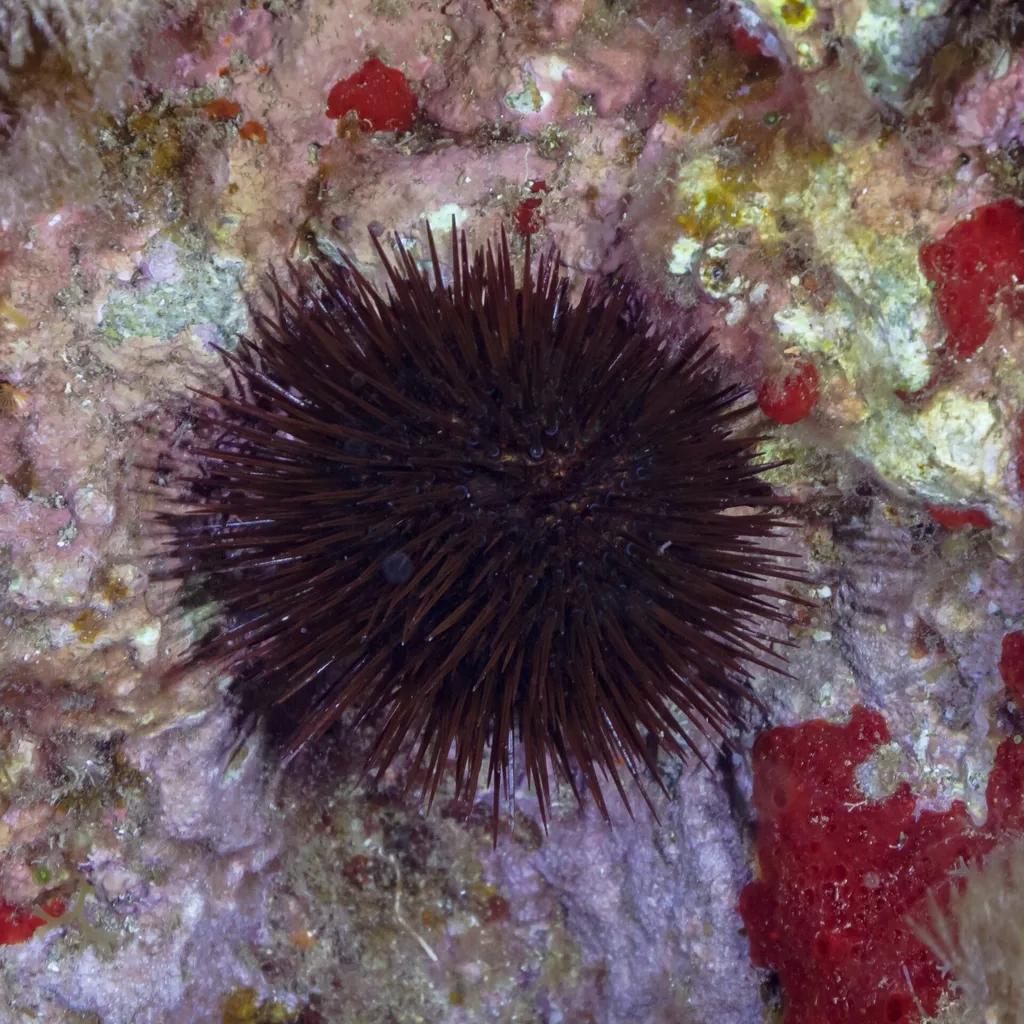 2.8 in (7 cm)40 gal (150 L)54–75°F (12–24°C)
Mediterranean purple urchin
Paracentrotus lividus
2.8 in (7 cm) · 40 gal (150 L)
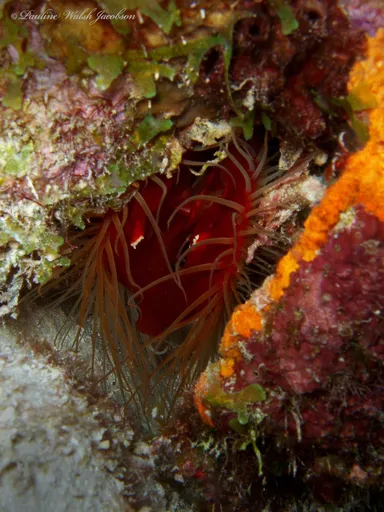 3.5 in (9 cm)30 gal (115 L)75–81°F (24–27°C)
Flame scallop
Ctenoides scaber
3.5 in (9 cm) · 30 gal (115 L)
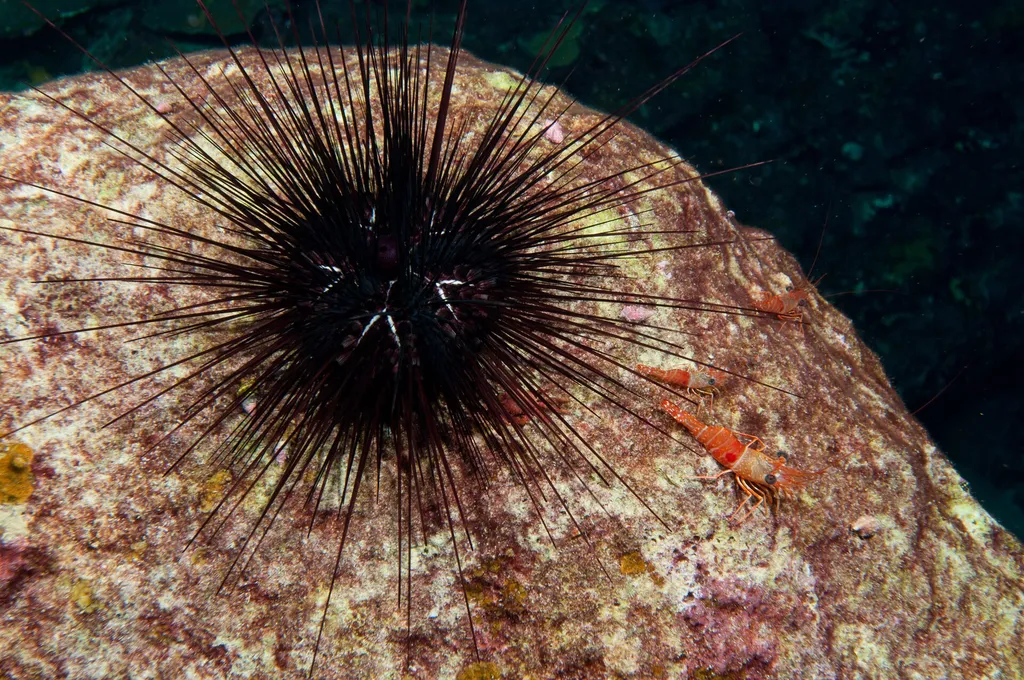 3.9 in (10 cm)79 gal (300 L)72–81°F (22–27°C)
Caribbean long-spined urchin
Diadema antillarum
3.9 in (10 cm) · 79 gal (300 L)
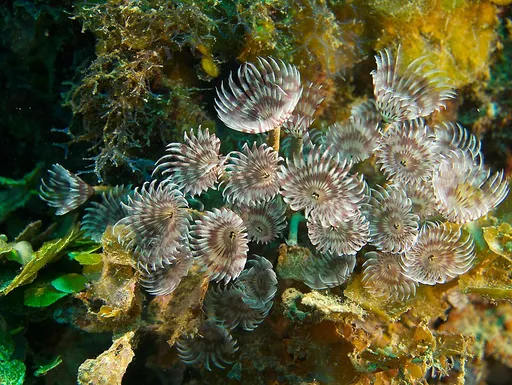 3.9 in (10 cm)11 gal (40 L)75–81°F (24–27°C)
Social feather duster
Bispira brunnea
3.9 in (10 cm) · 11 gal (40 L)
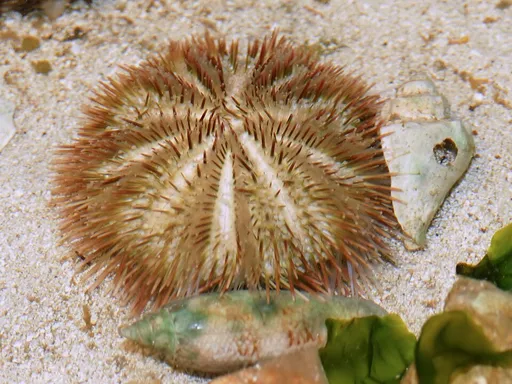 3.9 in (10 cm)20 gal (75 L)72–81°F (22–27°C)
White urchin
Lytechinus variegatus
3.9 in (10 cm) · 20 gal (75 L)