Marine betta
Calloplesiops altivelis
Also known as Comet, Marine Betta Comet, Comet Grouper
SaltwaterFish
Care at a glance
- Temperature
- 73–81°F
- 23–27°C
- pH
- 8.1–8.4
- Adult size
- 6.3 in
- 16 cm
- Minimum tank
- 55 gal
- 210 L
- Temperament
- Peaceful
- Social behavior
- Solitary
- Tankmates
- With caution
- Swim level
- Middle
- Difficulty
- Medium
- Breeding
- Medium
- Rarity
- Common
- Reef safe
- Reef safe with caution
- Family
- Plesiopidae
- Origin
- Indo-Pacific, from the Red Sea and East Africa across to the Line Islands and Tonga
Overview
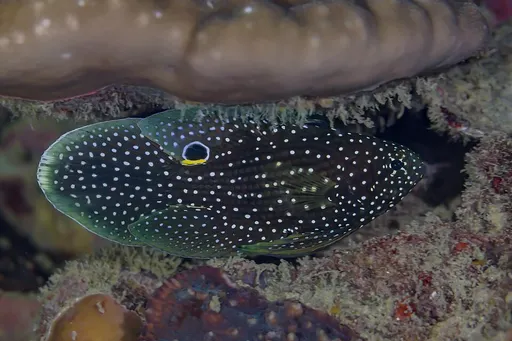
A hardy, long-lived predator once it is settled and eating, but shy and slow to acclimate, so it can be outcompeted or bullied by boisterous tankmates. It ignores corals, anemones, and sessile inverts completely, making it coral-safe, but it will eat small fish, ornamental shrimp, and other bite-sized crustaceans, which is why it is reef safe with caution. Feed meaty foods like mysis, chopped seafood, and clam. Keep one per tank as they can be aggressive toward their own kind.
In the wild
The marine betta is a secretive, largely nocturnal fish that hides in reef caves, ledges, and overhangs during the day and comes out to hunt at dusk and night. It drifts slowly with its flowing, fan-like fins spread wide. In the aquarium it needs a mature tank with generous live rock and dark caves to retreat into, and dim or low-flow areas where it feels secure. It is peaceful and easily out-competed for food, so a calm tank suits it best.
Good to know
Calloplesiops altivelis carries a large false eyespot (ocellus) on its rear dorsal fin. When threatened it backs into a hole and leaves its tail end exposed, so the eyespot and dark, white-spotted body mimic the head of a whitemouth moray eel (Gymnothorax meleagris) peering out of its den. This Batesian mimicry deters predators.
Did you know
Its tail-end eyespot lets it pretend to be a moray eel: when it hides head-first in a crevice, a would-be predator sees what looks like the toothy face of a moray staring back out.
Common questions
What size tank does a Marine betta need?
A Marine betta needs at least 55 gal (210 L). It spends most of its time in the middle.
What temperature and pH does a Marine betta need?
A Marine betta is comfortable at 73–81°F (23–27°C) with a pH of 8.1–8.4.
How big does a Marine betta get?
An adult Marine betta reaches about 6.3 in (16 cm).
Related species
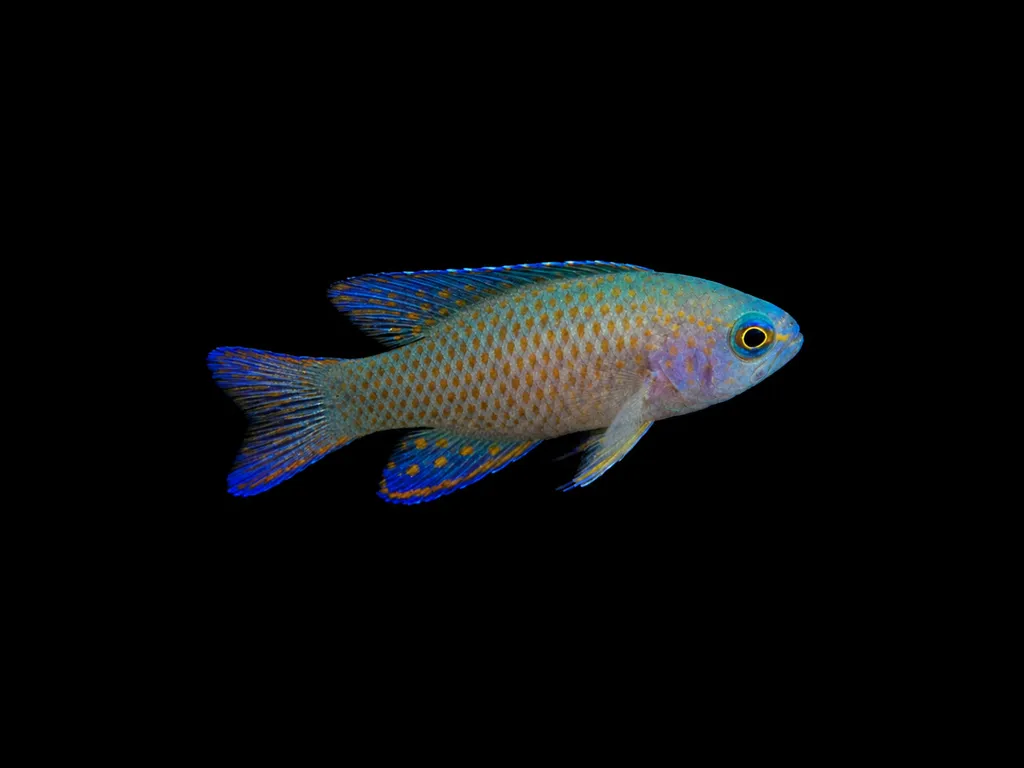 3.1 in (8 cm)29 gal (110 L)73–81°F (23–27°C)
Randall's assessor
Assessor randalli
3.1 in (8 cm) · 29 gal (110 L)
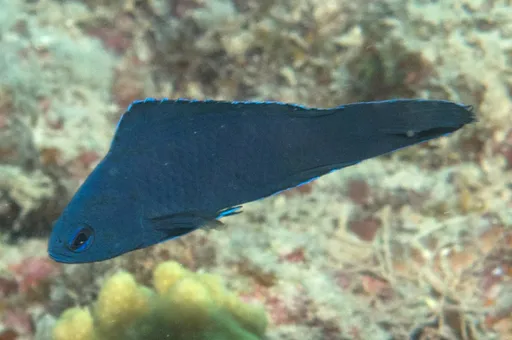 2.8 in (7 cm)29 gal (110 L)72–79°F (22–26°C)
Blue assessor
Assessor macneilli
2.8 in (7 cm) · 29 gal (110 L)
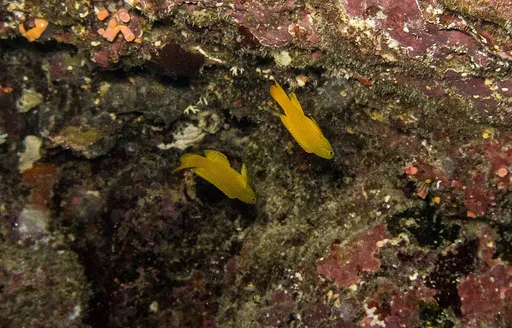 2.8 in (7 cm)29 gal (110 L)72–79°F (22–26°C)
Yellow assessor
Assessor flavissimus
2.8 in (7 cm) · 29 gal (110 L)
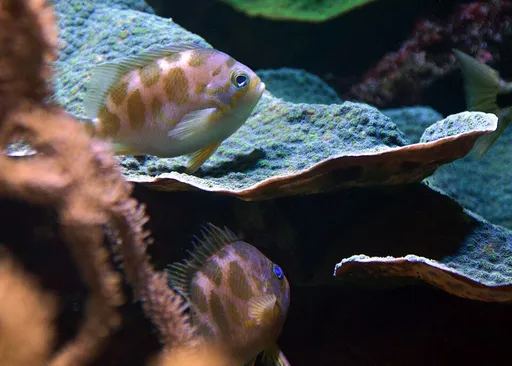 5.9 in (15 cm)100 gal (380 L)72–79°F (22–26°C)
Blotched anthias
Odontanthias borbonius
5.9 in (15 cm) · 100 gal (380 L)
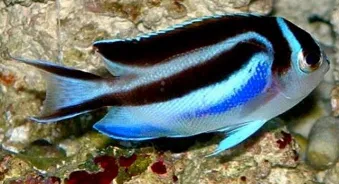 7.1 in (18 cm)85 gal (320 L)72–79°F (22–26°C)
Bellus angelfish
Genicanthus bellus
7.1 in (18 cm) · 85 gal (320 L)
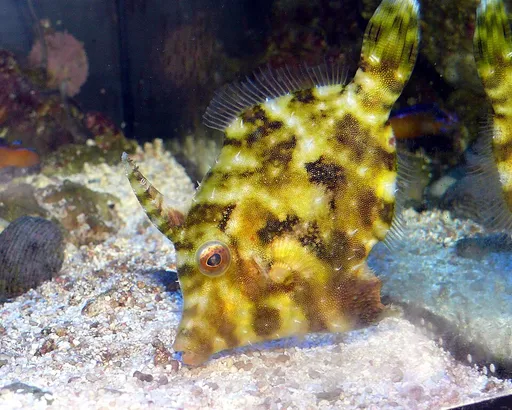 5.5 in (14 cm)30 gal (114 L)72–79°F (22–26°C)
Aiptasia eating filefish
Acreichthys tomentosus
5.5 in (14 cm) · 30 gal (114 L)