Edith's betta
Betta edithae
Also known as Edith's mouthbrooder, Pearl Spot Betta
FreshwaterFish
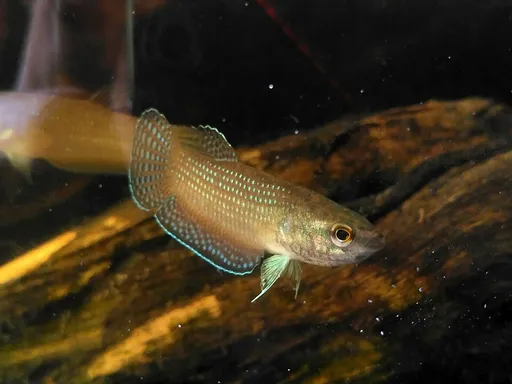
Care at a glance
- Temperature
- 72–81°F
- 22–27°C
- pH
- 5.0–7.0
- Adult size
- 2.4 in
- 6 cm
- Minimum tank
- 20 gal
- 75 L
- Temperament
- Mostly peaceful
- Social behavior
- Social
- Tankmates
- With caution
- Swim level
- Middle
- Difficulty
- Easy
- Breeding
- Easy
- Rarity
- Common
- Family
- Osphronemidae
- Origin
- Native to Borneo, Sumatra, and nearby islands of Indonesia, where it lives in slow blackwater streams and artificial canals.
Overview
A single pair does well in a tank of about 75 liters or more with a tight lid, since these fish jump and also need a warm layer of humid air above the water. Feed small live and frozen foods such as daphnia, artemia, and bloodworm, with dried foods accepted once recognized. Best kept alone or with calm, similar sized tankmates in a species setup. Water should be soft and acidic with gentle filtration.
In the wild
Betta edithae comes from tannin stained lowland streams and sluggish canals across the Greater Sunda Islands. The water is soft and acidic with a lot of leaf litter and overhanging cover. A dim tank with driftwood, dried leaves, and floating plants suits it well. Keep the pH between 5.0 and 7.0 and the temperature around 22 to 27 C.
Good to know
Described by Vierke in 1984, it is the only member of its own species group within Betta. Males are paternal mouthbrooders, holding eggs and fry in the mouth for roughly two weeks before releasing free swimming young. It is one of the most adaptable wild bettas and tolerates a wider range of conditions than most.
Did you know
Unlike the bubble nesting Siamese fighter, Betta edithae broods its eggs inside the male's mouth until the fry are ready to swim.
Common questions
What size tank does an Edith's betta need?
An Edith's betta needs at least 20 gal (75 L). It spends most of its time in the middle.
What temperature and pH does an Edith's betta need?
An Edith's betta is comfortable at 72–81°F (22–27°C) with a pH of 5.0–7.0.
How big does an Edith's betta get?
An adult Edith's betta reaches about 2.4 in (6 cm).
Related species
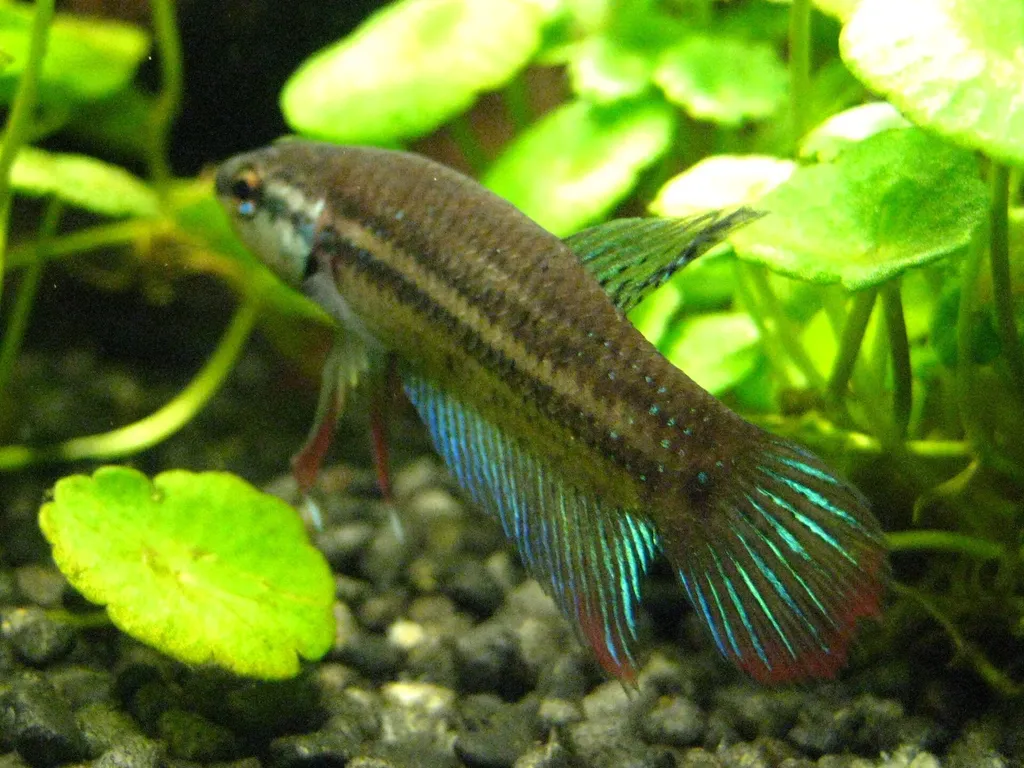 2.4 in (6 cm)12 gal (45 L)68–82°F (20–28°C)
Crescent betta
Betta imbellis
2.4 in (6 cm) · 12 gal (45 L)
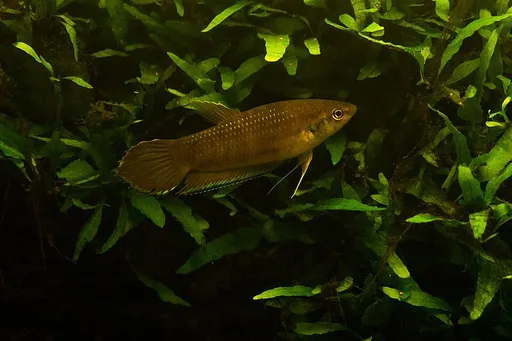 2.4 in (6 cm)16 gal (60 L)70–77°F (21–25°C)
Enisae betta
Betta enisae
2.4 in (6 cm) · 16 gal (60 L)
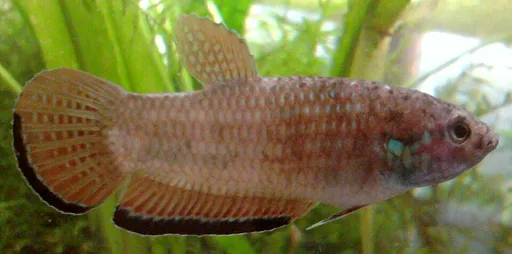 2.4 in (6 cm)16 gal (60 L)73–82°F (23–28°C)
Krabi mouthbrooder
Betta simplex
2.4 in (6 cm) · 16 gal (60 L)
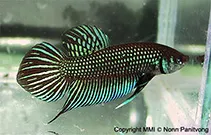 2.4 in (6 cm)10 gal (38 L)72–82°F (22–28°C)
Mahachai betta
Betta mahachaiensis
2.4 in (6 cm) · 10 gal (38 L)
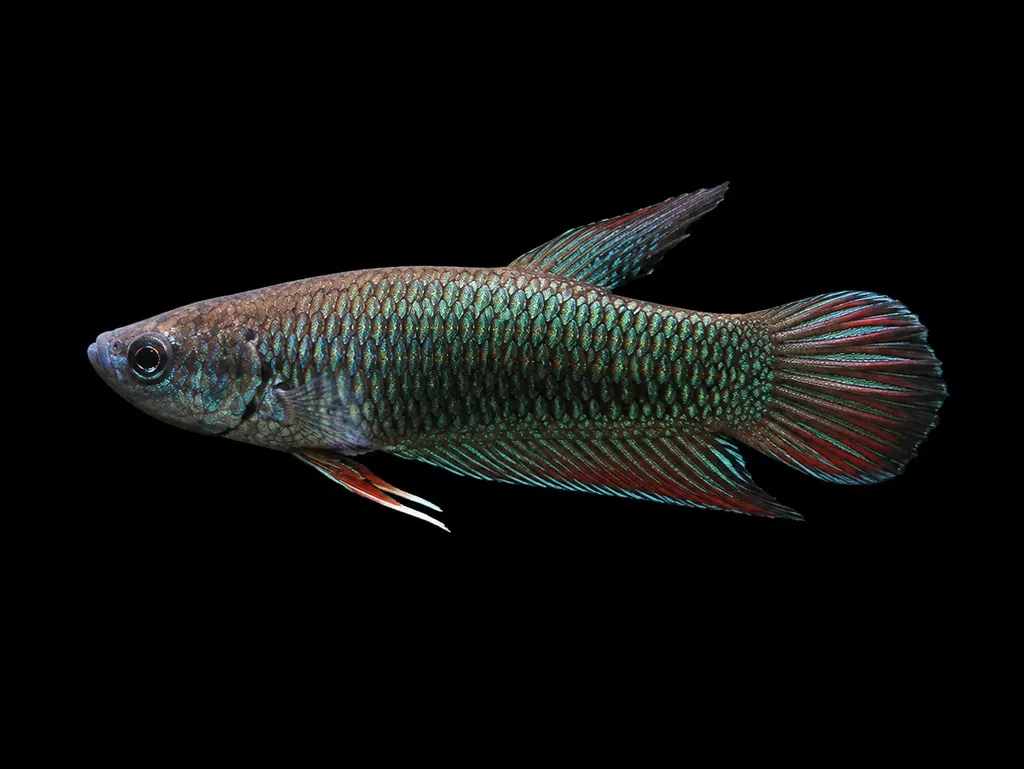 2.4 in (6 cm)20 gal (75 L)73–81°F (23–27°C)
Pulchra betta
Betta pulchra
2.4 in (6 cm) · 20 gal (75 L)
- 2.3 in (5.9 cm)21 gal (80 L)75–82°F (24–28°C)
Green throat mouthbrooder
Betta chloropharynx
2.3 in (5.9 cm) · 21 gal (80 L)