Crescent betta
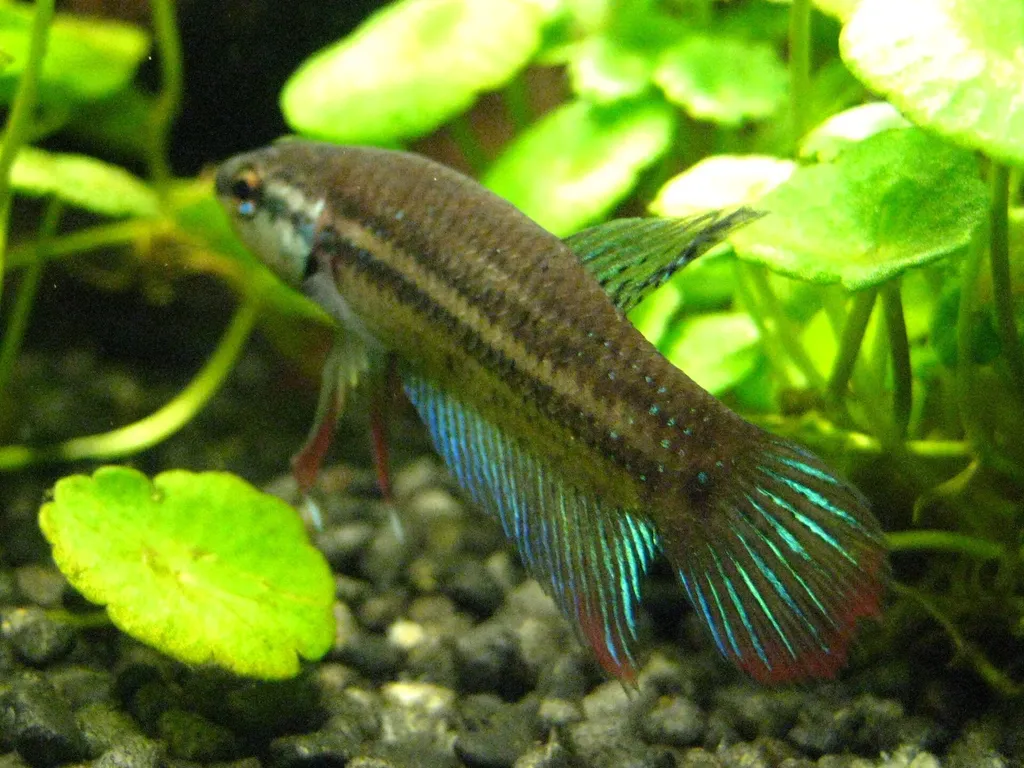
Betta imbellis
Also known as Peacock Betta
FreshwaterFish
Care at a glance
- Temperature
- 68–82°F
- 20–28°C
- pH
- 6.0–7.5
- Adult size
- 2.4 in
- 6 cm
- Minimum tank
- 12 gal
- 45 L
- Temperament
- Mostly peaceful
- Social behavior
- Solitary
- Tankmates
- With caution
- Swim level
- Middle
- Difficulty
- Medium
- Breeding
- No record
- Rarity
- Very rare
- Family
- Osphronemidae
- Origin
- Malaysia, Thailand, Sumatra
Overview
It is best kept as a single fish or a bonded pair in a planted tank of around 45 liters with calm water. It tends to hold the middle and upper levels and likes dense cover to retreat into. Keep it in the low to high 20s C with a soft, slightly acidic to neutral pH. Feed small meaty foods like quality pellet, frozen bloodworms, and brine shrimp.
In the wild
Crescent bettas live in shallow, still waters across Malaysia, Thailand, and Sumatra, including swamps, rice paddies, and small streams. These spots are warm, soft to neutral, and packed with plants near the surface. At home they want a quiet tank with floating plants, plenty of cover, and almost no current. Keep the lid snug and leave a little air gap above the water.
Good to know
This is a wild betta in the Osphronemidae family, reaching about 6 cm. Like its relatives it is a labyrinth fish that gulps air from the surface, and males build bubble nests to hold the eggs. It is much calmer than the domesticated Siamese fighting fish it is related to.
Did you know
Two males can sometimes share a heavily planted tank without the all-out fighting you see in domestic bettas, as long as there is space and sightline breaks. Their wild temperament was never bred up for aggression the way show bettas were.
Common questions
What size tank does a Crescent betta need?
A Crescent betta needs at least 12 gal (45 L). It spends most of its time in the middle.
What temperature and pH does a Crescent betta need?
A Crescent betta is comfortable at 68–82°F (20–28°C) with a pH of 6.0–7.5.
How big does a Crescent betta get?
An adult Crescent betta reaches about 2.4 in (6 cm).
Related species
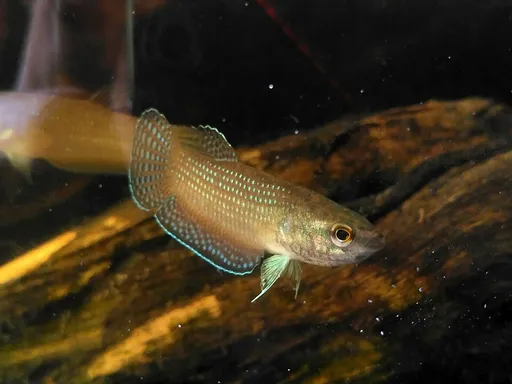 2.4 in (6 cm)20 gal (75 L)72–81°F (22–27°C)
Edith's betta
Betta edithae
2.4 in (6 cm) · 20 gal (75 L)
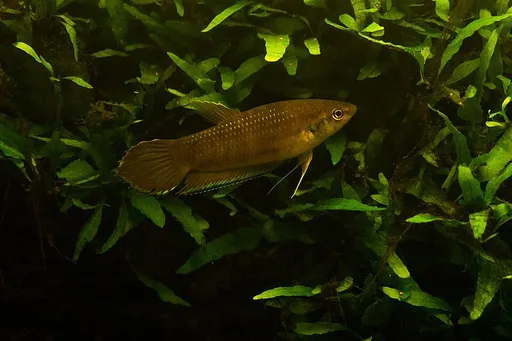 2.4 in (6 cm)16 gal (60 L)70–77°F (21–25°C)
Enisae betta
Betta enisae
2.4 in (6 cm) · 16 gal (60 L)
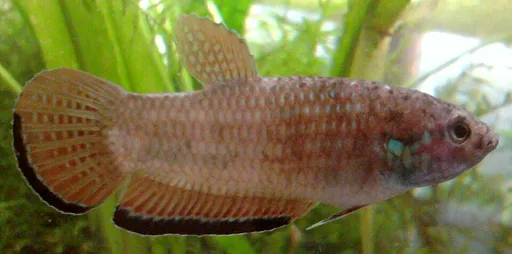 2.4 in (6 cm)16 gal (60 L)73–82°F (23–28°C)
Krabi mouthbrooder
Betta simplex
2.4 in (6 cm) · 16 gal (60 L)
 2.4 in (6 cm)10 gal (38 L)72–82°F (22–28°C)
Mahachai betta
Betta mahachaiensis
2.4 in (6 cm) · 10 gal (38 L)
 2.4 in (6 cm)20 gal (75 L)73–81°F (23–27°C)
Pulchra betta
Betta pulchra
2.4 in (6 cm) · 20 gal (75 L)
- 2.3 in (5.9 cm)21 gal (80 L)75–82°F (24–28°C)
Green throat mouthbrooder
Betta chloropharynx
2.3 in (5.9 cm) · 21 gal (80 L)