Krabi mouthbrooder
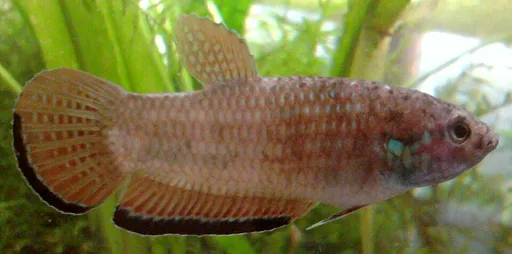
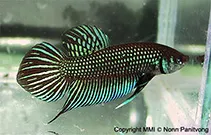
Betta simplex
Also known as Simplex betta, Pumpkin Betta
FreshwaterFish
Care at a glance
- Temperature
- 73–82°F
- 23–28°C
- pH
- 7.0–8.0
- Adult size
- 2.4 in
- 6 cm
- Minimum tank
- 16 gal
- 60 L
- Temperament
- Mostly peaceful
- Social behavior
- Social
- Tankmates
- With caution
- Swim level
- Middle
- Difficulty
- Medium
- Breeding
- Medium
- Rarity
- Common
- Family
- Osphronemidae
- Origin
- Endemic to the Krabi area of southern Thailand, living in limestone spring pools and drainage ditches with hard, near neutral to alkaline water.
Overview
A pair or small group is comfortable in a tank of about 60 liters with a base of at least 60 cm and a secure lid. Keep the water neutral to slightly alkaline, pH 7.0 to 8.0, and moderately hard at 23 to 28 C. Offer small live and frozen foods like bloodworm, brine shrimp, and daphnia. Peaceful for the genus but best in a species tank or with calm, similar sized fish.
In the wild
Betta simplex is unusual among wild bettas in coming from clear limestone waters rather than acidic blackwater. Its home pools and ditches are rich in dissolved minerals with a pH around 7.0 to 7.4 and dense marginal plants. A tank with rock, roots, and plenty of cover mimics this well. Moderately hard water suits it, so it does not need the soft acidic setup most of its relatives require.
Good to know
Described by Kottelat in 1994, it sits in the Betta picta complex and is a paternal mouthbrooder. Males incubate the eggs in the mouth for roughly 9 to 16 days. It is named simplex for its relatively plain markings compared with close relatives.
Did you know
It is one of the few bettas that prefers hard, alkaline water, a trait tied to the limestone springs of Krabi where it lives.
Common questions
What size tank does a Krabi mouthbrooder need?
A Krabi mouthbrooder needs at least 16 gal (60 L). It spends most of its time in the middle.
What temperature and pH does a Krabi mouthbrooder need?
A Krabi mouthbrooder is comfortable at 73–82°F (23–28°C) with a pH of 7.0–8.0.
How big does a Krabi mouthbrooder get?
An adult Krabi mouthbrooder reaches about 2.4 in (6 cm).
Related species
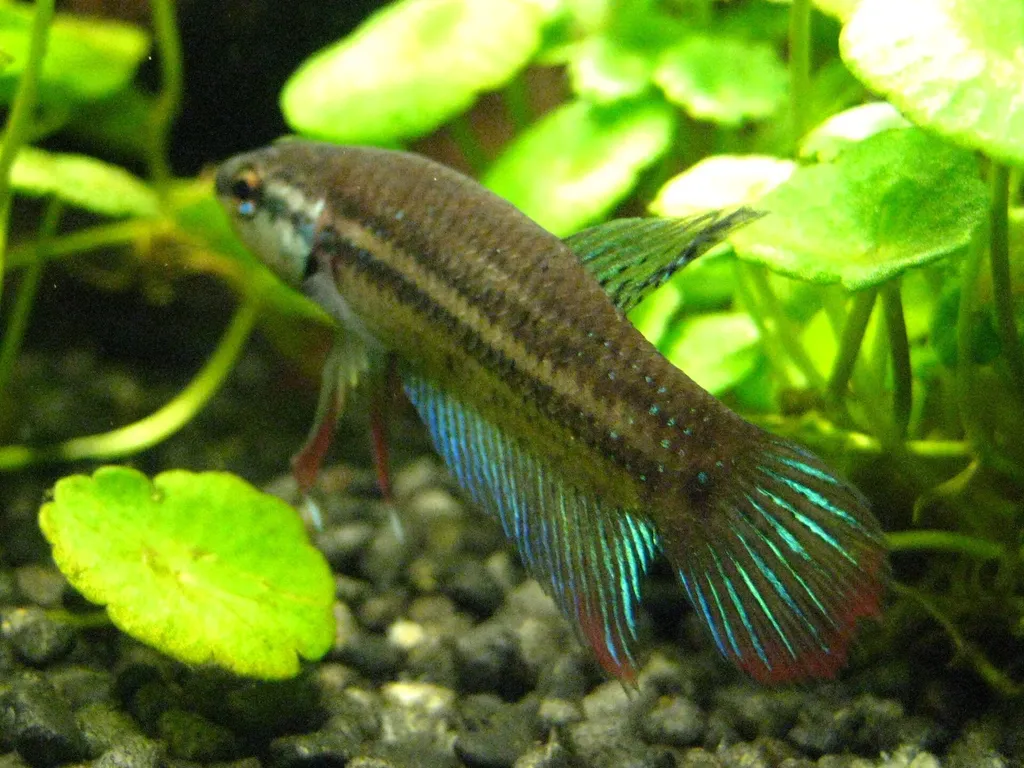 2.4 in (6 cm)12 gal (45 L)68–82°F (20–28°C)
Crescent betta
Betta imbellis
2.4 in (6 cm) · 12 gal (45 L)
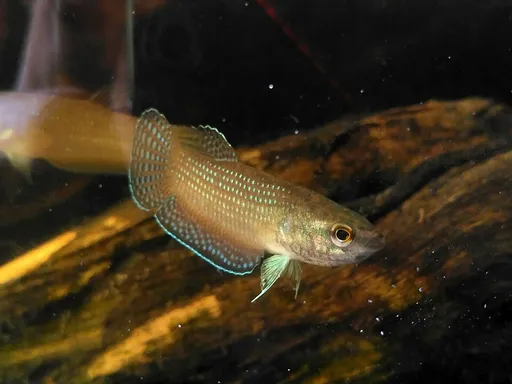 2.4 in (6 cm)20 gal (75 L)72–81°F (22–27°C)
Edith's betta
Betta edithae
2.4 in (6 cm) · 20 gal (75 L)
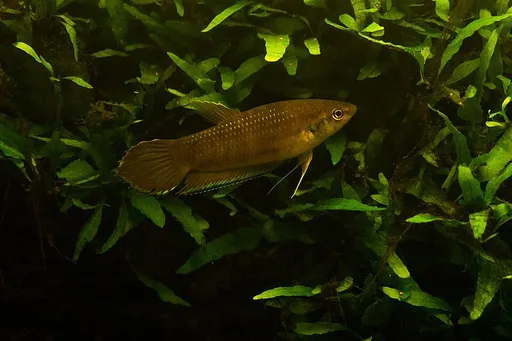 2.4 in (6 cm)16 gal (60 L)70–77°F (21–25°C)
Enisae betta
Betta enisae
2.4 in (6 cm) · 16 gal (60 L)
 2.4 in (6 cm)10 gal (38 L)72–82°F (22–28°C)
Mahachai betta
Betta mahachaiensis
2.4 in (6 cm) · 10 gal (38 L)
- 2.5 in (6.3 cm)21 gal (80 L)73–79°F (23–26°C)
Ferox betta
Betta ferox
2.5 in (6.3 cm) · 21 gal (80 L)
- 2.5 in (6.3 cm)16 gal (60 L)72–79°F (22–26°C)
Nuluhon betta
Betta nuluhon
2.5 in (6.3 cm) · 16 gal (60 L)