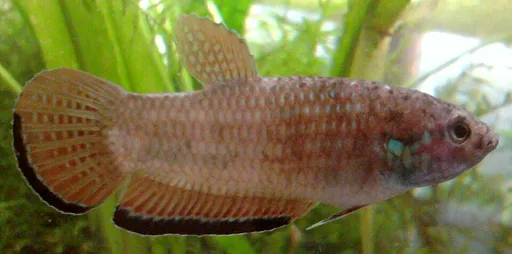
Mahachai betta
Betta mahachaiensis
Also known as Mahachai fighter, Blue Dream Betta
FreshwaterFish
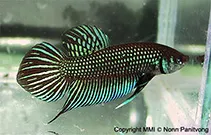
Care at a glance
- Temperature
- 72–82°F
- 22–28°C
- pH
- 7.0–8.5
- Adult size
- 2.4 in
- 6 cm
- Minimum tank
- 10 gal
- 38 L
- Temperament
- Mostly peaceful
- Social behavior
- Solitary
- Tankmates
- With caution
- Swim level
- Middle
- Difficulty
- Medium
- Breeding
- Medium
- Rarity
- Common
- Family
- Osphronemidae
- Origin
- Coastal central Thailand (Samut Sakhon, Samut Songkhram, Samut Prakan, western Bangkok)
Overview
Keep one fish, or a carefully introduced pair, in a tank of at least 38 liters with a footprint around 45 by 30 cm. This is not a community fish. Males are territorial toward each other and toward Betta splendens, so they are best kept solitary. They sit in the middle of the water column and want a heavily planted tank with floating cover and gentle sponge-filter flow, at 22 to 28 C and a pH of 7 to 8.5. They are strong jumpers, so use a tight-fitting lid that still leaves a warm, humid air gap above the water. Feed small frozen and live foods and a quality betta pellet. Since the species is critically endangered, never release captive fish into the wild, and check your local rules before keeping or moving them.
In the wild
Mahachai bettas come from coastal swamps in central Thailand, around Samut Sakhon, Samut Songkhram, Samut Prakan, and western Bangkok. These are low brackish wetlands with hard, mineral-rich, alkaline water, which is unusual for a betta. Match that with a heavily planted tank, floating plants for surface cover, and gentle flow from a sponge filter. Keep the water warm, 22 to 28 C, and on the hard, alkaline side, with a pH from 7 to 8.5. They do not need salt and are kept and bred in plain freshwater, but do not chase a low, acidic pH the way you would for a blackwater betta.
Good to know
This is a wild betta in the family Osphronemidae, described in 2012, and it grows to about 6 cm, slightly larger and more robust than the common Betta splendens. It is a labyrinth fish, meaning it breathes air at the surface, so it needs a warm, humid air layer above the water. Males build bubble nests, and the eggs hatch in 24 to 48 hours. Fry first need infusoria, then move up to microworms and baby brine shrimp. It is critically endangered in the wild, so buy captive-bred stock only.
Did you know
Unlike most bettas in the hobby, this one is a brackish-water specialist. In the wild it lives in coastal swamps with salinity running from about 1.1 to 10.6 ppt, so it tolerates and may even prefer slightly hard, mineral-rich water rather than the soft, acidic conditions people often assume bettas need.
Common questions
What size tank does a Mahachai betta need?
A Mahachai betta needs at least 10 gal (38 L). It spends most of its time in the middle.
What temperature and pH does a Mahachai betta need?
A Mahachai betta is comfortable at 72–82°F (22–28°C) with a pH of 7.0–8.5.
How big does a Mahachai betta get?
An adult Mahachai betta reaches about 2.4 in (6 cm).
Related species
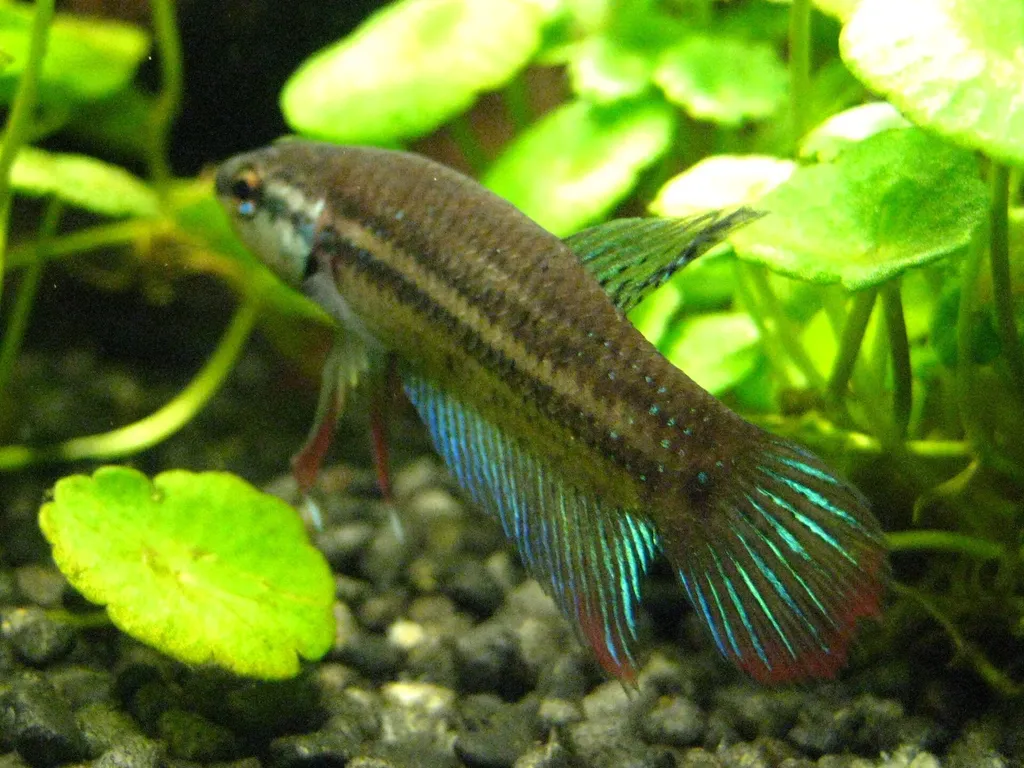 2.4 in (6 cm)12 gal (45 L)68–82°F (20–28°C)
Crescent betta
Betta imbellis
2.4 in (6 cm) · 12 gal (45 L)
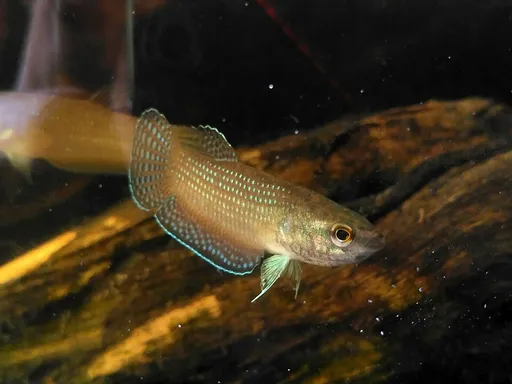 2.4 in (6 cm)20 gal (75 L)72–81°F (22–27°C)
Edith's betta
Betta edithae
2.4 in (6 cm) · 20 gal (75 L)
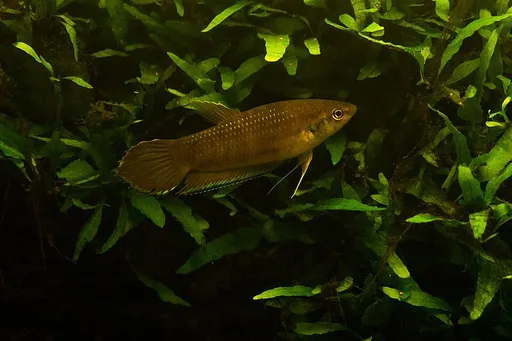 2.4 in (6 cm)16 gal (60 L)70–77°F (21–25°C)
Enisae betta
Betta enisae
2.4 in (6 cm) · 16 gal (60 L)
 2.4 in (6 cm)16 gal (60 L)73–82°F (23–28°C)
Krabi mouthbrooder
Betta simplex
2.4 in (6 cm) · 16 gal (60 L)
- 2.5 in (6.3 cm)21 gal (80 L)73–79°F (23–26°C)
Ferox betta
Betta ferox
2.5 in (6.3 cm) · 21 gal (80 L)
- 2.5 in (6.3 cm)16 gal (60 L)72–79°F (22–26°C)
Nuluhon betta
Betta nuluhon
2.5 in (6.3 cm) · 16 gal (60 L)