Colombian shark catfish
Ariopsis seemanni
BrackishSaltwaterFish
Care at a glance
- Temperature
- 72–79°F
- 22–26°C
- pH
- 7.0–8.5
- Adult size
- 13.8 in
- 35 cm
- Minimum tank
- 225 gal
- 850 L
- Temperament
- Mostly peaceful
- Social behavior
- Social
- Tankmates
- With caution
- Swim level
- Bottom
- Difficulty
- Difficult
- Breeding
- No record
- Rarity
- Very rare
- Family
- Ariidae
- Origin
- Central America
Overview
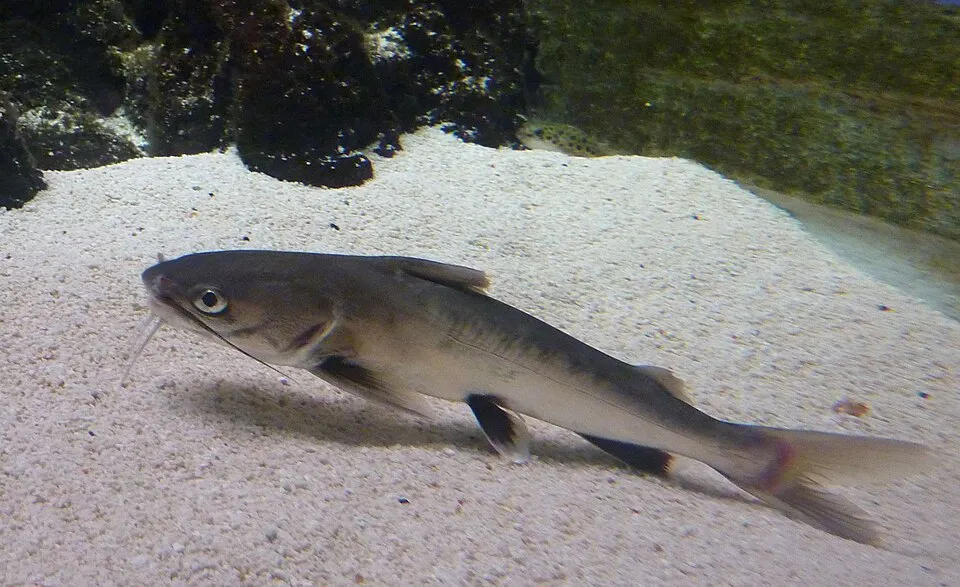
The Colombian shark catfish is a nervous, constantly swimming, shoaling fish that should be kept in a group of five or more so it feels secure and spreads out any squabbling. It is peaceful toward tankmates too large to eat, but it will take smaller fish, so pair it with robust, similarly sized companions. It needs brackish water that grows saltier as it matures, so it is a poor fit for a standard freshwater community. Give it a large, open tank with strong flow and a soft bed, and feed meaty sinking foods such as prawn, mussel, and chopped fish. Handle it with care because its dorsal spine can deliver a painful sting. Aim for a tank of around 850 liters or larger.
In the wild
The Colombian shark catfish lives along the Pacific coast of Central America, in estuaries, tidal rivers, and mangrove-lined shores. Young fish start in fresh to lightly brackish water and move into saltier water as they grow, so raise the salinity over time from a low specific gravity toward near-marine for adults. Keep it warm, around 22 to 26 C, with a hard, alkaline pH between 7 and 8.5. A large tank with a sand bed, smooth rock, and strong, well-oxygenated flow best matches its coastal home.
Good to know
The Colombian shark catfish belongs to Ariidae, the sea catfishes, and reaches around 35 cm. Its tall dorsal fin, forked tail, and streamlined body give it a shark-like look that drives its popularity. Sea catfishes are among the few catfishes that brood their eggs, the male carrying the large eggs in his mouth until they hatch, though this has not been reproduced in home aquariums. It also carries a mildly venomous spine at the front of the dorsal and pectoral fins.
Did you know
Male sea catfishes are mouthbrooders, carrying a clutch of marble-sized eggs in the mouth for weeks and often not feeding the whole time. The Colombian shark catfish also shifts from fresh water as a youngster to nearly full seawater as an adult.
Common questions
What size tank does a Colombian shark catfish need?
A Colombian shark catfish needs at least 225 gal (850 L). It spends most of its time in the bottom.
What temperature and pH does a Colombian shark catfish need?
A Colombian shark catfish is comfortable at 72–79°F (22–26°C) with a pH of 7.0–8.5.
How big does a Colombian shark catfish get?
An adult Colombian shark catfish reaches about 13.8 in (35 cm).
Related species
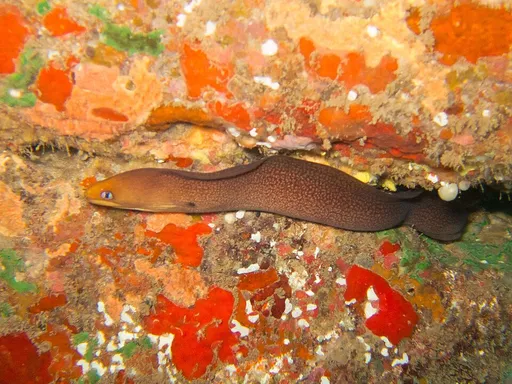 11.8 in (30 cm)65 gal (246 L)72–79°F (22–26°C)
Golden dwarf moray
Gymnothorax melatremus
11.8 in (30 cm) · 65 gal (246 L)
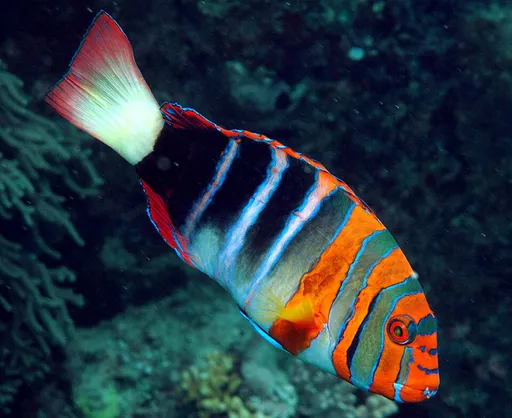 11.8 in (30 cm)125 gal (473 L)72–79°F (22–26°C)
Harlequin tuskfish
Choerodon fasciatus
11.8 in (30 cm) · 125 gal (473 L)
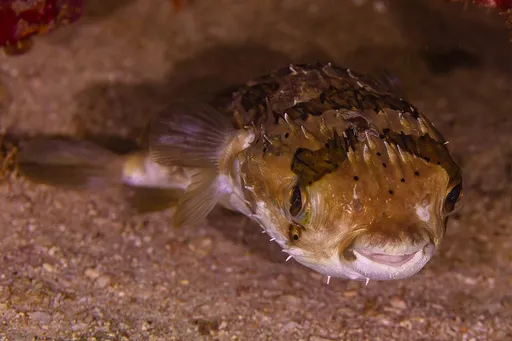 11.8 in (30 cm)180 gal (680 L)75–81°F (24–27°C)
Porcupine puffer
Diodon holocanthus
11.8 in (30 cm) · 180 gal (680 L)
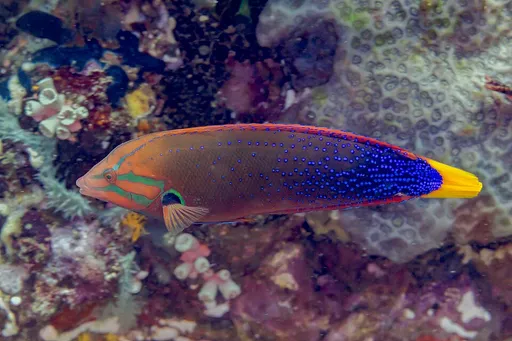 11.8 in (30 cm)150 gal (568 L)72–79°F (22–26°C)
Red coris wrasse
Coris gaimard
11.8 in (30 cm) · 150 gal (568 L)
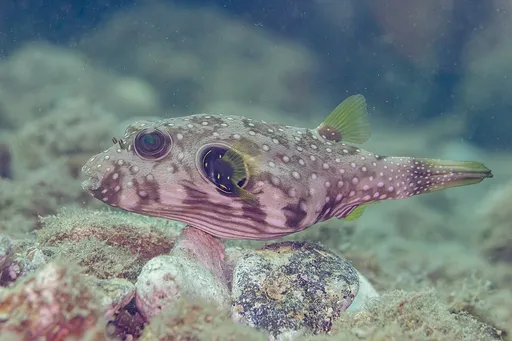 19.7 in (50 cm)180 gal (680 L)75–81°F (24–27°C)
Stars-and-stripes puffer
Arothron hispidus
19.7 in (50 cm) · 180 gal (680 L)
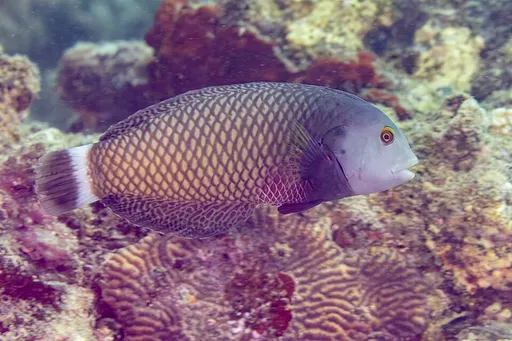 11.8 in (30 cm)106 gal (400 L)73–81°F (23–27°C)
Dragon wrasse
Novaculichthys taeniourus
11.8 in (30 cm) · 106 gal (400 L)