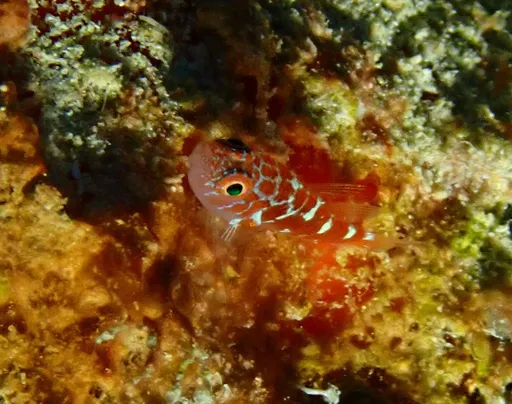
Caesiura pygmygoby
Trimma caesiura
Also known as Rare White Spotted Nano Goby, White Spotted Dwarf Goby, White Spotted Goby
SaltwaterFish
Care at a glance
- Temperature
- 72–79°F
- 22–26°C
- pH
- 8.1–8.4
- Adult size
- 1.4 in
- 3.5 cm
- Minimum tank
- 10 gal
- 38 L
- Temperament
- Peaceful
- Social behavior
- Solitary
- Swim level
- Bottom
- Difficulty
- Easy
- Breeding
- Medium
- Rarity
- Rare
- Reef safe
- Reef safe
- Family
- Gobiidae
- Origin
- Western Pacific (Palau to Samoa)
Overview
The Caesiura pygmygoby is a peaceful, reef-safe pygmygoby for a small tank. It is easy to keep.
Did you know
The Caesiura pygmygoby's captive-bred line is listed by Biota as Trimma cf. caesiura, where cf. means compare with. It is the breeder's honest flag that the fish may prove to be a close relative, still waiting on a firm identification.
Caring for the Caesiura pygmygoby
Give each Caesiura pygmygoby its own shelter, such as a cave or the underside of a shelf rock. It adopts that spot and patrols a modest patch around it. Keep one in a small tank of 10 gal (38 L) or more, or spread several across a larger one.
The water should run at 72 to 79°F (22 to 26°C), with a pH of 8.1 to 8.4. It takes small pellets, chopped mysis, Calanus and baby brine shrimp.
It is peaceful, though it is more of a territory holder than the sociable Eviota species. Corals and even tiny ornamental shrimp are safe with it. Breeding it is moderately hard.
Good to know
The Caesiura pygmygoby was described by David Starr Jordan and Alvin Seale in 1906, from Apia, Samoa. They made it the type species of their new genus, so every Trimma is defined with reference to this fish. The body is red-orange, with a row of white saddle-like spots along the back. Research on the genus has shown that several pygmygobies can change sex in either direction as the makeup of a group shifts. It is also known as the white spotted dwarf goby.
In the wild
The Caesiura pygmygoby lives in clear lagoons and on seaward reefs across the western Pacific, from Palau to Samoa. It tucks into crevices and small caves in dead coral rock and sandy rubble, with records down to 70 meters. It is usually found alone, holding a small territory around a chosen hole.
Weekly picks
Tank mates
The Caesiura pygmygoby is a peaceful, solitary species that keeps to the bottom. These picks share a community profile with it, are safe together in both directions, and overlap on water type, temperature and pH.
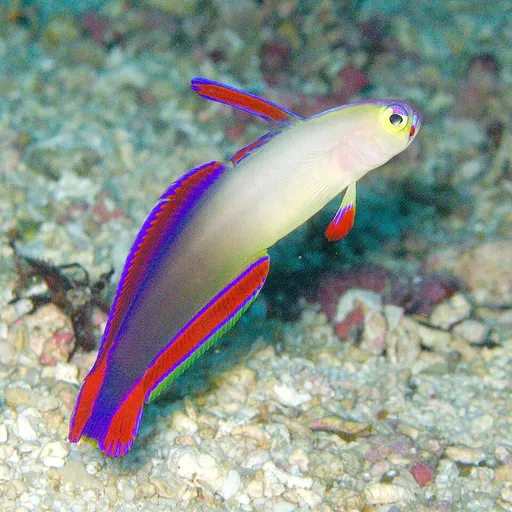
Purple firefish
Nemateleotris decora
Saltwater3.5 in (9 cm) · 20 gal (75 L)72–79°F (22–26°C)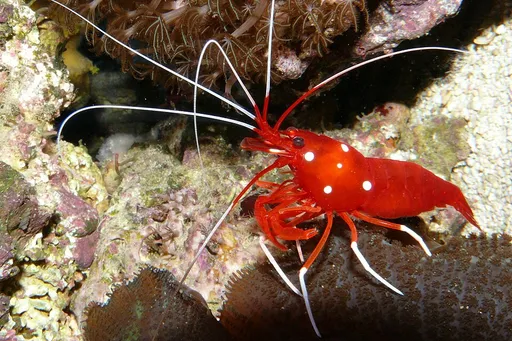
Fire shrimp
Lysmata debelius
Saltwater2.4 in (6 cm) · 20 gal (75 L)72–79°F (22–26°C)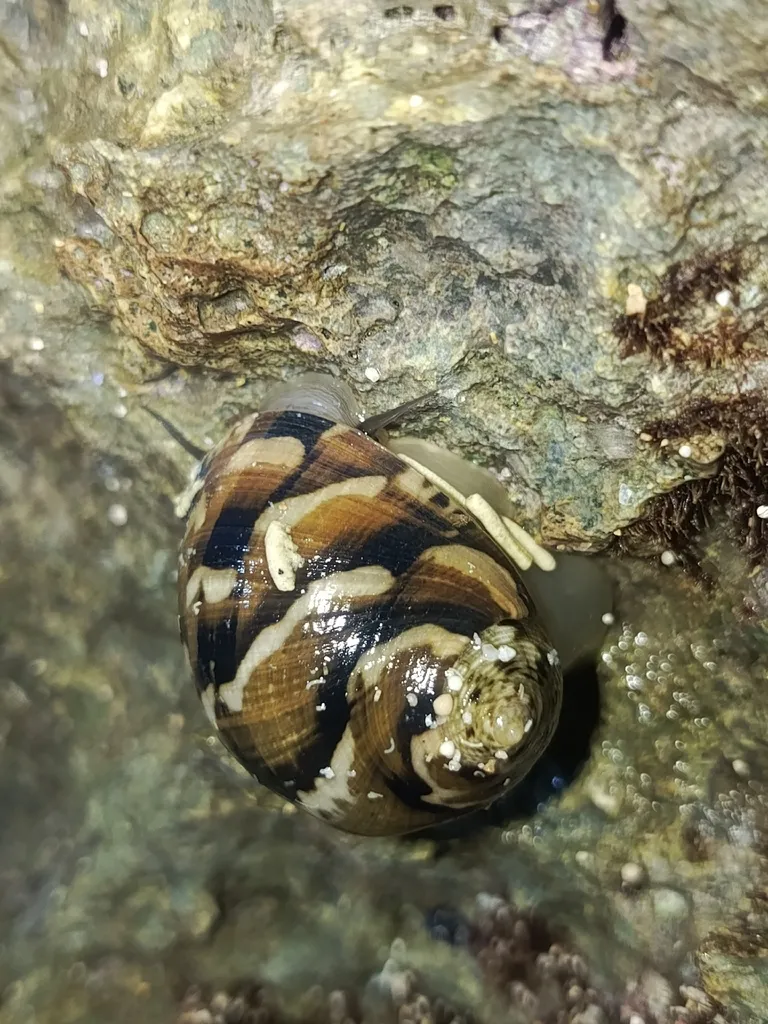
Marine nerite snail
Nerita sp.
Saltwater1 in (2.5 cm) · 11 gal (40 L)72–79°F (22–26°C)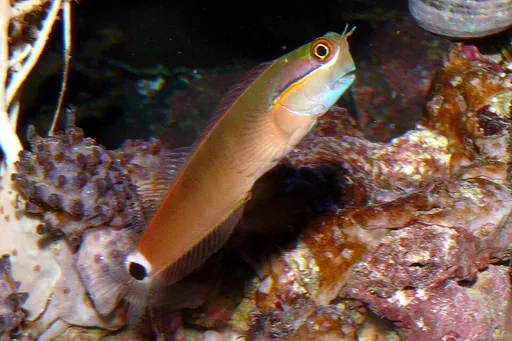
Tailspot blenny
Ecsenius stigmatura
Saltwater2.4 in (6 cm) · 20 gal (75 L)72–79°F (22–26°C)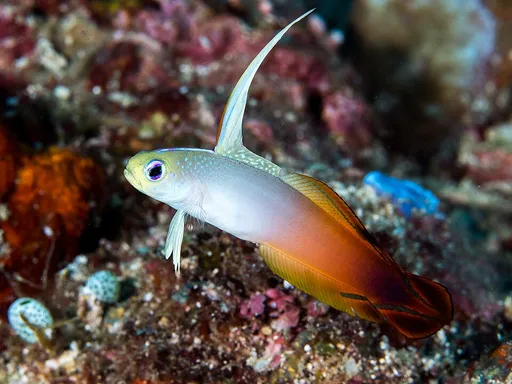
Firefish
Nemateleotris magnifica
Saltwater3.5 in (9 cm) · 20 gal (75 L)72–81°F (22–27°C)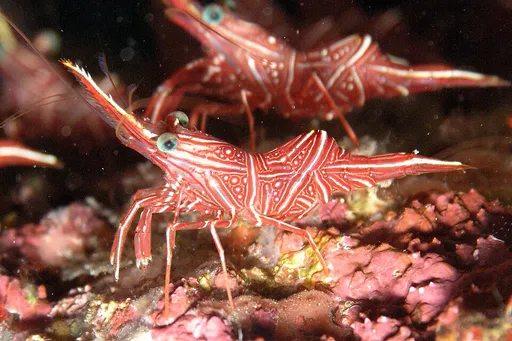
Camel / dancing shrimp
Rhynchocinetes durbanensis
Saltwater2 in (5 cm) · 16 gal (60 L)75–81°F (24–27°C)
Common questions
What size tank does a Caesiura pygmygoby need?
A Caesiura pygmygoby needs at least 10 gal (38 L). It spends most of its time in the bottom.
What temperature and pH does a Caesiura pygmygoby need?
A Caesiura pygmygoby is comfortable at 72–79°F (22–26°C) with a pH of 8.1–8.4.
What does a Caesiura pygmygoby eat?
A Caesiura pygmygoby takes small pellets, chopped mysis, Calanus and baby brine shrimp.
How big does a Caesiura pygmygoby get?
An adult Caesiura pygmygoby reaches about 1.4 in (3.5 cm).
Related species
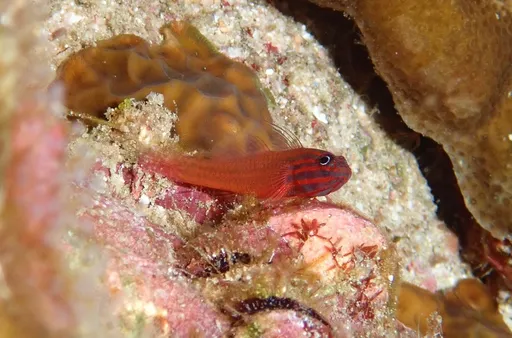 1.2 in (3 cm)10 gal (38 L)72–79°F (22–26°C)
Redlined pygmygoby
Trimma striatum
1.2 in (3 cm) · 10 gal (38 L)
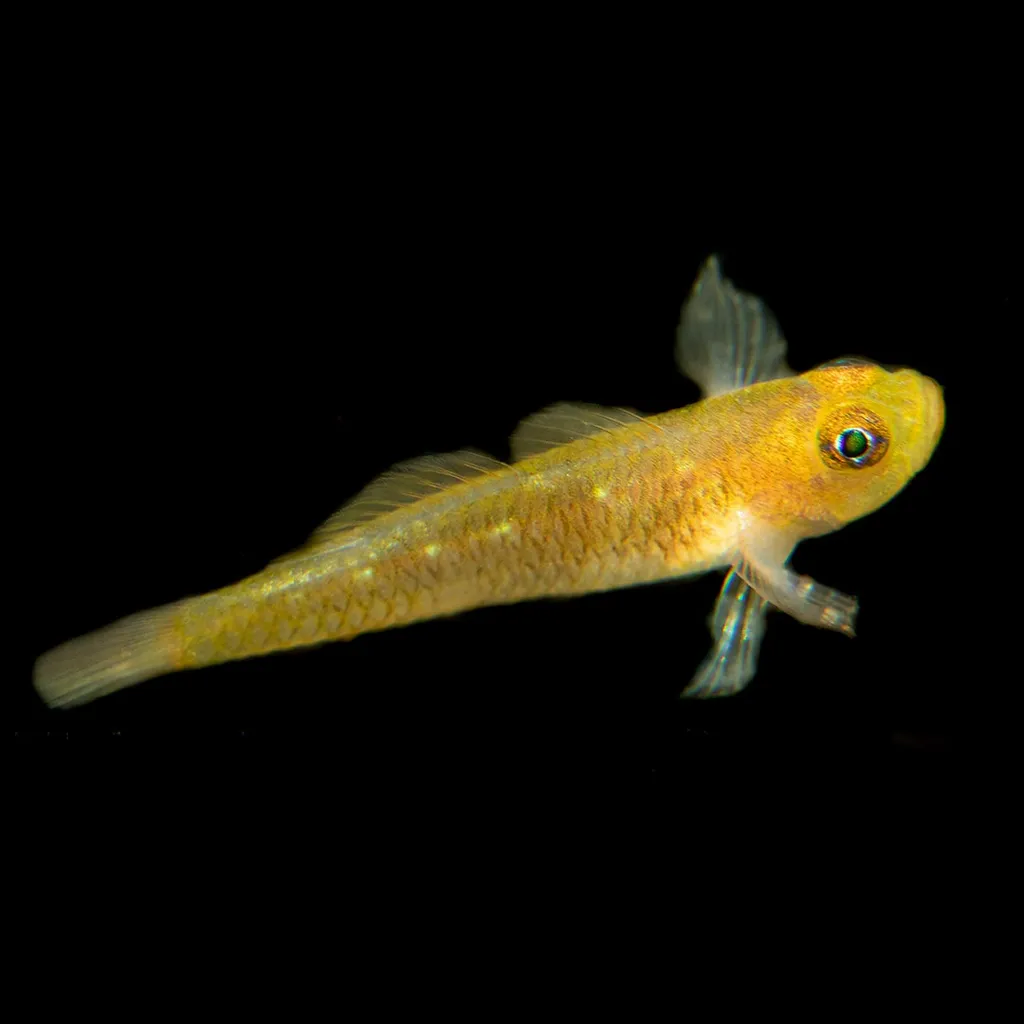 1.1 in (2.7 cm)5 gal (19 L)72–79°F (22–26°C)
Citron pygmygoby
Trimma kitrinum
1.1 in (2.7 cm) · 5 gal (19 L)
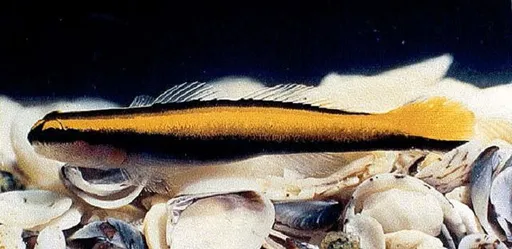 1.6 in (4 cm)11 gal (40 L)72–79°F (22–26°C)
Barber goby
Elacatinus figaro
1.6 in (4 cm) · 11 gal (40 L)
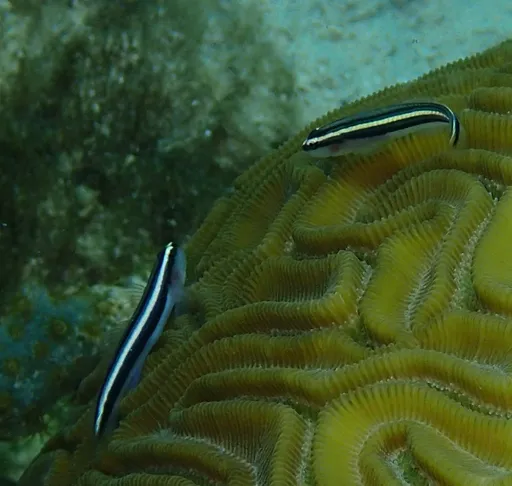 1.6 in (4 cm)11 gal (40 L)72–79°F (22–26°C)
Barsnout cleaner goby
Elacatinus illecebrosus
1.6 in (4 cm) · 11 gal (40 L)
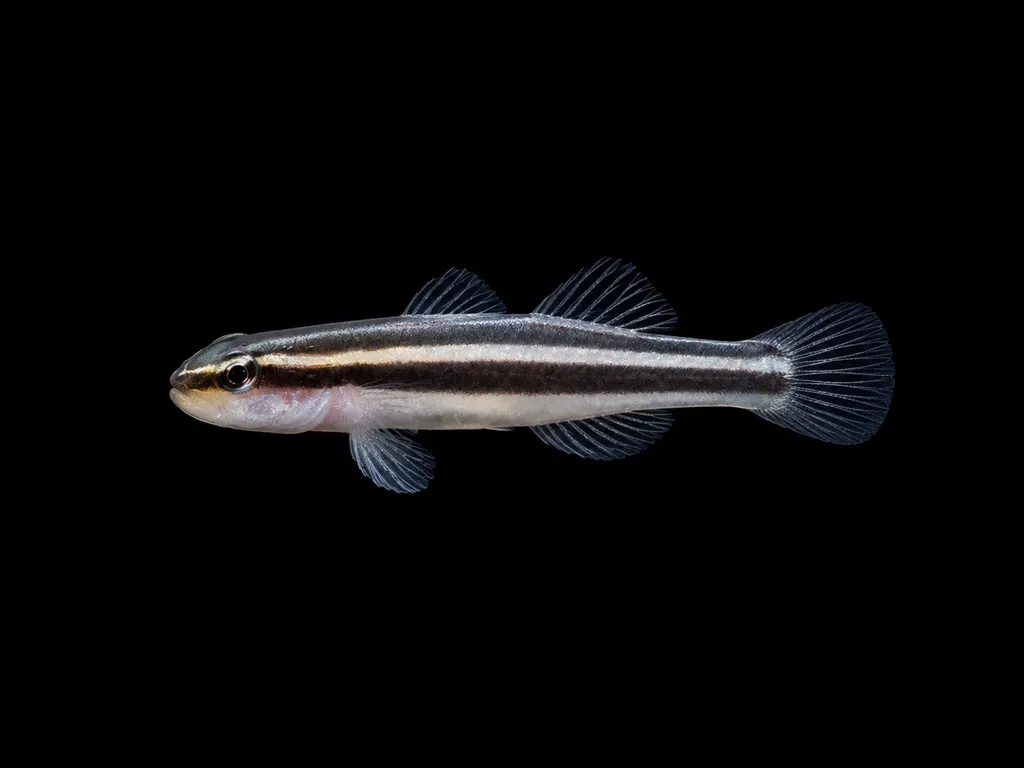 1.6 in (4 cm)11 gal (40 L)72–79°F (22–26°C)
Broadstripe cleaner goby
Elacatinus prochilos
1.6 in (4 cm) · 11 gal (40 L)
 1.6 in (4 cm)13 gal (50 L)75–79°F (24–26°C)
Sharknose goby
Elacatinus evelynae
1.6 in (4 cm) · 13 gal (50 L)