Asian banjo catfish
Acrochordonichthys rugosus
FreshwaterFish
Care at a glance
- Temperature
- 64–75°F
- 18–24°C
- pH
- 6.0–7.5
- Adult size
- 4.3 in
- 11 cm
- Minimum tank
- 25 gal
- 95 L
- Temperament
- Mostly peaceful
- Social behavior
- Social
- Tankmates
- With caution
- Swim level
- Bottom
- Difficulty
- Difficult
- Breeding
- No record
- Rarity
- Very rare
- Family
- Akysidae
- Origin
- Malaysia, Sunda Islands
Overview
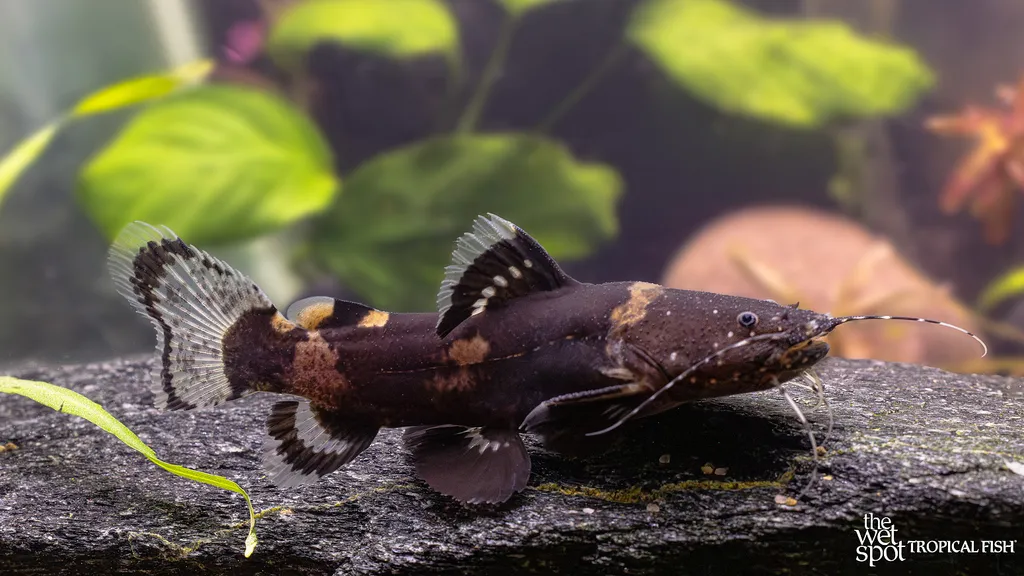
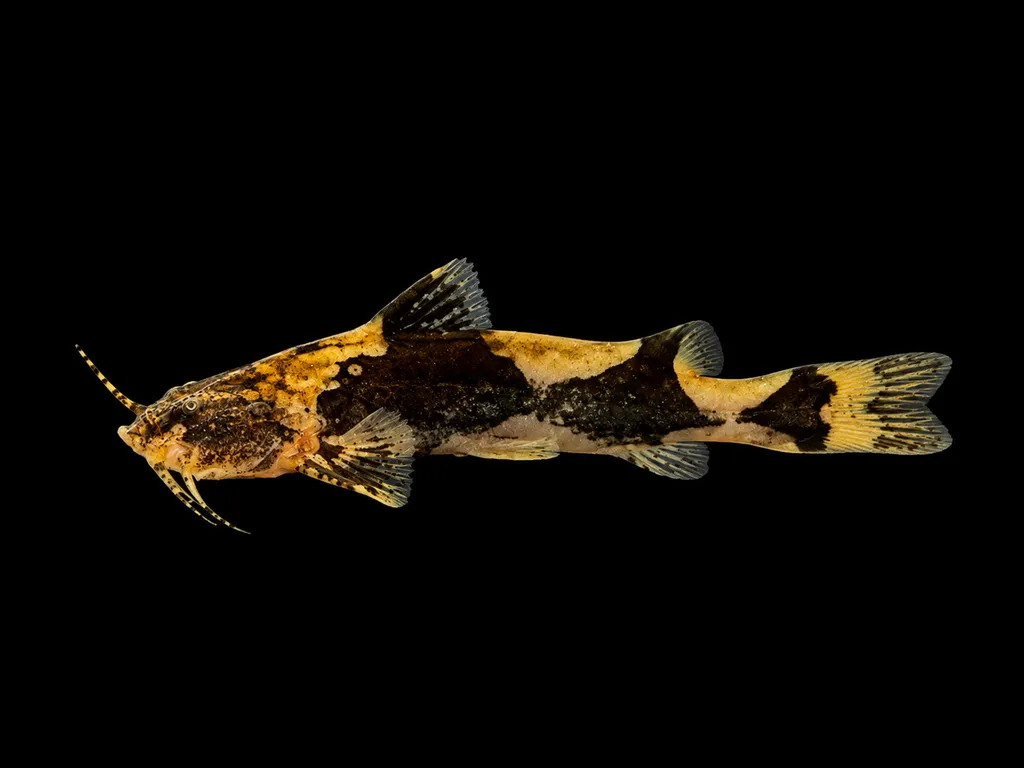
The Asian banjo catfish is a slow, sedentary fish that spends the day tucked against wood or under leaf litter and only stirs at night. It is peaceful toward anything it cannot swallow, but small fish and shrimp will be eaten, so pick tankmates that are calm and too big to be a meal. Because it barely moves and is a poor competitor at feeding time, drop sinking foods such as frozen bloodworms, chopped prawn, and small earthworms right in front of it after lights out. Keep one on its own or a small group with plenty of hiding places, and handle it carefully since its skin can release a toxic slime when the fish is stressed. A tank of around 95 liters or larger suits it.
In the wild
This species comes from Malaysia and the Sunda Islands, where it lives in clear, flowing forest streams with sandy or gravel beds and scattered wood. The water there is soft, slightly acidic, and cooler than many tropical tanks, so aim for around 18 to 24 C and a pH between 6 and 7.5. Recreate the stream with a fine sand base, smooth rounded rocks, driftwood, and leaf litter, plus gentle to moderate flow and good oxygenation. Dim lighting and shaded caves help it feel secure and come out to feed.
Good to know
The Asian banjo catfish belongs to Akysidae, a small family of Asian stream catfishes, and reaches about 11 cm. Its common name comes from the broad, flattened head and tapering body, and its skin is covered in wart-like tubercles that it can shed and renew. The species is best known for a defensive slime that is toxic to other fish in a confined space, a trait shared across its genus. Its colour shifts with mood and surroundings. Breeding has not been documented in aquariums.
Did you know
Kept in a bag or a small tank, a stressed Asian banjo catfish can release enough toxic slime from its skin to kill nearby fish within minutes, which is why it is best moved and acclimatized on its own.
Common questions
What size tank does an Asian banjo catfish need?
An Asian banjo catfish needs at least 25 gal (95 L). It spends most of its time in the bottom.
What temperature and pH does an Asian banjo catfish need?
An Asian banjo catfish is comfortable at 64–75°F (18–24°C) with a pH of 6.0–7.5.
How big does an Asian banjo catfish get?
An adult Asian banjo catfish reaches about 4.3 in (11 cm).
Related species
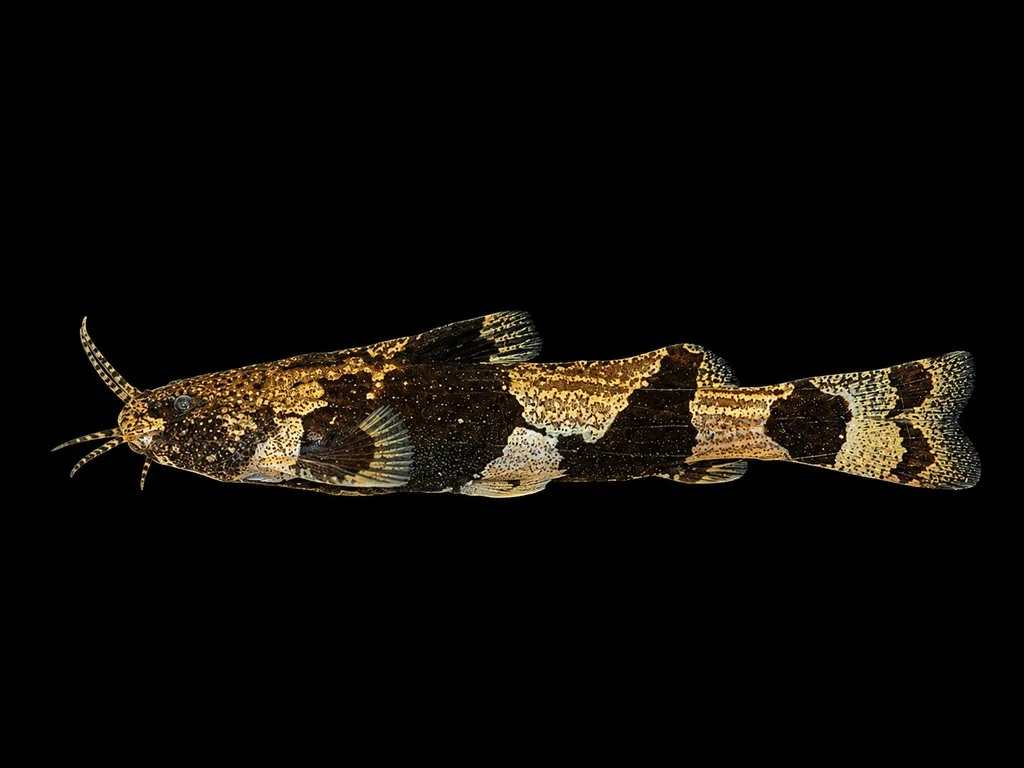 2.8 in (7 cm)14 gal (54 L)72–79°F (22–26°C)
Burmese marble bee catfish
Akysis prashadi
2.8 in (7 cm) · 14 gal (54 L)
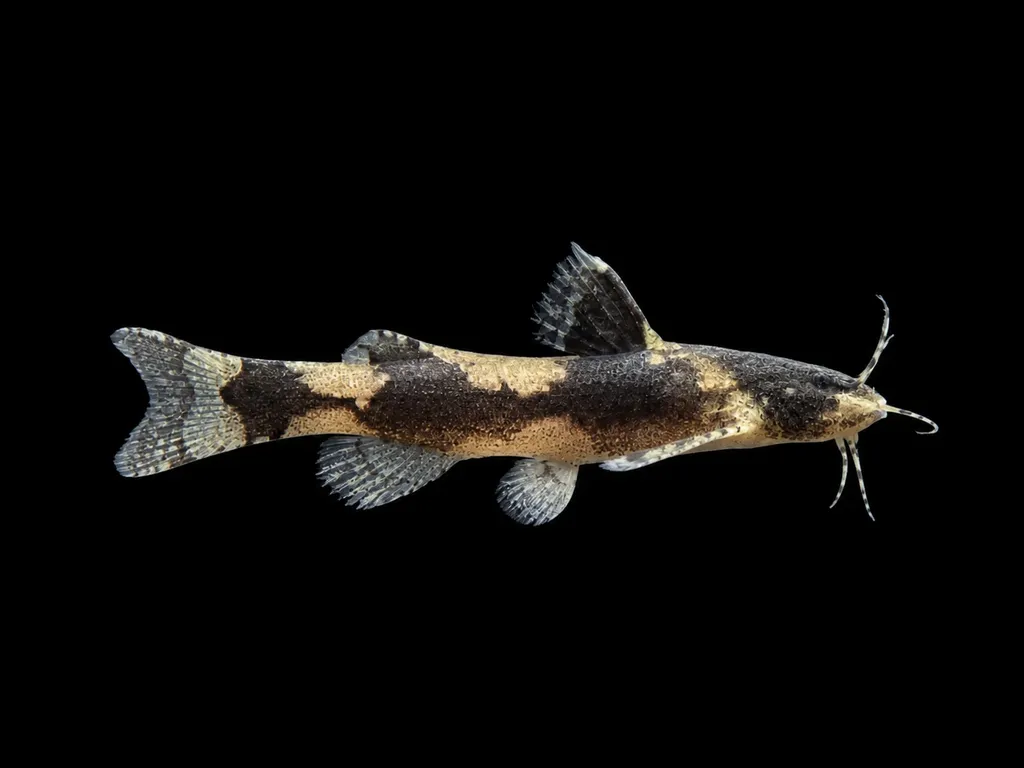 2.4 in (6 cm)14 gal (54 L)72–79°F (22–26°C)
Hendrickson's bee catfish
Akysis hendricksoni
2.4 in (6 cm) · 14 gal (54 L)
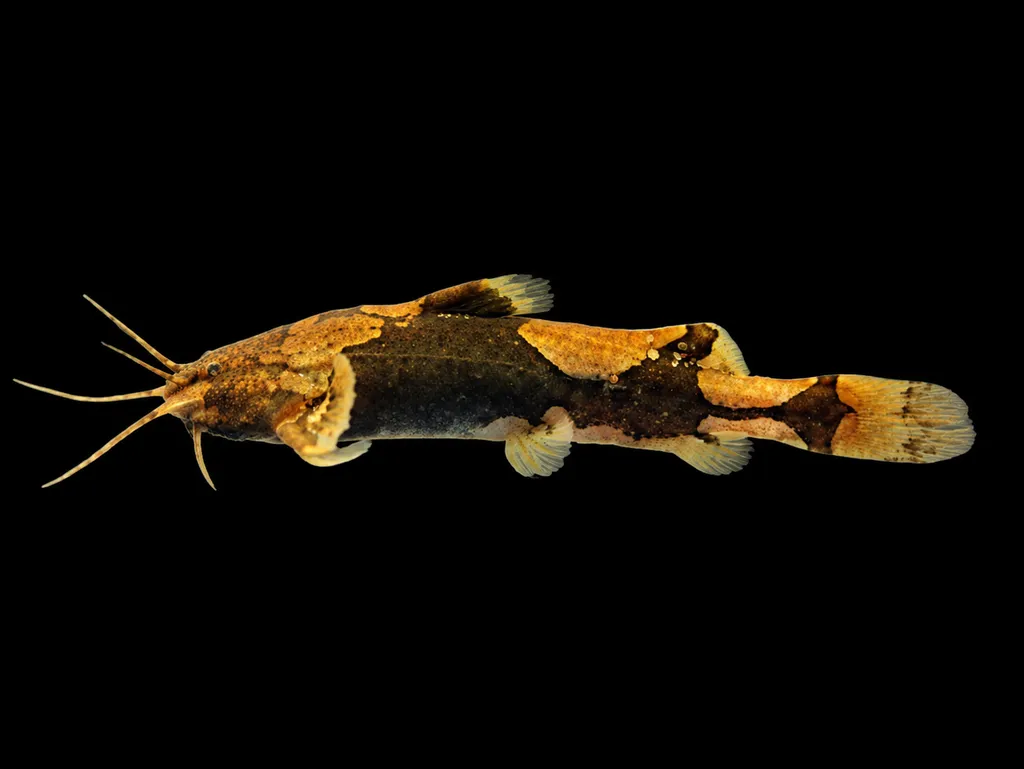 2.4 in (6 cm)14 gal (54 L)72–79°F (22–26°C)
Orange marble bee catfish
Akysis longifilis
2.4 in (6 cm) · 14 gal (54 L)
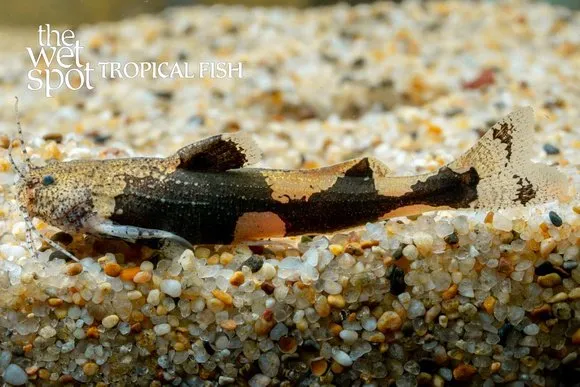
 1.6 in (4 cm)14 gal (54 L)72–79°F (22–26°C)
Portellus bee catfish
Akysis portellus
1.6 in (4 cm) · 14 gal (54 L)
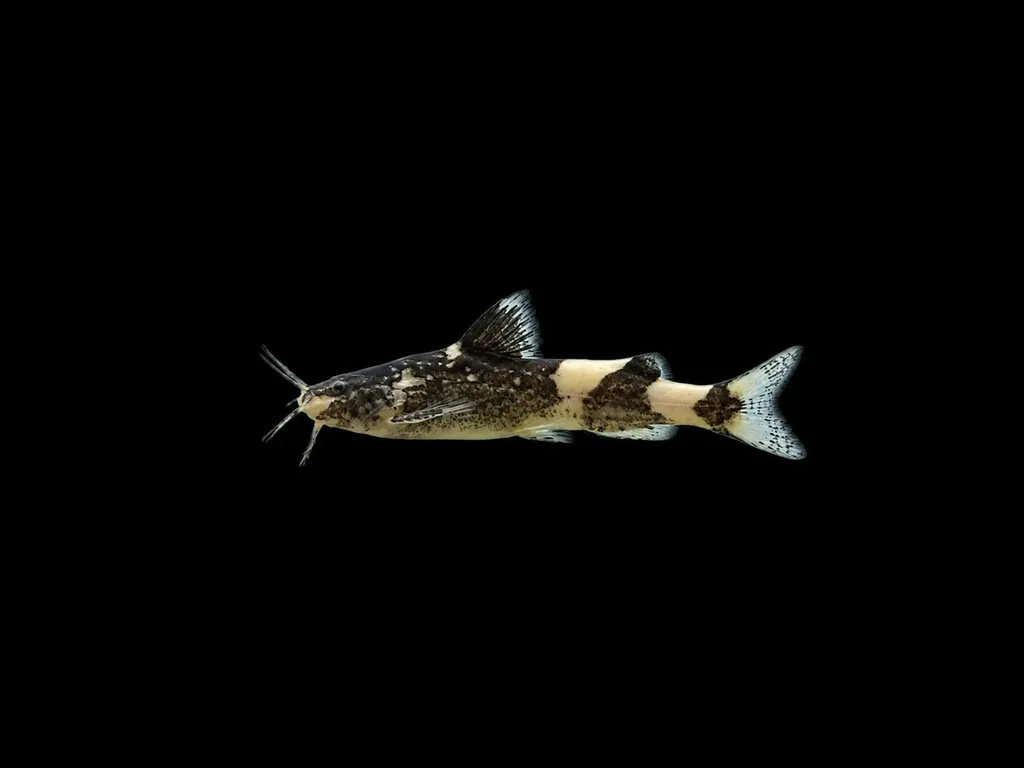
 1.6 in (4 cm)11 gal (40 L)72–79°F (22–26°C)
Wasp bee catfish
Akysis vespa
1.6 in (4 cm) · 11 gal (40 L)
 1.4 in (3.5 cm)11 gal (40 L)72–79°F (22–26°C)
Small-eyed bee catfish
Akysis microps
1.4 in (3.5 cm) · 11 gal (40 L)