Waving hand coral
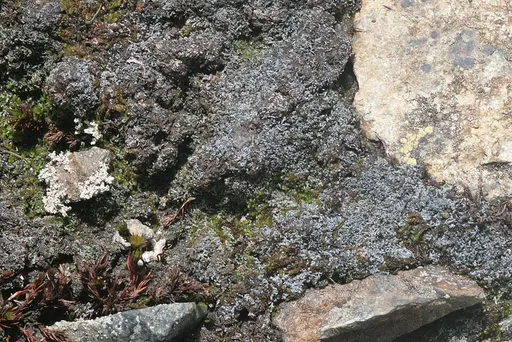
Anthelia
Also known as Waving Hand Polyps, Fuzzy Polyps, Anthelia Polyps
SaltwaterCoral
Care at a glance
- Temperature
- 75–81°F
- 24–27°C
- pH
- 8.1–8.4
- Adult size
- 7.9 in
- 20 cm
- Minimum tank
- 11 gal
- 40 L
- Temperament
- Mostly peaceful
- Social behavior
- Solitary
- Swim level
- Bottom
- Difficulty
- Beginner
- Breeding
- Easy
- Rarity
- Common
- Reef safe
- Reef safe
- Family
- Xeniidae
- Origin
- Indo-Pacific reefs
Overview
A sessile mat-forming octocoral that spreads by encrusting rock and by shedding fragments that root wherever they land, making it one of the fastest colonizers among the soft corals in this catalog. It has no sweeper tentacles and will not sting neighbors, but its sheer growth rate lets it overrun slower corals through simple overgrowth, so most keepers confine it to an isolated rock or island. It tolerates a wider range of water conditions than most soft corals and needs no target feeding, which is why it is often recommended as a first coral.
In the wild
Anthelia forms broad mats across shallow Indo-Pacific reef flats and lagoons, with feathery polyps standing up on long stalks to catch light and current. It tolerates a wide light range but does best under low to moderate light, roughly 75 to 150 PAR, and wants medium to strong, fairly steady flow to keep its stalks swaying and clean. Place it low to mid on the rockwork with open room around it, since a happy colony spreads across bare rock quickly and is difficult to relocate once established.
Good to know
Anthelia is a soft coral in the family Xeniidae, the same family as pulsing xenia (Xenia elongata) already in this catalog, though Anthelia's hand-shaped polyps stay open and sway rather than rhythmically pulsing. It relies mainly on zooxanthellae for energy and only lightly captures fine particulate food from the water column. Colonies spread by encrusting outward and by dropping small pieces that reattach and grow into new mats.
Did you know
A single small piece of Anthelia can carpet an entire rock within months. Because it is often confused with pulsing xenia at the store, the easiest way to tell them apart at a glance is that Anthelia's hand-shaped polyps stay open and sway in the current instead of rhythmically opening and closing.
Common questions
What size tank does a Waving hand coral need?
A Waving hand coral needs at least 11 gal (40 L). It spends most of its time in the bottom.
What temperature and pH does a Waving hand coral need?
A Waving hand coral is comfortable at 75–81°F (24–27°C) with a pH of 8.1–8.4.
How big does a Waving hand coral get?
An adult Waving hand coral reaches about 7.9 in (20 cm).
Related species
 7.9 in (20 cm)11 gal (40 L)75–81°F (24–27°C)
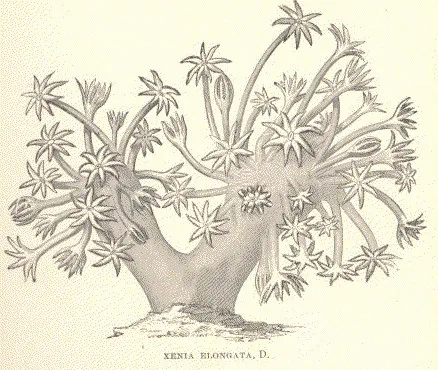
Pulsing xenia
Xenia elongata
7.9 in (20 cm) · 11 gal (40 L)
 7.9 in (20 cm)11 gal (40 L)75–81°F (24–27°C)
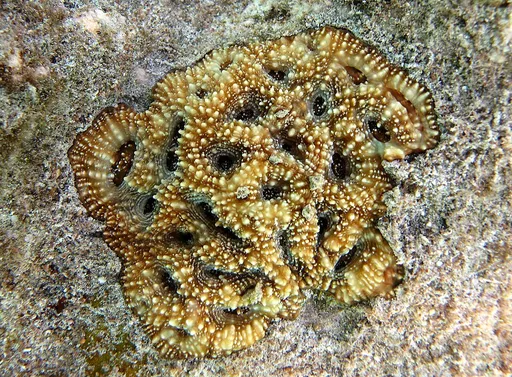
Acan coral
Acanthastrea echinata
7.9 in (20 cm) · 11 gal (40 L)
 7.9 in (20 cm)20 gal (75 L)75–81°F (24–27°C)
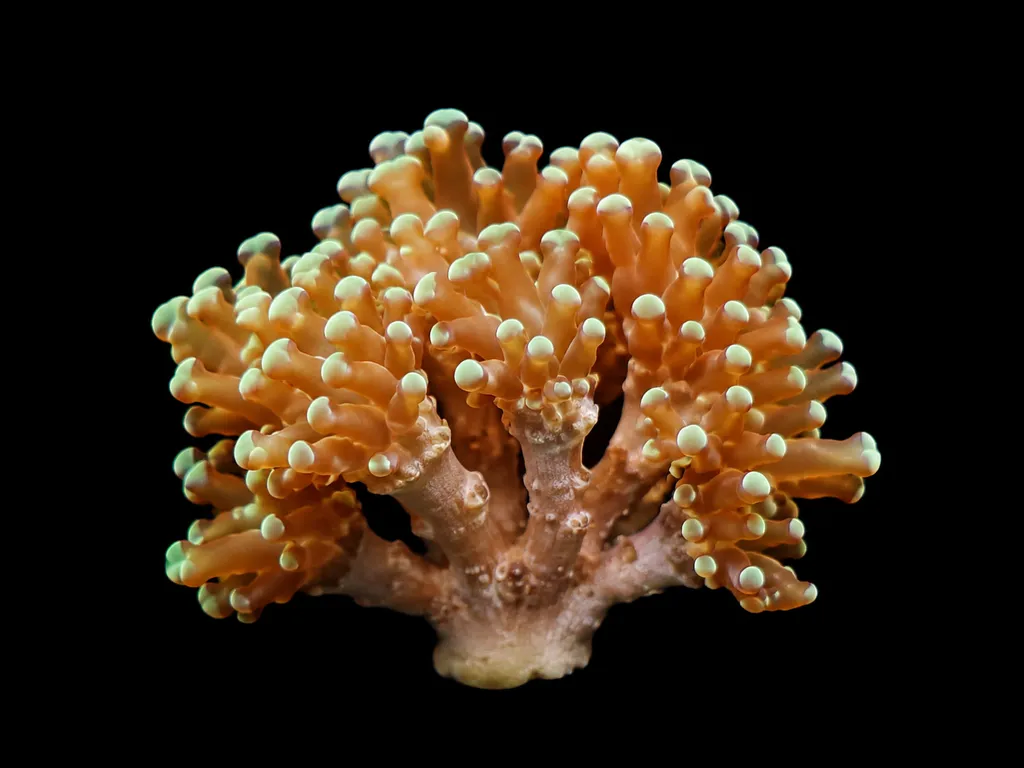
Branching frogspawn coral
Fimbriaphyllia paradivisa
7.9 in (20 cm) · 20 gal (75 L)
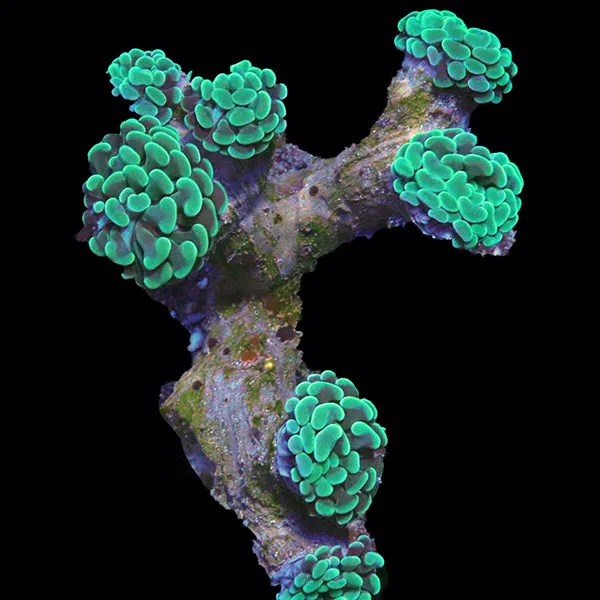 7.9 in (20 cm)20 gal (75 L)75–81°F (24–27°C)
Branching hammer coral
Fimbriaphyllia paraancora
7.9 in (20 cm) · 20 gal (75 L)
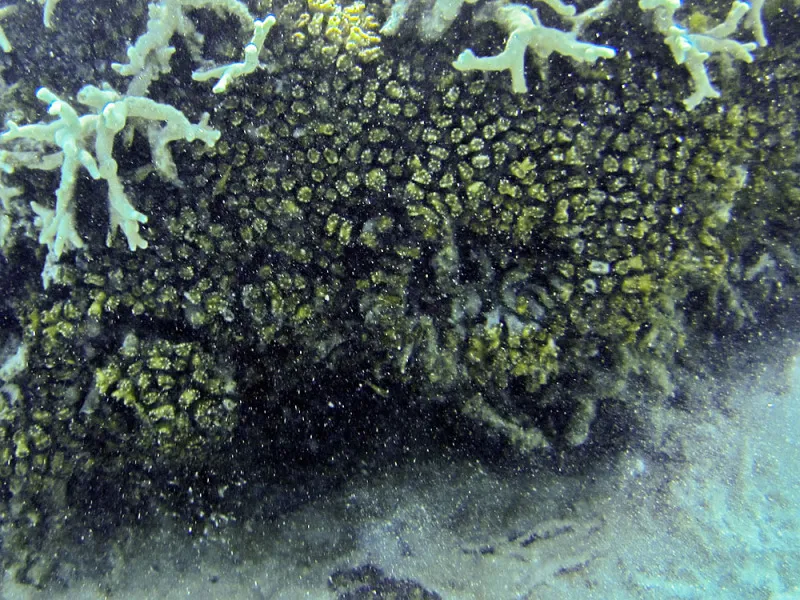 7.9 in (20 cm)11 gal (40 L)75–81°F (24–27°C)
Candy cane coral
Caulastraea furcata
7.9 in (20 cm) · 11 gal (40 L)
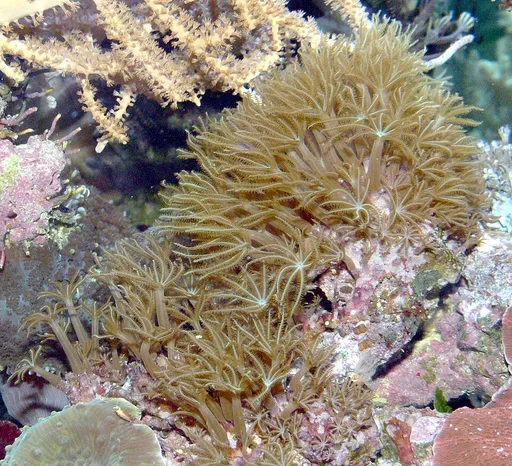 7.9 in (20 cm)11 gal (40 L)75–81°F (24–27°C)
Encrusting star polyps
Briareum
7.9 in (20 cm) · 11 gal (40 L)