Variety of Paradise fish
Albino paradise fish
Macropodus opercularis
The named variety of Macropodus opercularis · See the species →
Also known as Albino paradise gourami
FreshwaterFish
Care at a glance
- Temperature
- 50–72°F
- 10–22°C
- pH
- 6.5–7.5
- Adult size
- 3.1 in
- 8 cm
- Minimum tank
- 25 gal
- 95 L
- Temperament
- Aggressive
- Social behavior
- Social
- Own kind
- One male per tank
- Tankmates
- With caution
- Swim level
- Middle
- Difficulty
- Medium
- Breeding
- Bubble nester · Hard
- Rarity
- Rare
- Family
- Osphronemidae
Overview
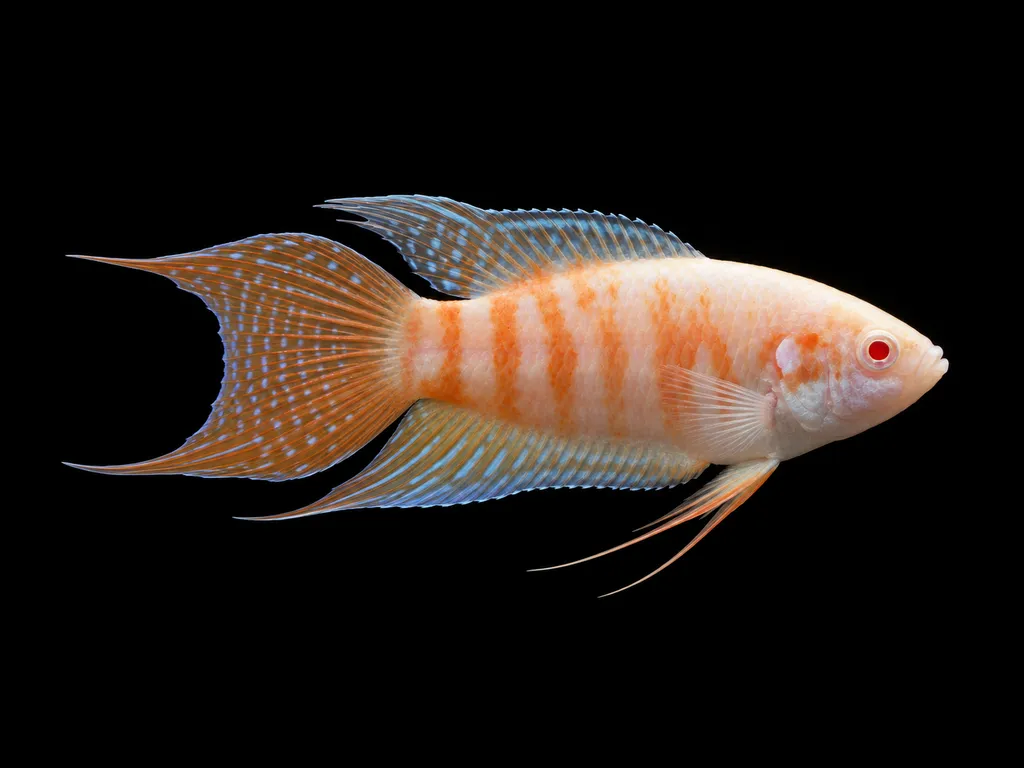
The albino paradise fish trades the dark body of the wild fish for cream and keeps the banding. Its red eyes are the giveaway that separates it from a merely pale wild type. Its care is moderately demanding.
Did you know
A wild paradise fish carries seven to eleven blue bars on a red ground. The albino drains those colors rather than erasing them. Sellers describe the finished fish as cream to white, with the red and blue left as undertones, strongest in the fins.
Caring for the albino paradise fish
Keep albino paradise fish in a tank of 25 gal (95 L) or more. Plant it well, with floating cover, gentle flow and a dark substrate. Albino fish see less well in bright light. Shaded cover and a dimmer setup suit them better than an open, brightly lit tank.
The albino paradise fish does not need a heater in a temperate room. Keep the water at 50 to 72°F (10 to 22°C), with a pH of 6.5 to 7.5. Leave a warm, humid gap under the lid to protect the labyrinth organ. Feed a varied diet of flake or pellets, frozen bloodworms, daphnia and brine shrimp.
Males are aggressive toward each other and toward similar-shaped fish. Keep one male per tank, and keep a group only in a large, well-planted tank with lots of cover and broken sight lines. It holds its own with robust, fast tank mates, but it will bully timid or long-finned fish and eat very small ones.
Males build a floating bubble nest and guard the eggs and fry, driving the female away once spawning is done. Breeding is hard, mainly because of the male's aggression and the care the tiny fry need. Albino to albino breeds true, while albino to wild type gives normal-looking carriers.
Good to know
The albino paradise fish is also sold as the albino paradise gourami. Albinism removes melanin, which is why the eye is pink to red and the dark parts of the wild pattern drop out. As in other aquarium albino lines, the trait is recessive.
In the wild
The albino paradise fish is a tank-bred strain, and no wild paradise fish looks like it. Seriously Fish lists albino among the selectively bred ornamental strains of the species, beside xanthic, red, blue and stripeless forms. The species itself has been in Western aquariums since 1869. No breeder, country or decade is documented for the albino line.
Common questions
Is an albino paradise fish a different species from the paradise fish?
No. An albino paradise fish is a variety of the paradise fish, Macropodus opercularis, and it wants the same tank, water and food as the species.
What size tank does an albino paradise fish need?
An albino paradise fish needs at least 25 gal (95 L). It spends most of its time in the middle.
What does an albino paradise fish eat?
An albino paradise fish eats a varied diet of flake or pellets, frozen bloodworms, daphnia and brine shrimp.
How big does an albino paradise fish get?
An adult albino paradise fish reaches about 3.1 in (8 cm).
How does an albino paradise fish breed?
Albino paradise fish males build a floating bubble nest and guard the eggs and fry. Breeding is hard, and albino to albino breeds true, while albino to wild type gives normal-looking carriers.
Related species
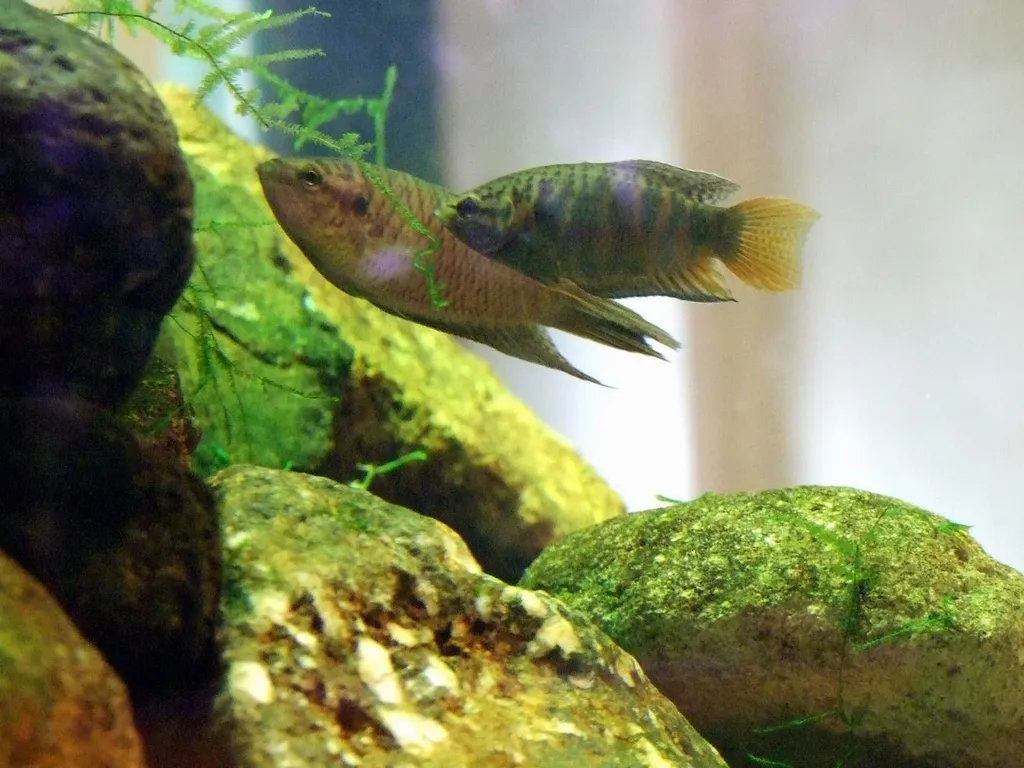 3 in (7.5 cm)25 gal (95 L)54–77°F (12–25°C)
Hong Kong paradise fish
Macropodus hongkongensis
3 in (7.5 cm) · 25 gal (95 L)
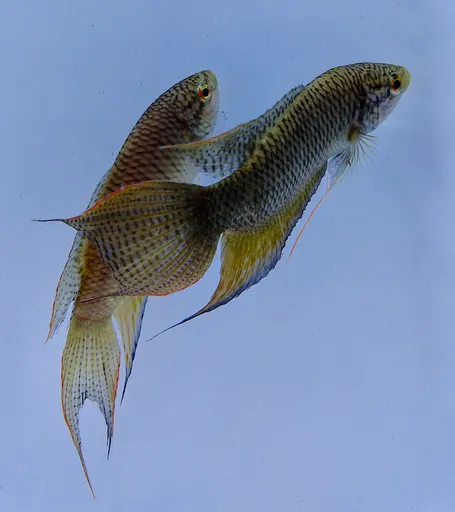 3.1 in (8 cm)20 gal (75 L)68–82°F (20–28°C)
Black paradise fish
Macropodus spechti
3.1 in (8 cm) · 20 gal (75 L)
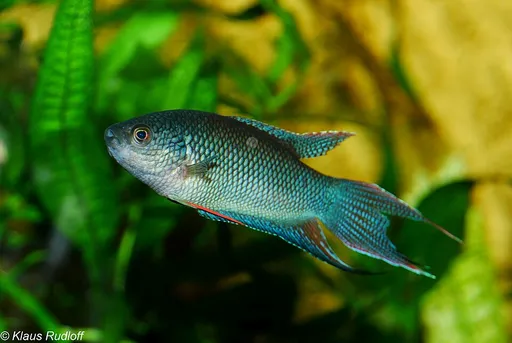 3.1 in (8 cm)20 gal (75 L)68–86°F (20–30°C)
Redback paradisefish
Macropodus erythropterus
3.1 in (8 cm) · 20 gal (75 L)
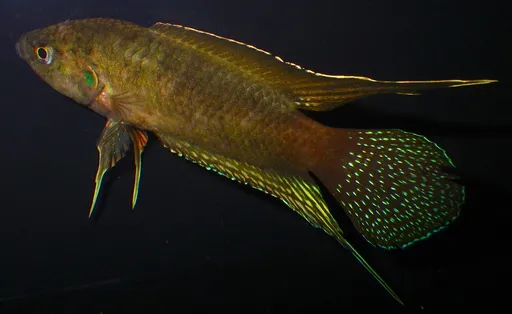 3.1 in (8 cm)20 gal (75 L)61–75°F (16–24°C)
Round-tail paradise fish
Macropodus ocellatus
3.1 in (8 cm) · 20 gal (75 L)
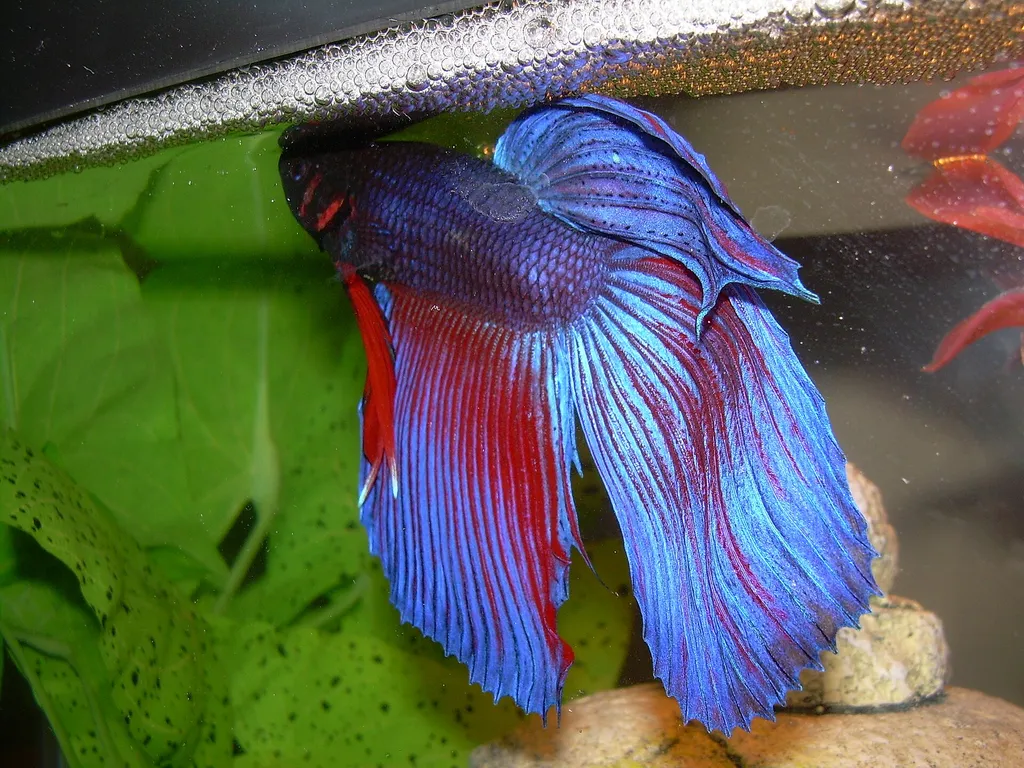 3 in (7.5 cm)5 gal (19 L)72–86°F (22–30°C)
Betta
Betta splendens
3 in (7.5 cm) · 5 gal (19 L)
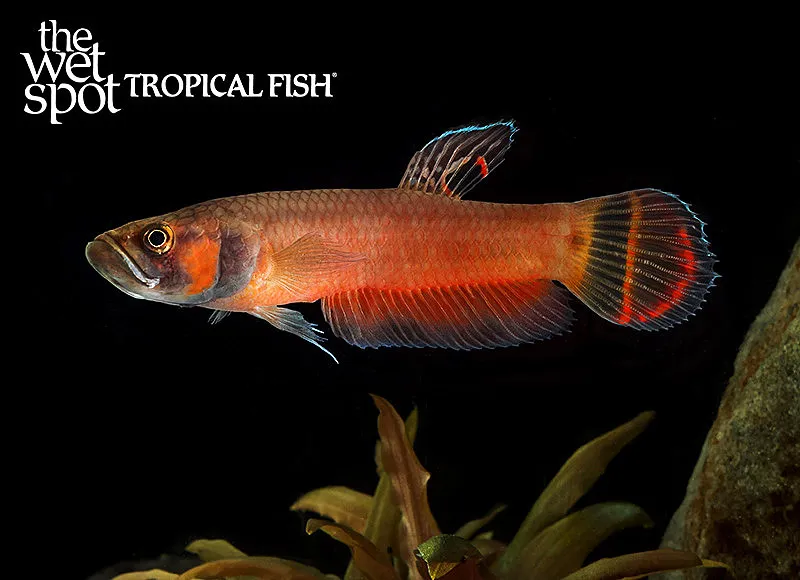 3.9 in (10 cm)20 gal (75 L)72–79°F (22–26°C)
Brunei beauty betta
Betta macrostoma
3.9 in (10 cm) · 20 gal (75 L)