Round-tail paradise fish
Macropodus ocellatus
Also known as Chinese paradise fish, Roundtail paradisefish, Dark Knight Paradise Fish
FreshwaterFish
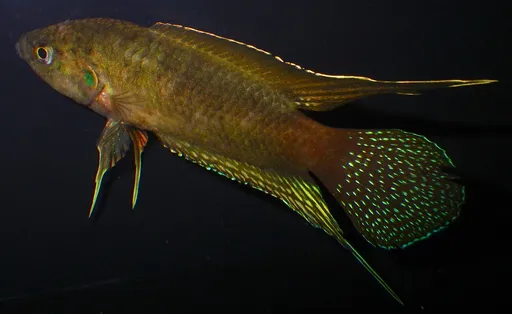
Care at a glance
- Temperature
- 61–75°F
- 16–24°C
- pH
- 6.0–7.5
- Adult size
- 3.1 in
- 8 cm
- Minimum tank
- 20 gal
- 75 L
- Temperament
- Mostly peaceful
- Social behavior
- Solitary
- Tankmates
- With caution
- Swim level
- Middle
- Difficulty
- Easy
- Breeding
- Medium
- Rarity
- Common
- Family
- Osphronemidae
- Origin
- East Asia (China, Korea, Japan; Pearl River to Amur River basins)
Overview
Keep them in a tank of 75 liters or larger, with the heater left off and the temperature sitting between 16 and 24 C and a pH from 6 to 7.5. They are mostly peaceful but males are territorial and turn aggressive toward their own kind and similar shaped fish, especially when spawning, so keep one fish, a single pair, or use a large, heavily planted tank with broken sight lines rather than a true group. They hold the middle of the water column and feed on small live and frozen foods, pellets, and flakes. In temperate climates they do well in an outdoor pond over summer. Do not release any into local waters, and check your regional rules first, since cold-hardy fish can establish where they do not belong.
In the wild
Round-tail paradise fish come from East Asia, ranging across China, Korea, and Japan through the Pearl River up to the Amur River basins. These are cool, slow waters that go genuinely cold in winter, so treat this as a subtropical fish, not a tropical one. The single most important point is that it does best in an unheated tank, running anywhere from 16 to 24 C, and it actually benefits from a cool winter rest well into the low teens. Give them at least 75 liters, well planted with floating plants, driftwood, and leaf litter for cover, and keep the water around pH 6 to 7.5.
Good to know
This is a labyrinth fish in the family Osphronemidae, reaching about 8 cm as an adult. Like other labyrinth fish it has an accessory breathing organ and gulps air at the surface, so it needs access to warm, humid air just above the waterline. It is a bubble-nest builder, and the male tends the nest and fry. Sustained tropical temperatures above roughly 24 to 25 C stress it and are linked to disease such as fish TB.
Did you know
That cool winter rest is not just tolerated, it is useful. A drop into the low teens or colder over the colder months, followed by a slight warm-up afterward, is what triggers them to spawn, which makes this one of the few aquarium fish that wants a real seasonal chill rather than steady warmth year round.
Common questions
What size tank does a Round-tail paradise fish need?
A Round-tail paradise fish needs at least 20 gal (75 L). It spends most of its time in the middle.
What temperature and pH does a Round-tail paradise fish need?
A Round-tail paradise fish is comfortable at 61–75°F (16–24°C) with a pH of 6.0–7.5.
How big does a Round-tail paradise fish get?
An adult Round-tail paradise fish reaches about 3.1 in (8 cm).
Related species
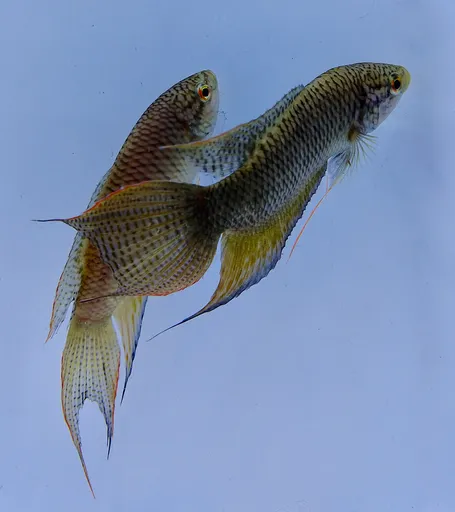 3.1 in (8 cm)20 gal (75 L)68–82°F (20–28°C)
Black paradise fish
Macropodus spechti
3.1 in (8 cm) · 20 gal (75 L)
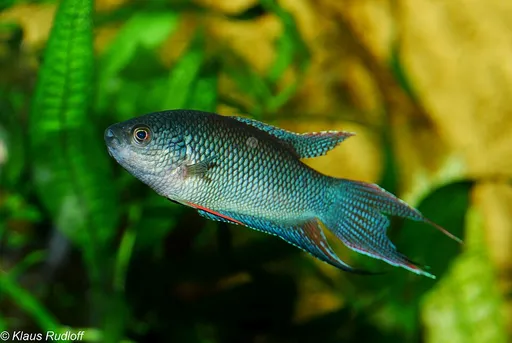 3.1 in (8 cm)20 gal (75 L)68–86°F (20–30°C)
Redback paradisefish
Macropodus erythropterus
3.1 in (8 cm) · 20 gal (75 L)
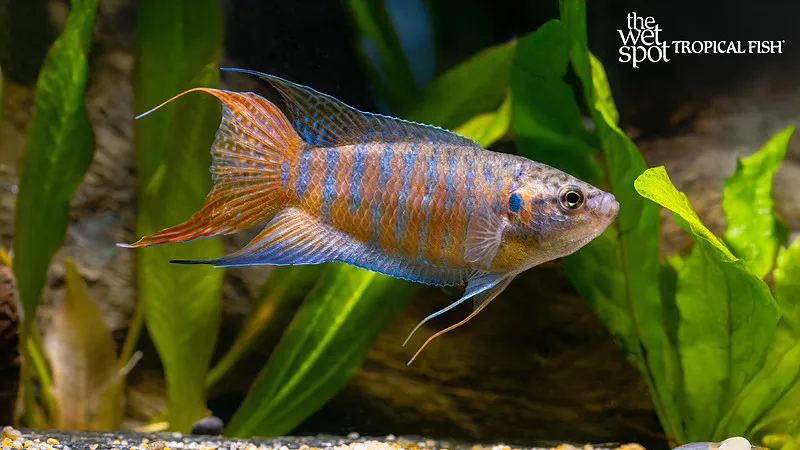 3.1 in (8 cm)25 gal (95 L)50–72°F (10–22°C)
Paradise fish
Macropodus opercularis
3.1 in (8 cm) · 25 gal (95 L)
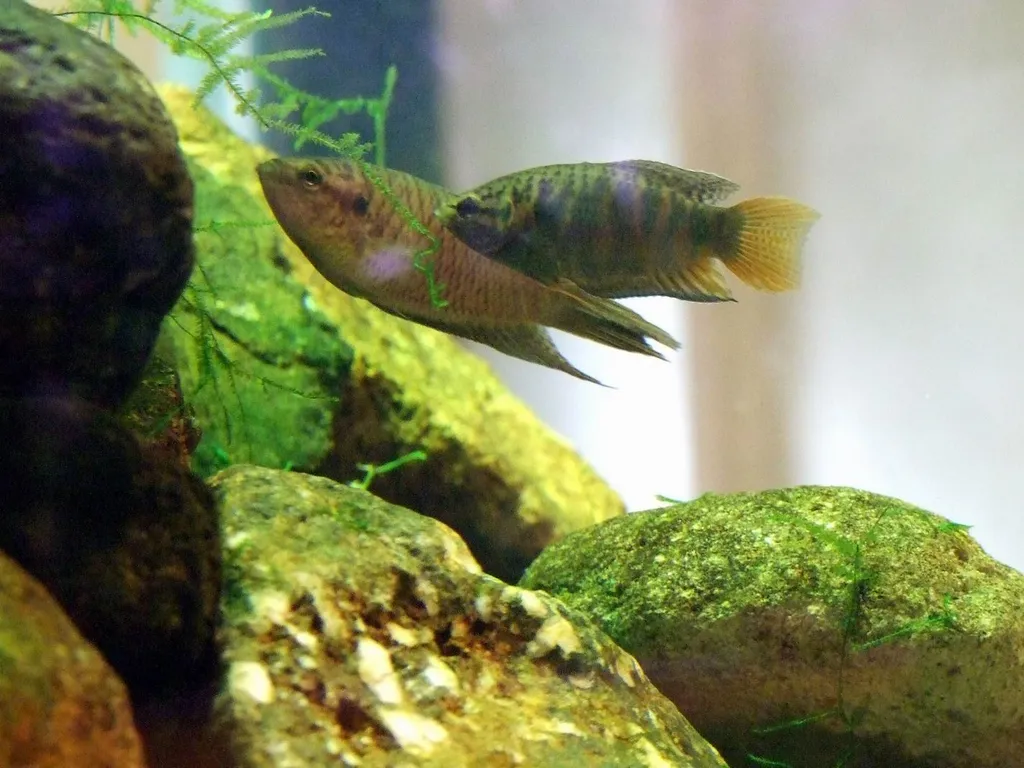 3 in (7.5 cm)25 gal (95 L)54–77°F (12–25°C)
Hong Kong paradise fish
Macropodus hongkongensis
3 in (7.5 cm) · 25 gal (95 L)
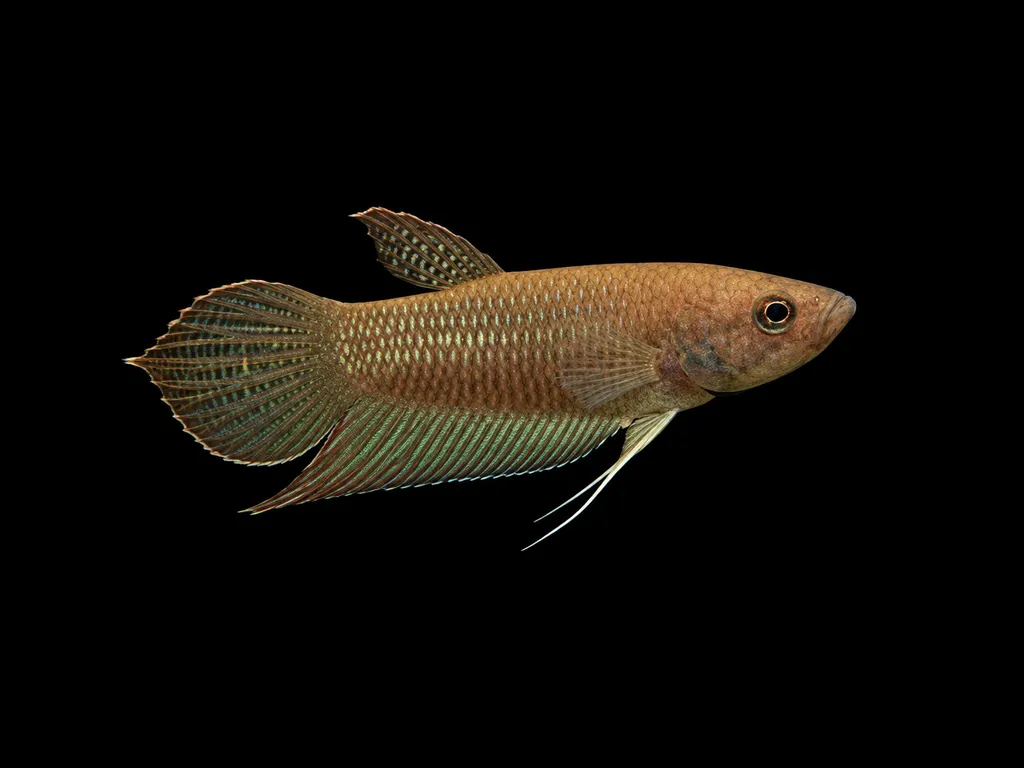 3.1 in (8 cm)20 gal (75 L)70–81°F (21–27°C)
Akar betta
Betta akarensis
3.1 in (8 cm) · 20 gal (75 L)
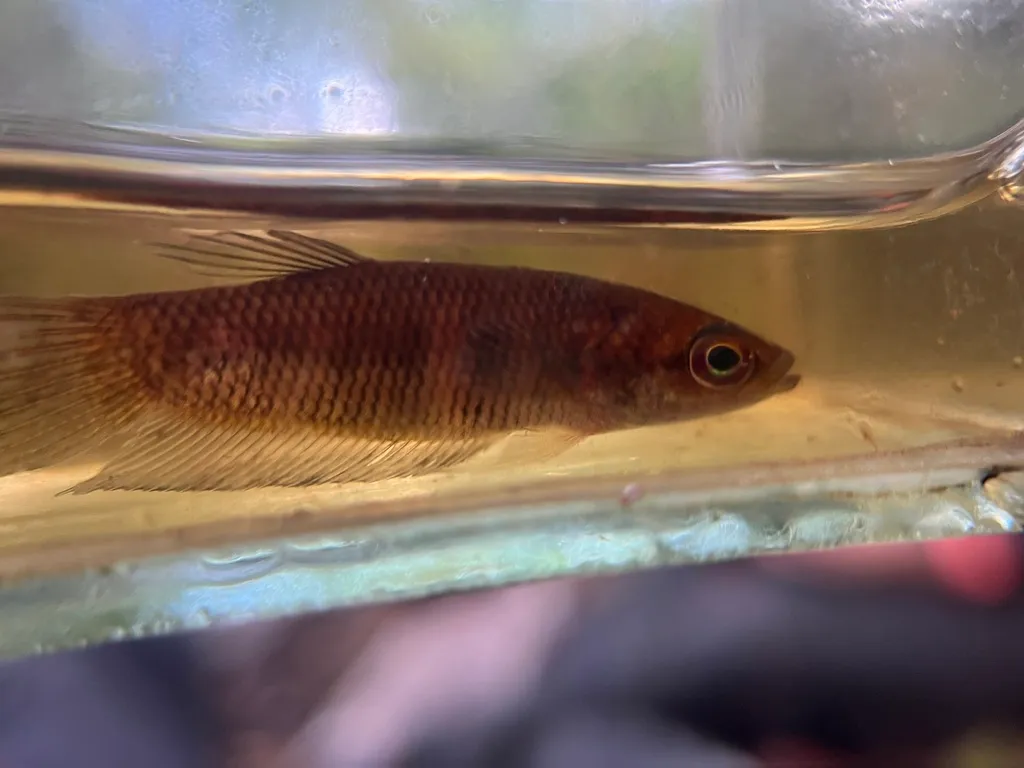 3.1 in (8 cm)24 gal (90 L)73–81°F (23–27°C)
Horseshoe betta
Betta hipposideros
3.1 in (8 cm) · 24 gal (90 L)