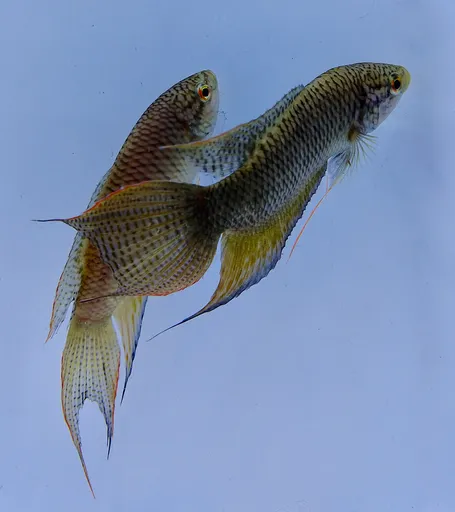
Black paradise fish
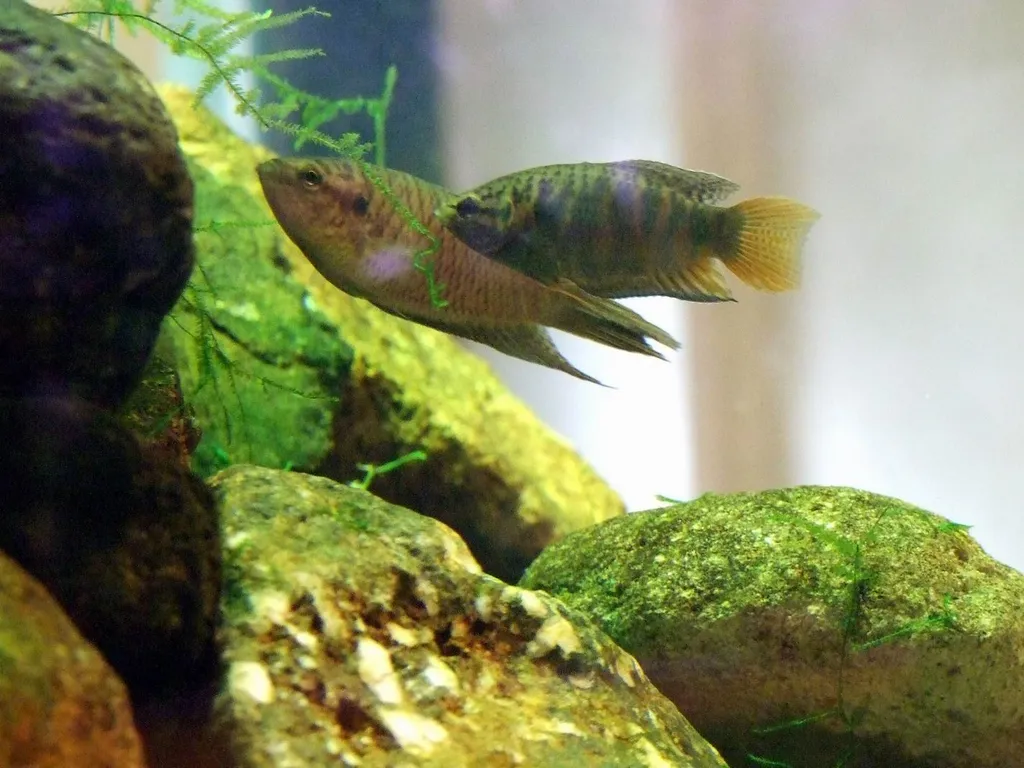
Macropodus spechti
Also known as Macropodus concolor
FreshwaterFish
Care at a glance
- Temperature
- 68–82°F
- 20–28°C
- pH
- 6.0–8.0
- Adult size
- 3.1 in
- 8 cm
- Minimum tank
- 20 gal
- 75 L
- Temperament
- Mostly peaceful
- Social behavior
- Solitary
- Tankmates
- With caution
- Swim level
- Middle
- Difficulty
- Easy
- Breeding
- Medium
- Rarity
- Common
- Family
- Osphronemidae
- Origin
- Central Vietnam (Thu Bon and Huong/Perfume river systems)
Overview
Keep them in a tank of at least 75 liters, with a footprint around 80 by 30 cm, since a longer tank cuts down on aggression. They are mostly peaceful but territorial, so run only one male per tank because males fight. Keep them solitary or as one male with several females rather than in a group, and skip small, slow, or long-finned tankmates that a larger fish may nip or bully. Water can sit anywhere from 20 to 28 C at a pH of 6 to 8. Feed pellets, flakes, and frozen or live foods like bloodworms and brine shrimp. They will spawn in a quiet, well-planted tank, but pairs can turn aggressive and the fry need very small first foods such as infusoria, which is why breeding rates as medium difficulty.
In the wild
Black paradise fish come from slow, shaded waters in central Vietnam, in the Thu Bon and Huong river systems. They sit in densely planted, dimly lit margins with plenty of cover. To match that, give them a heavily planted tank with driftwood, floating plants on top, and a few Indian almond leaves to stain the water and lower the light. Soft, slightly acidic to neutral water suits them best, around pH 6 to 8, though they tolerate a wide hardness range. They are a cool-tolerant species and do well at room temperature, anywhere from 20 to 28 C, so many keepers run them unheated.
Good to know
This is a labyrinth fish in the family Osphronemidae, a close relative of the common paradise fish. Body length runs about 7 to 8 cm, and a male's extended fins push the total length closer to 10 or 11 cm. Like other anabantoids it has a labyrinth organ and gulps air from the surface, so it needs a layer of warm, humid air above the water and a tight lid. It is a bubble-nest builder, with the male tending the nest and guarding the fry.
Did you know
The labyrinth organ lets them breathe air straight from the surface, which is how they survive in warm, still, low-oxygen water that would suffocate most fish. That same trait means a fish can be in trouble if it can't reach the top, so keep the surface clear and the lid close to the water to trap a warm pocket of air the fish can gulp.
Common questions
What size tank does a Black paradise fish need?
A Black paradise fish needs at least 20 gal (75 L). It spends most of its time in the middle.
What temperature and pH does a Black paradise fish need?
A Black paradise fish is comfortable at 68–82°F (20–28°C) with a pH of 6.0–8.0.
How big does a Black paradise fish get?
An adult Black paradise fish reaches about 3.1 in (8 cm).
Related species
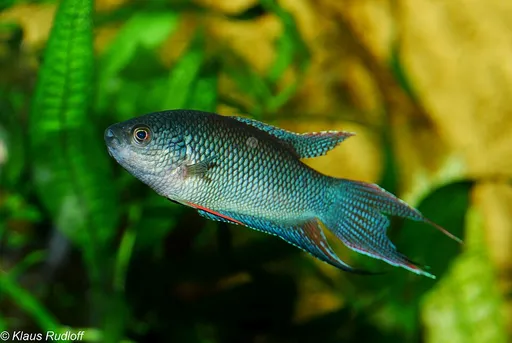 3.1 in (8 cm)20 gal (75 L)68–86°F (20–30°C)
Redback paradisefish
Macropodus erythropterus
3.1 in (8 cm) · 20 gal (75 L)
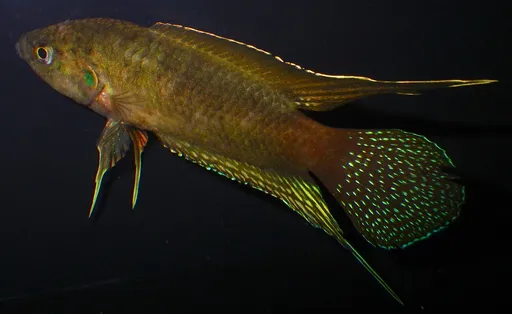 3.1 in (8 cm)20 gal (75 L)61–75°F (16–24°C)
Round-tail paradise fish
Macropodus ocellatus
3.1 in (8 cm) · 20 gal (75 L)
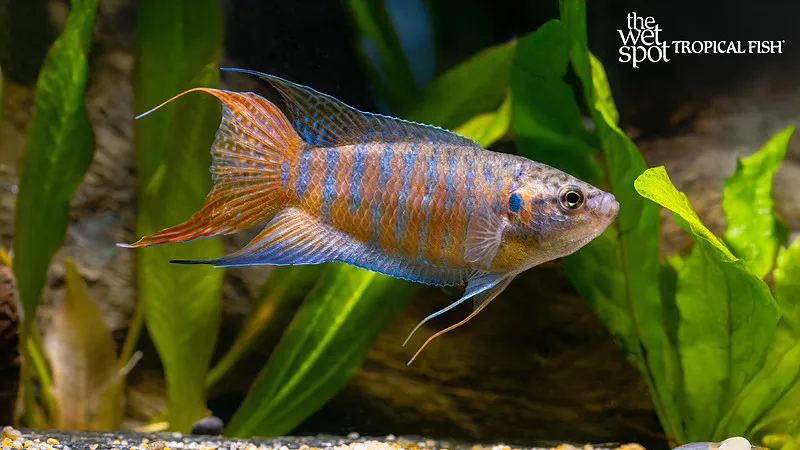 3.1 in (8 cm)25 gal (95 L)50–72°F (10–22°C)
Paradise fish
Macropodus opercularis
3.1 in (8 cm) · 25 gal (95 L)
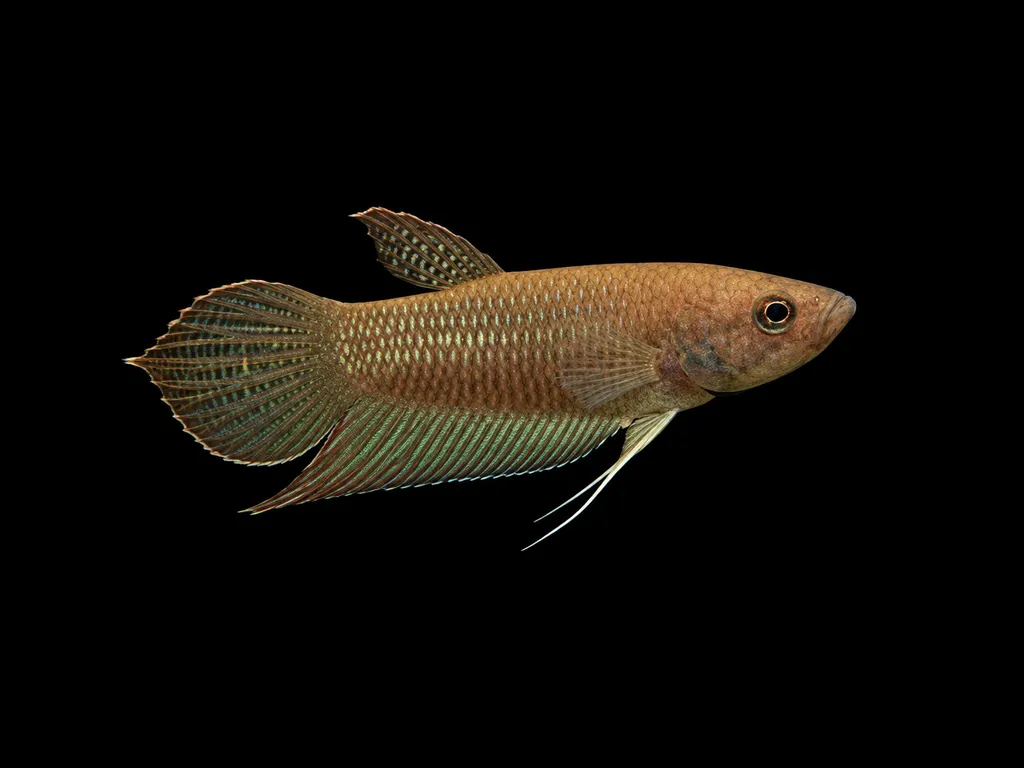
 3 in (7.5 cm)25 gal (95 L)54–77°F (12–25°C)
Hong Kong paradise fish
Macropodus hongkongensis
3 in (7.5 cm) · 25 gal (95 L)
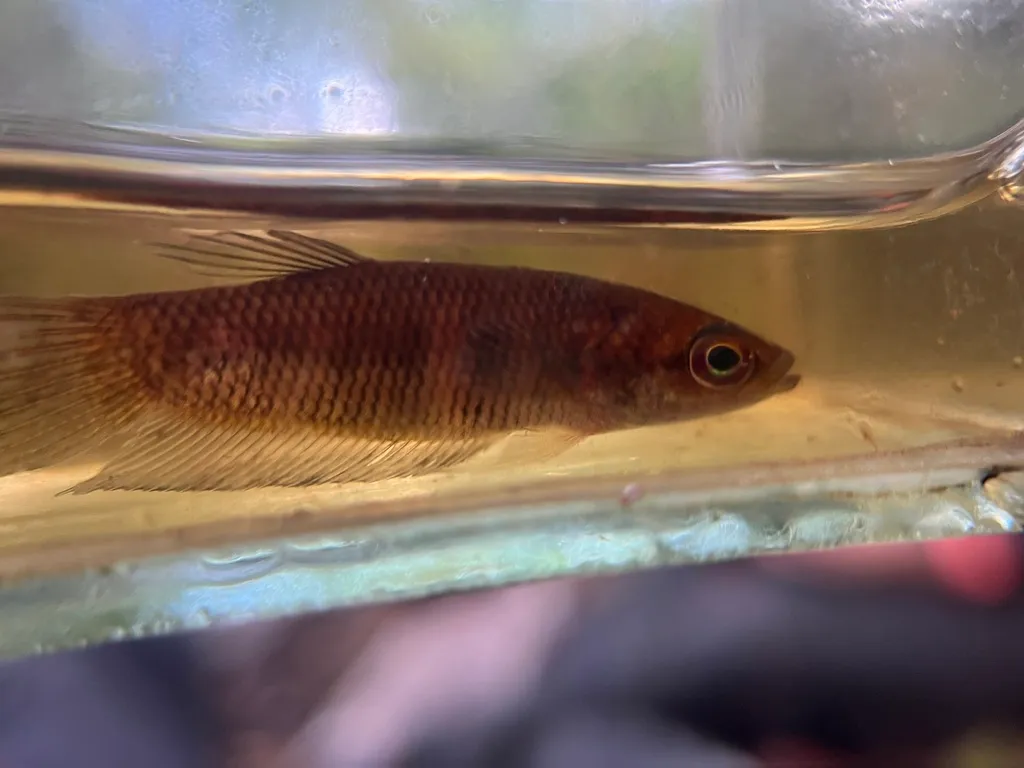
 3.1 in (8 cm)20 gal (75 L)70–81°F (21–27°C)
Akar betta
Betta akarensis
3.1 in (8 cm) · 20 gal (75 L)
 3.1 in (8 cm)24 gal (90 L)73–81°F (23–27°C)
Horseshoe betta
Betta hipposideros
3.1 in (8 cm) · 24 gal (90 L)