Akar betta
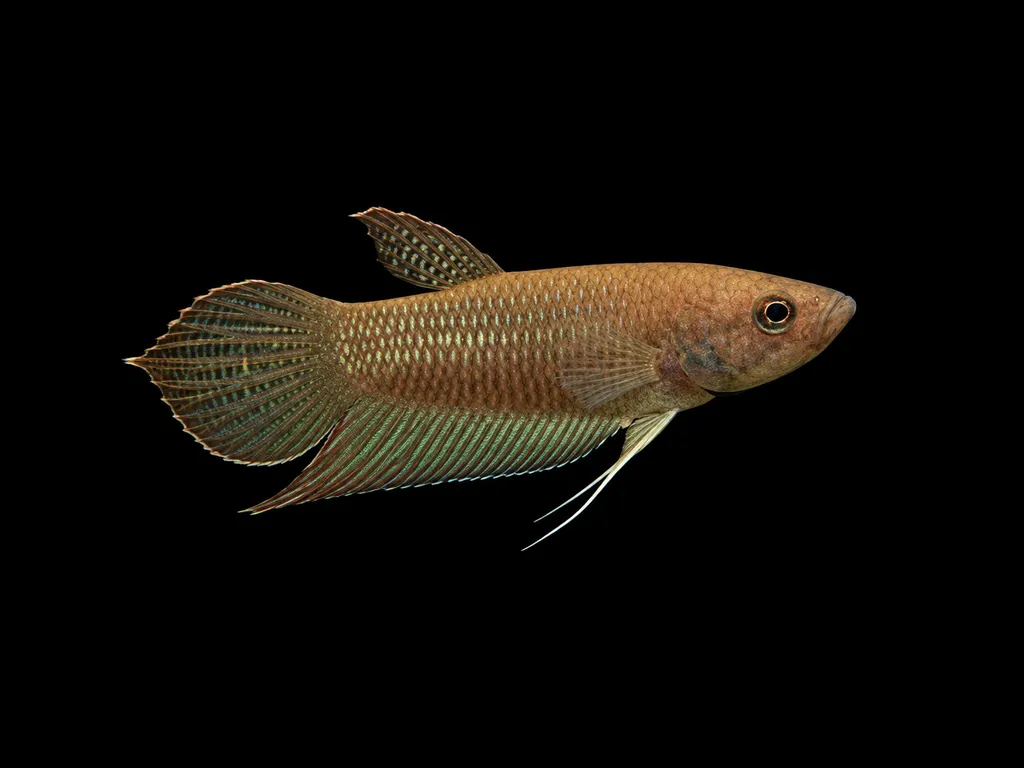
Betta akarensis
Also known as Betta climacura
FreshwaterFish
Care at a glance
- Temperature
- 70–81°F
- 21–27°C
- pH
- 5.5–7.0
- Adult size
- 3.1 in
- 8 cm
- Minimum tank
- 20 gal
- 75 L
- Temperament
- Mostly peaceful
- Social behavior
- Solitary
- Tankmates
- With caution
- Swim level
- Middle
- Difficulty
- Medium
- Breeding
- Hard
- Rarity
- Rare
- Family
- Osphronemidae
- Origin
- Borneo
Overview
The Akar betta is one of the larger, more elongate wild bettas and is best kept as a single fish or a compatible pair rather than in a crowd. It spends most of its time in the middle of the tank and near cover, drifting out to hunt. It is generally peaceful toward other fish but will eat anything small enough to swallow, so choose calm tankmates of similar size or keep it in a species tank. Feed small meaty foods such as frozen bloodworm, daphnia, brine shrimp and a good dry food built for carnivores. A tank of around 75 liters or more with a very tight lid gives it room and stops it jumping.
In the wild
Betta akarensis comes from Borneo, where it lives in shady forest streams stained the colour of tea by fallen leaves and wood. The water there is soft, acidic and gently flowing. To match it, keep the tank dimly lit with plenty of shade, add leaf litter, driftwood and a few hardy shade-tolerant plants, and use a soft, dark substrate. Hold the temperature between 21 and 27 degrees Celsius and the pH on the acidic side, from about 5.5 to 7.0. A layer of oak or almond leaves helps recreate the tannin-rich blackwater it prefers.
Good to know
A member of the gourami family Osphronemidae, the Akar betta belongs to the akarensis group of mouthbrooding bettas and grows to around 8 centimeters. Like others in its group it is a paternal mouthbrooder: after a rolling embrace the male gathers the eggs and holds them in his throat pouch for roughly two weeks until fully formed fry are released. Breeding is considered hard, largely because the fish needs very soft, acidic water and a settled, well-fed pair before it will spawn.
Did you know
This betta is named after the Akar river system in Sarawak, on the island of Borneo, where it was first collected. Unlike the familiar bubble-nesting Siamese fighting fish, the males of this species brood their eggs and young inside the mouth.
Common questions
What size tank does an Akar betta need?
An Akar betta needs at least 20 gal (75 L). It spends most of its time in the middle.
What temperature and pH does an Akar betta need?
An Akar betta is comfortable at 70–81°F (21–27°C) with a pH of 5.5–7.0.
How big does an Akar betta get?
An adult Akar betta reaches about 3.1 in (8 cm).
Related species
 3.1 in (8 cm)24 gal (90 L)73–81°F (23–27°C)
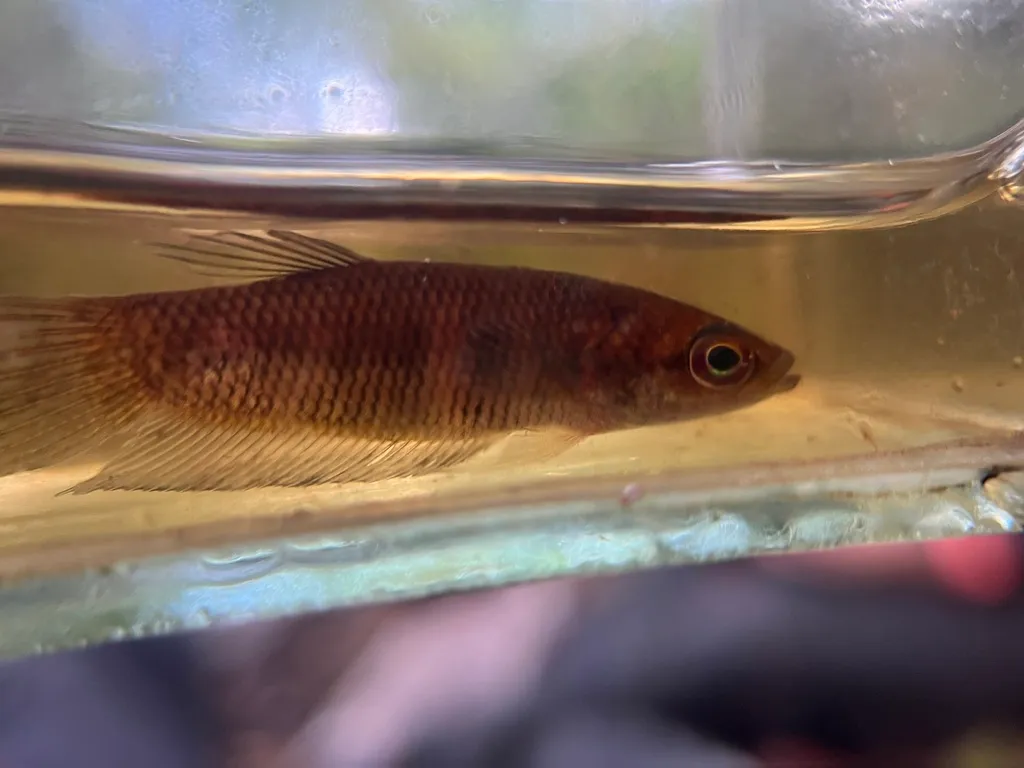
Horseshoe betta
Betta hipposideros
3.1 in (8 cm) · 24 gal (90 L)
 3.1 in (8 cm)20 gal (75 L)72–79°F (22–26°C)
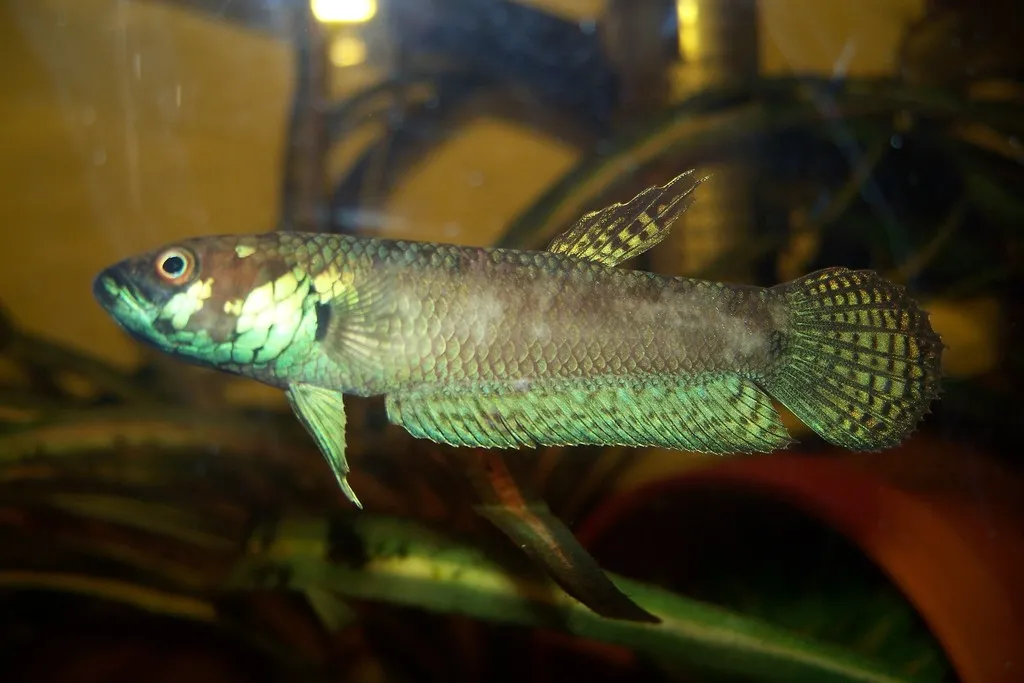
Pallifina betta
Betta pallifina
3.1 in (8 cm) · 20 gal (75 L)
- 3.2 in (8.1 cm)21 gal (80 L)75–82°F (24–28°C)
Ibanorum betta
Betta ibanorum
3.2 in (8.1 cm) · 21 gal (80 L)
- 3.2 in (8.1 cm)24 gal (90 L)73–81°F (23–27°C)
Omega betta
Betta omega
3.2 in (8.1 cm) · 24 gal (90 L)
- 3.1 in (7.9 cm)21 gal (80 L)72–81°F (22–27°C)
Pinguis betta
Betta pinguis
3.1 in (7.9 cm) · 21 gal (80 L)
 3.2 in (8.2 cm)26 gal (100 L)79–84°F (26–29°C)
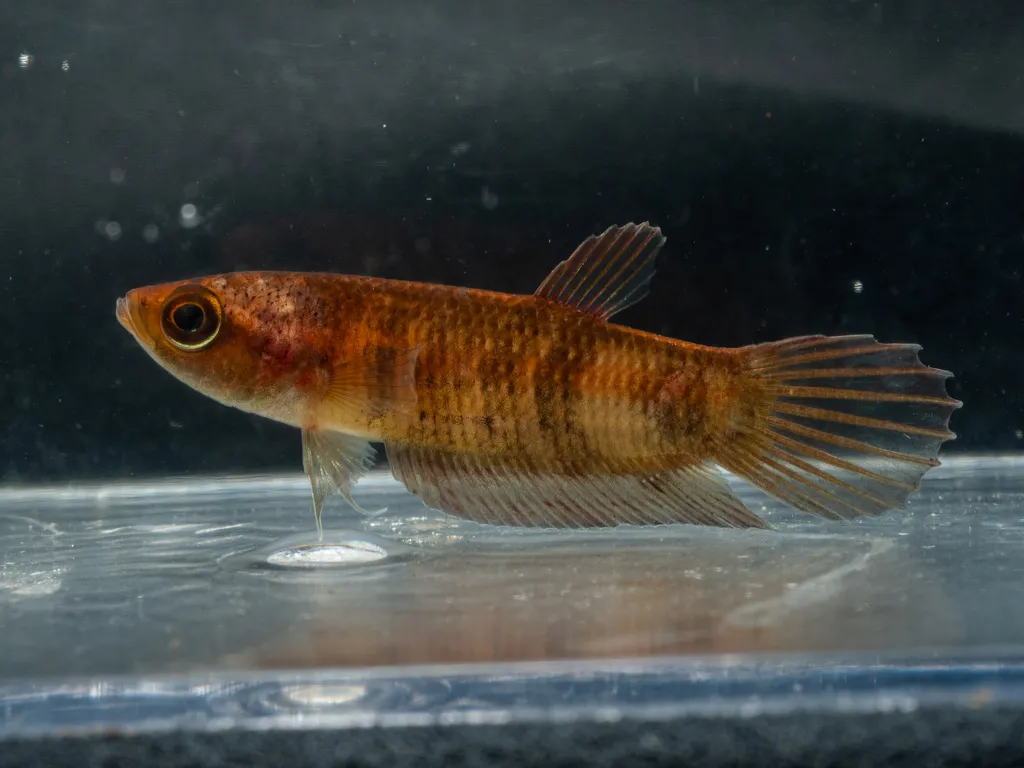
Anabatoides betta
Betta anabatoides
3.2 in (8.2 cm) · 26 gal (100 L)