Omega betta
Betta omega
FreshwaterFish
Care at a glance
- Temperature
- 73–81°F
- 23–27°C
- pH
- 4.0–6.0
- Adult size
- 3.2 in
- 8.1 cm
- Minimum tank
- 24 gal
- 90 L
- Temperament
- Mostly peaceful
- Social behavior
- Social
- Tankmates
- With caution
- Swim level
- Middle
- Difficulty
- Difficult
- Breeding
- Hard
- Rarity
- Very rare
- Family
- Osphronemidae
- Origin
- Pekan Nanas, Johor, Peninsular Malaysia
Overview
If it turns up at all it will be from old hobby lines, and it should be treated like other waseri group bettas: a calm, shy mouthbrooder kept as a pair or a small group with cover, in very soft acidic water of pH 4 to 6 at 23 to 27 C. It eats any fish or shrimp small enough to swallow. Feed live and frozen foods such as bloodworm, brine shrimp and small earthworms. Allan and Barbara Brown raised a captive generation in the 1980s, so breeding is possible with patience.
In the wild
The Omega betta is known only from remnant blackwater swamp near Pekan Nanas in southwest Johor, Peninsular Malaysia, where the last fish were caught from overgrown roadside ditches and small streams running through oil palm estates. It shared those ditches with six-banded barbs, Rasbora einthovenii, swamp eels, Betta bellica, Betta pulchra and a snakehead. A blackwater tank of 90 liters or more with very soft acidic water, leaf litter, wood, dim light and a tight lid is the setup. The describers think the species may already be extinct in the wild.
Good to know
Betta omega is a paternal mouthbrooder of the Betta waseri group in the family Osphronemidae, described by Tan and Ahmad in 2018 from museum specimens, the largest of them 81.2 mm standard length. Hobbyists had kept the Pekan Nanas fish since the 1980s under other names, and it was even pictured as B. waseri in a 1993 field guide, but nobody had described it. Its closest relative is B. hipposideros, and it is told apart by a black throat mark shaped like the Greek letter omega. The IUCN lists it as Critically Endangered.
Did you know
The name omega points two ways: at the omega-shaped mark on the fish's throat, and at the last letter of the Greek alphabet, chosen because the describers expected these to be the last of their kind as Malaysia's blackwater swamps disappear. The type series is two fish caught in 2016 on an earthworm-baited hand line plus three specimens that had sat in preservative since 1984.
Common questions
What size tank does an Omega betta need?
An Omega betta needs at least 24 gal (90 L). It spends most of its time in the middle.
What temperature and pH does an Omega betta need?
An Omega betta is comfortable at 73–81°F (23–27°C) with a pH of 4.0–6.0.
How big does an Omega betta get?
An adult Omega betta reaches about 3.2 in (8.1 cm).
Related species
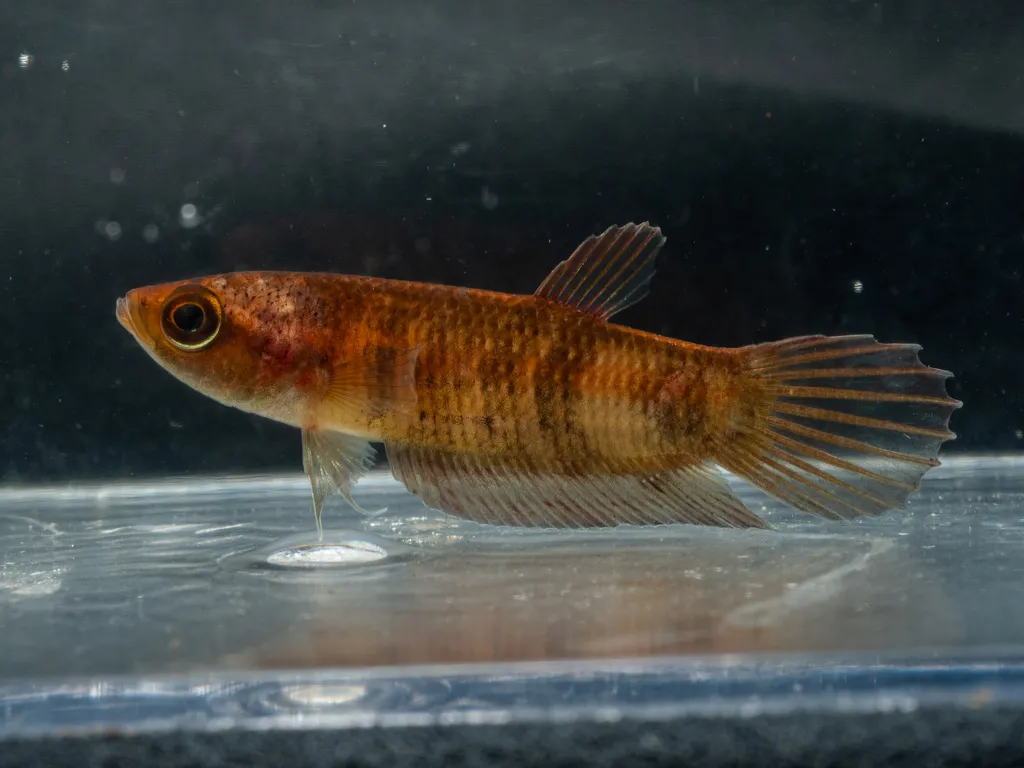
- 3.2 in (8.1 cm)21 gal (80 L)75–82°F (24–28°C)
Ibanorum betta
Betta ibanorum
3.2 in (8.1 cm) · 21 gal (80 L)
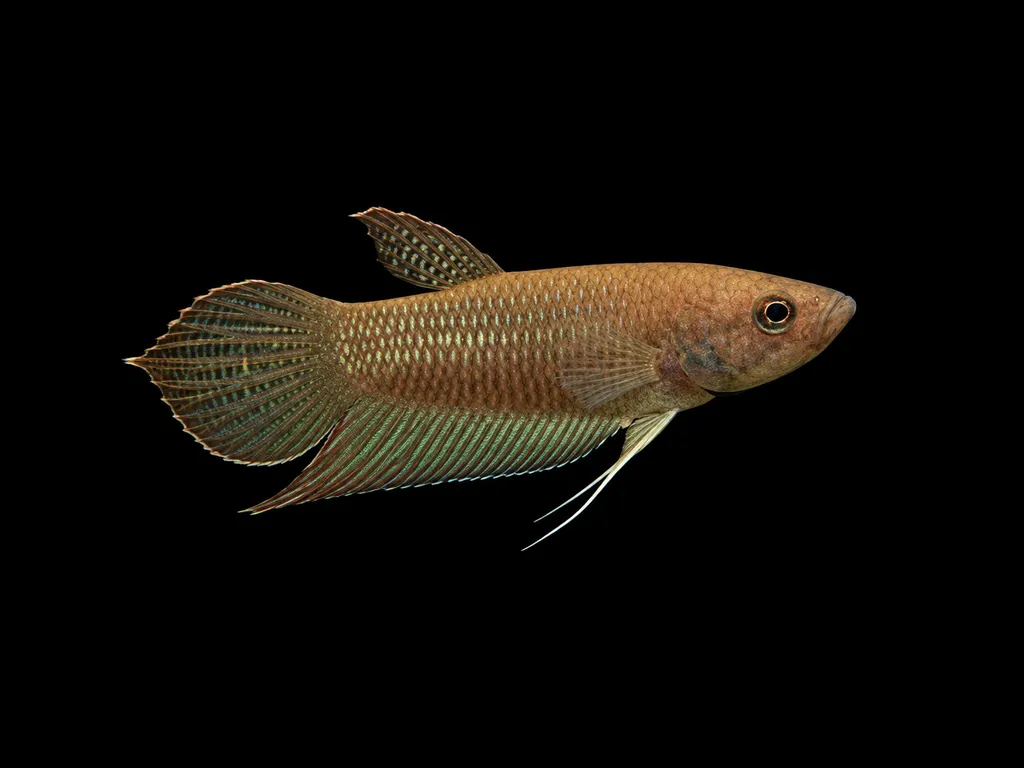
 3.2 in (8.2 cm)26 gal (100 L)79–84°F (26–29°C)
Anabatoides betta
Betta anabatoides
3.2 in (8.2 cm) · 26 gal (100 L)
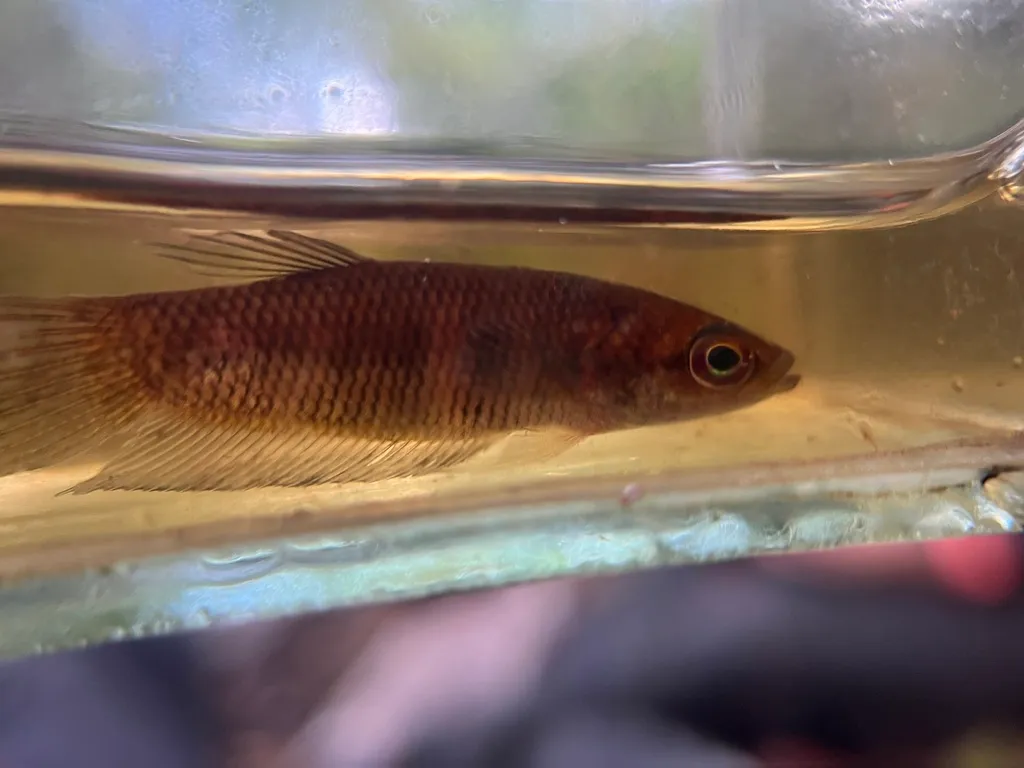
 3.1 in (8 cm)20 gal (75 L)70–81°F (21–27°C)
Akar betta
Betta akarensis
3.1 in (8 cm) · 20 gal (75 L)
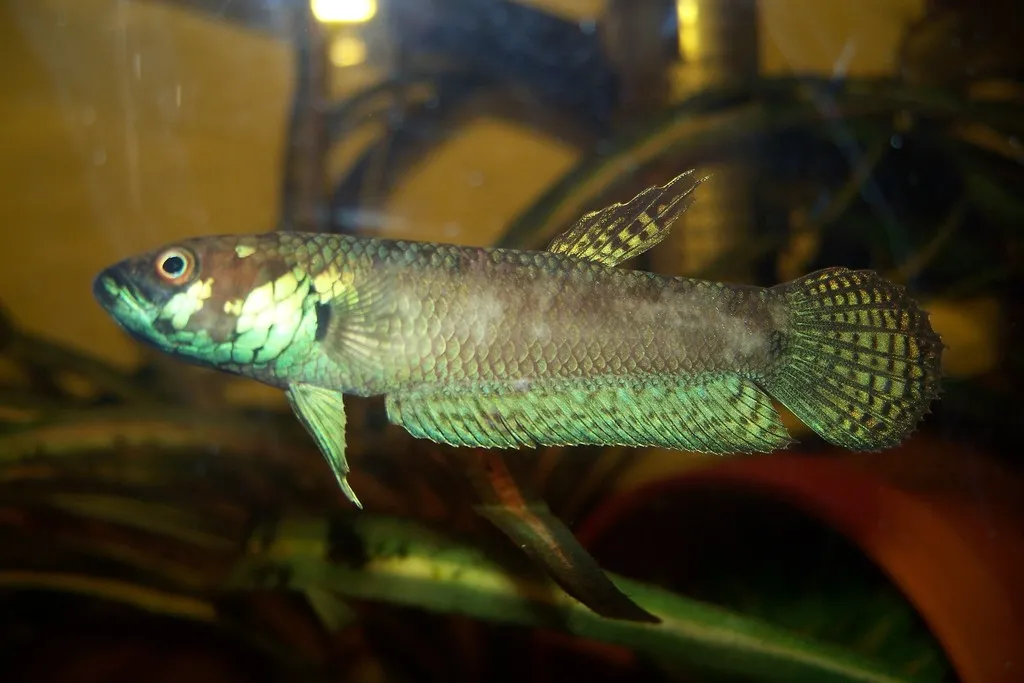
 3.1 in (8 cm)24 gal (90 L)73–81°F (23–27°C)
Horseshoe betta
Betta hipposideros
3.1 in (8 cm) · 24 gal (90 L)
 3.1 in (8 cm)20 gal (75 L)72–79°F (22–26°C)
Pallifina betta
Betta pallifina
3.1 in (8 cm) · 20 gal (75 L)
- 3.3 in (8.3 cm)21 gal (80 L)68–79°F (20–26°C)
Ideii betta
Betta ideii
3.3 in (8.3 cm) · 21 gal (80 L)