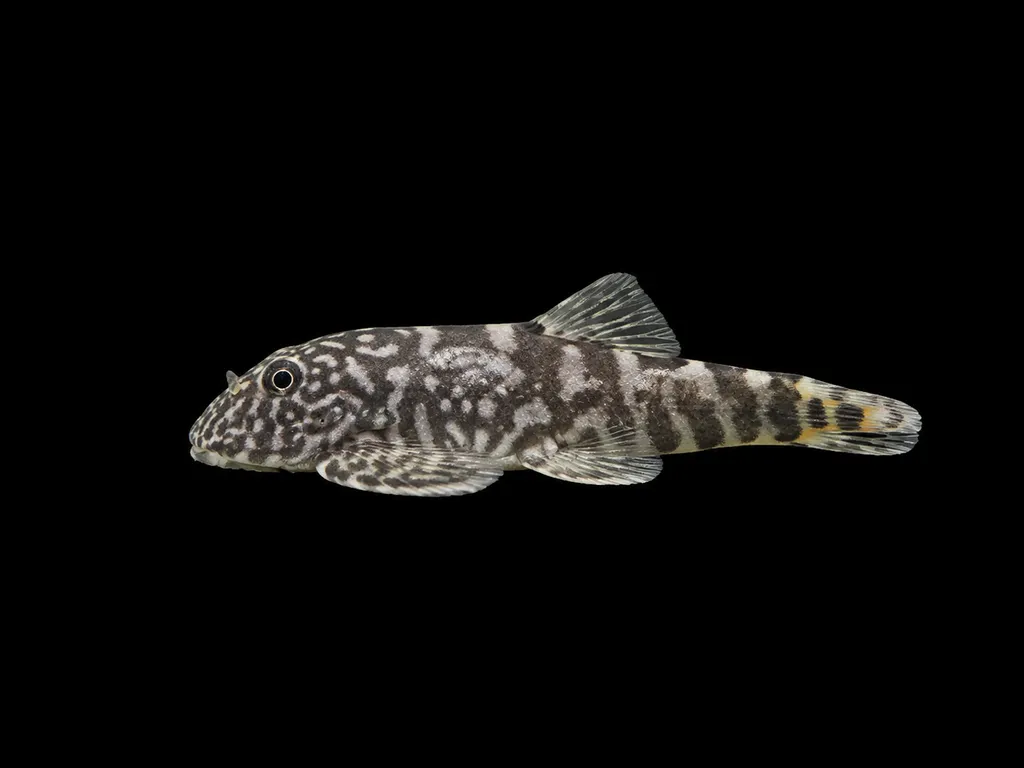
Yellowfin Borneo sucker
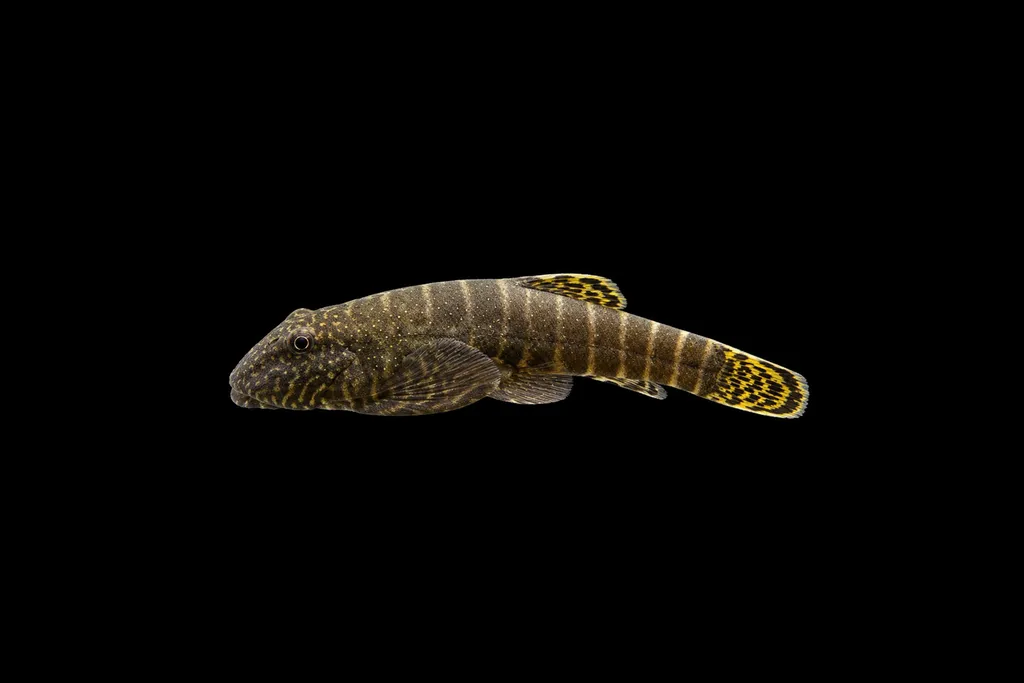
Gastromyzon viriosus
Also known as Yellowfinned Borneo sucker, Yellow fin hillstream loach
FreshwaterFish
Care at a glance
- Temperature
- 72–79°F
- 22–26°C
- pH
- 6.5–7.5
- Adult size
- 2.6 in
- 6.5 cm
- Minimum tank
- 20 gal
- 75 L
- Temperament
- Peaceful
- Social behavior
- Social
- Swim level
- Bottom
- Difficulty
- Difficult
- Breeding
- No record
- Rarity
- Rare
- Family
- Gastromyzontidae
- Origin
- Tatau basin, Sarawak, Malaysia
Overview
The yellowfin Borneo sucker is a peaceful hillstream loach for a warm, fast river tank. It is hard to keep, so it suits an experienced keeper.
Did you know
The yellowfin Borneo sucker stands out among more than thirty mostly brown relatives by wearing egg-yolk yellow trim. Those fin margins, not the plain body, are what sell it.
Caring for the yellowfin Borneo sucker
A group of yellowfin Borneo suckers needs 20 gal (75 L) or more, with strong flow and a bright, rocky floor. Good light over smooth, algae-covered stones on sand and gravel brings out the fin color this fish is bought for. The yellow edging deepens when it grazes well.
Keep the water at 72 to 79°F (22 to 26°C) with a pH of 6.5 to 7.5, mildly acidic to neutral. Keep oxygen high with vigorous surface movement.
Its diet is mostly biofilm, so mature the tank first. Add fine sinking foods and crushed algae wafers to keep it in condition.
Keep a group of five or six, which will cling and graze in the current all day. Choose small, calm tank mates that enjoy the same warm, fast, clean water. Its captive breeding has not been reported.
Good to know
Gastromyzon viriosus is a member of the hillstream loach family Gastromyzontidae. Tan described it in 2006. The name viriosus means robust or strong, for its thick-set build.
In the wild
The yellowfin Borneo sucker is known from the Tatau basin in central Sarawak, Malaysian Borneo. It lives on current-swept stone in warm, clear, fast water.
Weekly picks
Tank mates
The yellowfin Borneo sucker is a peaceful, social species that keeps to the bottom. These picks share a community profile with it, are safe together in both directions, and overlap on water type, temperature and pH.
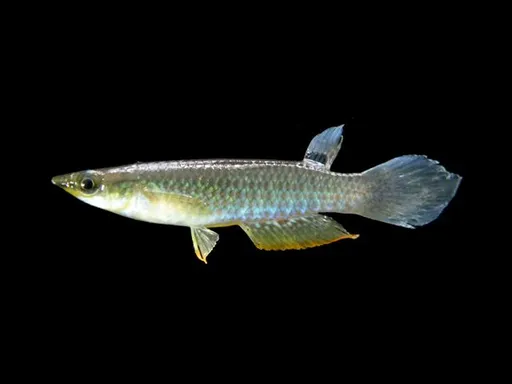
Blue panchax
Aplocheilus panchax
Freshwater3.5 in (9 cm) · 20 gal (75 L)72–82°F (22–28°C)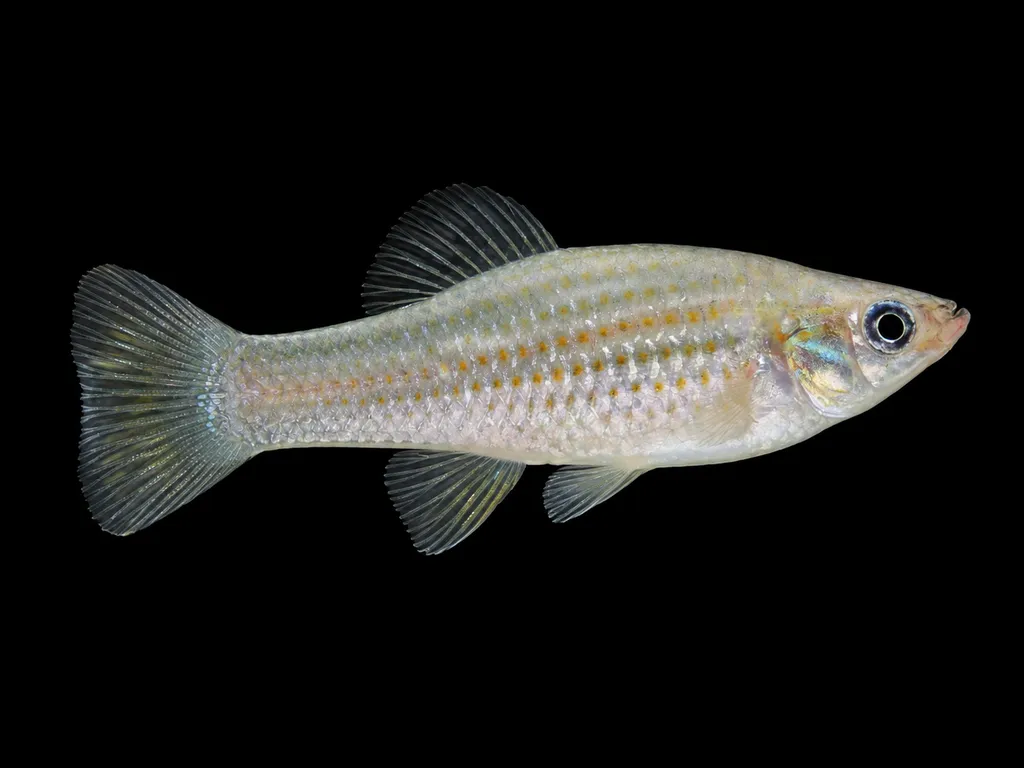
Amazon molly
Poecilia formosa
Freshwater3.5 in (9 cm) · 20 gal (75 L)68–82°F (20–28°C)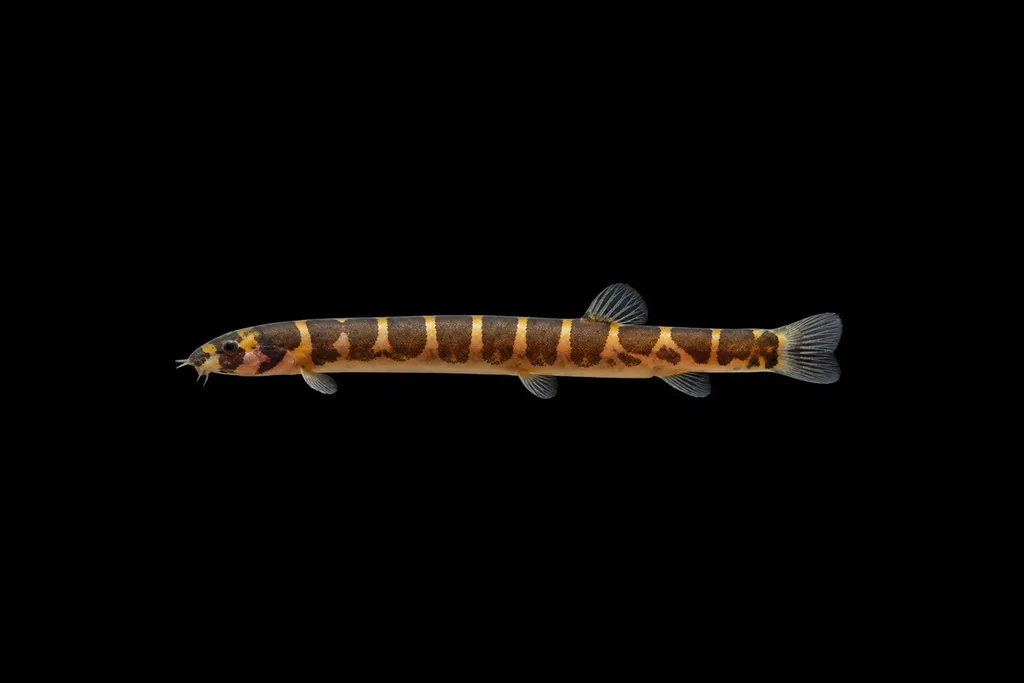
Borneo kuhli loach
Pangio borneensis
Freshwater2.5 in (6.3 cm) · 20 gal (75 L)72–81°F (22–27°C)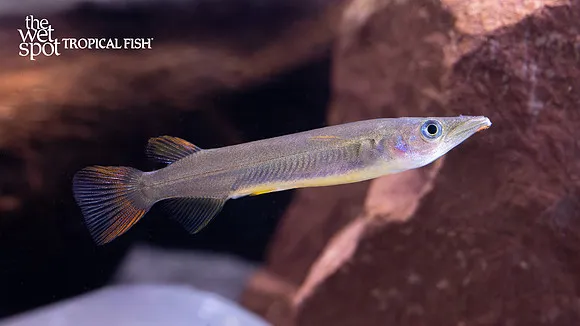
Rex halfbeak
Nomorhamphus rex
Freshwater2.2 in (5.5 cm) · 20 gal (75 L)72–79°F (22–26°C)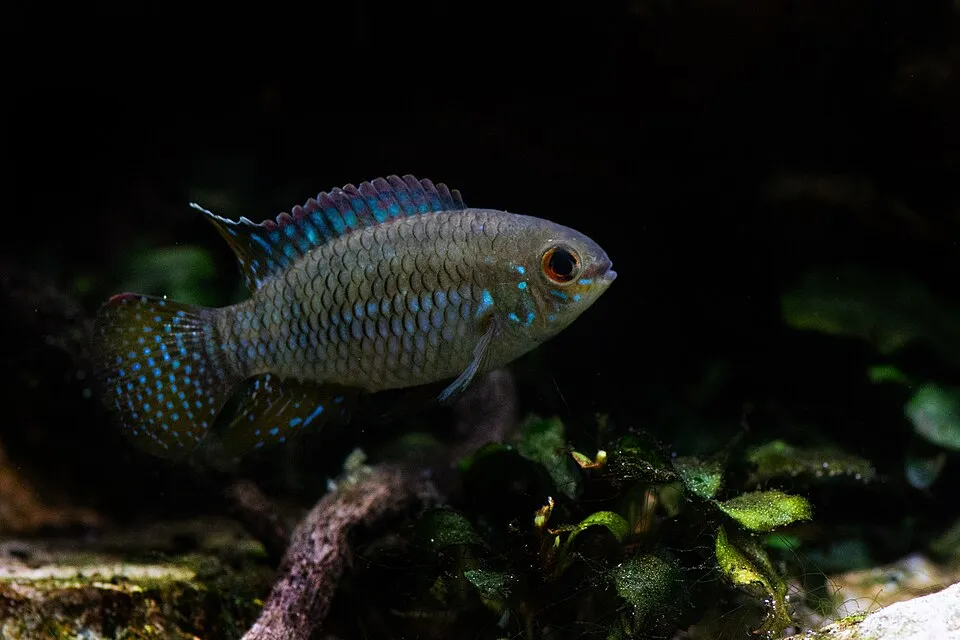
Dwarf flag cichlid
Laetacara curviceps
Freshwater2.2 in (5.5 cm) · 20 gal (75 L)68–82°F (20–28°C)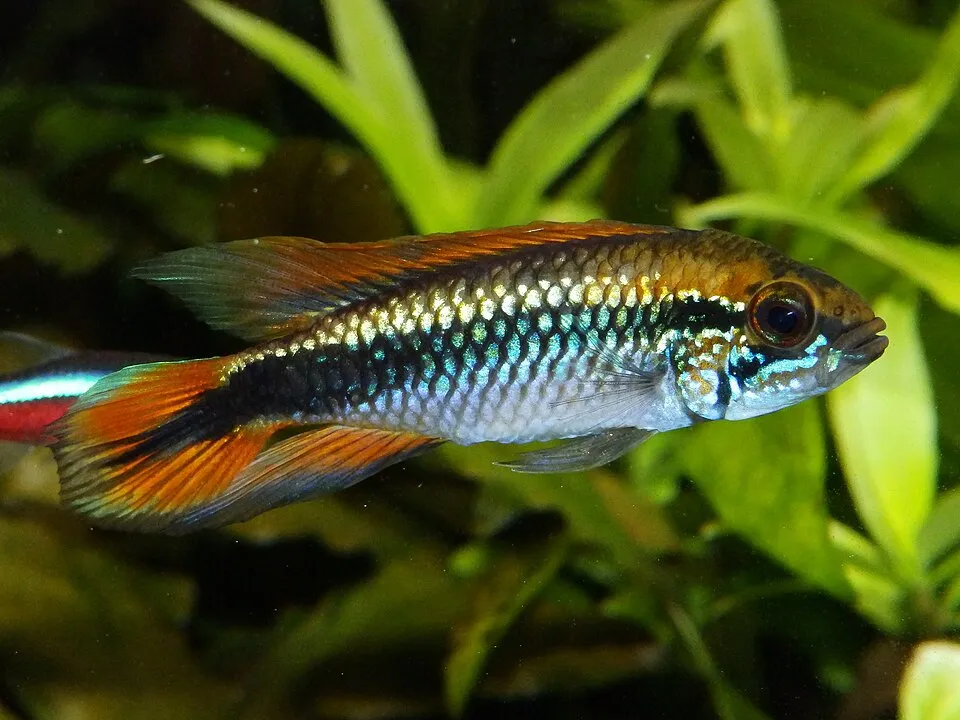
Agassiz's dwarf cichlid
Apistogramma agassizii
Freshwater3.5 in (9 cm) · 20 gal (75 L)72–84°F (22–29°C)
Common questions
What size tank does a yellowfin Borneo sucker need?
A yellowfin Borneo sucker needs at least 20 gal (75 L). It spends most of its time in the bottom.
What temperature and pH does a yellowfin Borneo sucker need?
A yellowfin Borneo sucker is comfortable at 72–79°F (22–26°C) with a pH of 6.5–7.5.
What does a yellowfin Borneo sucker eat?
A yellowfin Borneo sucker lives mostly on biofilm, so it needs a mature tank. Add fine sinking foods and crushed algae wafers to keep it in condition.
How big does a yellowfin Borneo sucker get?
An adult yellowfin Borneo sucker reaches about 2.6 in (6.5 cm).
Related species
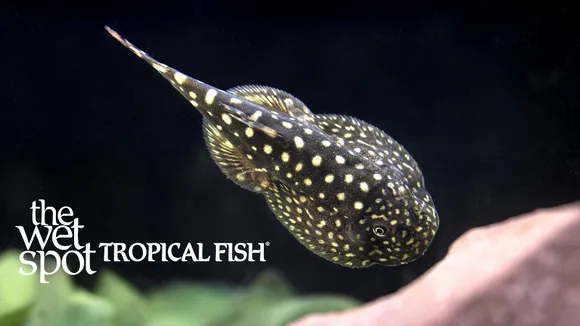 2.6 in (6.5 cm)20 gal (75 L)68–75°F (20–24°C)
Spotted hillstream loach
Gastromyzon punctulatus
2.6 in (6.5 cm) · 20 gal (75 L)
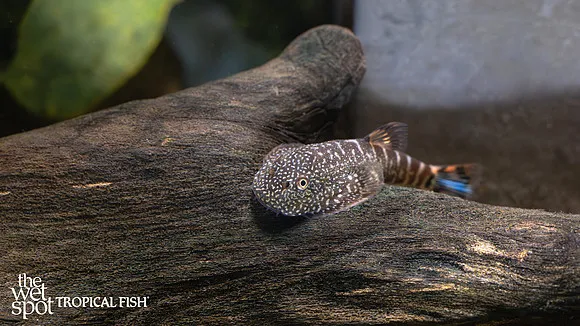 2.4 in (6.2 cm)20 gal (75 L)68–77°F (20–25°C)
Starry Borneo sucker
Gastromyzon stellatus
2.4 in (6.2 cm) · 20 gal (75 L)
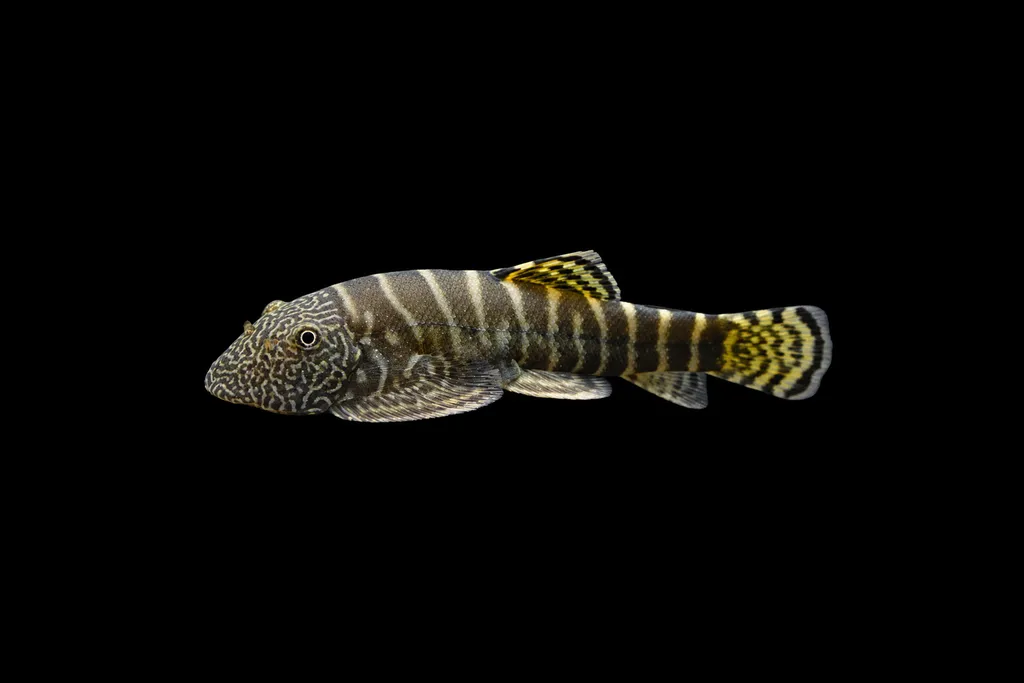 2.9 in (7.3 cm)24 gal (90 L)72–79°F (22–26°C)
Zebra Borneo sucker
Gastromyzon zebrinus
2.9 in (7.3 cm) · 24 gal (90 L)
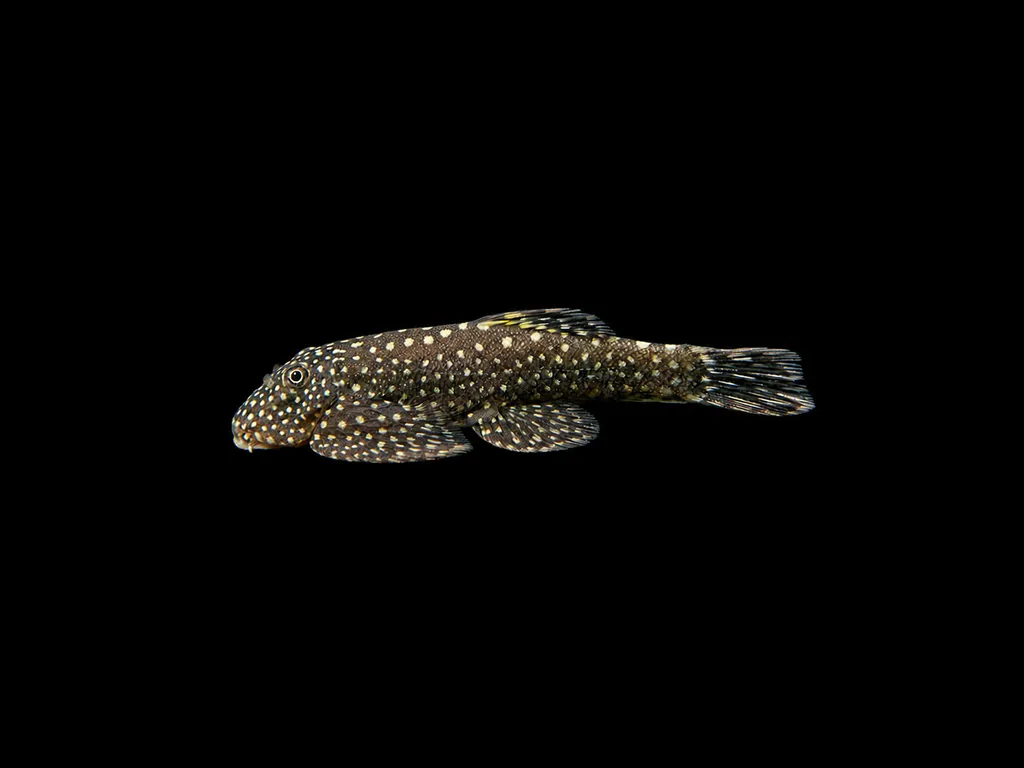 2.2 in (5.5 cm)20 gal (75 L)68–77°F (20–25°C)
Serian Borneo sucker
Gastromyzon scitulus
2.2 in (5.5 cm) · 20 gal (75 L)
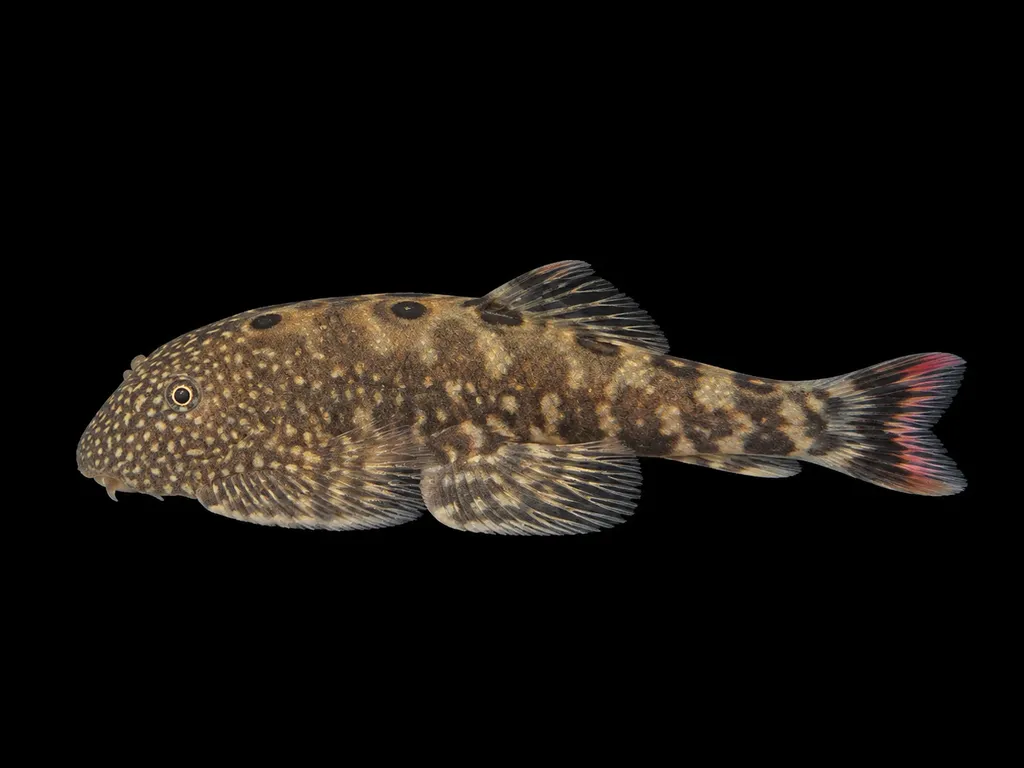 2.1 in (5.4 cm)20 gal (75 L)68–77°F (20–25°C)
Eyespotted Borneo sucker
Gastromyzon ocellatus
2.1 in (5.4 cm) · 20 gal (75 L)
 3.3 in (8.4 cm)24 gal (90 L)68–77°F (20–25°C)
Ornate-tail Borneo sucker
Gastromyzon ornaticauda
3.3 in (8.4 cm) · 24 gal (90 L)