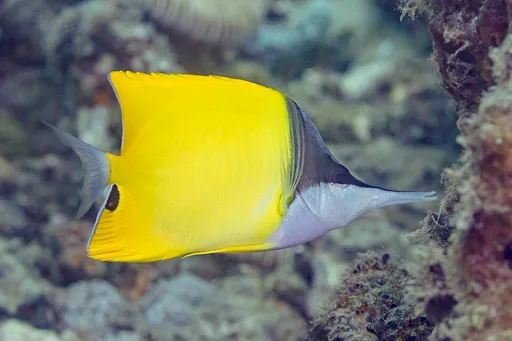
Yellow longnose butterflyfish
Forcipiger flavissimus
Also known as Forcepsfish, Longnose Butterflyfish, Common Longnose Butterflyfish
SaltwaterFish
Care at a glance
- Temperature
- 75–81°F
- 24–27°C
- pH
- 8.1–8.4
- Adult size
- 8.7 in
- 22 cm
- Minimum tank
- 106 gal
- 400 L
- Temperament
- Mostly peaceful
- Social behavior
- Solitary
- Tankmates
- With caution
- Swim level
- Middle
- Difficulty
- Medium
- Breeding
- No record
- Rarity
- Common
- Reef safe
- Reef safe with caution
- Family
- Chaetodontidae
- Origin
- Indo-Pacific and Red Sea reefs, from East Africa to Hawaii, plus the eastern Pacific from Baja California to the Galapagos
Overview
Mostly peaceful and generally easy to feed once settled, taking mysis, krill, and other meaty frozen foods readily, though it can squabble with similar-looking butterflyfish and should be kept one per tank. Reef safety is mixed: many individuals leave corals alone and are kept successfully in reef tanks, but some will pick at soft coral polyps, tubeworm crowns, or the tube feet of sea urchins, so it earns a caution rating rather than a clean yes. Give it a full quarantine before adding it to a display, since it is more prone to parasitic infection during shipping stress than many other butterflyfish.
In the wild
Widespread across the Indo-Pacific and Red Sea from East Africa to Hawaii, and also found in the eastern Pacific from Baja California to the Galapagos, on clear lagoon and seaward reefs down to about 145 m. Its long snout is built for picking food out of narrow coral crevices and among the spines of sea urchins, so the aquarium should offer plenty of live rock with nooks and crevices to forage through along with open swimming space. A tank of at least 400 litres (106 US gal) suits a single fish.
Good to know
Named for its greatly elongated, forceps-like snout, an adaptation shared with its close relative Forcipiger longirostris and used to reach small invertebrates tucked deep in reef crevices that other butterflyfish cannot get at. Its body is bright lemon yellow with a black-and-white barred head and a false eyespot near the tail that helps confuse predators about which end is which. It reaches about 22 cm, making it one of the larger Chaetodontidae kept in home aquariums.
Did you know
Its long snout lets it reach past the spines of a sea urchin to nip at the tube feet and pedicellariae without getting hurt, a feeding trick few other reef fish can pull off.
Common questions
What size tank does a Yellow longnose butterflyfish need?
A Yellow longnose butterflyfish needs at least 106 gal (400 L). It spends most of its time in the middle.
What temperature and pH does a Yellow longnose butterflyfish need?
A Yellow longnose butterflyfish is comfortable at 75–81°F (24–27°C) with a pH of 8.1–8.4.
How big does a Yellow longnose butterflyfish get?
An adult Yellow longnose butterflyfish reaches about 8.7 in (22 cm).
Related species
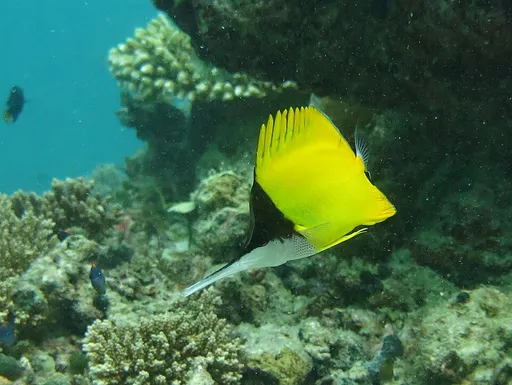 8.7 in (22 cm)100 gal (380 L)73–81°F (23–27°C)
Big longnose butterflyfish
Forcipiger longirostris
8.7 in (22 cm) · 100 gal (380 L)
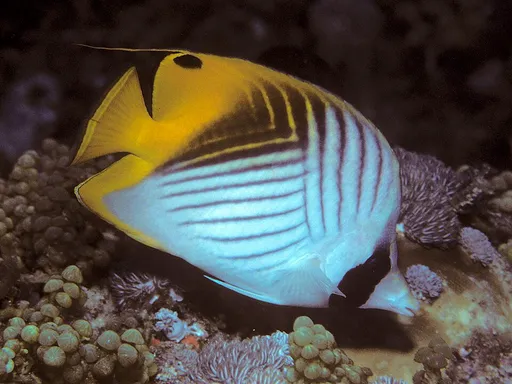 9.1 in (23 cm)79 gal (300 L)75–81°F (24–27°C)
Threadfin butterflyfish
Chaetodon auriga
9.1 in (23 cm) · 79 gal (300 L)
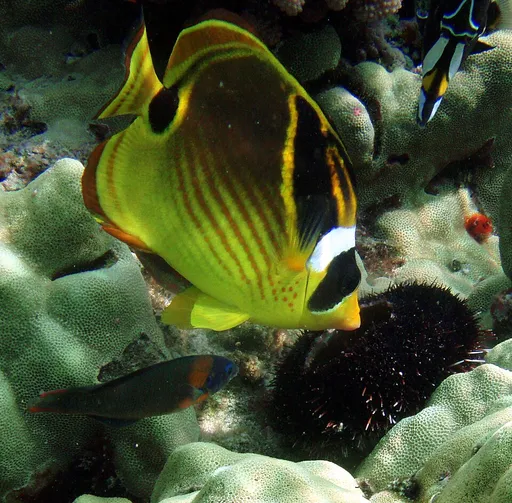 7.9 in (20 cm)106 gal (400 L)75–81°F (24–27°C)
Raccoon butterflyfish
Chaetodon lunula
7.9 in (20 cm) · 106 gal (400 L)
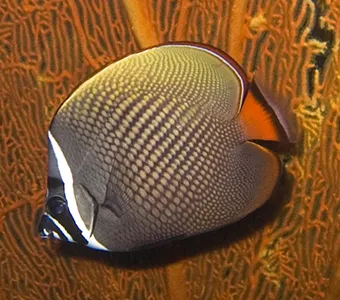 7.1 in (18 cm)90 gal (340 L)73–81°F (23–27°C)
Collare butterflyfish
Chaetodon collare
7.1 in (18 cm) · 90 gal (340 L)
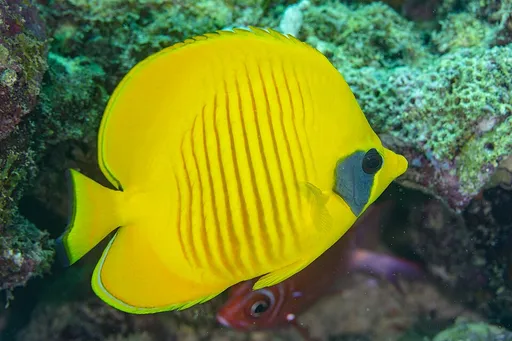 9.1 in (23 cm)151 gal (570 L)75–82°F (24–28°C)
Golden butterflyfish
Chaetodon semilarvatus
9.1 in (23 cm) · 151 gal (570 L)
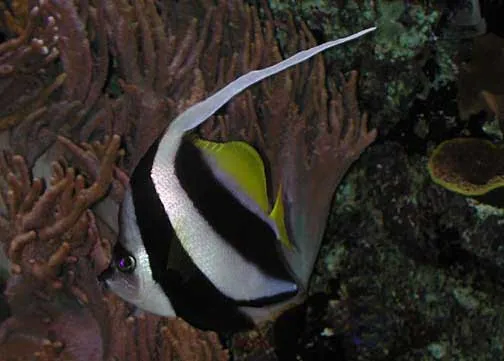 8.3 in (21 cm)124 gal (470 L)75–81°F (24–27°C)
Schooling bannerfish
Heniochus diphreutes
8.3 in (21 cm) · 124 gal (470 L)