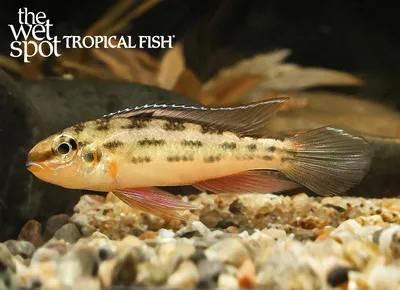
Warzel's dwarf cichlid
Dicrossus warzeli
Also known as Tapajos checkerboard, Four-bar checkerboard
FreshwaterFish
Care at a glance
- Temperature
- 75–82°F
- 24–28°C
- pH
- 4.5–6.0
- Adult size
- 3 in
- 7.5 cm
- Minimum tank
- 20 gal
- 75 L
- Temperament
- Mostly peaceful
- Social behavior
- Social
- Swim level
- Bottom
- Difficulty
- Medium
- Breeding
- Substrate spawner · Medium
- Rarity
- Rare
- Family
- Cichlidae
- Origin
- Tapajós tributaries, Brazil
Overview
Warzel's dwarf cichlid is a shy, mostly peaceful blackwater fish for a dark, quiet tank. It is best with a little experience.
Did you know
Warzel's dwarf cichlid was named in 2010 for Frank Warzel, a German aquarist and pike cichlid expert. He studied it for years before it had a scientific name. He died in 2004, six years before the species was formally described.
Caring for the Warzel's dwarf cichlid
Keep a single pair of Warzel's dwarf cichlids, or one male with two or three females, rather than a crowd. Give them at least 20 gal (75 L), shaded with driftwood and plenty of dried leaf litter. Use fine sand and gentle filtration, and keep the tank dark and quiet, with plenty of cover. They spend their time low, picking through leaf litter and sand near the bottom.
Use very soft, warm water at 75 to 82°F (24 to 28°C). Hold the pH low, at 4.5 to 6.0, using peat, botanicals or reverse osmosis water. Steady, clean, humic-rich water matters more than any decor. Feed small foods it can manage, such as micro pellets, live or frozen daphnia, cyclops and baby brine shrimp, plus finely crushed flake.
Warzel's dwarf cichlid is mostly peaceful but easily bullied. Choose small, calm tank mates such as pencilfish or small tetras that will not race it for food.
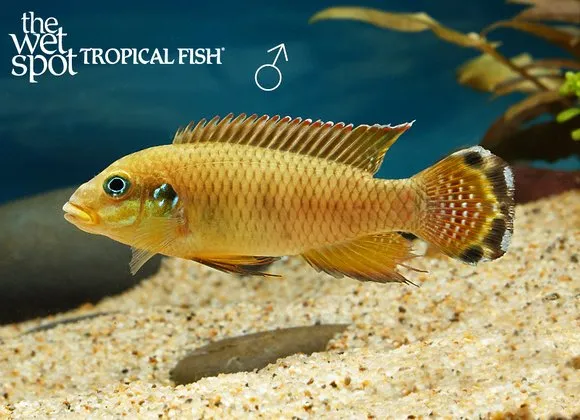
Males grow larger and trail a lyre-shaped tail, while females stay much smaller. Unlike the mouthbrooding dwarf cichlids, it is an open substrate spawner, laying eggs on wood or leaves that the female tends. Breeding is of medium difficulty and hinges on very soft, acidic water.
Good to know
Dicrossus warzeli is a checkerboard cichlid in the family Cichlidae. Rows of dark dash-like blotches run along its flanks.
In the wild
Warzel's dwarf cichlid comes from small forest streams in the Tapajos drainage of Brazil. The water there is very soft, acidic and stained brown by fallen leaves.
Weekly picks
Tank mates
The Warzel's dwarf cichlid is a mostly peaceful, social species that keeps to the bottom. These picks share a community profile with it, are safe together in both directions, and overlap on water type, temperature and pH.
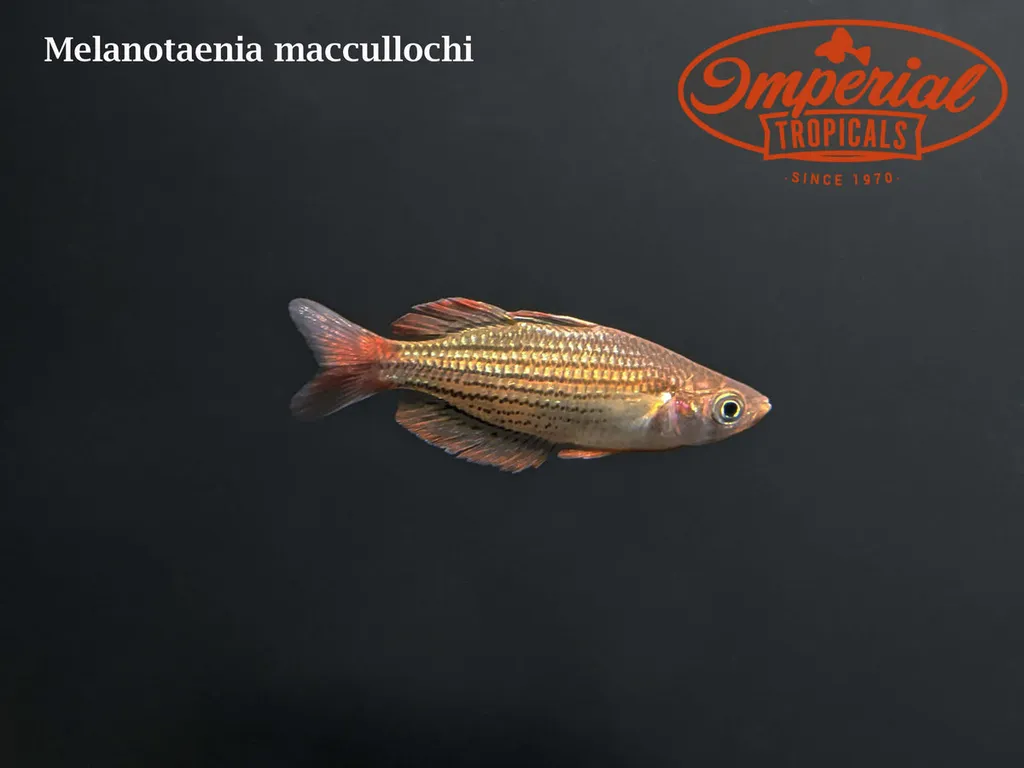
Dwarf rainbowfish
Melanotaenia maccullochi
Freshwater2.8 in (7 cm) · 20 gal (75 L)72–82°F (22–28°C)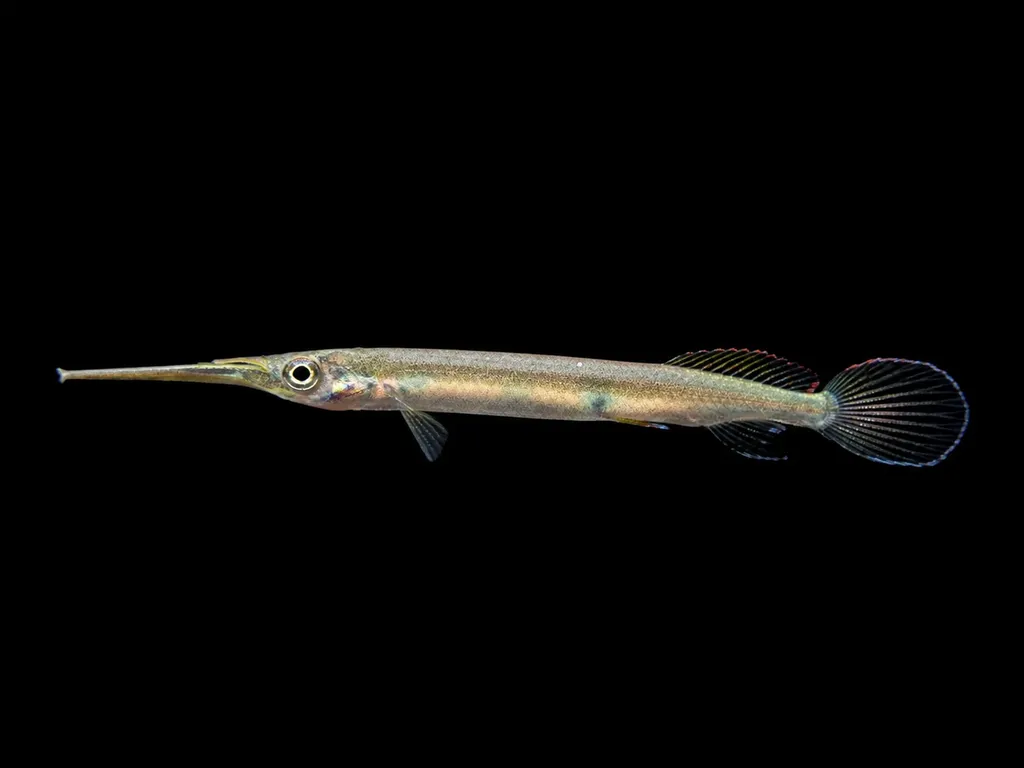
Kuekenthal's halfbeak
Hemirhamphodon kuekenthali
Freshwater3.3 in (8.5 cm) · 20 gal (75 L)73–81°F (23–27°C)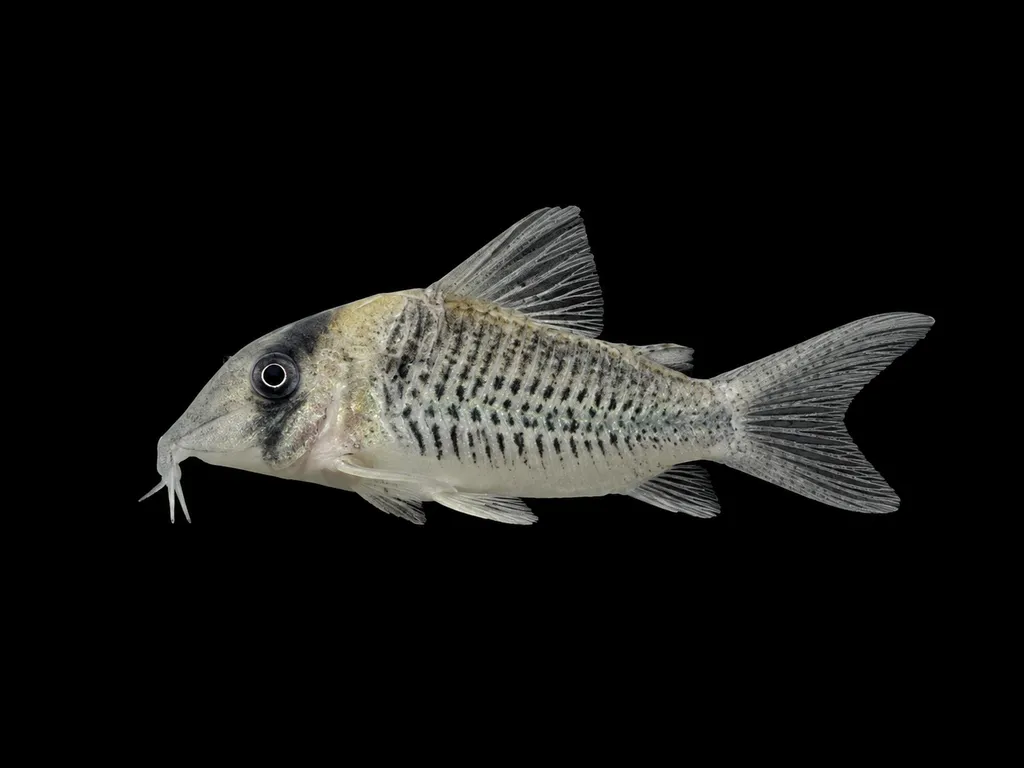
Caramater cory
Corydoras caramater
Freshwater2.2 in (5.5 cm) · 20 gal (75 L)75–82°F (24–28°C)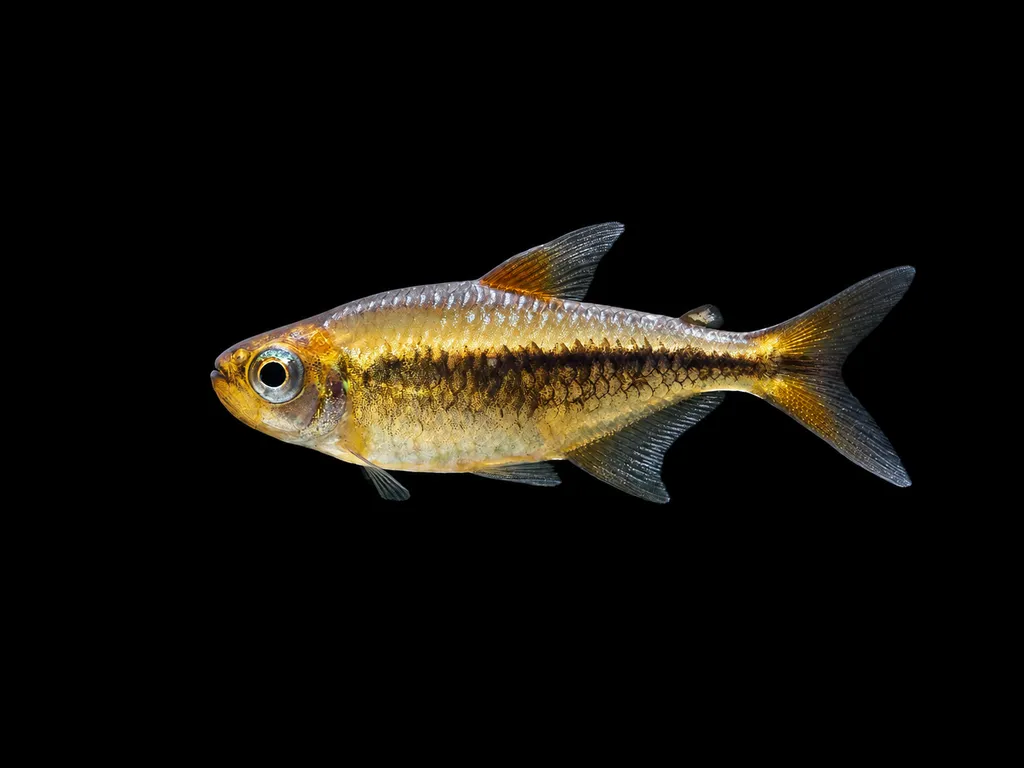
Blackmargin tetra
Moenkhausia nigromarginata
Freshwater2.1 in (5.3 cm) · 20 gal (75 L)73–82°F (23–28°C)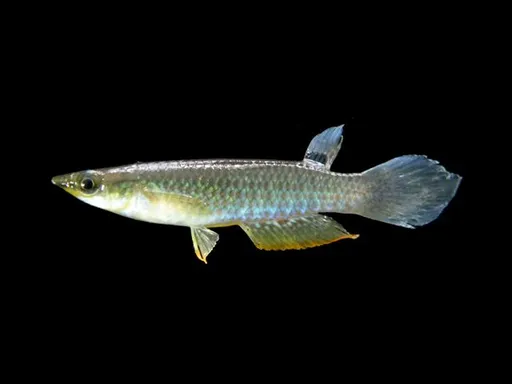
Blue panchax
Aplocheilus panchax
Freshwater3.5 in (9 cm) · 20 gal (75 L)72–82°F (22–28°C)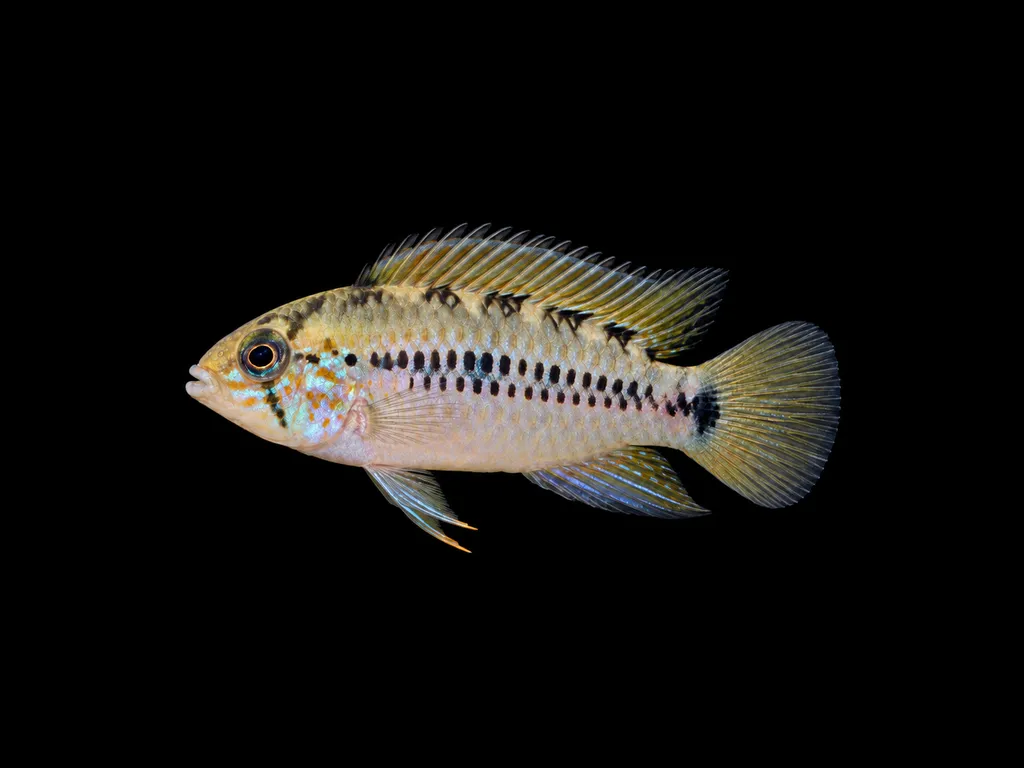
Alacrina dwarf cichlid
Apistogramma alacrina
Freshwater2.8 in (7 cm) · 20 gal (75 L)73–82°F (23–28°C)
Common questions
What size tank does a Warzel's dwarf cichlid need?
A Warzel's dwarf cichlid needs at least 20 gal (75 L). It spends most of its time in the bottom.
What temperature and pH does a Warzel's dwarf cichlid need?
A Warzel's dwarf cichlid is comfortable at 75–82°F (24–28°C) with a pH of 4.5–6.0.
What does a Warzel's dwarf cichlid eat?
A Warzel's dwarf cichlid eats small foods it can manage, such as micro pellets, live or frozen daphnia, cyclops and baby brine shrimp. Add finely crushed flake as well.
How big does a Warzel's dwarf cichlid get?
An adult Warzel's dwarf cichlid reaches about 3 in (7.5 cm).
How can you tell a male Warzel's dwarf cichlid from a female?
Males grow larger and trail a lyre-shaped tail, while females stay much smaller.
How does a Warzel's dwarf cichlid breed?
A Warzel's dwarf cichlid is an open substrate spawner that lays its eggs on wood or leaves, and the female tends them. Breeding is of medium difficulty and hinges on very soft, acidic water.
Related species
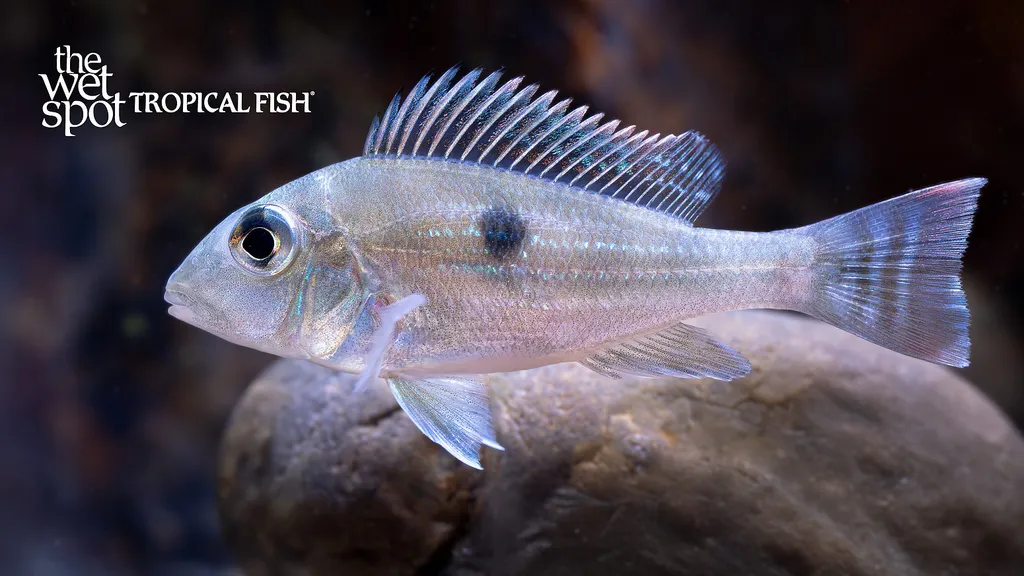 3.5 in (9 cm)24 gal (90 L)79–86°F (26–30°C)
Spadetail checkerboard cichlid
Dicrossus maculatus
3.5 in (9 cm) · 24 gal (90 L)
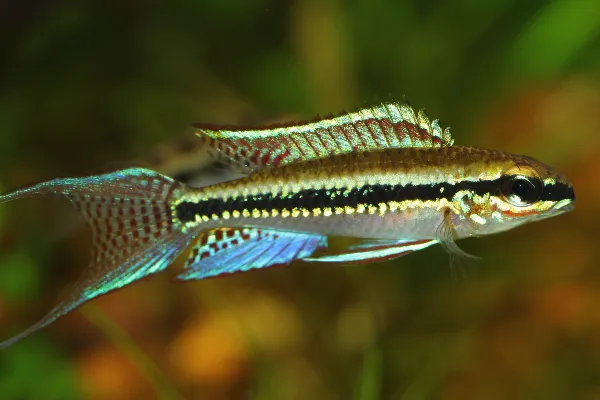 3.5 in (9 cm)20 gal (75 L)79–86°F (26–30°C)
Checkerboard cichlid
Dicrossus filamentosus
3.5 in (9 cm) · 20 gal (75 L)
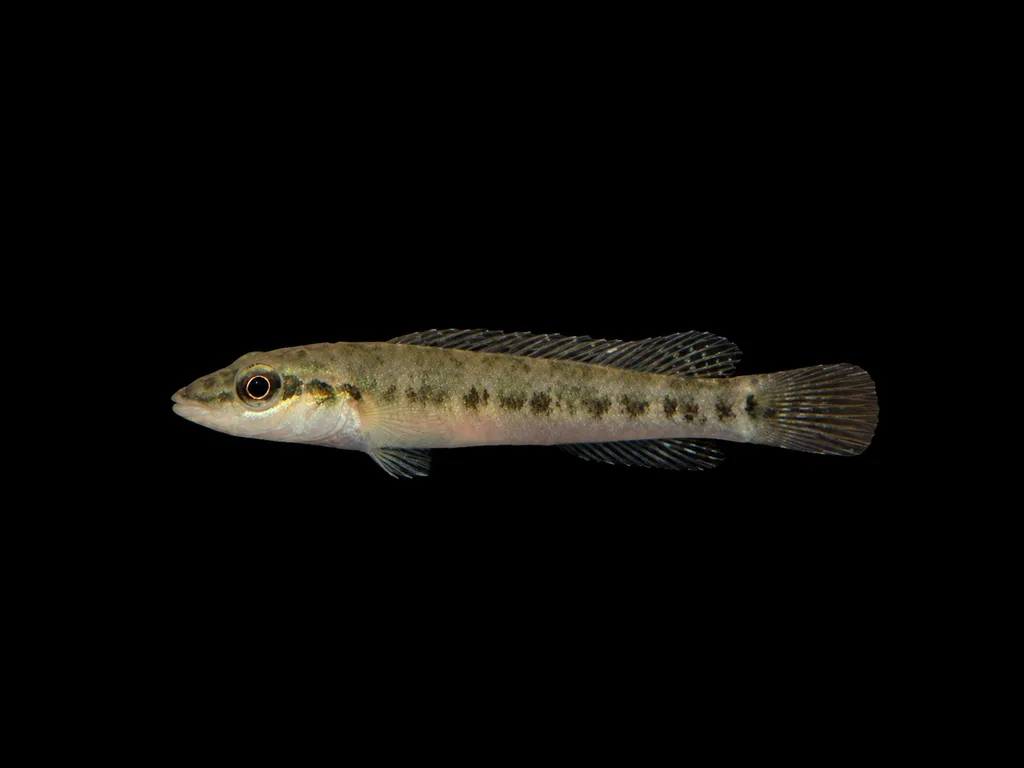 3 in (7.5 cm)29 gal (110 L)79–86°F (26–30°C)
Centrarchus dwarf pike
Teleocichla centrarchus
3 in (7.5 cm) · 29 gal (110 L)
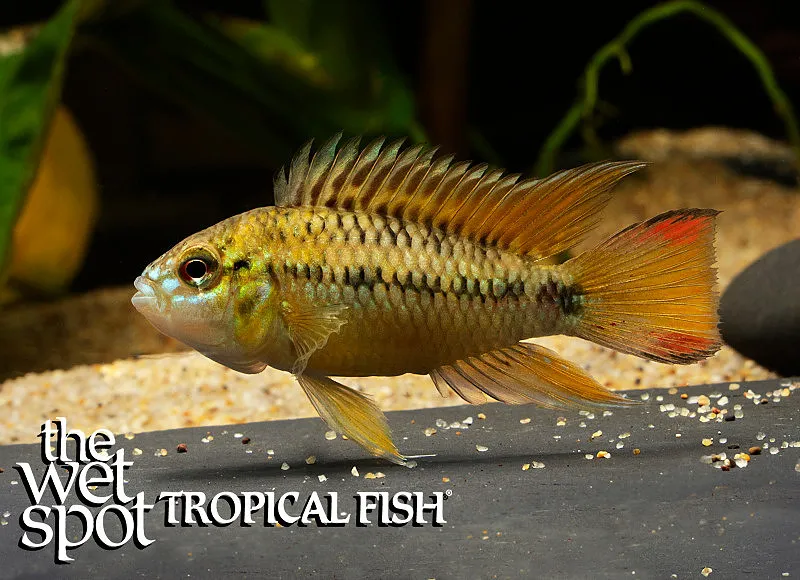 3 in (7.5 cm)20 gal (75 L)75–84°F (24–29°C)
Hoigne's dwarf cichlid
Apistogramma hoignei
3 in (7.5 cm) · 20 gal (75 L)
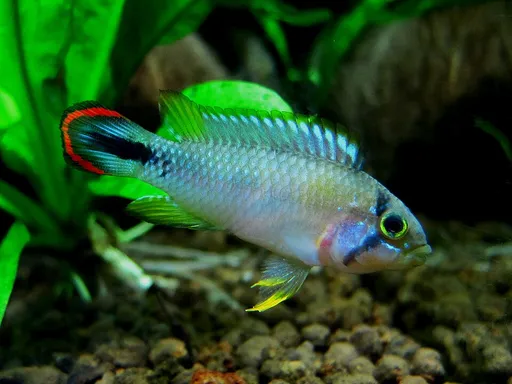 3 in (7.5 cm)20 gal (75 L)75–82°F (24–28°C)
Panduro apisto
Apistogramma panduro
3 in (7.5 cm) · 20 gal (75 L)
 3 in (7.5 cm)18 gal (70 L)73–81°F (23–27°C)
Wouri krib
Pelvicachromis drachenfelsi
3 in (7.5 cm) · 18 gal (70 L)