Sun catfish
Horabagrus brachysoma
FreshwaterFish
Care at a glance
- Temperature
- 73–77°F
- 23–25°C
- pH
- 6.5–7.5
- Adult size
- 17.7 in
- 45 cm
- Minimum tank
- 170 gal
- 645 L
- Temperament
- Mostly peaceful
- Social behavior
- Solitary
- Tankmates
- With caution
- Swim level
- Bottom
- Difficulty
- Difficult
- Breeding
- No record
- Rarity
- Very rare
- Family
- Horabagridae
- Origin
- India
Overview
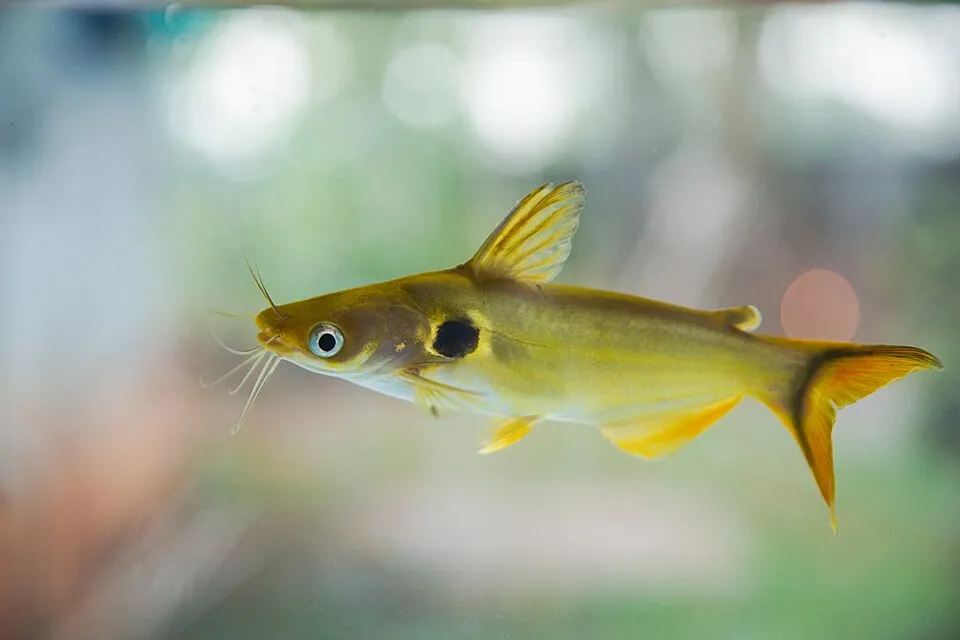
The sun catfish is a large, golden, nocturnal catfish that is peaceful for its size but will eat any tankmate small enough to swallow, so keep it only with big, calm fish. It is usually kept as a single specimen and does well with other robust species that stay out of its mouth. Give it dim lighting and solid daytime cover, such as big wood, rock caves, or wide pipes, over a soft bed. It is an easy eater, taking sinking pellets, prawn, mussel, fish strips, and earthworms, and there is no need for live feeders. It grows quickly and needs a large tank of around 645 liters or larger.
In the wild
The sun catfish is native to the rivers and floodplain wetlands of the Western Ghats in southwestern India, where it lives in warm, slow to moderate water among wood and dense bankside cover. Keep it from around 23 to 25 C with a pH between 6.5 and 7.5. A spacious tank with a soft substrate, large driftwood, rock caves, and shaded resting spots suits its habits, and dim lighting encourages it to come out in the evening. Good filtration matters, as it is a big, messy feeder.
Good to know
The sun catfish belongs to Horabagridae and reaches around 45 cm, though 30 cm is more usual in aquariums. It is named for its warm golden-yellow body, set off by a dark blotch edged in pale gold just behind the gill cover. In the wild it feeds on smaller fish, invertebrates, and plant matter. It is raised on farms in India using induced spawning, but it is not known to breed unaided in home aquariums, and it carries sharp, mildly venomous fin spines.
Did you know
The sun catfish is named for its bright golden-yellow colouring and the dark, gold-rimmed shoulder spot behind its gills. It is prized as a food fish in the Western Ghats of India and is raised on farms there, though wild numbers have declined.
Common questions
What size tank does a Sun catfish need?
A Sun catfish needs at least 170 gal (645 L). It spends most of its time in the bottom.
What temperature and pH does a Sun catfish need?
A Sun catfish is comfortable at 73–77°F (23–25°C) with a pH of 6.5–7.5.
How big does a Sun catfish get?
An adult Sun catfish reaches about 17.7 in (45 cm).
Related species
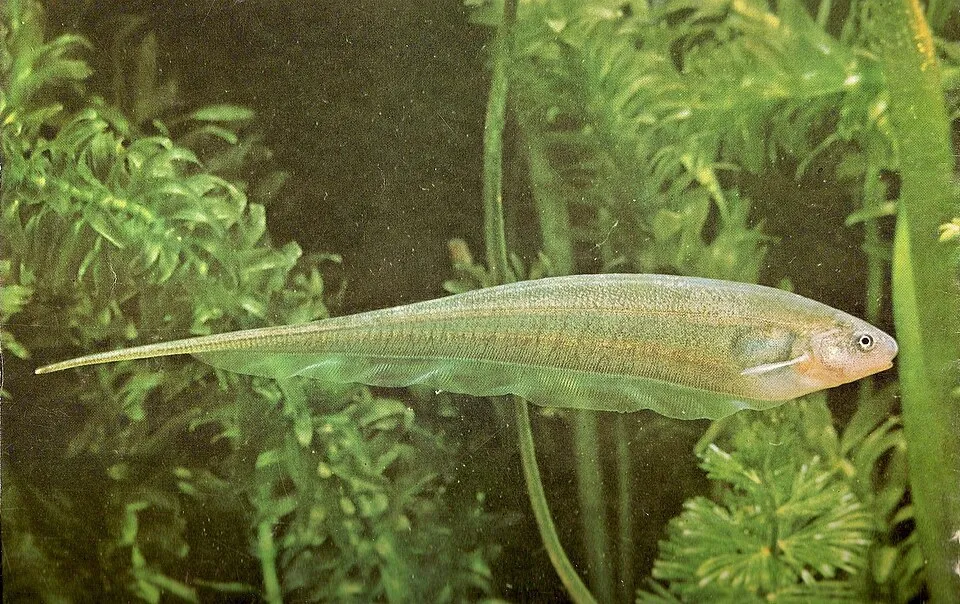 17.7 in (45 cm)85 gal (320 L)73–82°F (23–28°C)
Glass knifefish
Eigenmannia virescens
17.7 in (45 cm) · 85 gal (320 L)
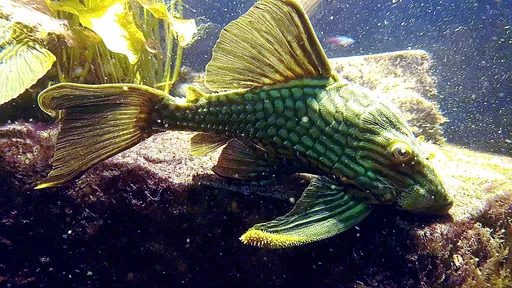 17.7 in (45 cm)151 gal (570 L)77–84°F (25–29°C)
Thunder royal pleco (L027)
Panaque armbrusteri
17.7 in (45 cm) · 151 gal (570 L)
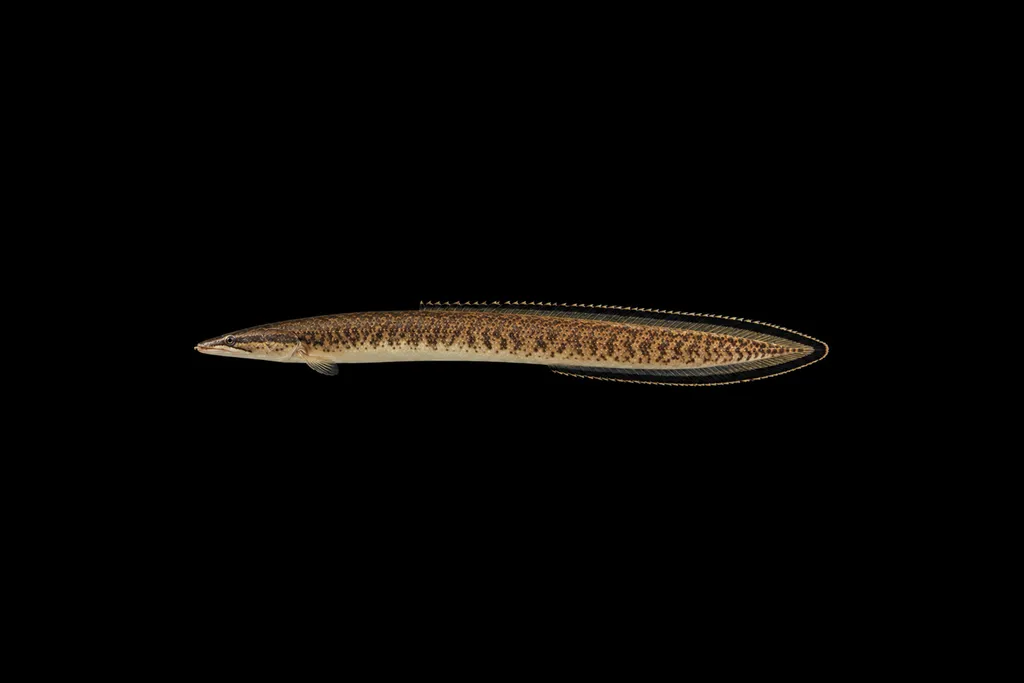 19.7 in (50 cm)106 gal (400 L)73–82°F (23–28°C)
Blackedge spiny eel
Mastacembelus nigromarginatus
19.7 in (50 cm) · 106 gal (400 L)
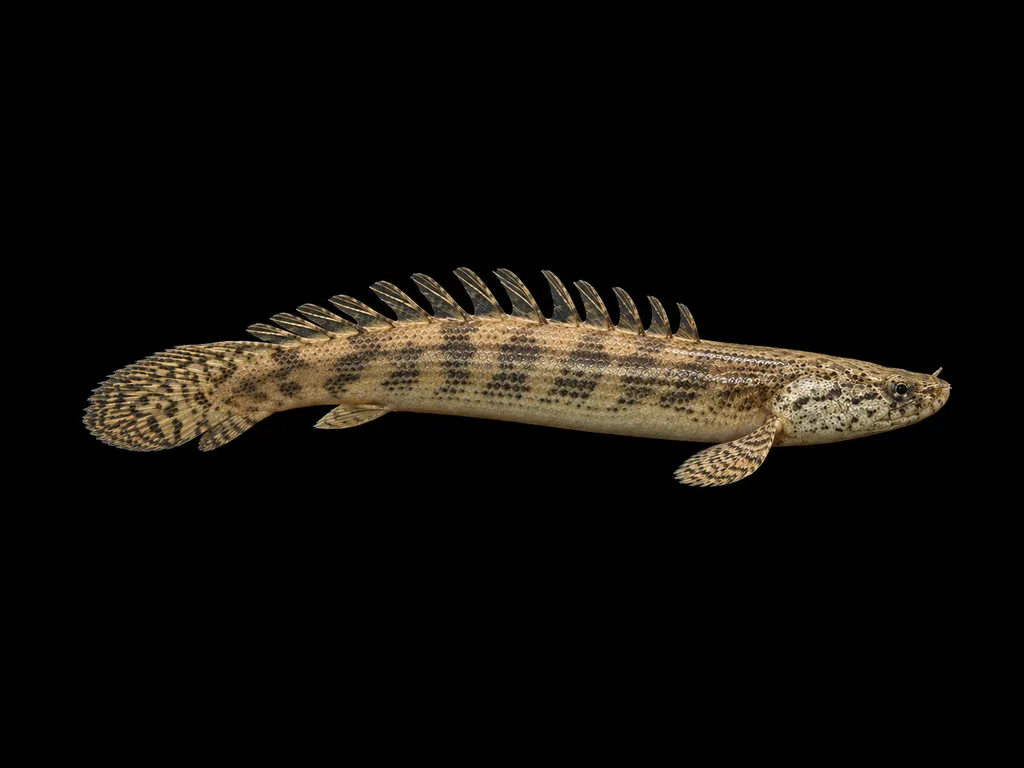 15.7 in (40 cm)119 gal (450 L)75–82°F (24–28°C)
Ansorge's bichir
Polypterus ansorgii
15.7 in (40 cm) · 119 gal (450 L)
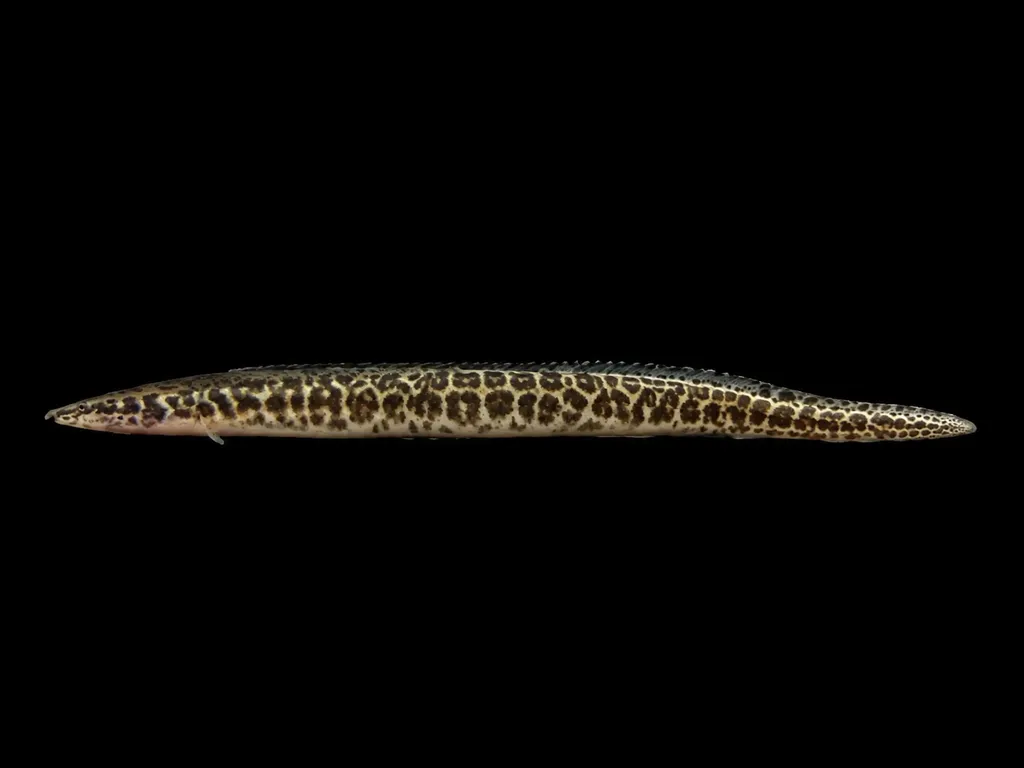 15 in (38 cm)79 gal (300 L)73–82°F (23–28°C)
Greshoff's spiny eel
Mastacembelus greshoffi
15 in (38 cm) · 79 gal (300 L)
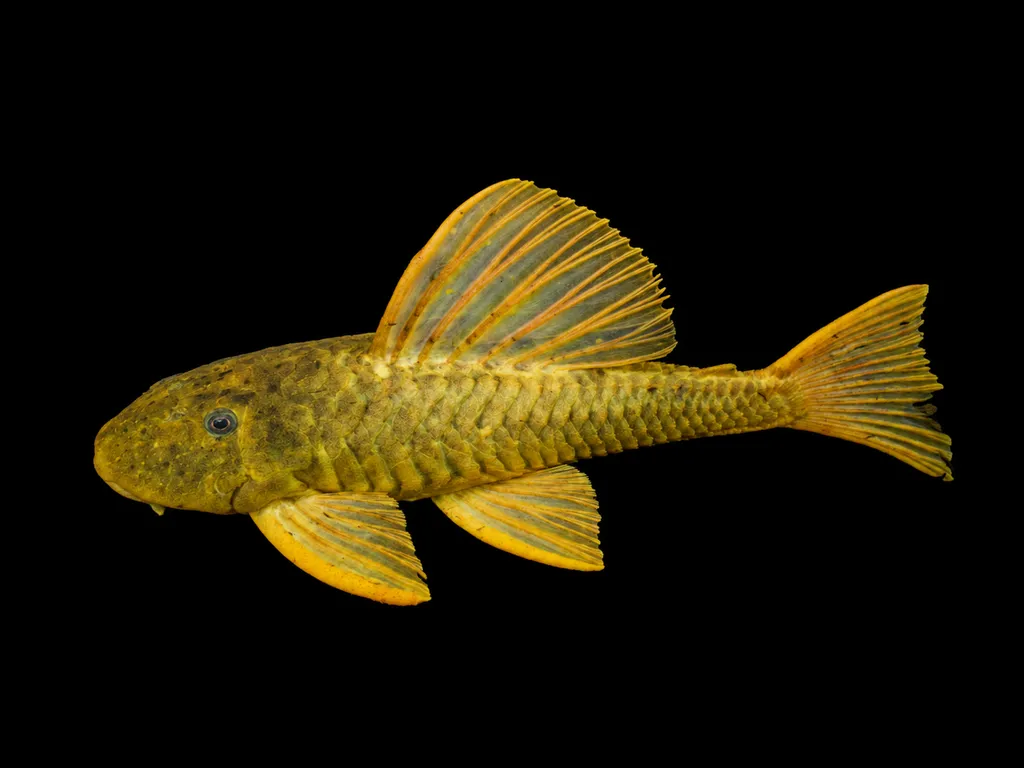 13.8 in (35 cm)106 gal (400 L)64–79°F (18–26°C)
Golden hypostomus
Hypostomus luteus
13.8 in (35 cm) · 106 gal (400 L)