Glass knifefish
Eigenmannia virescens
Also known as Transparent Knife
FreshwaterFish
Care at a glance
- Temperature
- 73–82°F
- 23–28°C
- pH
- 6.0–7.5
- Adult size
- 17.7 in
- 45 cm
- Minimum tank
- 85 gal
- 320 L
- Temperament
- Mostly peaceful
- Social behavior
- Solitary
- Tankmates
- With caution
- Swim level
- Bottom
- Difficulty
- Difficult
- Breeding
- No record
- Rarity
- Very rare
- Family
- Sternopygidae
- Origin
- South America
Overview
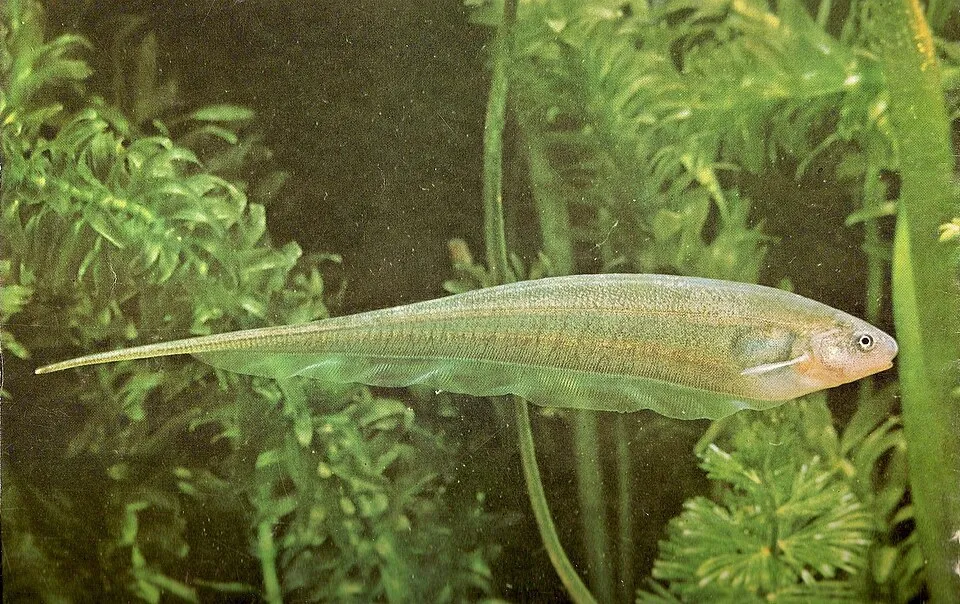
The glass knifefish is a translucent, night-active fish that shelters among plants and wood by day and forages low in the tank after dark. It is best kept one to a tank unless the aquarium is very large, since it can be territorial toward its own kind, and it should have calm tankmates too big to be eaten. Feed live and frozen foods such as bloodworms, blackworms, and small shrimp in the evening. It has soft, scaleless skin, so provide fine substrate, gentle flow, and clean, stable water. This fish grows long and needs a tank of at least 320 liters.
In the wild
Eigenmannia virescens is found through much of tropical South America, in slow rivers, floodplain lakes, and dense marginal vegetation, often among floating plant roots and submerged wood. It prefers warm, softly flowing, well-shaded water. Recreate this with plenty of cover, subdued lighting, fine sand, and steady filtration. Keep the temperature between 23 and 28 degrees Celsius and the pH slightly acidic to neutral, from about 6 to 7.5.
Good to know
The glass knifefish belongs to Sternopygidae and takes its name from its see-through body, through which the backbone is visible. Males grow to around 45 centimeters, larger than females. Like other South American knifefish it swims with a long, rippling anal fin and is weakly electric, generating a steady electric field from a tail organ that lets it sense and communicate in the dark. Aquarium spawning is seldom recorded.
Did you know
The glass knifefish is nearly transparent, so its spine and internal organs show through its body. It also broadcasts a constant weak electric field, which it shifts in frequency to avoid jamming the signals of nearby knifefish.
Common questions
What size tank does a Glass knifefish need?
A Glass knifefish needs at least 85 gal (320 L). It spends most of its time in the bottom.
What temperature and pH does a Glass knifefish need?
A Glass knifefish is comfortable at 73–82°F (23–28°C) with a pH of 6.0–7.5.
How big does a Glass knifefish get?
An adult Glass knifefish reaches about 17.7 in (45 cm).
Related species
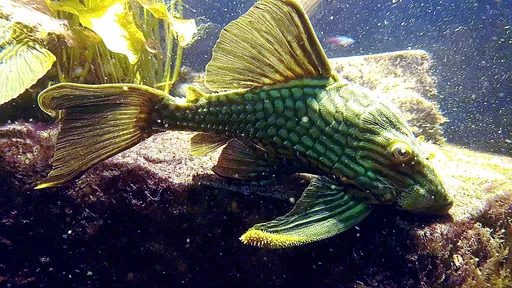 17.7 in (45 cm)151 gal (570 L)77–84°F (25–29°C)
Thunder royal pleco (L027)
Panaque armbrusteri
17.7 in (45 cm) · 151 gal (570 L)
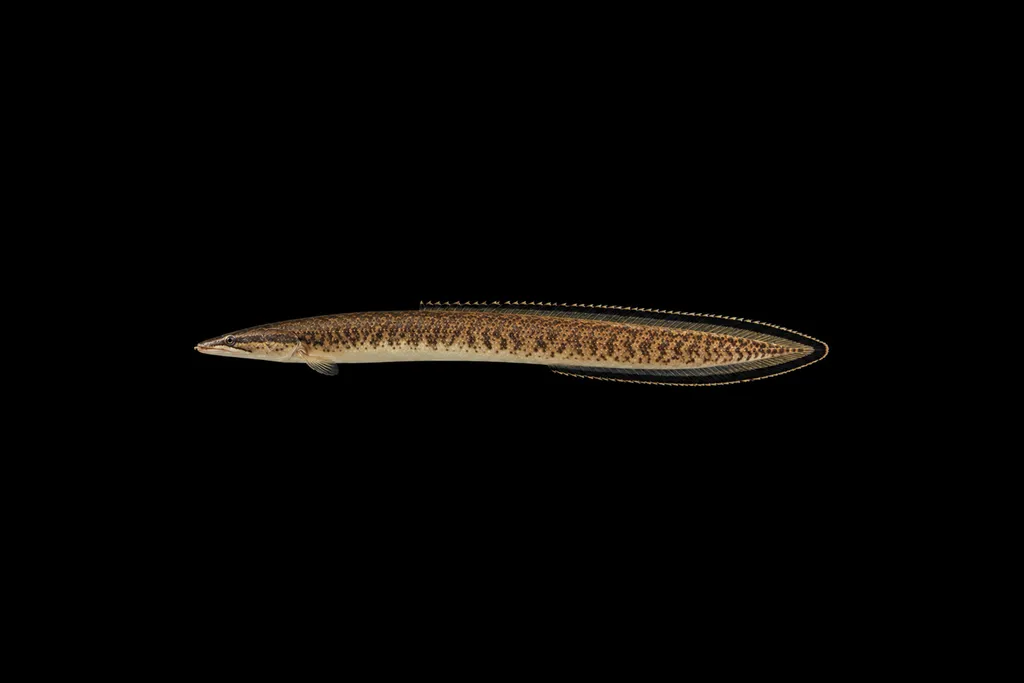 19.7 in (50 cm)106 gal (400 L)73–82°F (23–28°C)
Blackedge spiny eel
Mastacembelus nigromarginatus
19.7 in (50 cm) · 106 gal (400 L)
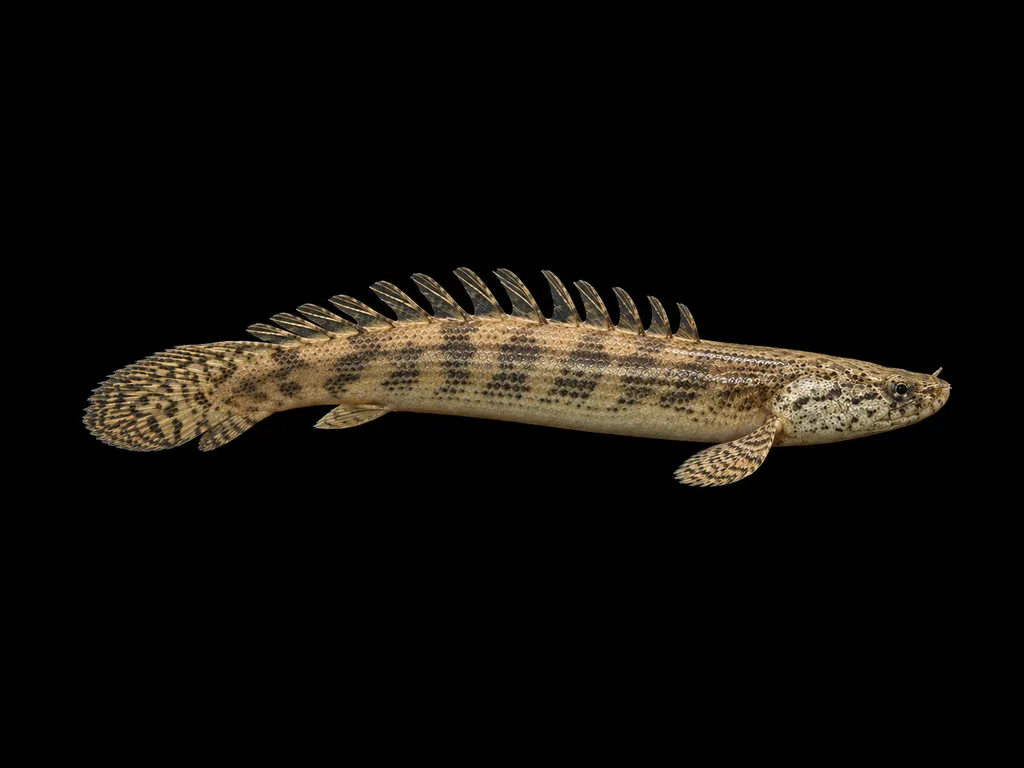 15.7 in (40 cm)119 gal (450 L)75–82°F (24–28°C)
Ansorge's bichir
Polypterus ansorgii
15.7 in (40 cm) · 119 gal (450 L)
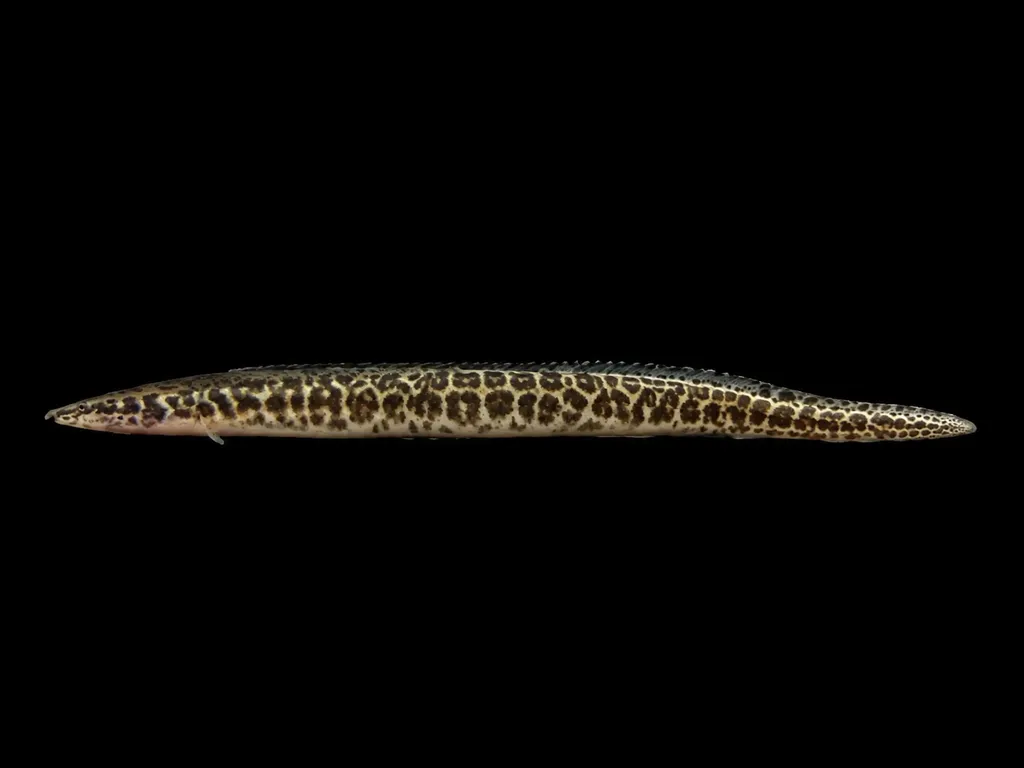 15 in (38 cm)79 gal (300 L)73–82°F (23–28°C)
Greshoff's spiny eel
Mastacembelus greshoffi
15 in (38 cm) · 79 gal (300 L)
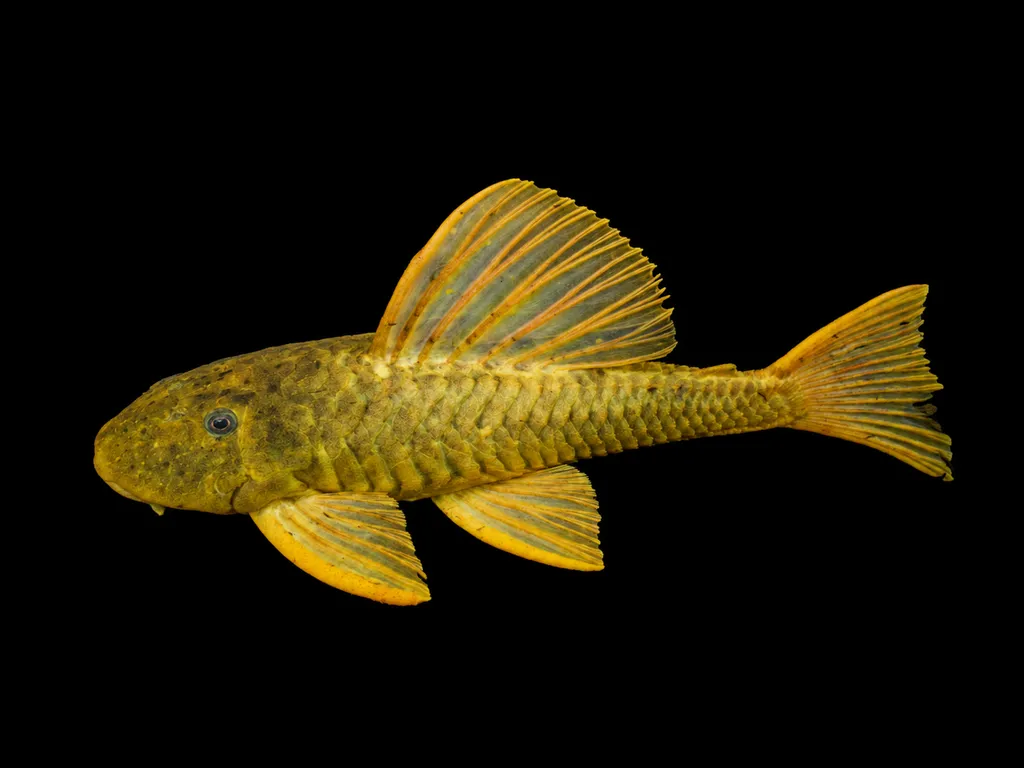 13.8 in (35 cm)106 gal (400 L)64–79°F (18–26°C)
Golden hypostomus
Hypostomus luteus
13.8 in (35 cm) · 106 gal (400 L)
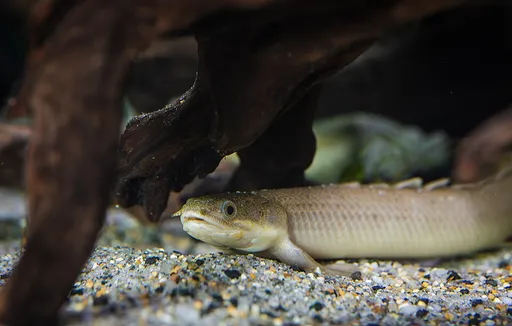 13.8 in (35 cm)143 gal (540 L)75–82°F (24–28°C)
Senegal bichir
Polypterus senegalus
13.8 in (35 cm) · 143 gal (540 L)