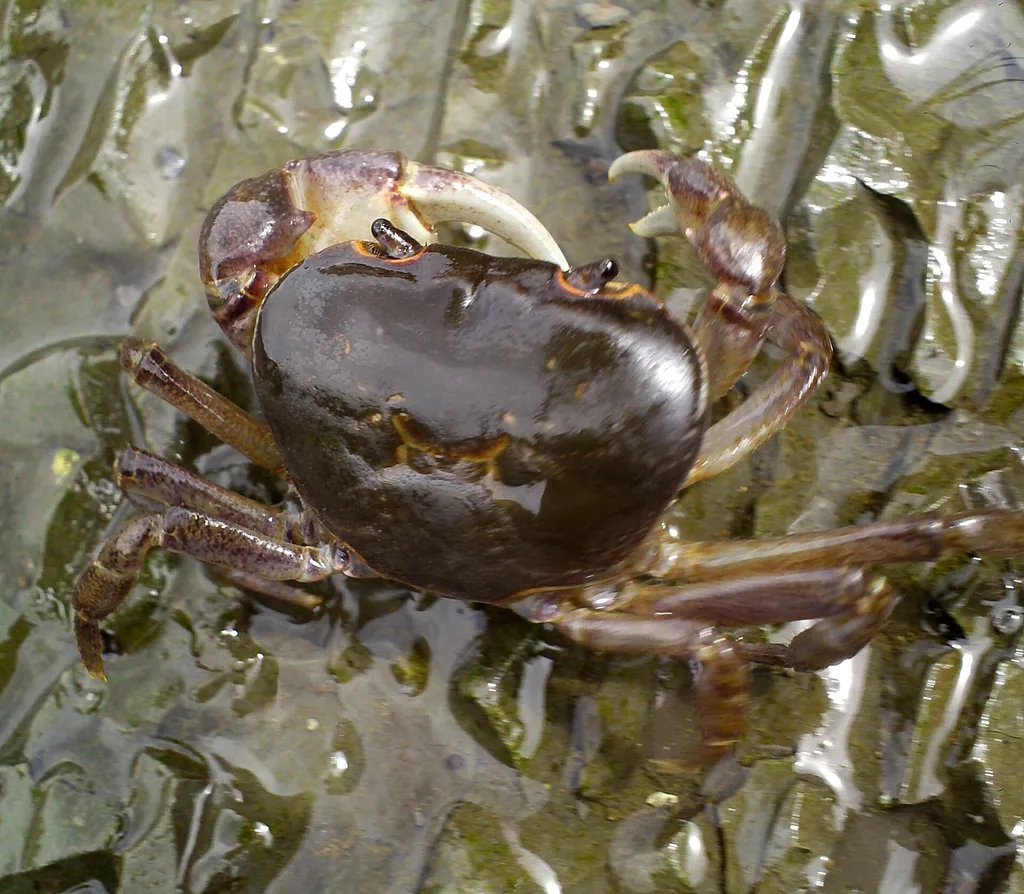
Sawagani
Geothelphusa dehaani
Also known as Japanese freshwater crab, Japanese dwarf warrior crab, Sawagani crab
FreshwaterCrab
Care at a glance
- Temperature
- 41–75°F
- 5–24°C
- pH
- 6.5–8.0
- Adult size
- 1.2 in
- 3 cm
- Minimum tank
- 11 gal
- 40 L
- Temperament
- Mostly peaceful
- Social behavior
- Solitary
- Own kind
- One male per tank
- Tankmates
- With caution
- Swim level
- Bottom
- Difficulty
- Medium
- Breeding
- Medium
- Rarity
- Very rare
- Family
- Potamidae
- Origin
- Japan, from Aomori in northern Honshu to the northern Ryukyu Islands
Overview
This is a nocturnal omnivore that hides by day and eats insects, worms, snails, and leaf litter at night, so in a tank it takes sinking pellets, frozen bloodworm, blanched vegetables, and dead leaves. It will also catch dwarf shrimp and small fish resting on the bottom, and crabs fight, so keep one, or one male with a female or two in a large, rock filled tank. It stays on the bottom and in its rock pile, and it climbs out and wanders if it can. Leave cuttlebone in the water for the molt, and keep the water cool and clean above all else.
In the wild
Sawagani live under rocks in the clean, cool upper and middle reaches of streams across Japan, from northern Honshu to the northern Ryukyus, and they walk out onto the wet forest floor on rainy days. Their streams stay around 20 C even in high summer, and that is the whole problem with keeping them: above the mid 20s they weaken and 30 C kills them, so this is a crab for an unheated room, a fan, or a chiller, at 5 to 24 C. Give it a tank of 40 liters or more with a pile of rocks to hide under, sand, strong filtration and oxygen, and a rock or piece of wood that breaks the surface, because it is amphibious and likes to climb out. Water is not fussy at pH 6.5 to 8, but it must be clean, and the lid must be tight.
Good to know
Geothelphusa dehaani is a freshwater crab in the family Potamidae with a carapace of 2 to 3 cm across, in three color forms, red brown, dark purple, and grey blue, that only partly line up with the genetic populations found in a 2025 genome wide SNP study. It develops directly: the female carries about 50 large eggs under her abdomen in summer and they hatch as tiny finished crabs, with no larval stage and no need for the sea. It is thought to live about ten years and hibernates under water through the winter. A 2024 revision by Naruse and Ng split two new species out of it, so trade animals labeled dehaani are really a species complex. The IUCN lists it as Least Concern.
Did you know
Sawagani is also a bar snack. In Japan the little crabs are deep fried whole and served crunchy at izakaya, and the same clean stream crab is used as a sign that a river's water is still in good shape.
Common questions
What size tank does a Sawagani need?
A Sawagani needs at least 11 gal (40 L). It spends most of its time in the bottom.
What temperature and pH does a Sawagani need?
A Sawagani is comfortable at 41–75°F (5–24°C) with a pH of 6.5–8.0.
How big does a Sawagani get?
An adult Sawagani reaches about 1.2 in (3 cm).
Related species
 1.2 in (3 cm)11 gal (40 L)72–82°F (22–28°C)
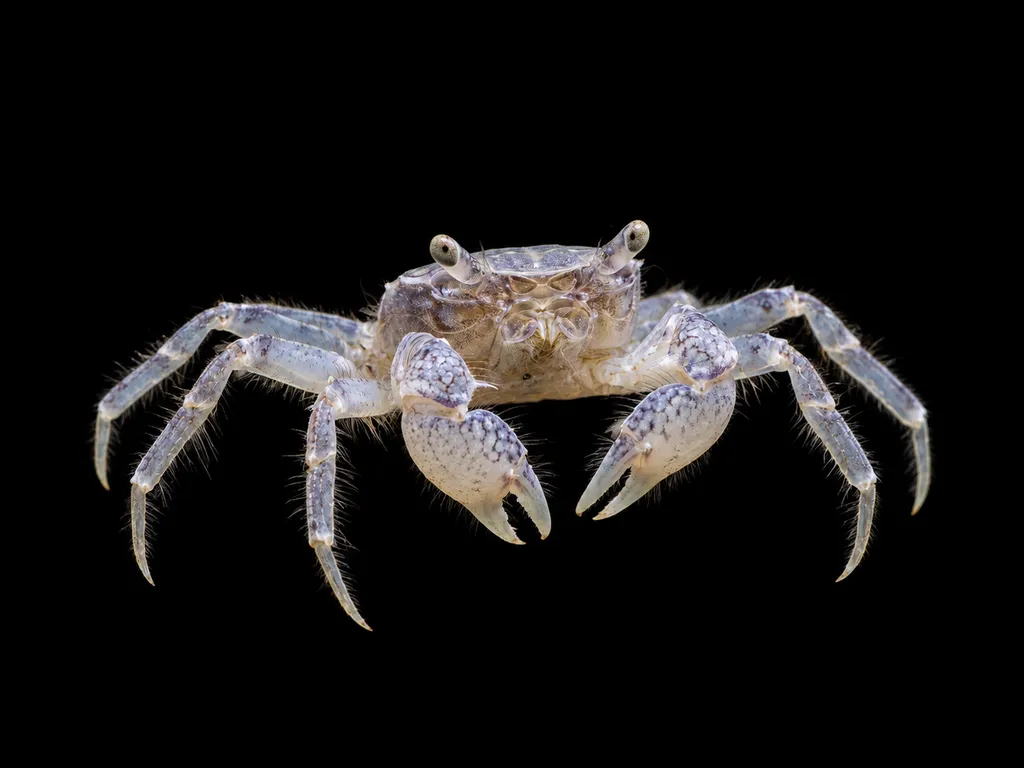
Thai dwarf rock crab
Siamthelphusa sp.
1.2 in (3 cm) · 11 gal (40 L)
 1 in (2.5 cm)10 gal (38 L)75–82°F (24–28°C)
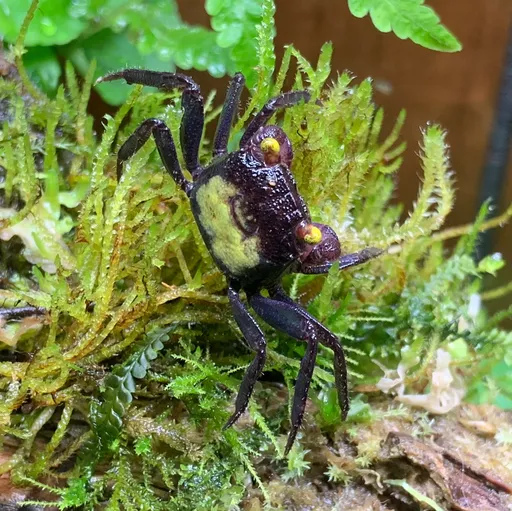
Purple vampire crab
Geosesarma dennerle
1 in (2.5 cm) · 10 gal (38 L)
- 1 in (2.5 cm)11 gal (40 L)72–82°F (22–28°C)
Batik crab
Metasesarma obesum
1 in (2.5 cm) · 11 gal (40 L)
 1.6 in (4 cm)11 gal (40 L)75–82°F (24–28°C)
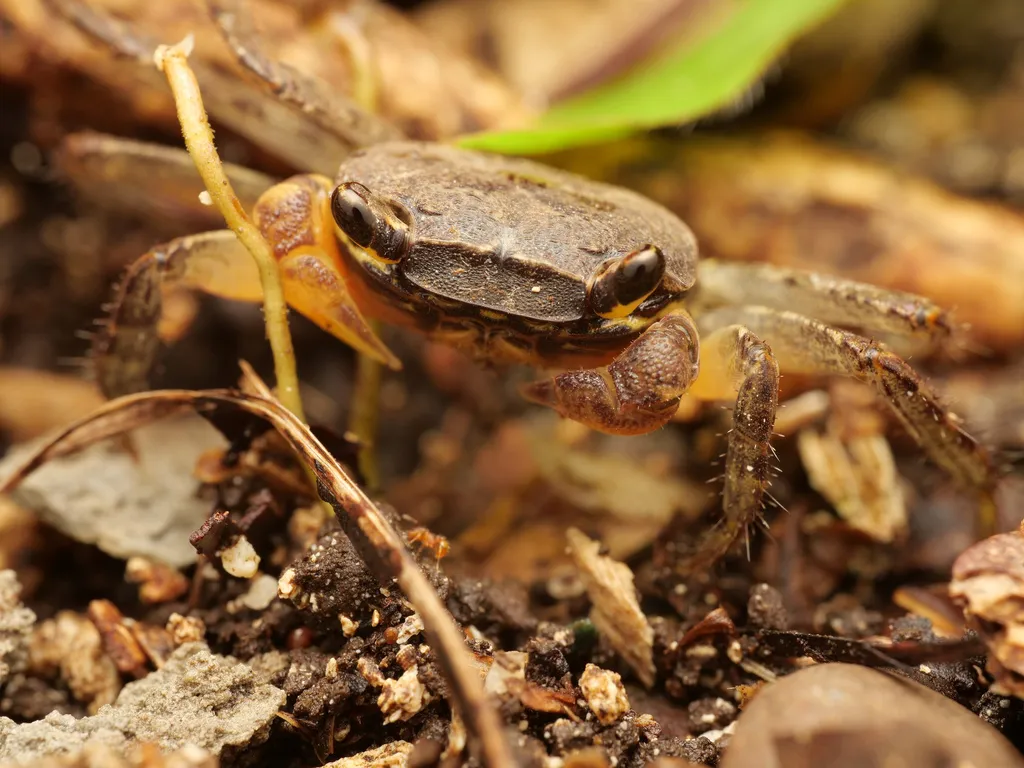
Red apple crab
Metasesarma aubryi
1.6 in (4 cm) · 11 gal (40 L)
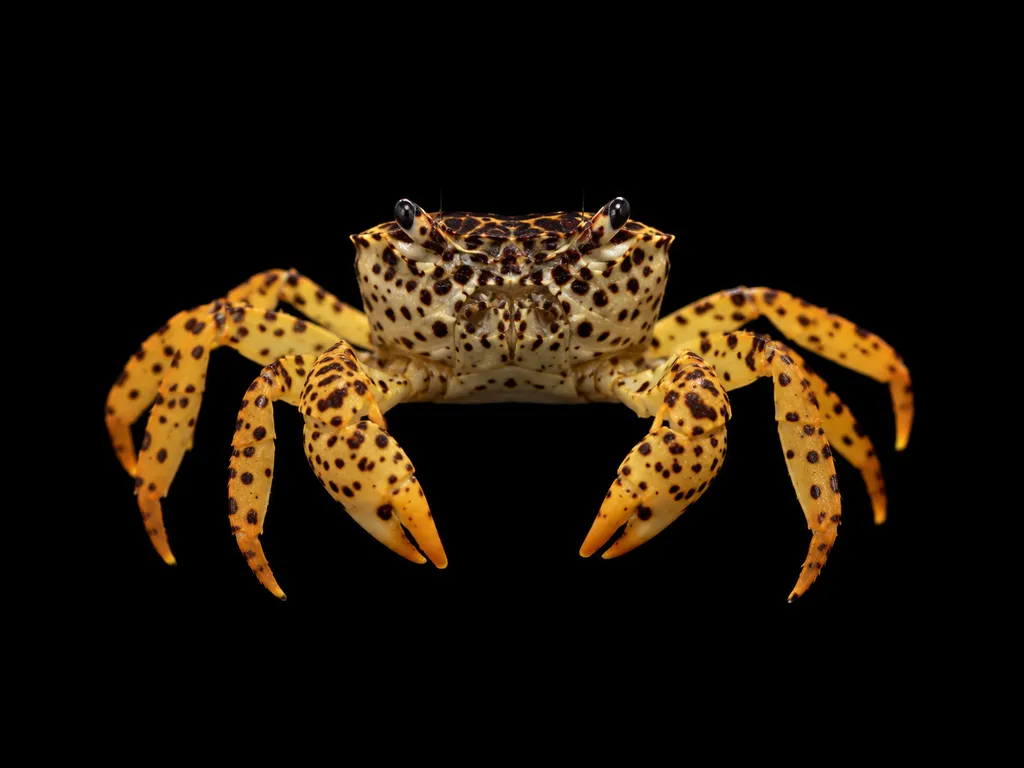 1.6 in (4 cm)16 gal (60 L)75–84°F (24–29°C)
Sulawesi fine spotted crab
Parathelphusa pallida
1.6 in (4 cm) · 16 gal (60 L)
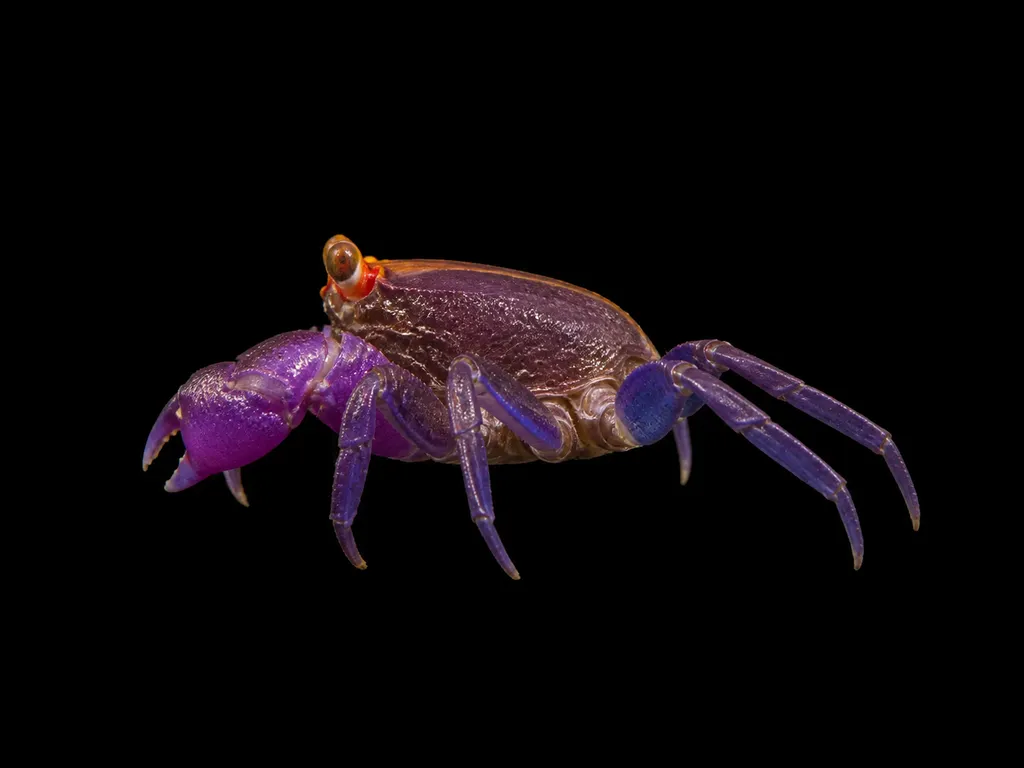 2 in (5 cm)10 gal (38 L)75–82°F (24–28°C)
Blue-leg vampire crab
Geosesarma bicolor
2 in (5 cm) · 10 gal (38 L)