Saulosi mbuna
Chindongo saulosi
Also known as Pseudotropheus saulosi
FreshwaterFish
Care at a glance
- Temperature
- 73–81°F
- 23–27°C
- pH
- 7.5–8.5
- Adult size
- 3.9 in
- 10 cm
- Minimum tank
- 42 gal
- 160 L
- Temperament
- Mostly peaceful
- Social behavior
- Social
- Swim level
- Middle
- Difficulty
- Easy
- Breeding
- Hard
- Rarity
- Rare
- Family
- Cichlidae
- Origin
- Lake Malawi
Overview
Keep them in a group with several females per male to spread out aggression, in a tank of around 160 liters or more. They are mostly peaceful for mbuna but still territorial, and they work the rocks and middle water. Their diet should be vegetable-heavy, with spirulina flake or pellets and quality cichlid food. Go easy on protein to avoid digestive trouble. Keep the water hard and alkaline, pH about 7.5 to 8.5, in the mid 20s C.
In the wild
Saulosi mbuna are endemic to a small area of Lake Malawi, mainly around Taiwan Reef. They live over rocky reefs in fairly shallow water, grazing algae off the stones and using the rocks for shelter and territory. The lake is hard and alkaline, so match that and build plenty of rockwork into caves and ledges. Open sand between the rocks gives them foraging space and helps spread out territorial pressure.
Good to know
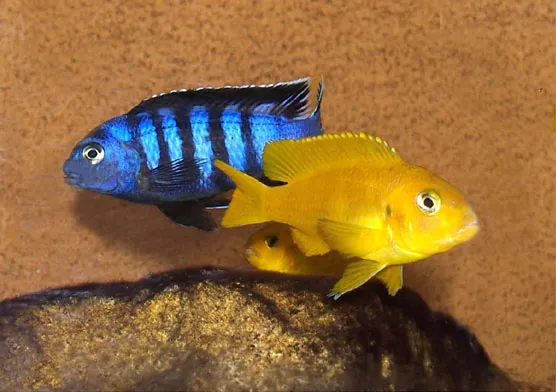
This is a mbuna cichlid in the family Cichlidae, reaching about 10 cm. It shows strong sexual dimorphism. Dominant males turn bright blue with dark vertical bars while females and subordinate males stay yellow. Females are maternal mouthbrooders. The species has a very limited natural range and has faced pressure from collection, so it is treated as a conservation concern and is now widely captive-bred.
Did you know
All juveniles start out yellow like the females. Only as a male matures and gains rank does he switch to the blue, barred coloration, so in a healthy group you usually see just a few blue males among many yellow fish.
Weekly picks
Tank mates
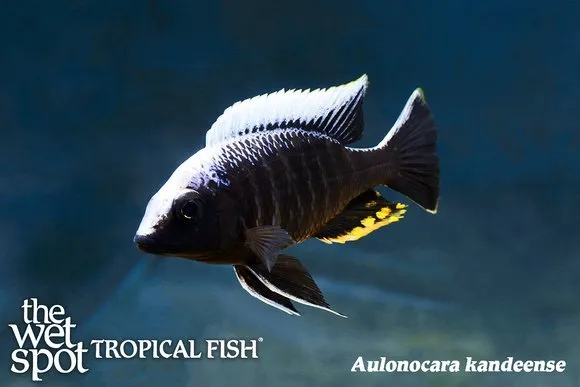
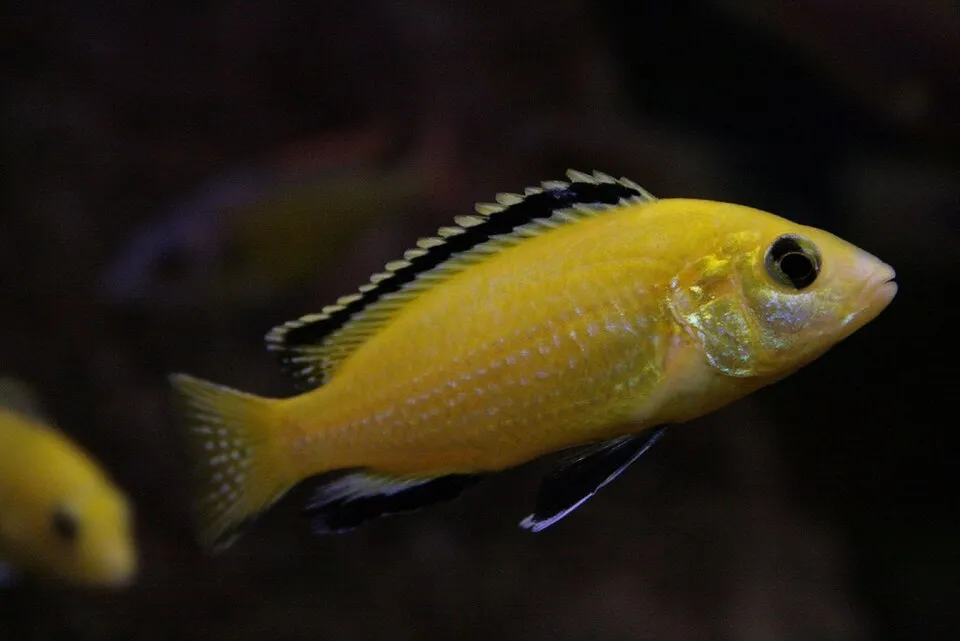
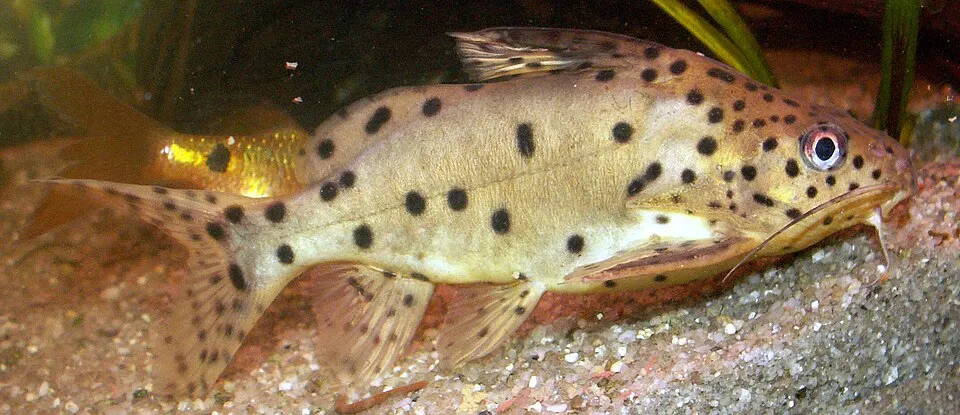
Saulosi mbuna is a mostly peaceful, social species that keeps to the middle. These picks share a community profile with it, are safe together in both directions, and overlap on water type, temperature and pH.
Common questions
What size tank does a Saulosi mbuna need?
A Saulosi mbuna needs at least 42 gal (160 L). It spends most of its time in the middle.
What temperature and pH does a Saulosi mbuna need?
A Saulosi mbuna is comfortable at 73–81°F (23–27°C) with a pH of 7.5–8.5.
How big does a Saulosi mbuna get?
An adult Saulosi mbuna reaches about 3.9 in (10 cm).
Related species
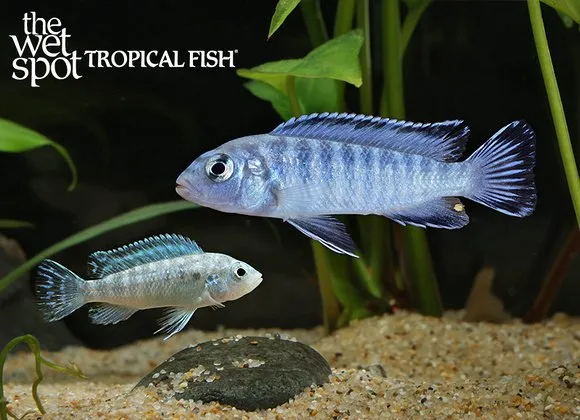 4.7 in (12 cm)53 gal (200 L)75–81°F (24–27°C)
Powder blue cichlid
Chindongo socolofi
4.7 in (12 cm) · 53 gal (200 L)
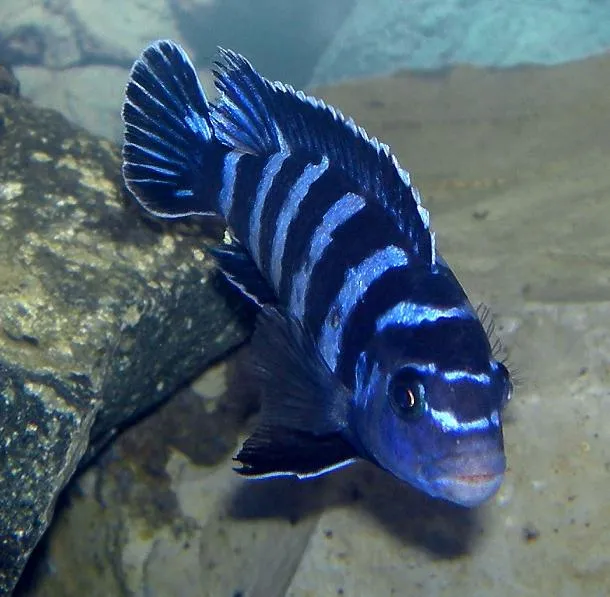 3.9 in (10 cm)53 gal (200 L)75–82°F (24–28°C)
Dwarf mbuna
Chindongo demasoni
3.9 in (10 cm) · 53 gal (200 L)
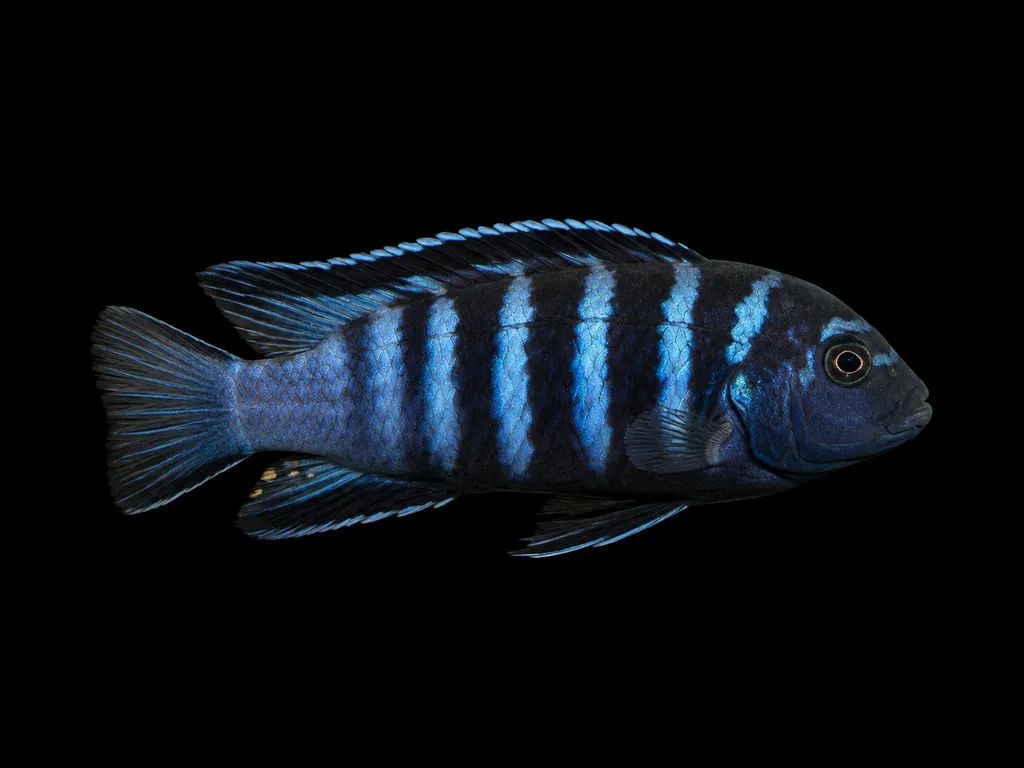 5.1 in (13 cm)53 gal (200 L)75–81°F (24–27°C)
Elongate mbuna
Chindongo elongatus
5.1 in (13 cm) · 53 gal (200 L)
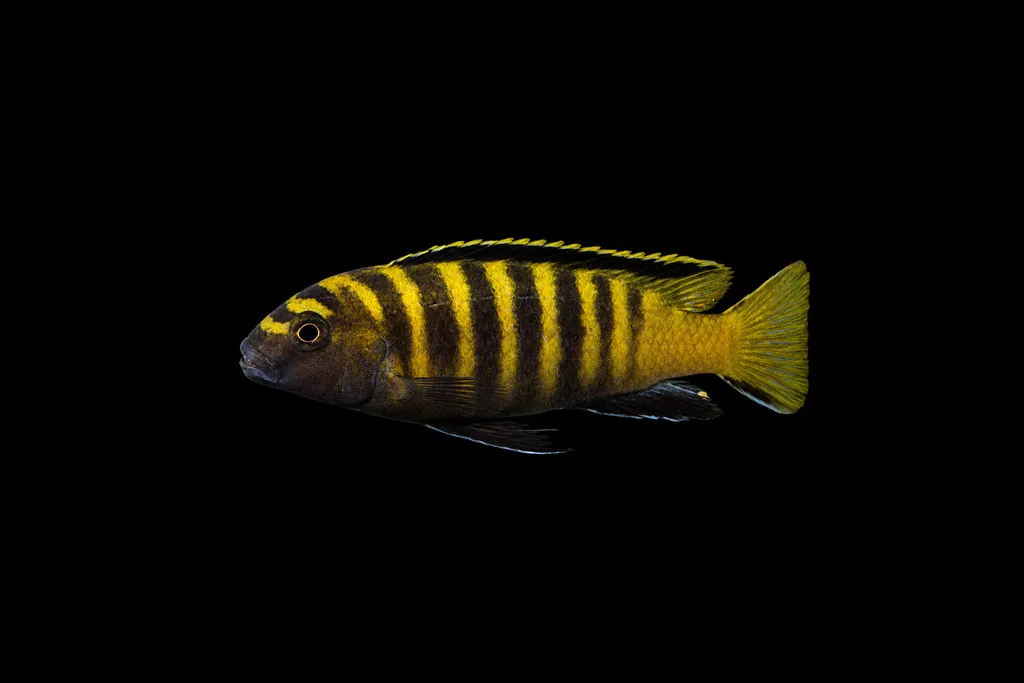 3.7 in (9.5 cm)42 gal (160 L)75–82°F (24–28°C)
Yellow chindongo
Chindongo flavus
3.7 in (9.5 cm) · 42 gal (160 L)
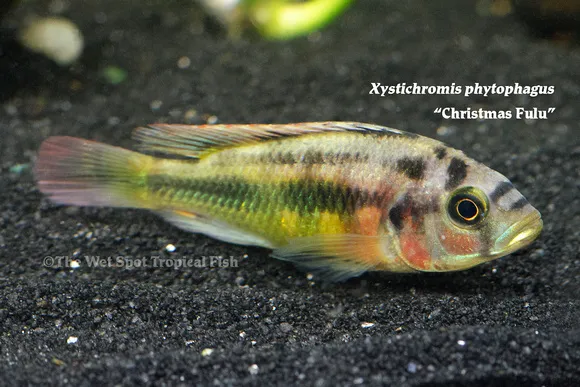 3.9 in (10 cm)53 gal (200 L)73–81°F (23–27°C)
Christmas fulu
Xystichromis phytophagus
3.9 in (10 cm) · 53 gal (200 L)
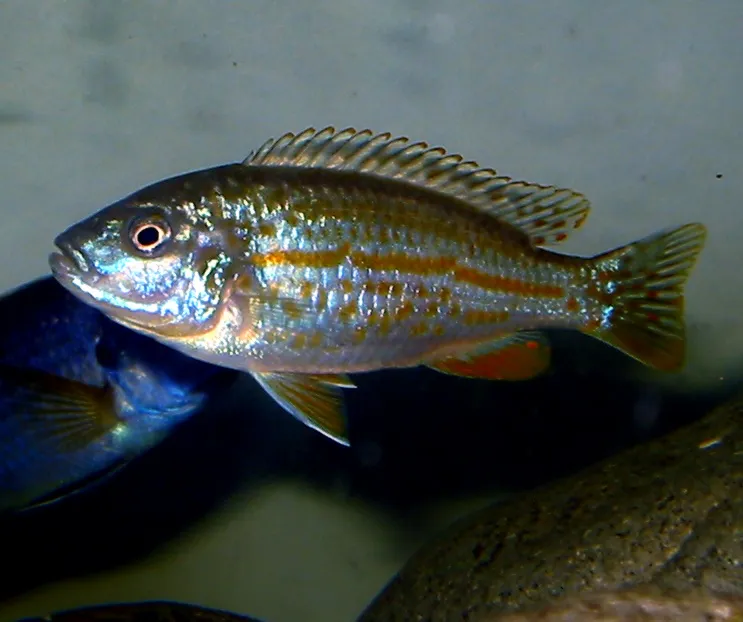 3.9 in (10 cm)45 gal (170 L)75–81°F (24–27°C)
Pearl of Likoma
Melanochromis joanjohnsonae
3.9 in (10 cm) · 45 gal (170 L)